
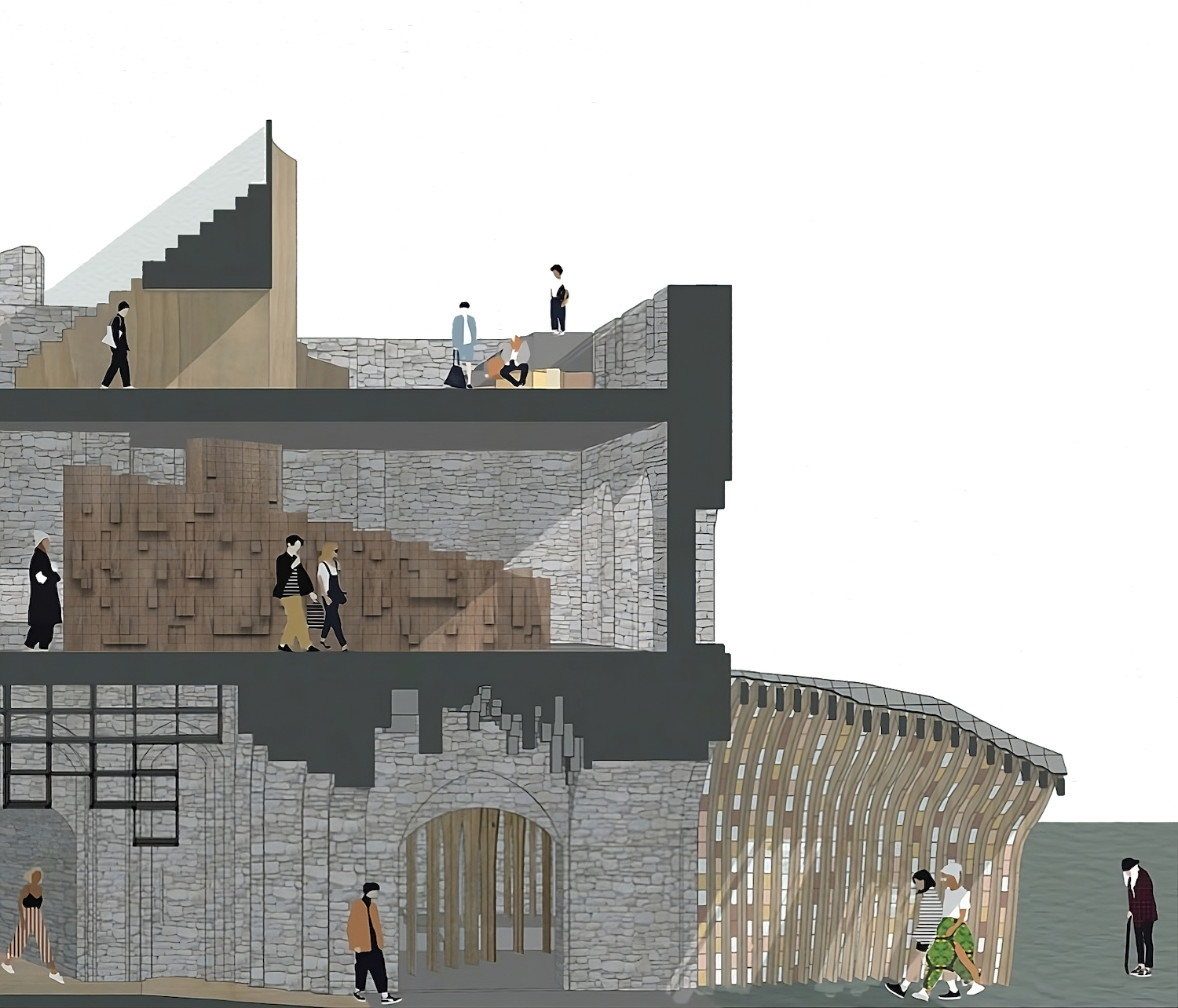



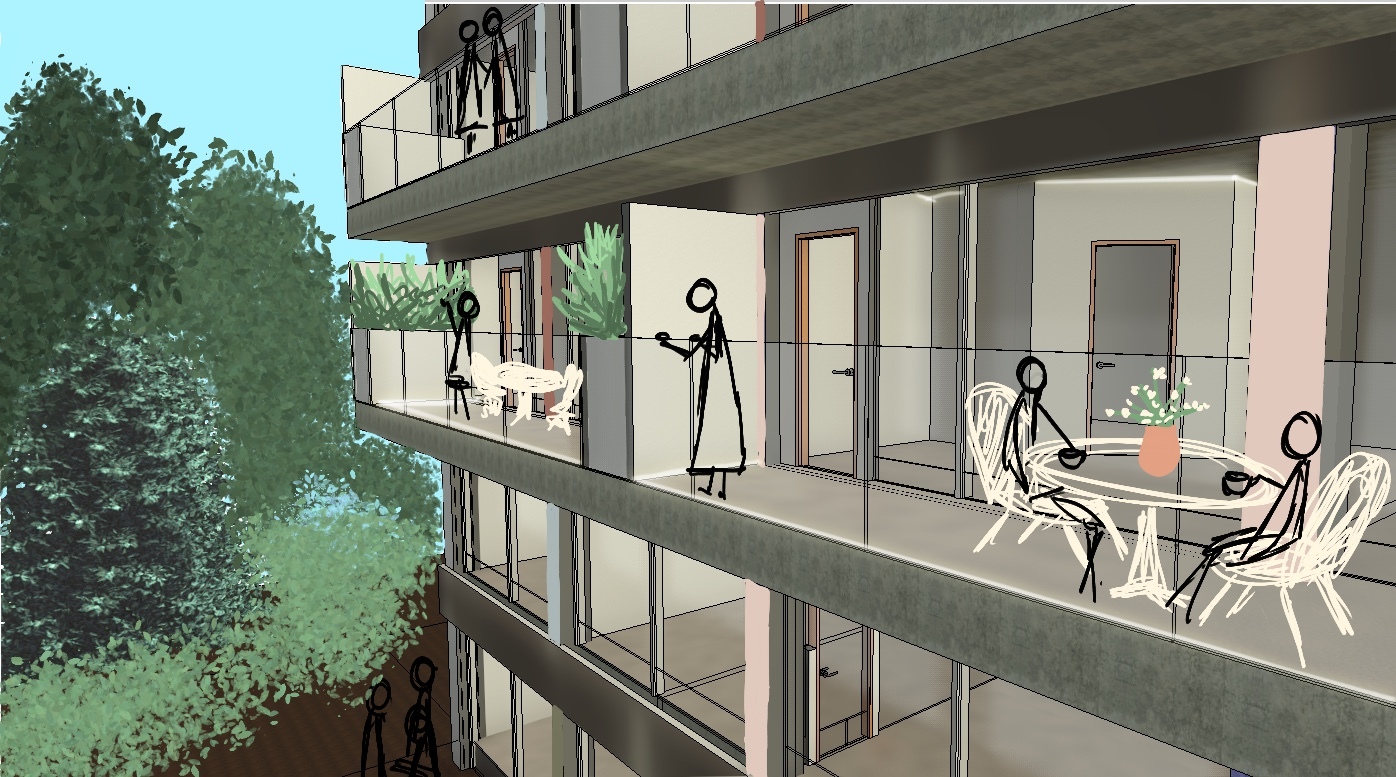
Second year began with trepidation, and some nerves, too. We were tasked with designing and structurally modifying Dean Park House in Bournemouth, and reimagining it from the bleak office block it currently is to a vibrant co-living, co-working and retail space. This was the first project on BA (Hons) Interior Architecture and Design that began to encourage structural modifications and challenge us to think further than design, and start to respect the complexities of architecture and the world of the industry.
Inspirations
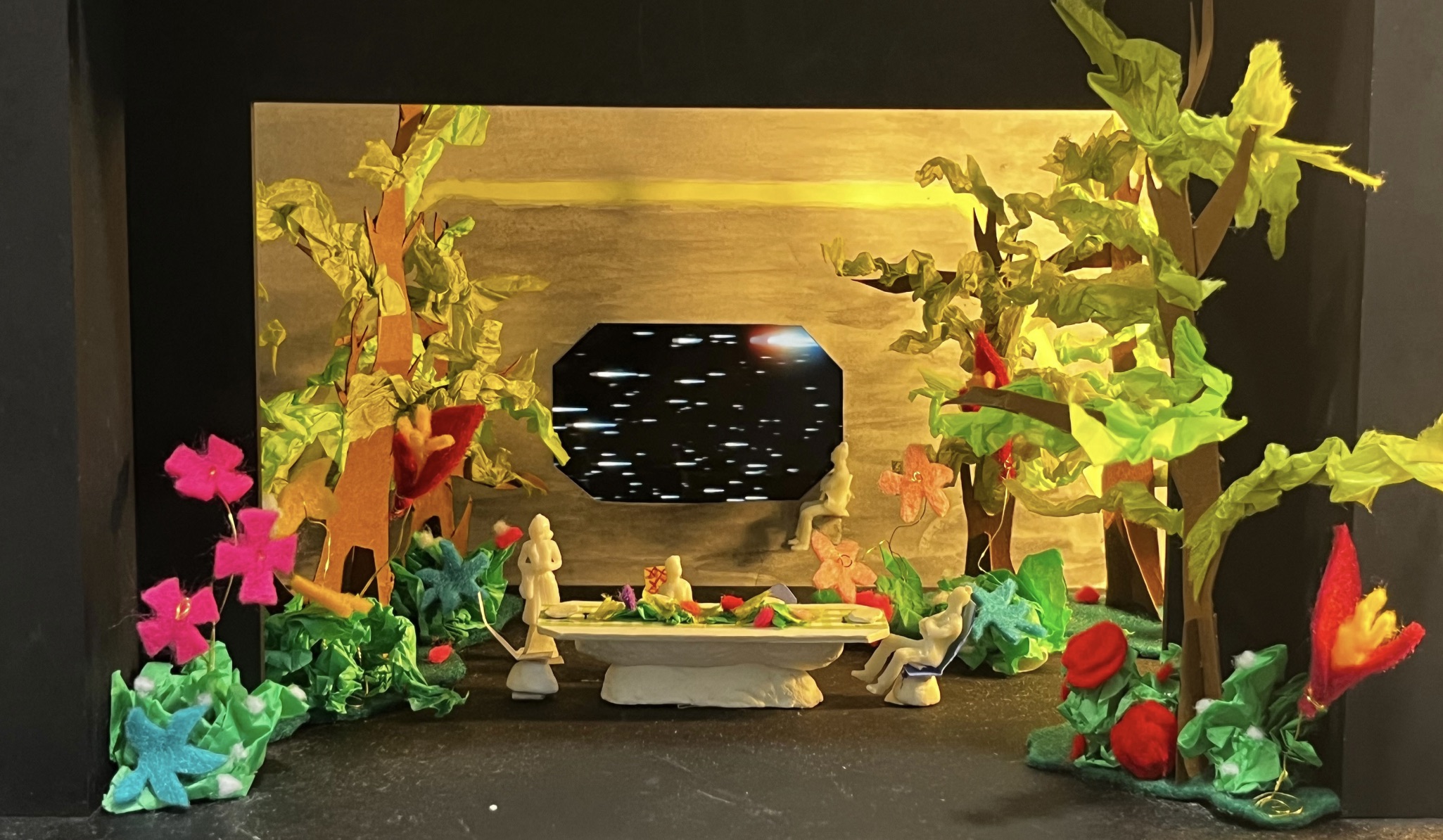
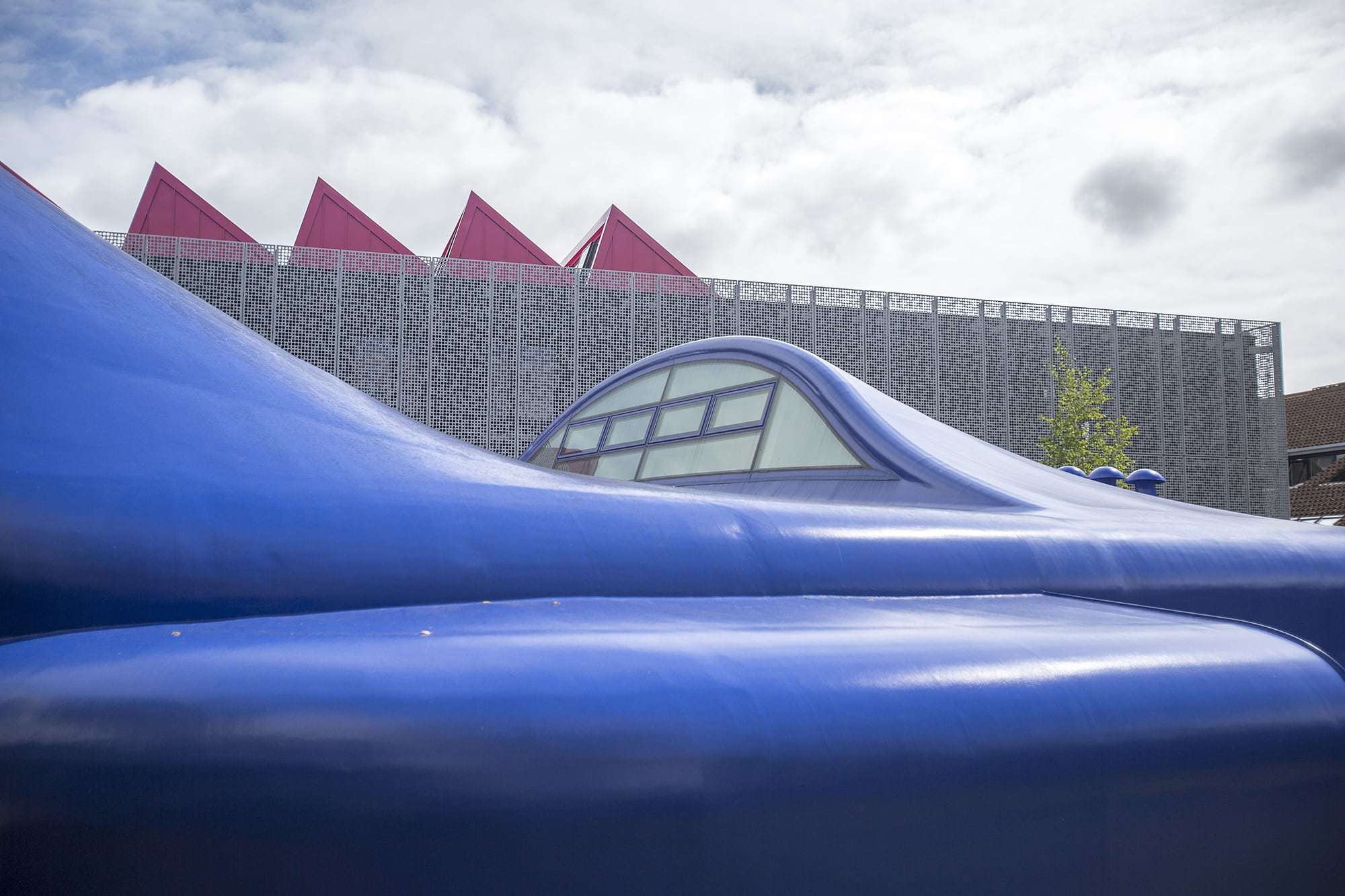
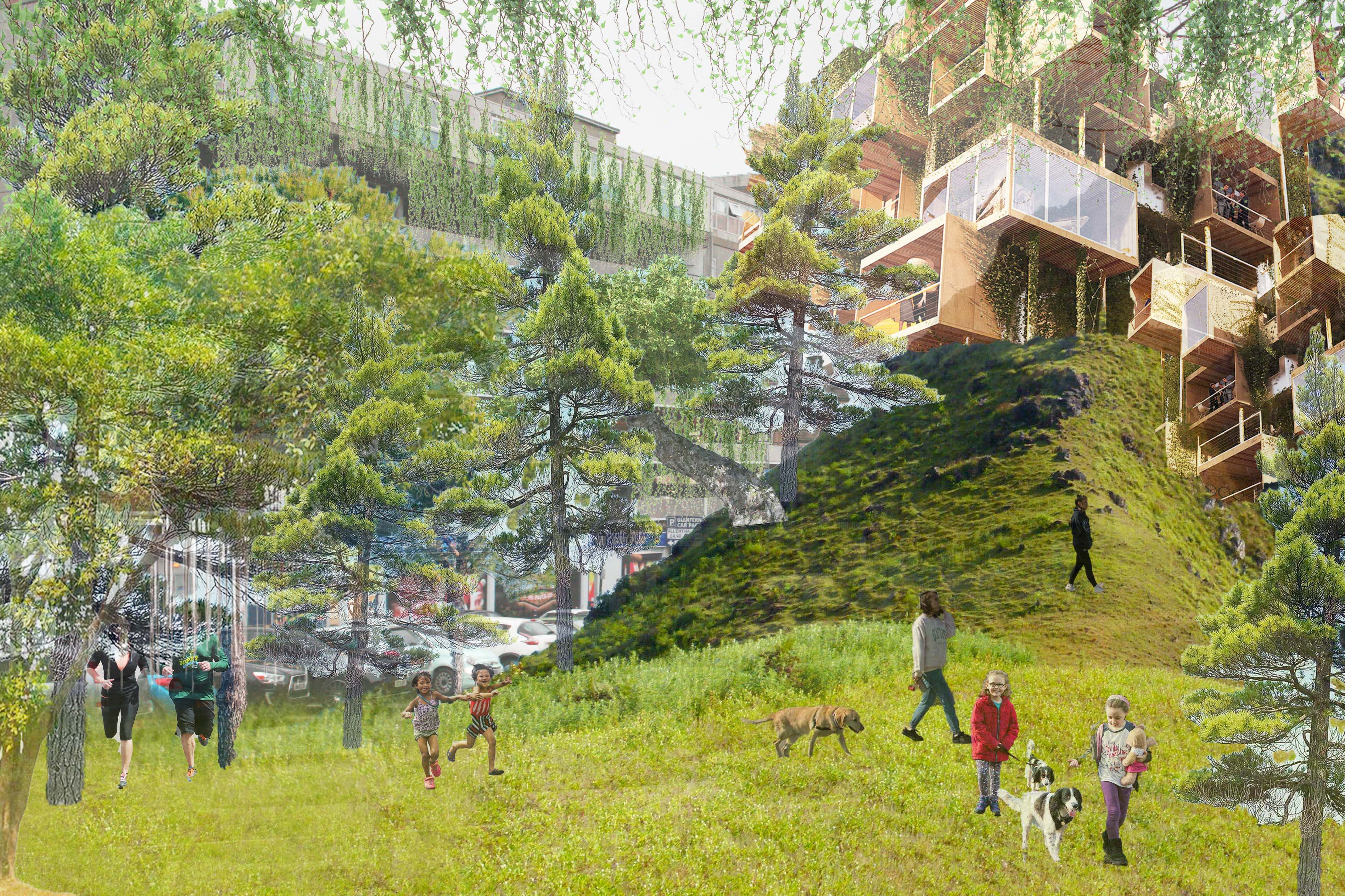
I was greatly inspired by Maggie’s Centres for their warming, homely environment and powerful architecture. The inclusion of nature in their spaces to calm users was a key takeaway for me. Wayfinding within their spaces was through signifiers – familiar, intuitive navigation of the interior space, and rather than signs that direct, I wanted to use calming colours, natural light, and sound to help users navigate each space in their own way, and intuitively.
Even though the co-living section was designed almost like a Center Parcs accommodation (a few days stay at a time, to maximise user engagement with the space in a shorter timeframe), the final design was considered with needs for this same warm and comforting environment as a place of calm after a day’s collaborating and networking.
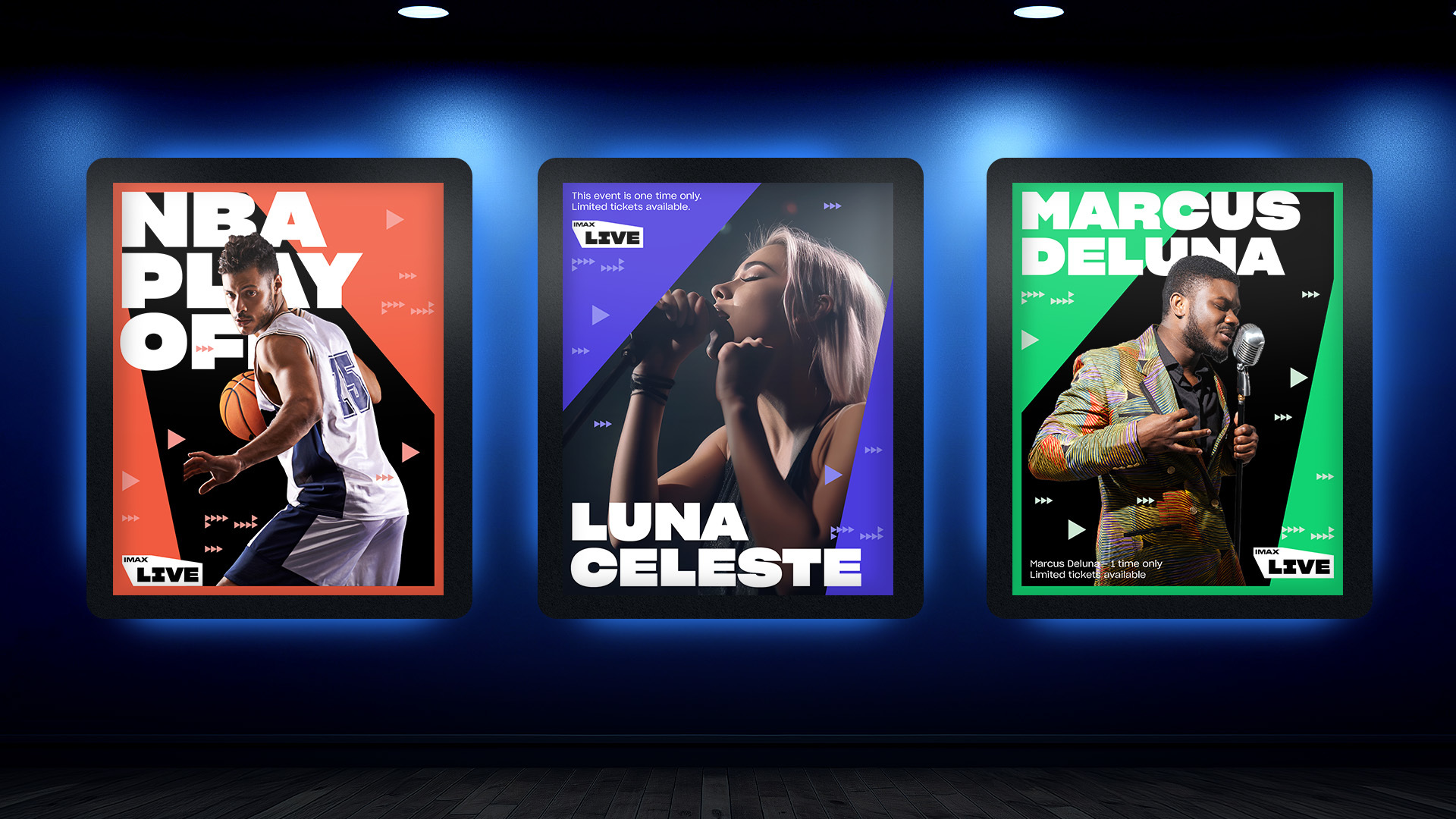
Trove, in Bournemouth town centre, is incredibly popular with university students at AUB given the creative collections of products and championing local sellers. The concept of this inspired the retail section of my project – where graduates can sell their own creative work, much like in Trove – but with the main purpose of professionals looking to recruit them for their talent and projects.
Development of ideas
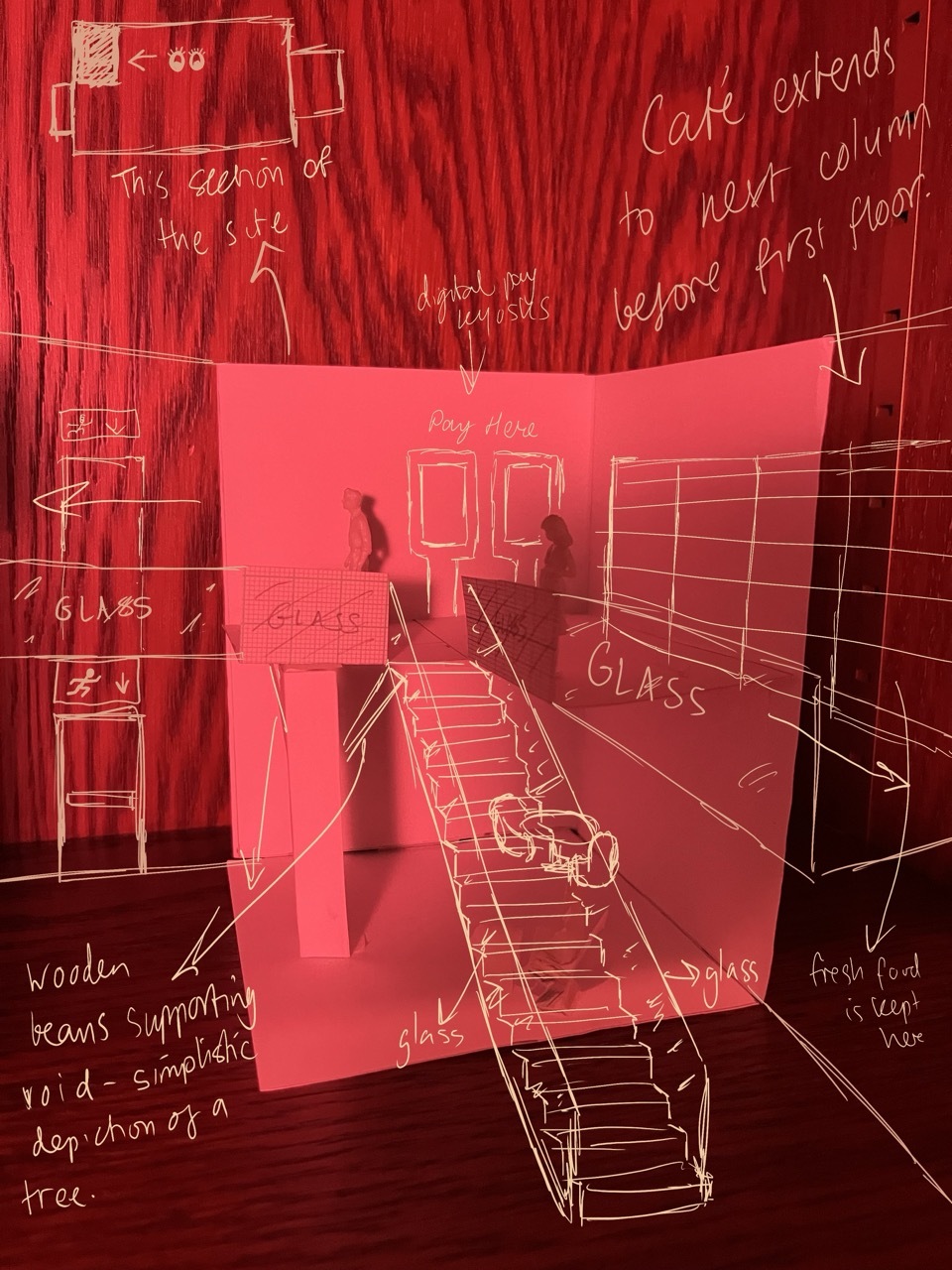
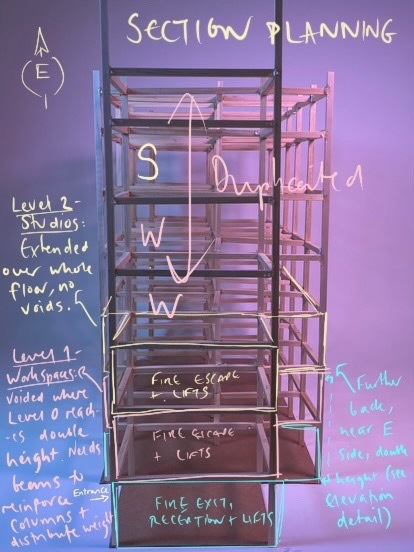
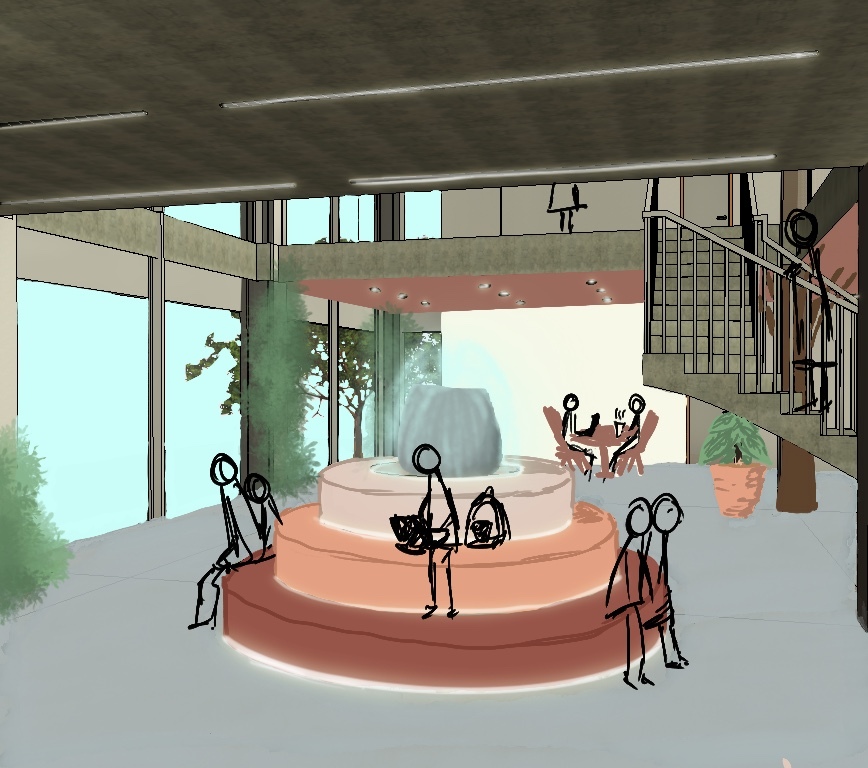
The idea of a co-living, co-working and retail space under one roof felt baffling at first, and I immediately began spiralling into theories about human confinement and the effects of the COVID-19 lockdown on the world and life as we knew it. People have simply adapted to working outside offices and connecting online, and natural human interaction is being lost. I needed to link this to the core idea of community, which was challenging at first, but structurally modifying the space and giving it a ‘void’ or double height ceiling in one portion, amplified the feeling of openness, and encouraged collaboration and social engagement.
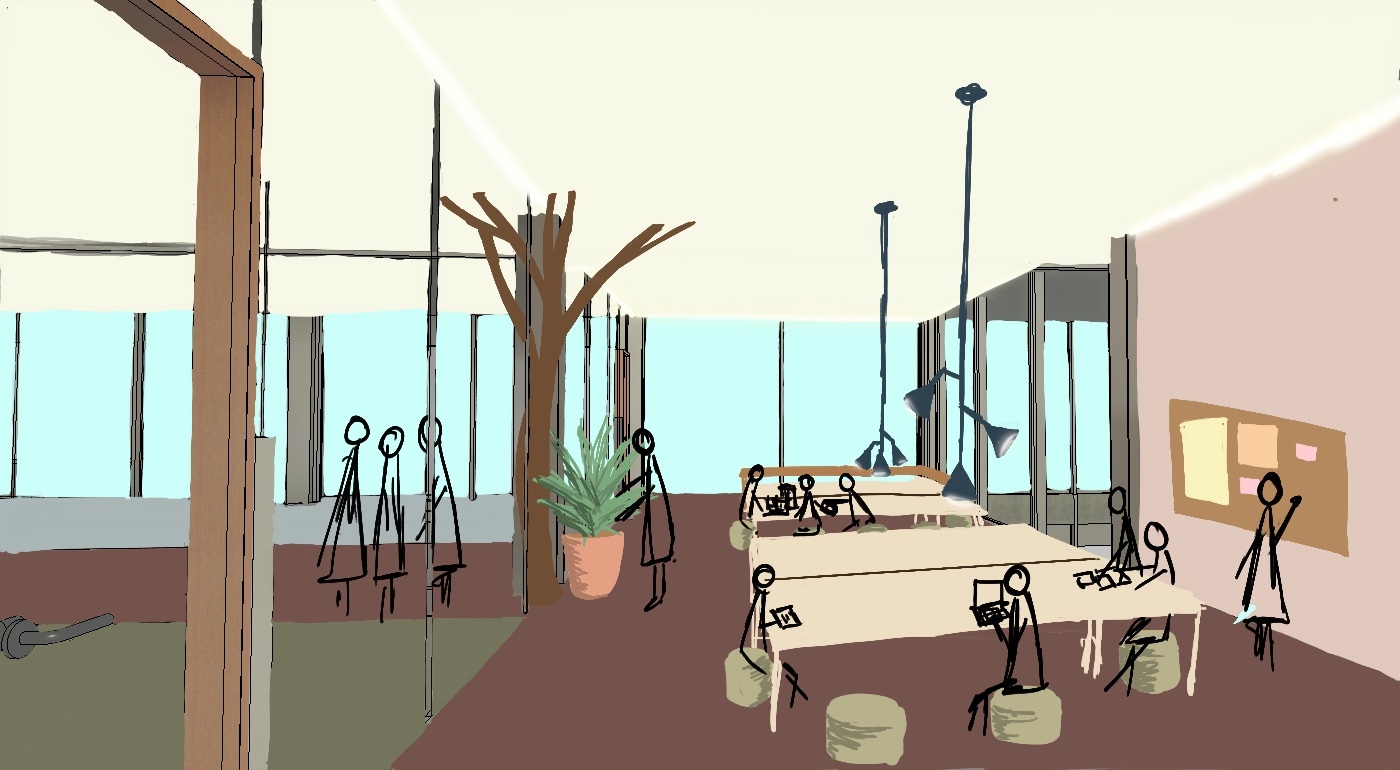
I knew that I wanted to design a space that was nature-inspired and simplistic – something grounded and rooted in natural beauty, and also something that supported neurodivergent users. Many co-working spaces do not cater for the sensory needs of neurodivergent people, and I wanted my space to change this through sensory calm and designated breakout spaces and private spaces amongst the community areas. My user group was creative graduates from AUB or other universities, and professionals in the creative industry who are looking to help young talent thrive. The project acts as a bridge between university study and the industry, as many creative graduates in the current economic climate are struggling to find jobs and climb the career ladder.
What I learned – Graduate Futures reflection
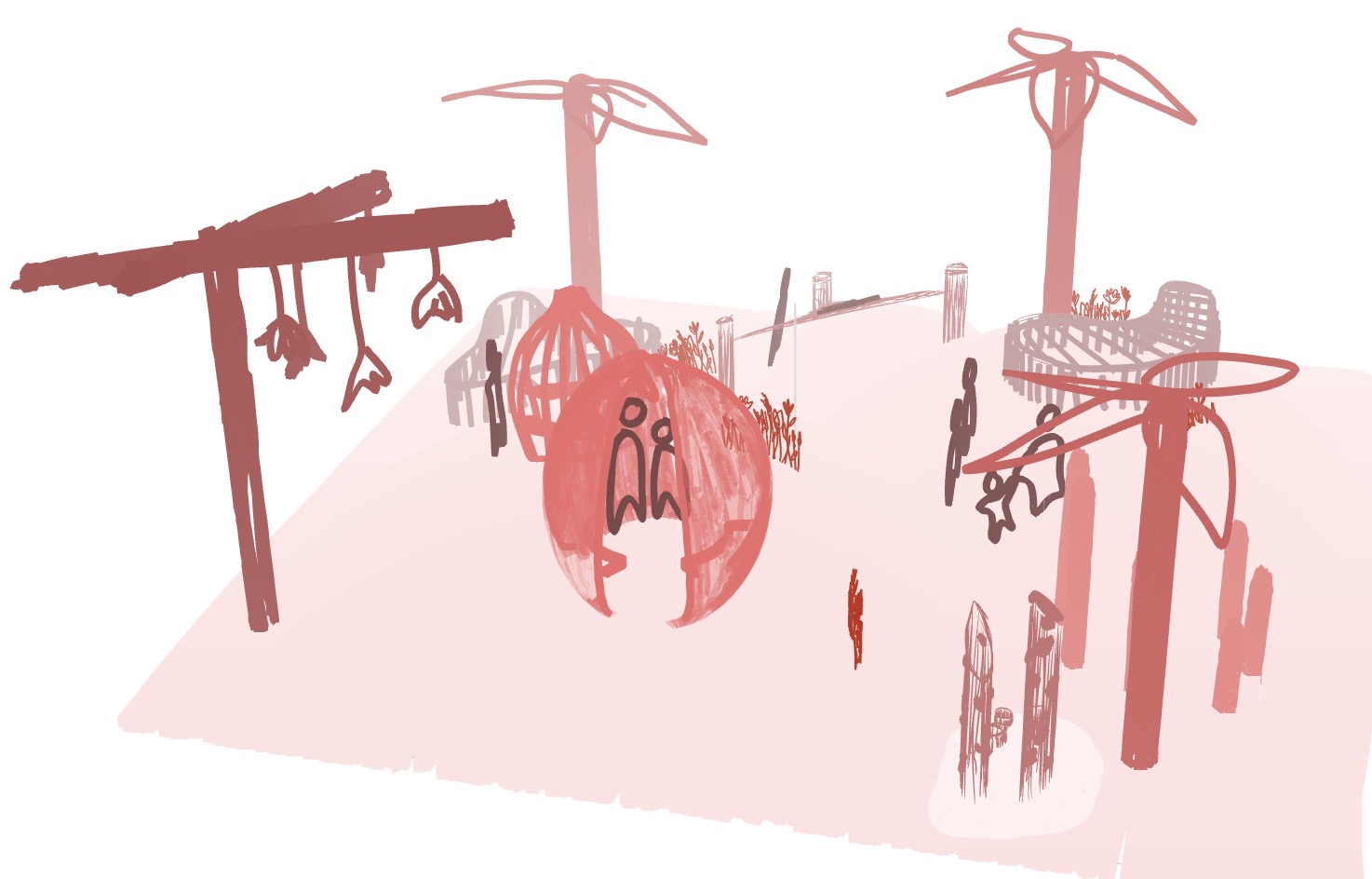
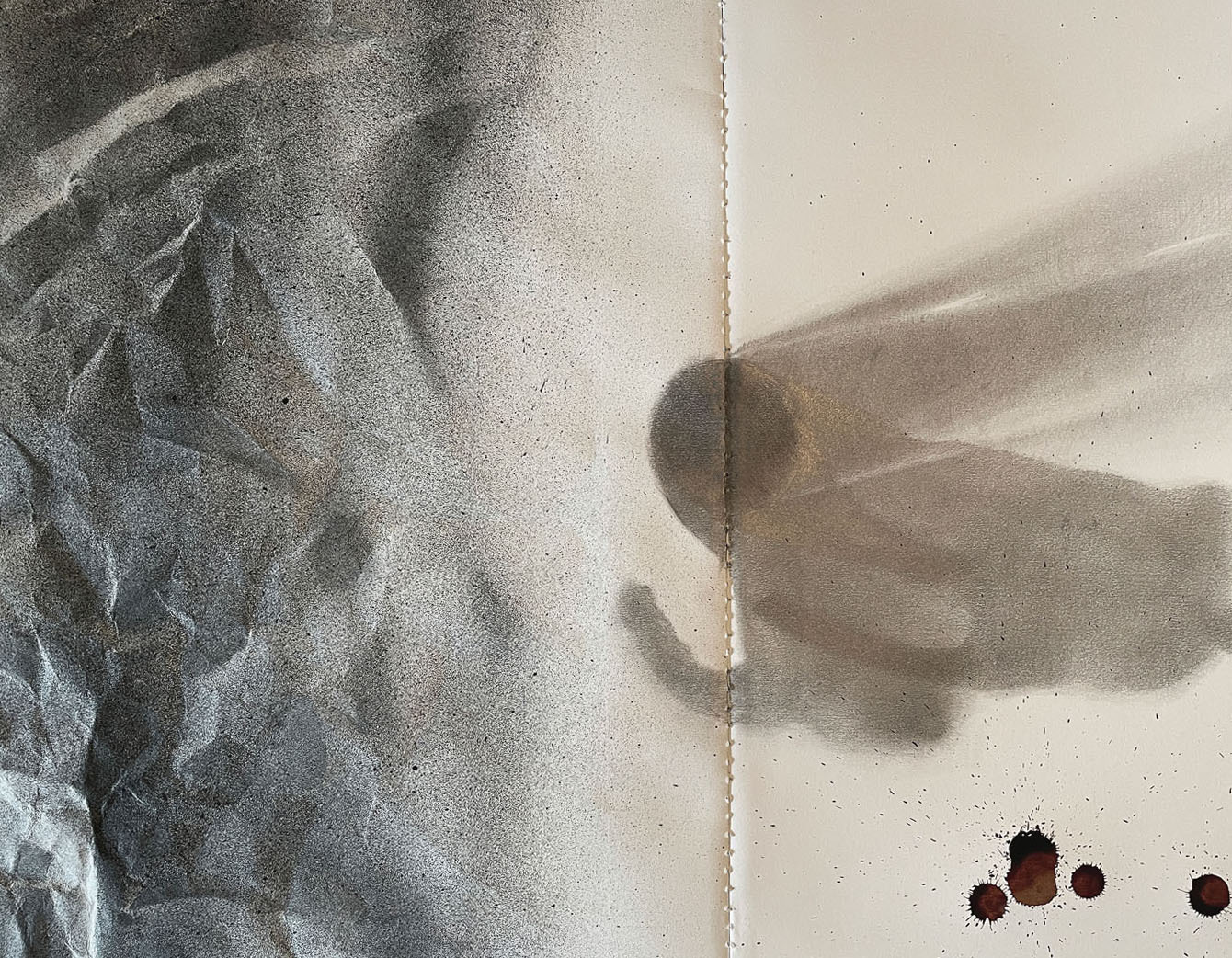
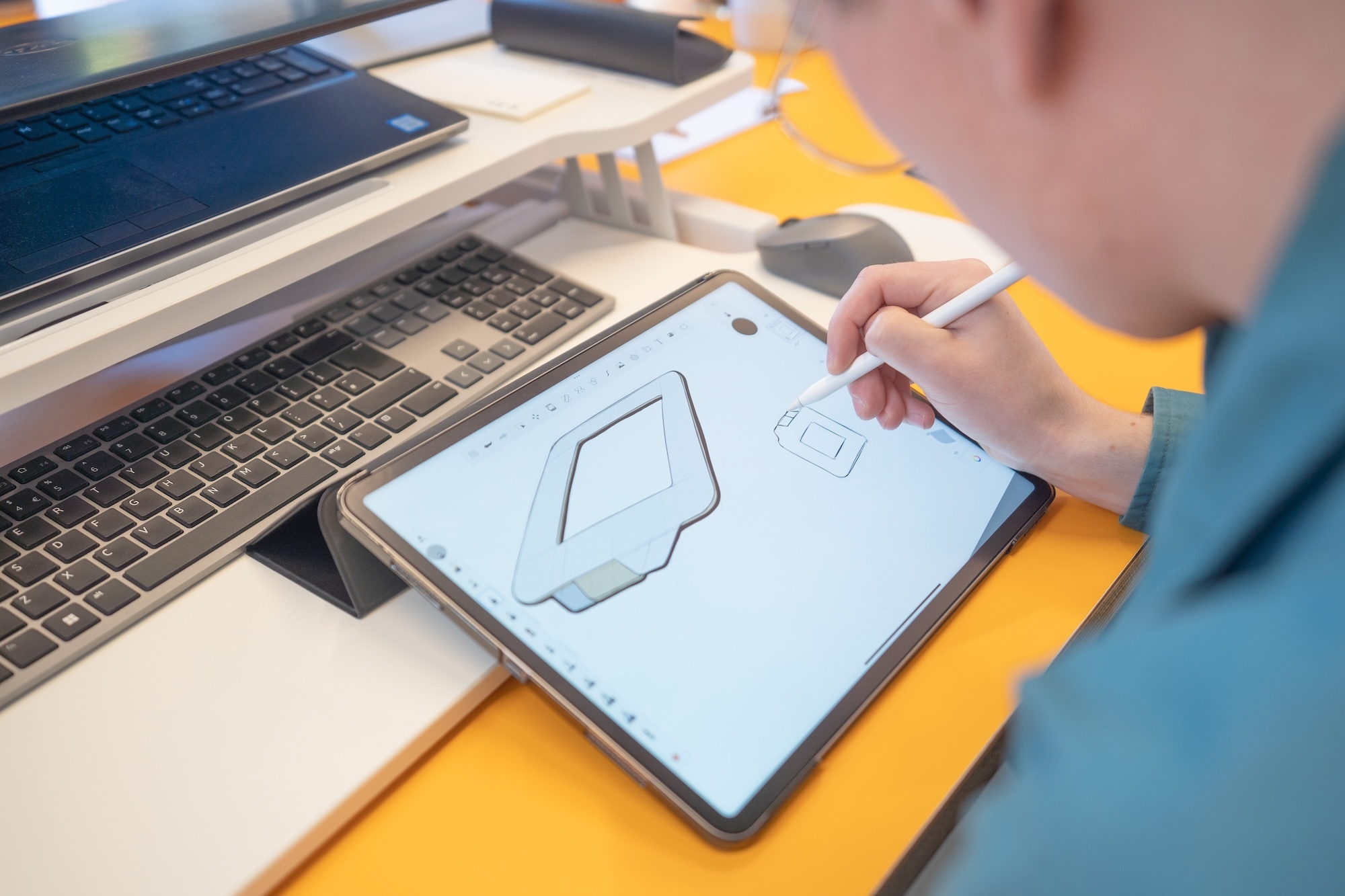
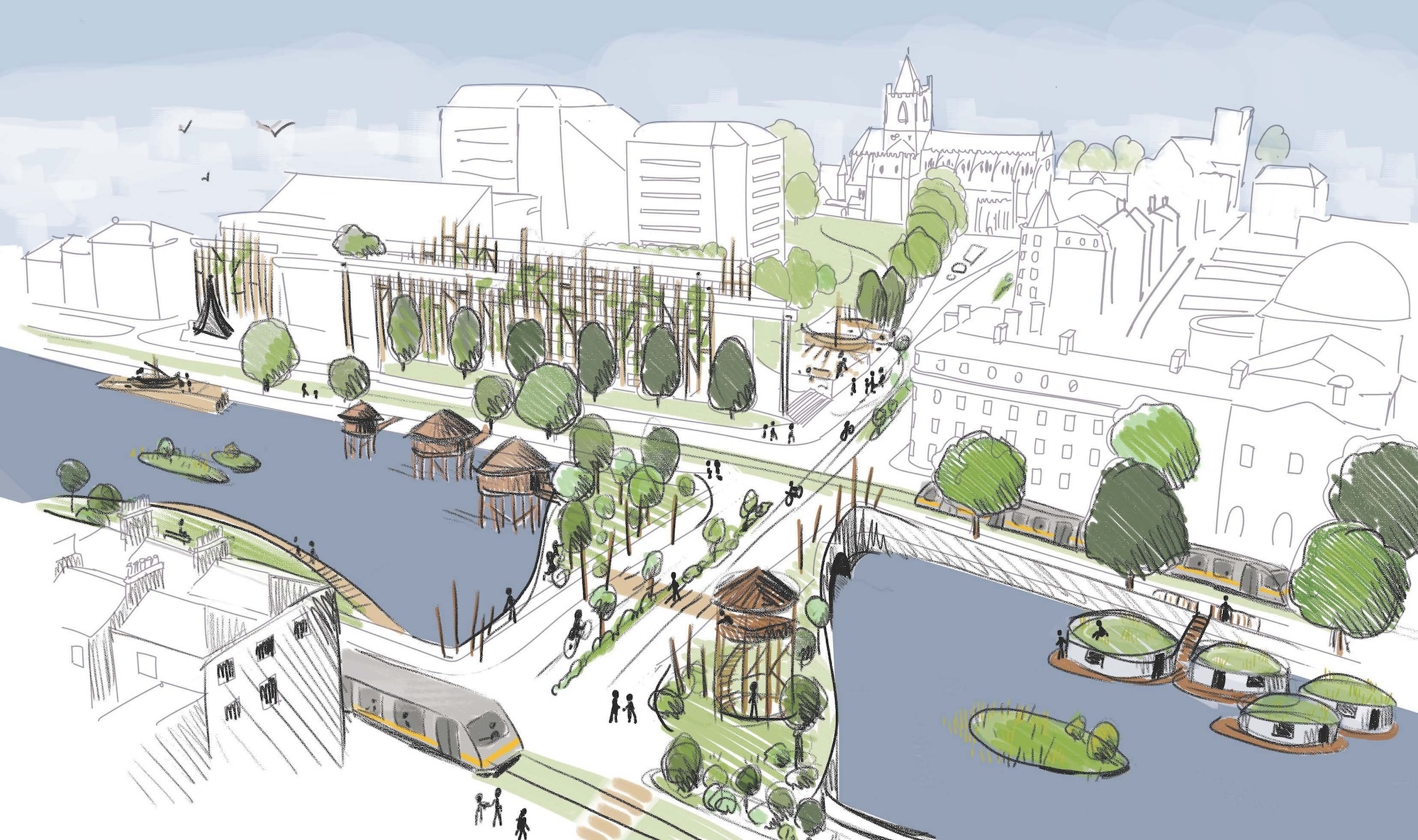
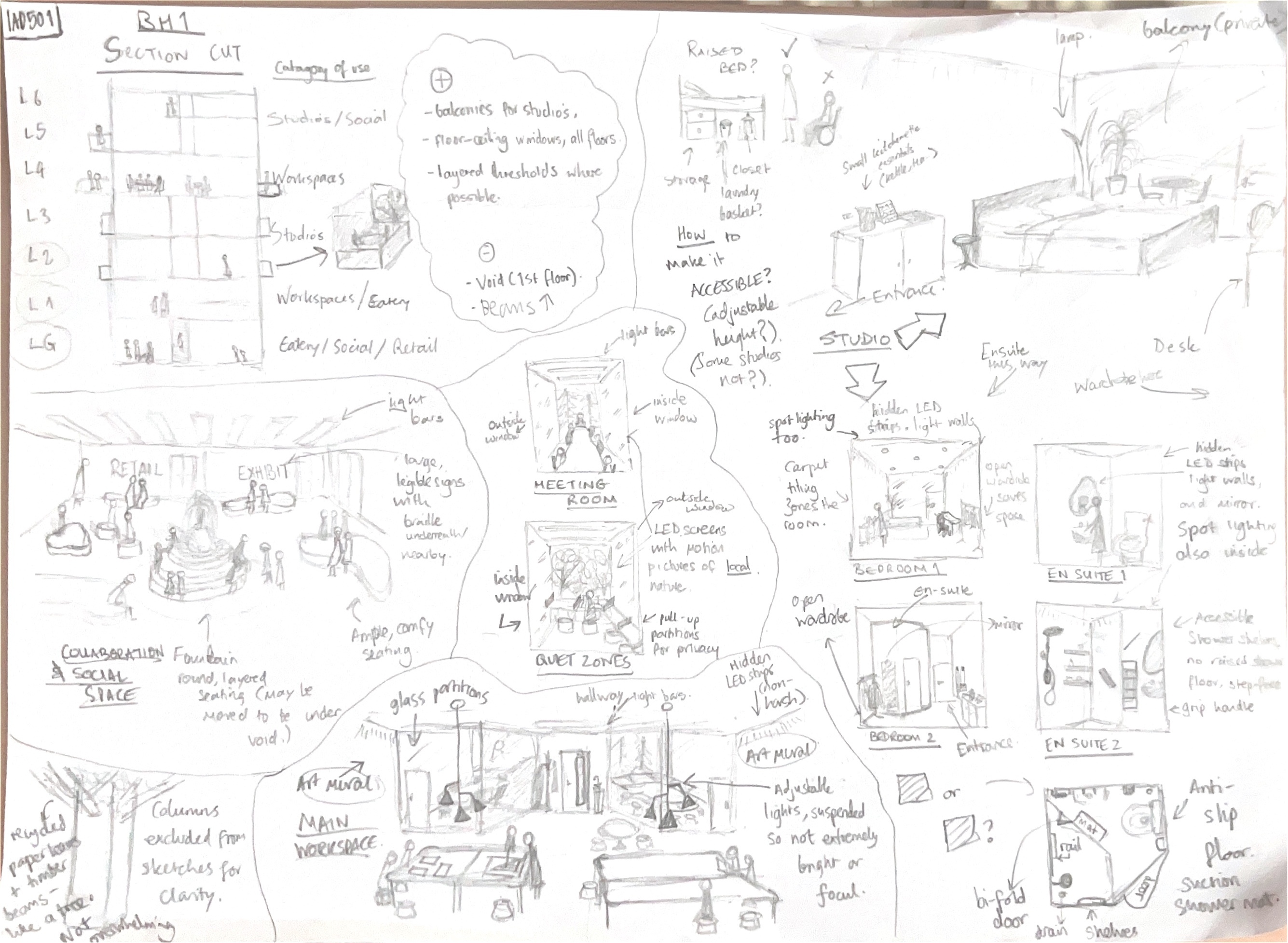
My favourite part of the course, and something I had the chance to improve in this project, is the constant development of ideas and the range of sketches I can produce – perspective, thumbnail, even rough sketches will do sometimes. Sketches for any discipline show the designer or artist’s thought process and idea formation, and are so important in understanding how finished projects once began.
I learned to draw much simpler and shorthand sketches to show this, rather than too much detail, and this helped demonstrate my designer’s mindset and even cultivated a habit of whipping out my sketchbook at any opportunity where an idea arose. I learned that design doesn’t have to be complicated to convey a message – subtle touches in a space can elevate the atmospheric experience, and leaning into simplistic ideas from the beginning can give more purpose and intent in every design choice.
This project relied heavily on a reflective analysis of our growth as designers. I feel that in just one term, I have learned so much from the mistakes of last year, and have begun to improve on each one through a professional and personalised approach, with trial and error to find what worked for me. I discovered that it was okay to not know all the software that my peers could use so well, as long as I had something equally effortful to bring to the table, like my hand-drawn technical drawings, and Procreate renders over simple, form-focused models.
Each term prepares us more for our futures as creative graduates, and I know this term propelled me into a clearer sense of knowledge over who I am becoming in my professional identity, and what this means for my direction in the industry. It's exhilarating to think where I could be going in a few years time with everything I am learning at AUB, and I am eager to delve deeper into my course and grow even more.