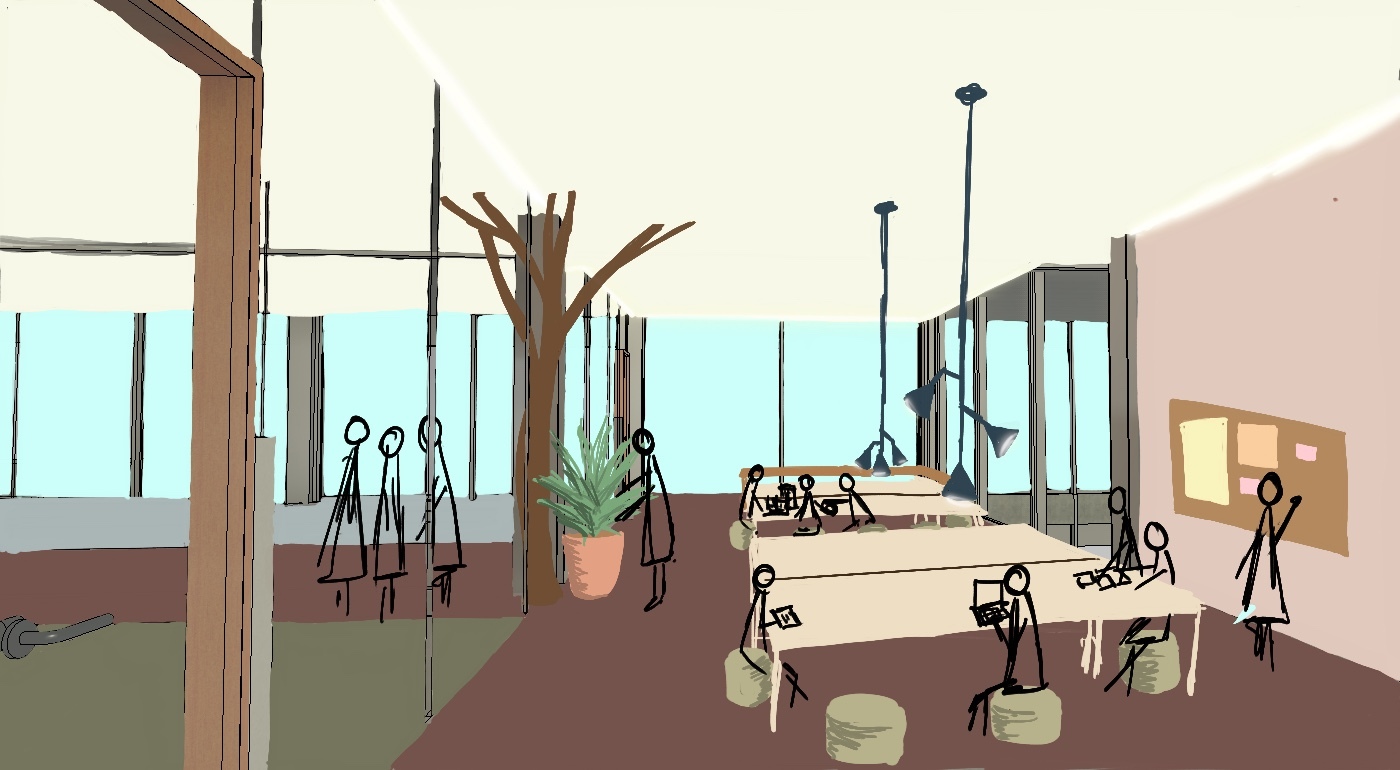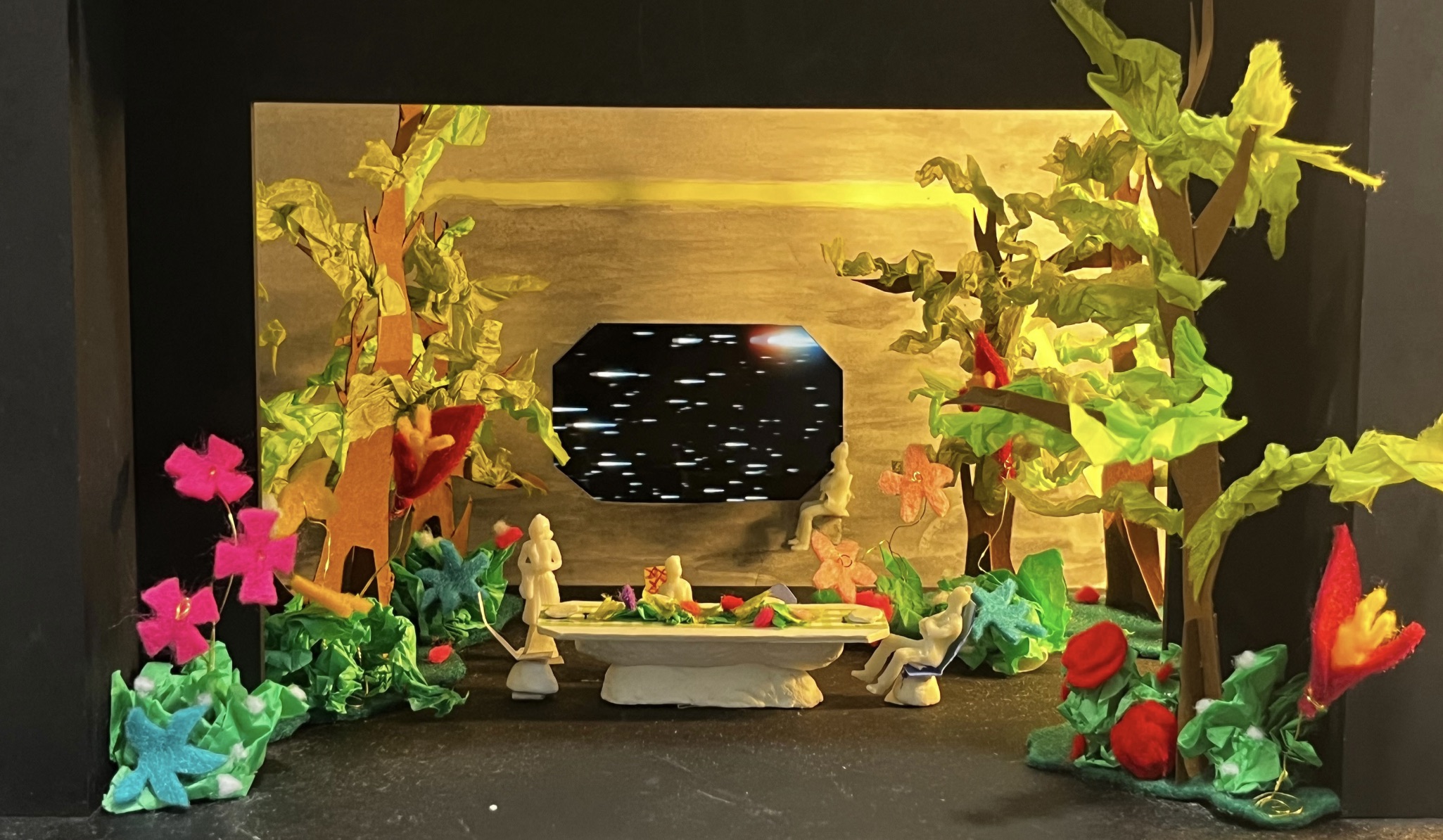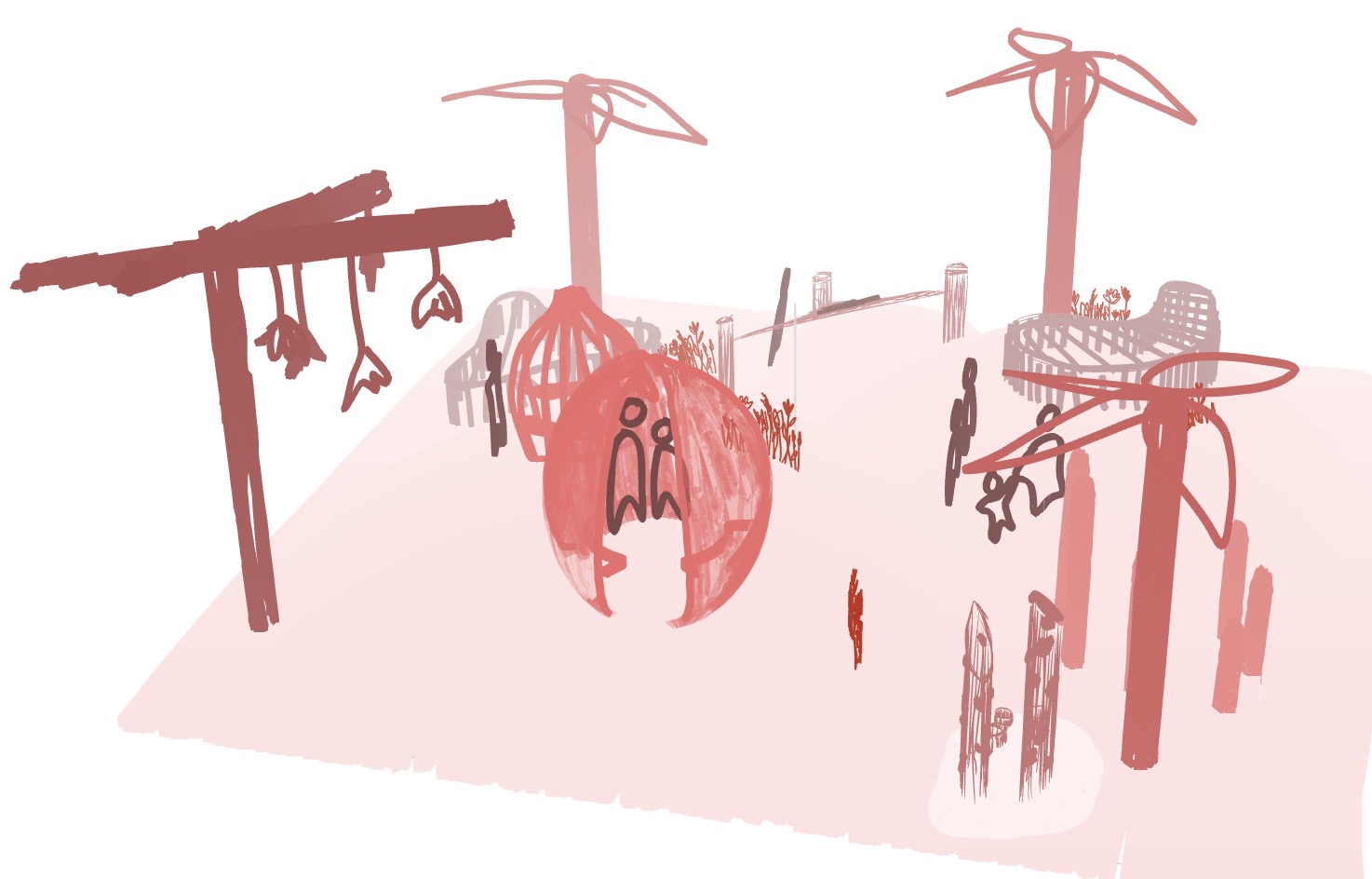
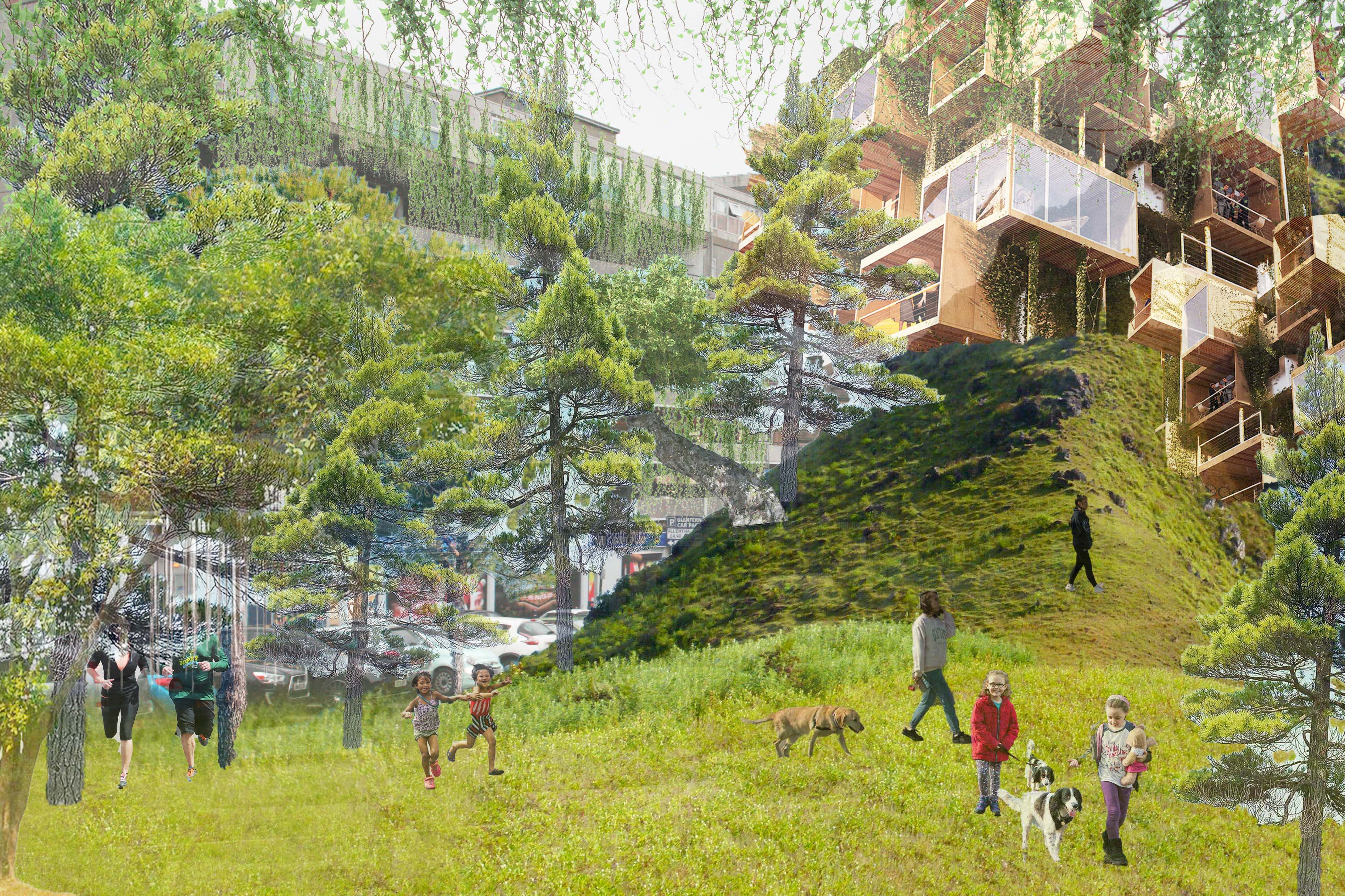









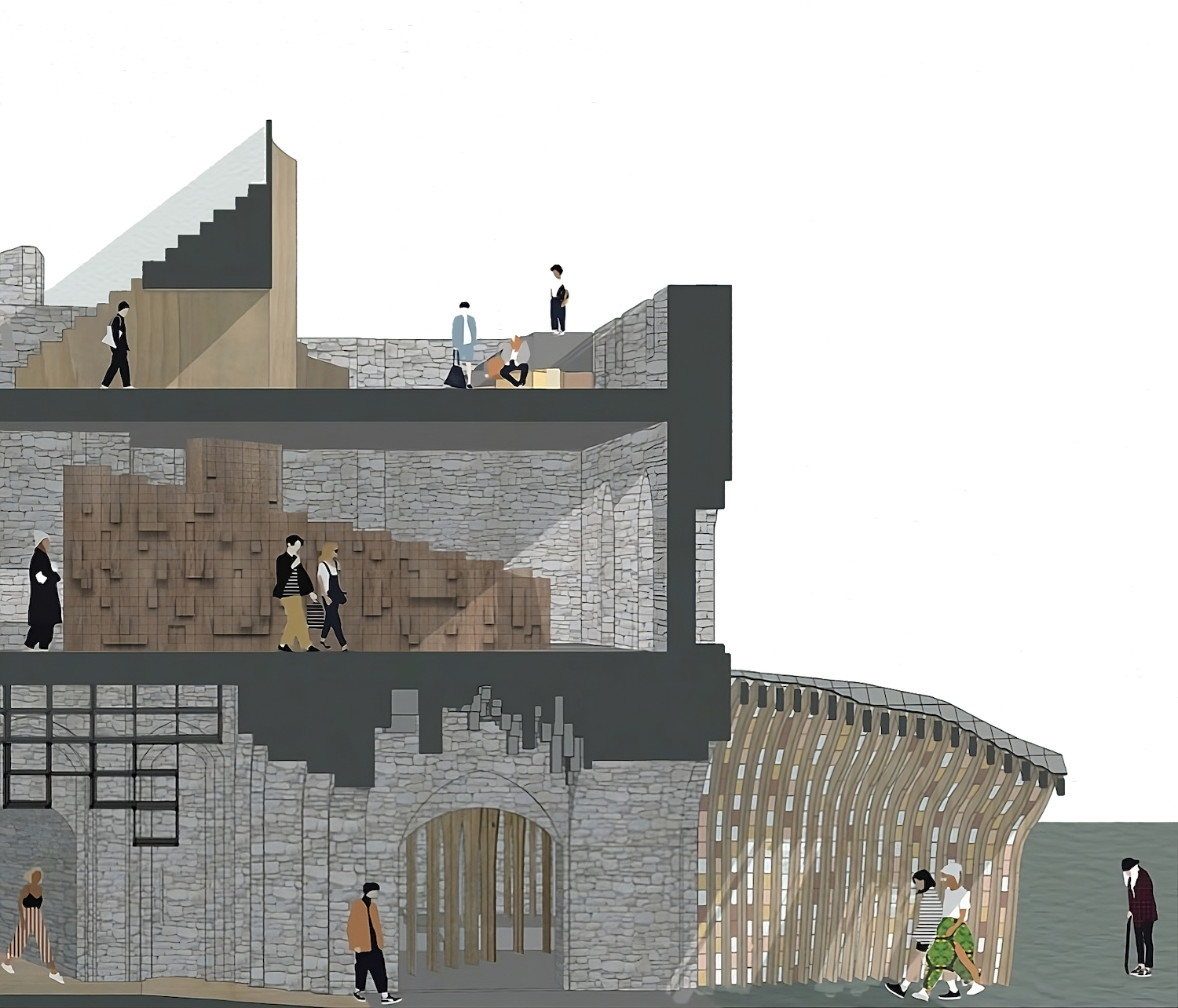











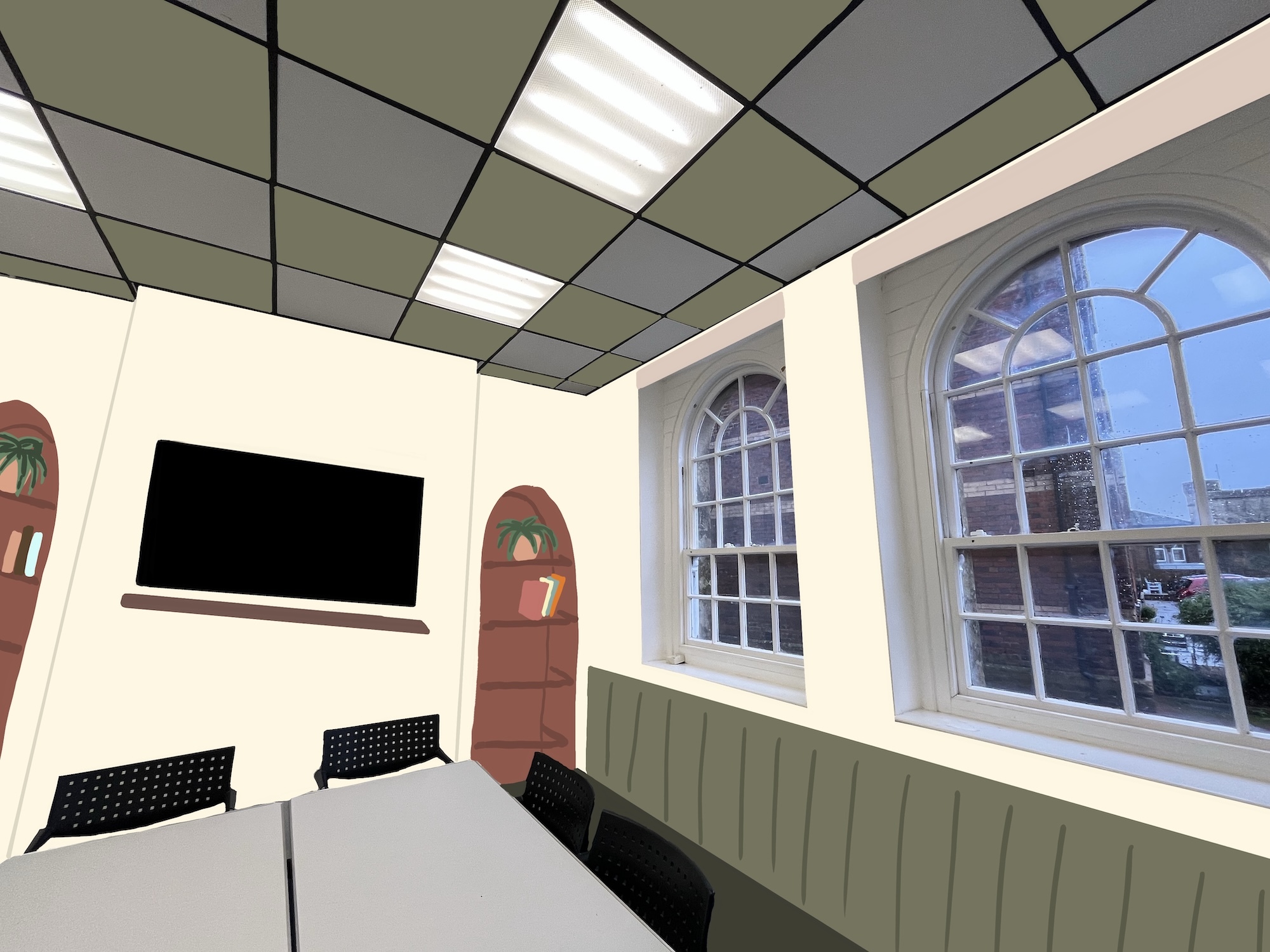
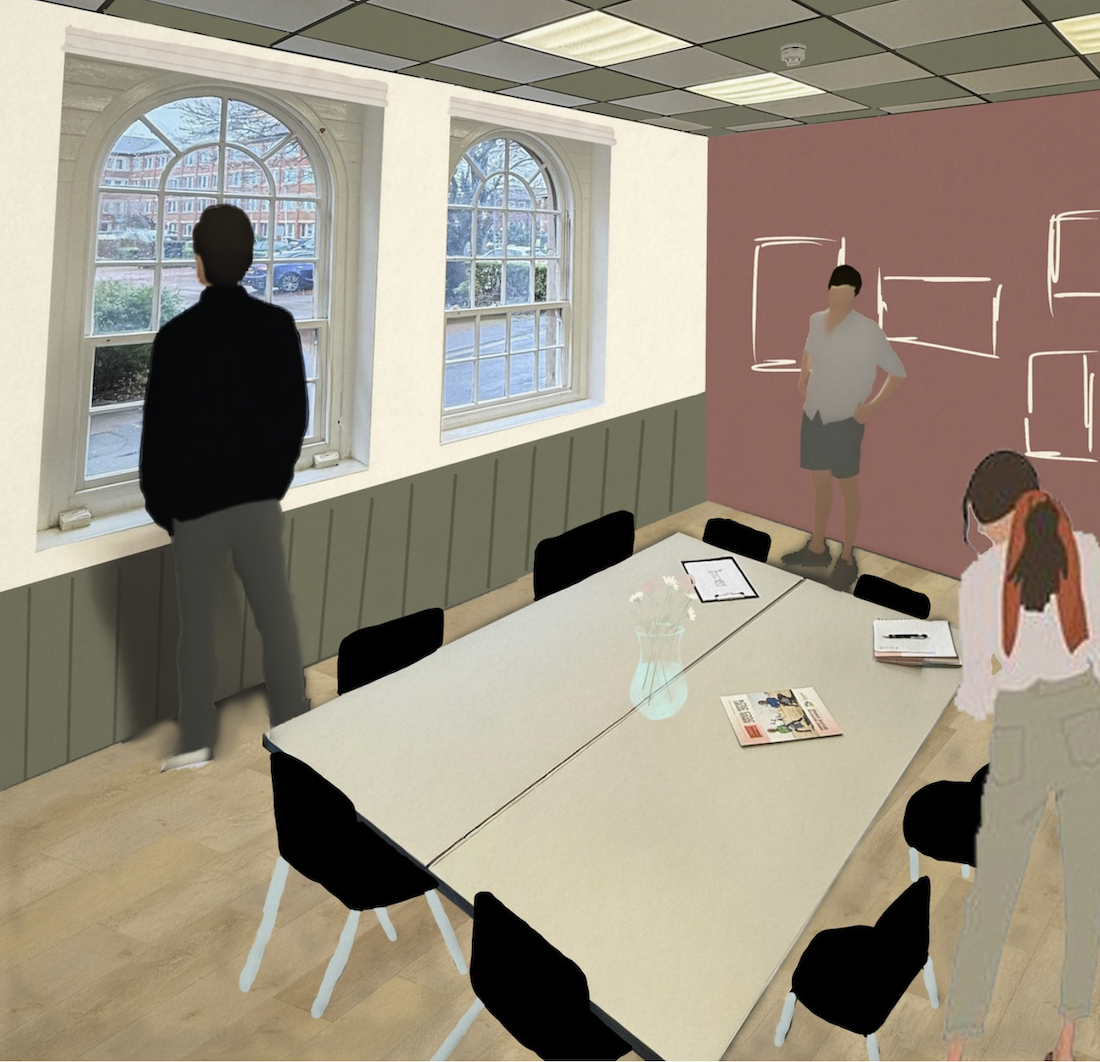
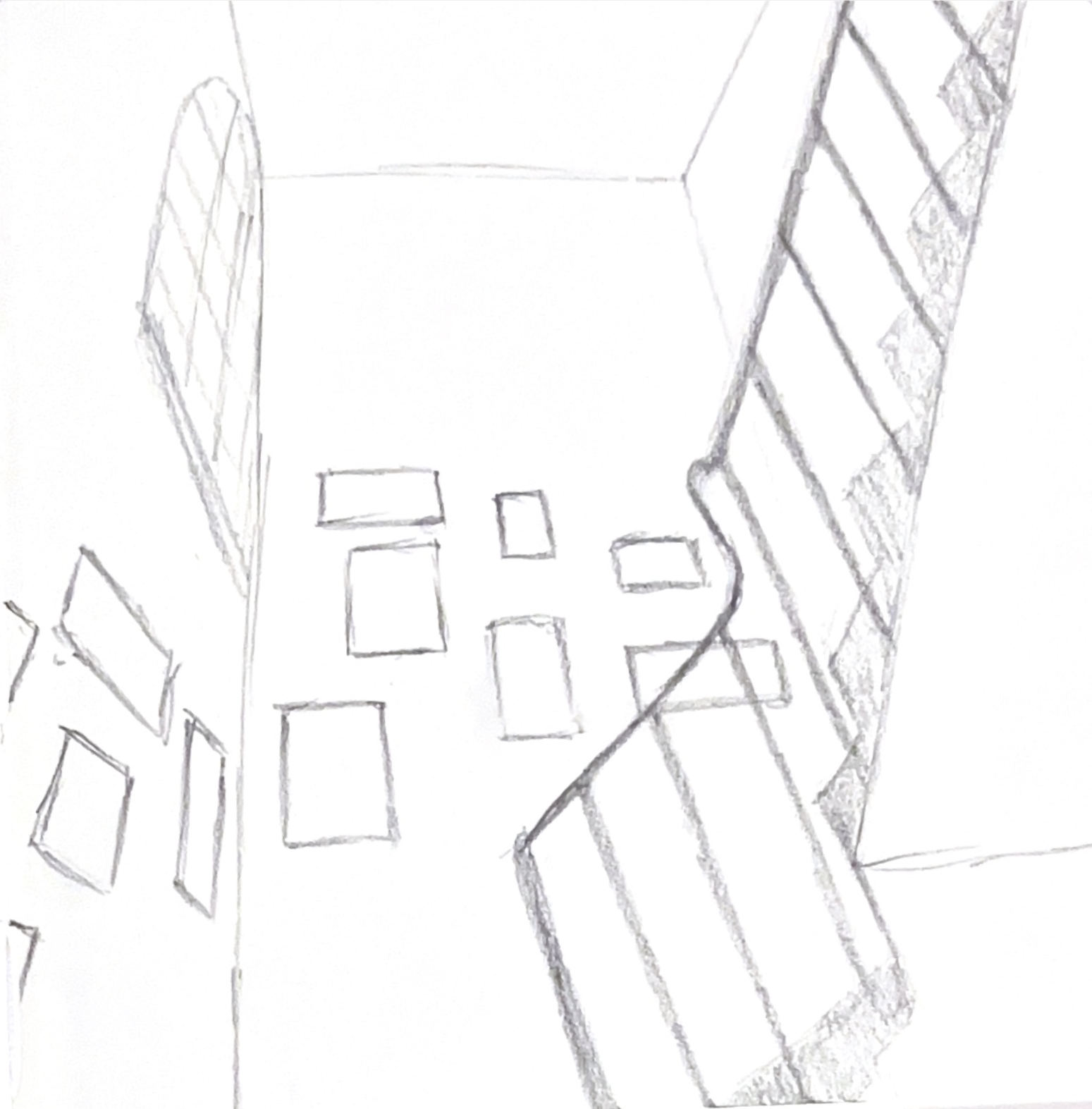
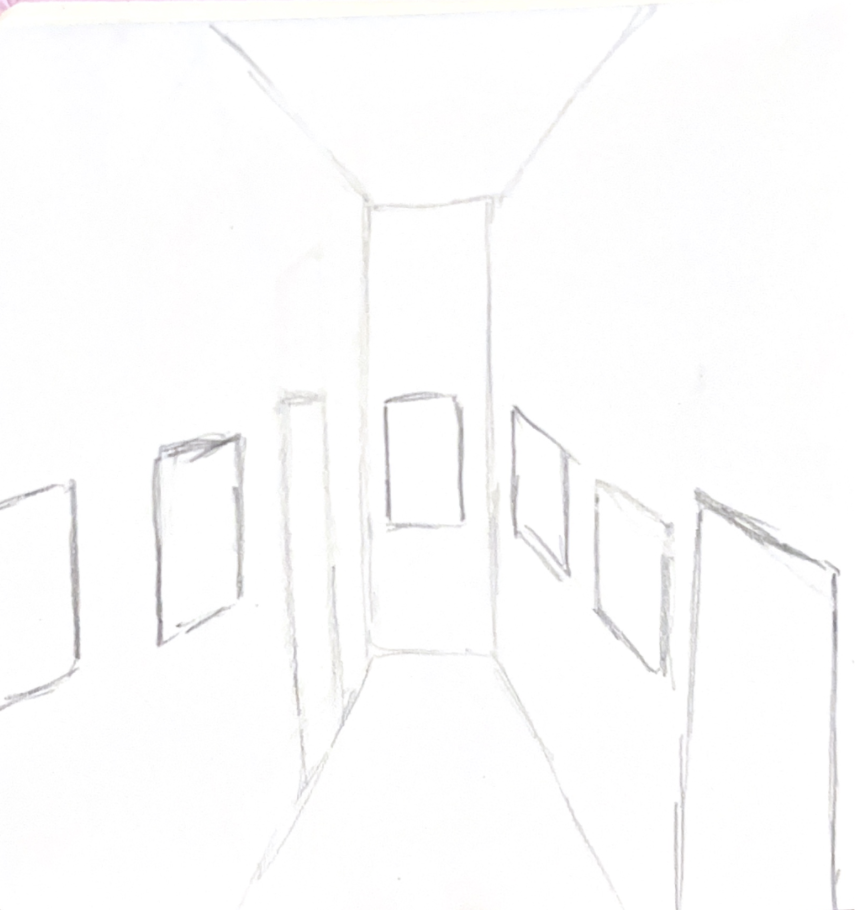
It was the final two weeks of term, and I had just submitted a challenging eight-week project, and was so glad to finally submit it. But I chose to make the most of my time, and attempt the graduate futures project on The Little Keep in Dorchester, a Grade II listed building once used as a military barracks, now used as small creative offices to rent. Our client wanted us to reimagine one of the spaces within the building, from the dull, uninspiring space it would begin as, into a hub of creativity that they could charge people to use.
My collaborative group, Sonder, aimed to create a neutral, relaxing and inspiring "blank slate" with the two weeks we had to work on the project, given we are used to eight weeks in our coursework!
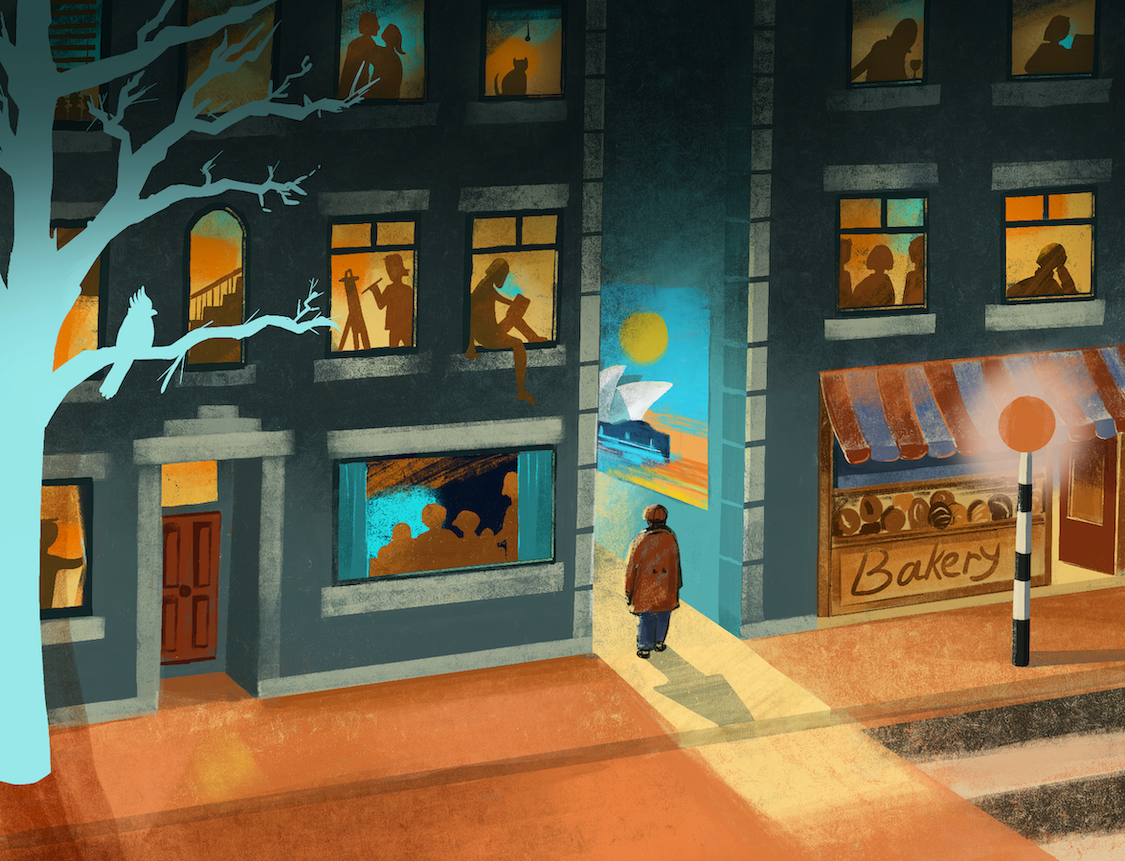
"Sonder" actually means the realisation that everyone you see or encounter has a life as complex as your own, and that felt apt for this project, as interior design is important to each individual’s own experience of life, creating a rich variety of emotions for the most observant people. Those who would be using the space we were about to design, would learn the heritage of the building and creative capabilities of those around them, in lives just as complex.
Myself and other group members decided to collaborate on the project to enhance our employability, as it is crucial as a designer to be able to work with others. While I was tempted to work solo, as I often find it's much easier, I chose to push myself past my usual boundaries and try something different. After all, variety is the key to true experience.
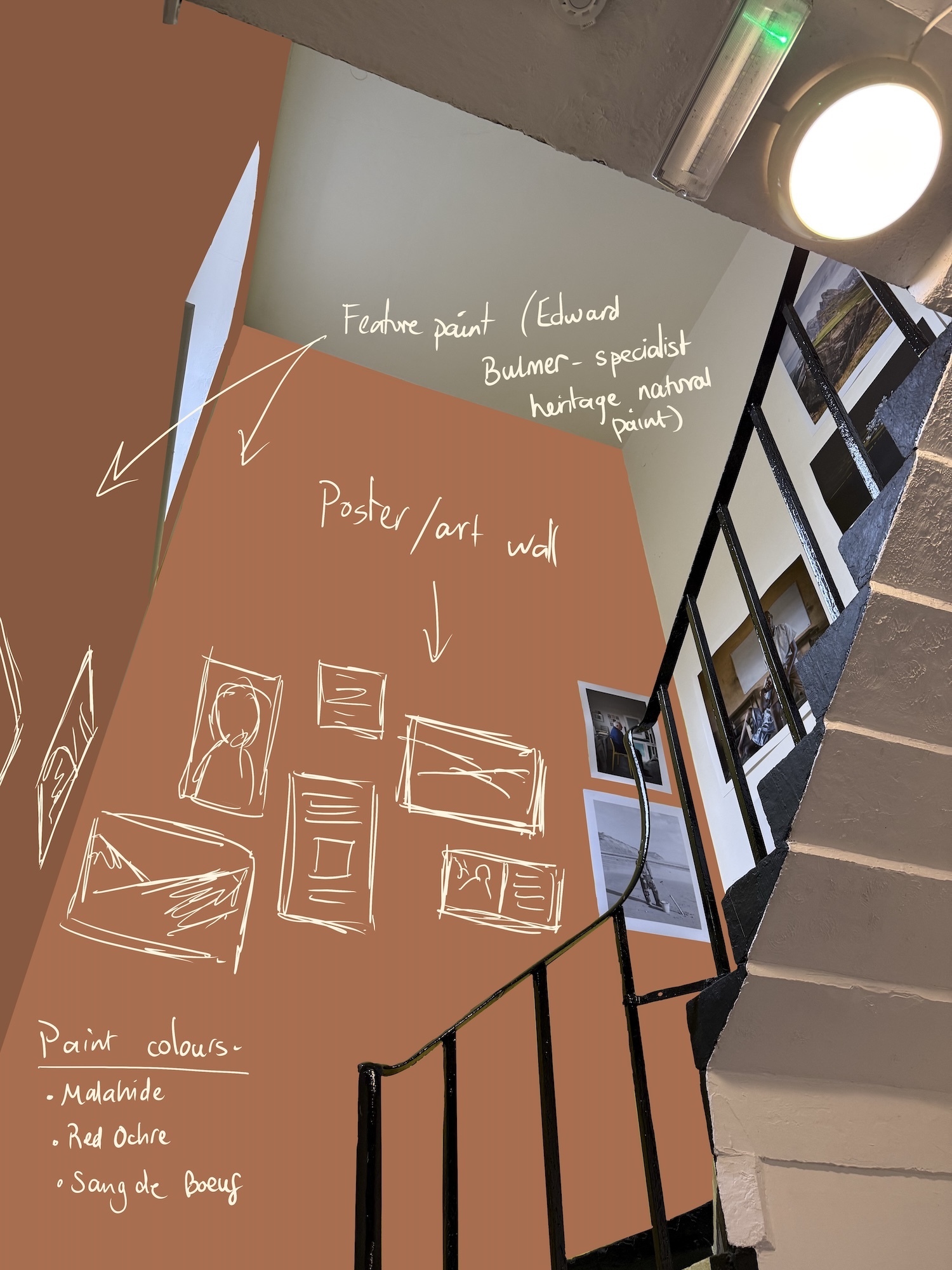
Our design style was widely similar, with personal variations. We all agreed on neutral colours, earthy tones and comfortable materials, as well as fixing structural issues in the room (serious damp and insulation issues) the same way, before doing any furnishing and painting. Our personalities shone through in our styles of development (sketches, renders) and our ideas that merged into one group action.
Challenges and successes
The project proved to be a test in collaborative capability, to see if we could really work with the people we had partnered up with. For our particular group, circumstances changed close to the deadline, where two of four had to give up the project, leaving myself and my course mate to continue for the last two days. It was in this short time that I felt much of the progress started to show, as the act of stepping-up from determination to keep going, spurred us into action.
Despite the group splitting due to these unforeseen circumstances, this project has given me more respect for collaborative efforts, as it is the first live project (real project) I have ever done, and the first group project where every stage was done with check-ins. I would recommend anyone in any discipline to try working with their course mates on something, even if it is challenging, to enhance their collaborative abilities – whether that's research or a side project.
On a personal note, I feel that this project had many successes for me and my professional development, as well as coaxing me out of my shell and encouraging me to try collaboration to aid the growth of my social skills. It’s not easy working as a team when you’re used to working alone, but in the creative industries, it’s so important to be able to do this. I took charge of the structural modifications needed, designing some of the final visuals, and the main layout of the presentation we would later share with the client.
These were challenging tasks, representing the final idea to the client, knowing they may choose it to produce in real life. However, it felt deeply rewarding to be able to share this work on presentation day, despite having encountered group complications, and be confident enough to pitch it alone.
What it means for my future
The outcome of the project revealed to me what I am truly capable of, and that if I continue to try public speaking, and push past my boundaries to see what I can do when I put my mind to it, I can achieve anything. It takes a lot of effort, dedication and sometimes even manifestation-before-belief to action what you want from yourself – whether it's confidence, self-esteem or self-discovery. But that makes it all worth it. I could’ve easily shied away from the project, given up, or decided not to be a part of the final pitch. However, being gentle with myself and reminding myself what I am striving for, encouraged that action. The more this happens, the more those manifestations come true.
So, if you’re reading this wondering how you’re going to manage a presentation, or a group project, or an unknown academic opportunity that could come up next term… go for it anyway. Think of what it can do for you, what you can learn from it, and try it without those spiralling words of "what if...?" The more perseverance you show towards things that are challenging for you, over time these things will become second nature. And what better time to discover what you’re capable of than university, surrounded by peers who are probably in the exact same boat as you?