










You are using an outdated browser. Most of this website should still work, but after upgrading your browser it will look and perform better.
- Home
- Undergraduate Courses
- BA (Hons) Fine Art
- Course details
BA (Hons) Fine Art
- Duration: 3–5 years full-time
- Placement year: Optional 1 year
- Course code: W100 (UCAS)
- Institution code: A66 (UCAS)
BA (Hons) Fine Art course information
BA (Hons) Fine Art is designed to provide you with a high-quality education in contemporary art practice, and is delivered by highly respected tutors, acclaimed artists and excellent technicians.
Over the duration of the course, you'll develop your individual artistic voice and a deep understanding of your chosen materials, informed through your own research and critical evaluation, peer and tutor feedback and supportive teaching. When you graduate, you'll be fully equipped to contribute and add something new to the UK’s art scene as an emerging artist. You’ll gain skills and knowledges that will enable you to thrive in the art world as well as in the culture and heritage industries more widely.
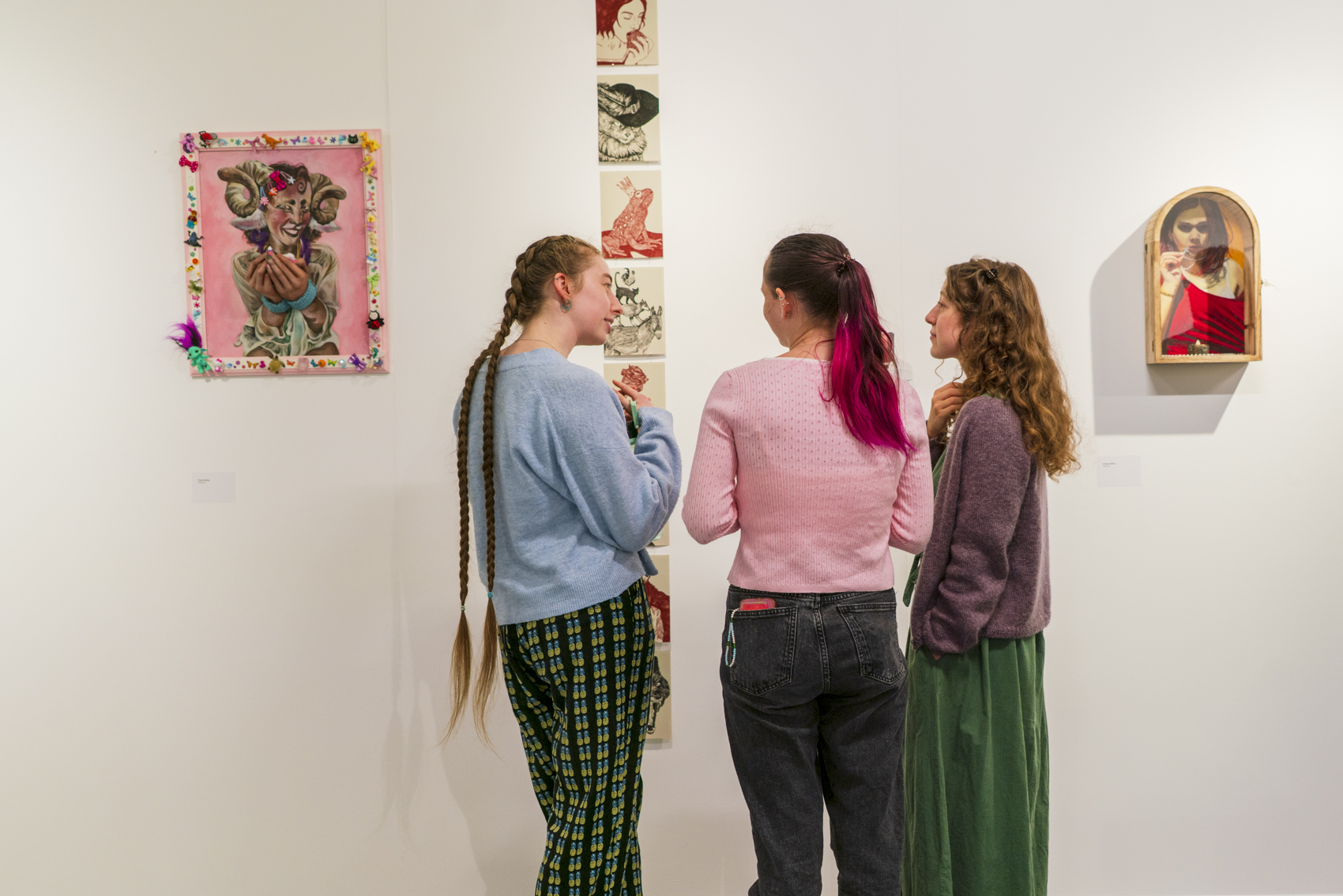
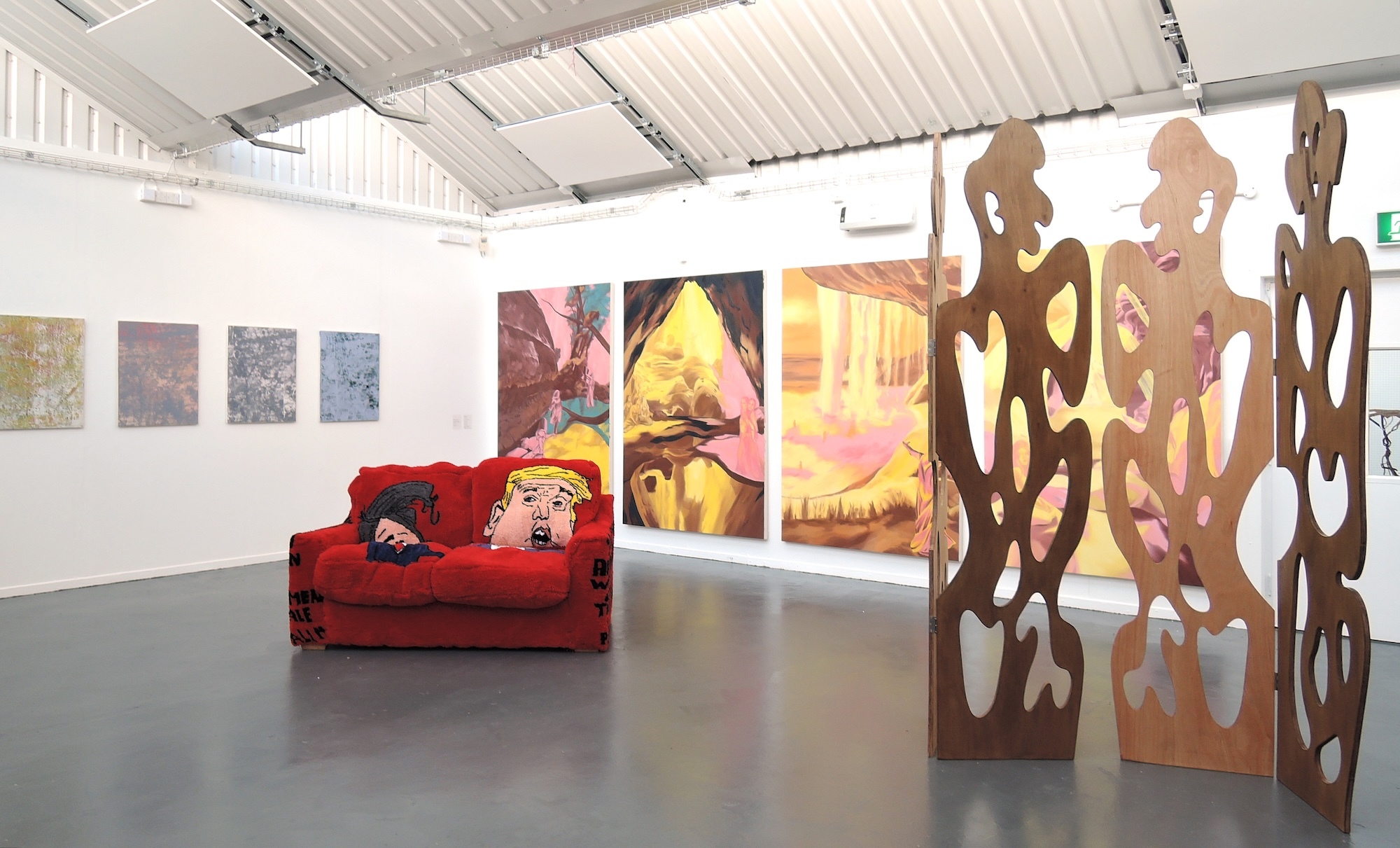
Exhibiting and being enterprising is a key part of our course. We offer many opportunities for you to exhibit your work with an emphasis on site-specific locations, thanks to our unique partnerships with local museums, councils and research centres. We also have a series of international student artist residency placements and worldwide partner university study exchanges; previous placement locations include Italy and South Korea. All these experiences are designed to give you a real sense of what it means to be a professional artist – both in the studio and the broader world.
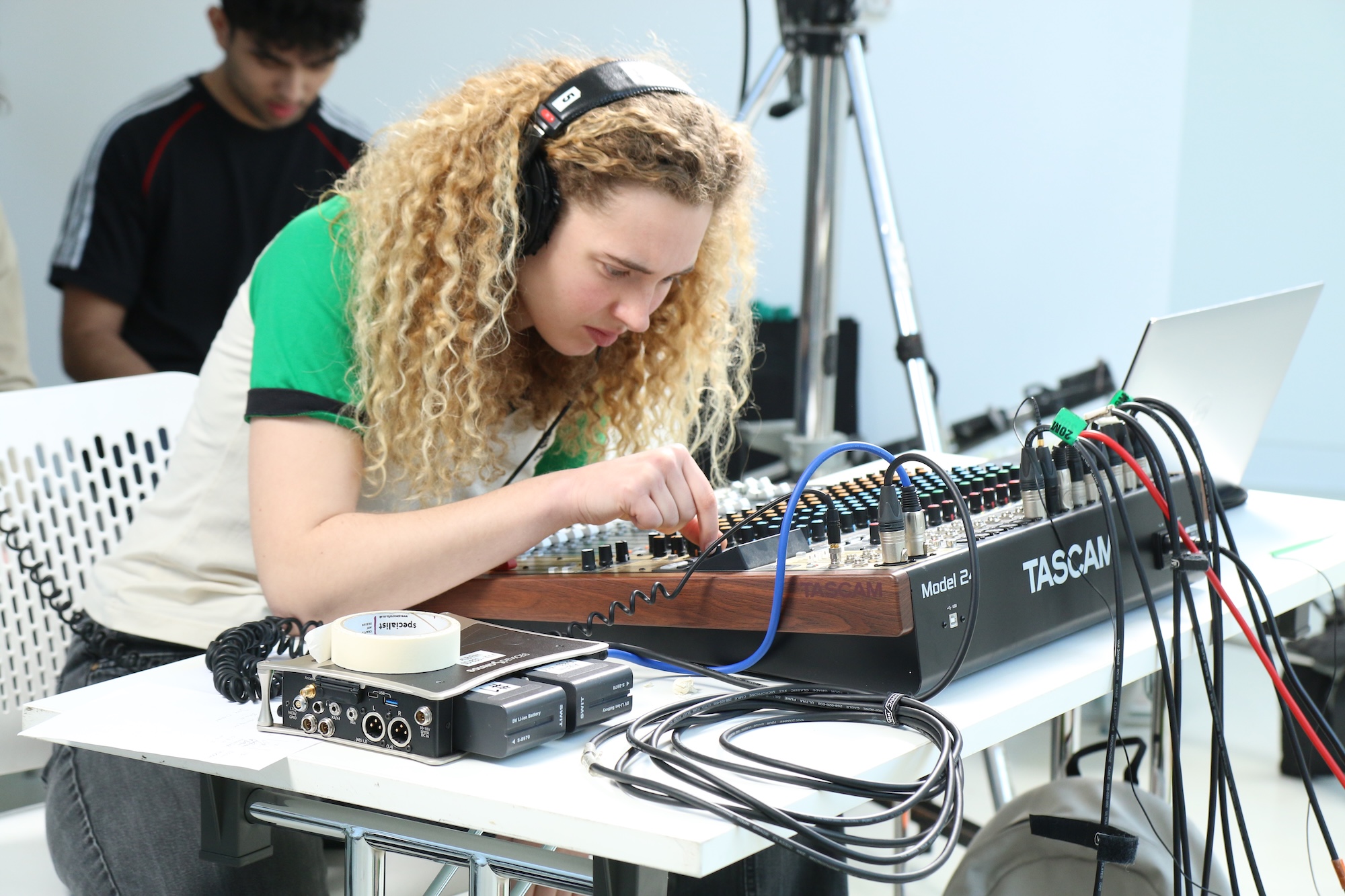
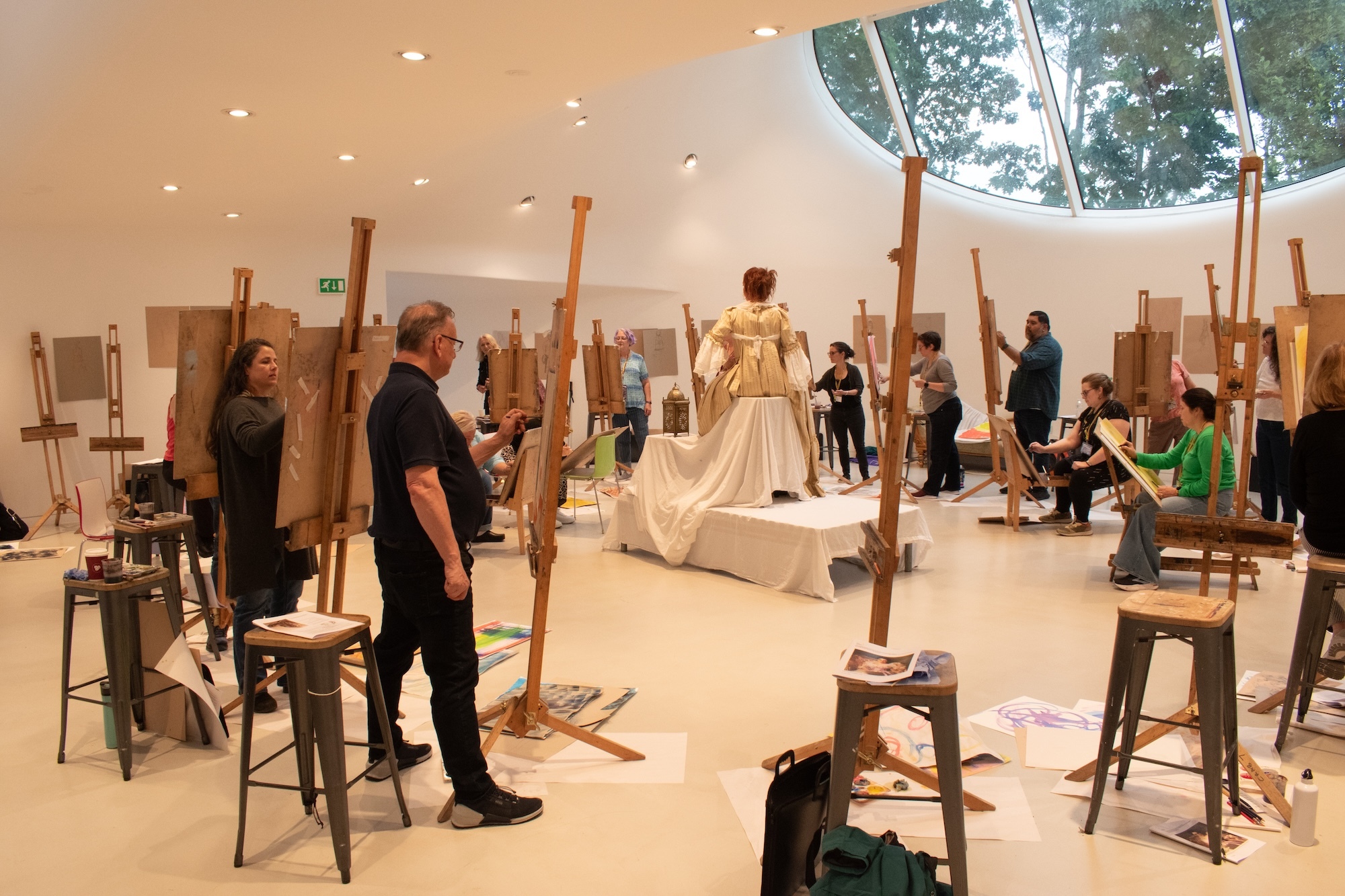
We support and encourage experimentation and development of skills, so workshops are offered as a continual part of the course over the three years. These are conducted in painting, drawing, printmaking and sculpture – we also have an area for you to make video and sonic art. Seminars and lectures will foster your conceptual development and understanding of recent theories, contexts and histories of art in a global context. Throughout your studies, you'll also explore how exhibitions are put together.
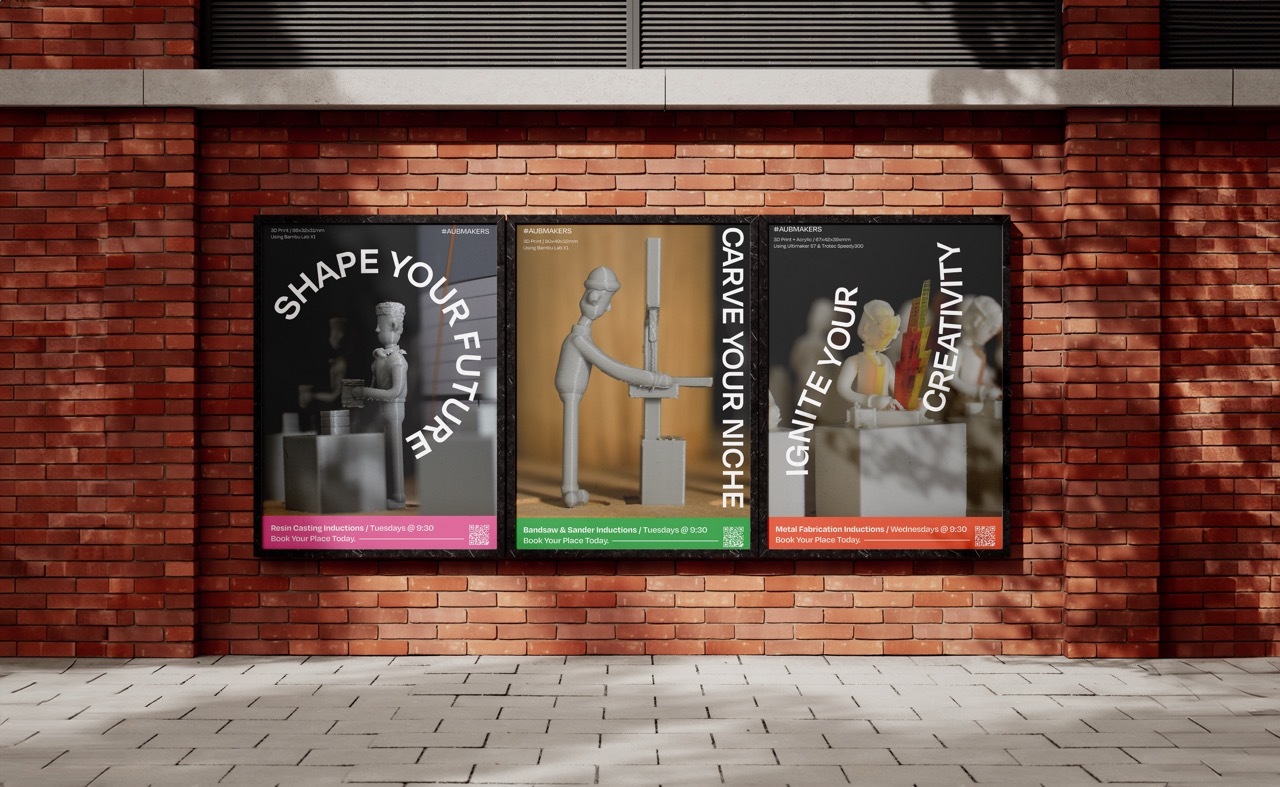
You'll have additional access to the latest technology, such as laser cutters, CNC (computer numerically controlled) machines and 3D printers. Our aim is to provide you with a solid foundation so that you can create contemporary artworks with high technical skill combined with solid conceptual grounding.
Above all, we offer a welcoming and inclusive course, set in a vibrant campus dedicated to creative practices of all kinds.
Three reasons to study BA (Hons) Fine Art at AUB:
- You'll create your personal identity as an artist through a combination of making and thinking skills.
- You'll discover how a supportive studio community can help realise your creative ambitions.
- You'll have opportunities to exhibit your artwork nationally and internationally.
Integrated Foundation year
On BA (Hons) Fine Art, you have the option to take a specialised Integrated Foundation Year, or Year 0.
The Integrated Foundation year allows you to explore and develop your skills and knowledge at an introductory level, gaining a better understanding of what the subject area has to offer before joining the degree.
Placement year
All undergraduate courses at AUB offer an optional placement year, to be taken between your second and third years of study.
If you’re unsure about this optional placement, you don’t need to decide now. Once you’re here and studying with us, the course team will discuss the placement options with you, so when the time comes, you can make a decision that’s right for you.
Exchange and international summer programmes
Students on BA (Hons) Fine Art have the chance to broaden their horizons through exciting exchange and international summer programmes. These opportunities allow you to study abroad at one of our brilliant partner institutions, experience different cultures, and enhance your academic journey.
Level 4 (first year)
Your first year builds upon your previous learning; you’ll experiment broadly and acquire new skills and knowledge, from a combination of both practice and theory sessions.
You’ll attend various workshops and learn about exhibiting your work. An important part of the first year is helping you to confidently speak and write about your work. In the final unit of this year, you'll define your practice and determine which areas you wish to specialise in.
You’ll work in a mixed practice studio.
Level 5 (second year)
Your second year encourages you to examine the positioning of your work within the Fine Art industries and to consider its relationship to audiences.
At the beginning of Level 5, you’ll decide where to locate your practice and which practical working zone of the course to locate yourself in. You can also move between zones.
You’ll continue to improve your practical skills whilst simultaneously clarifying the research questions you are investigating.
You’ll have opportunities to study abroad and participate in challenging projects. We encourage work experience in this year if you decide to opt for the independent study unit. Your research into career options and professional practice will also begin.
Level 6 (third year)
In your third year, you’ll continue to develop and refine your understanding of your own practice, specifically the Fine Art discipline, the language it operates within and how it's interpreted by viewers.
This is the crucial year when you consolidate your previous experience and experiments and pursue a focused practice. This is celebrated in your degree exhibition at AUB, allowing your work to be viewed by hundreds of people and giving you a springboard into professional life.
Teaching, learning and assessment
BA (Hons) Fine Art contains a rich mixture of taught activities that incrementally build practical and theoretical skills during the levels of the course.
Each unit is assessed separately, and the assessment forms part of the unit. Assessment both provides a measure of your achievement, and also gives you regular feedback on how your learning is developing.
For every unit of your course, we will inform you of what you are expected to learn; what you have to submit; how your work will be assessed; and the deadline for presenting your work for assessment. This is made available through Unit Information, which is on your course blog.
- Demonstrations: Making skills are learnt
- Workshops: Practical or theoretical projects
- Individual tutorials: Discuss academic progress
- Group seminars: Talk about art practice and ideas
- Group critiques: Discuss art practice critically and respond to questions
- Presentations: Present art practice or a slide show to peers
- Lectures: Critically engaged visual presentations with student questions
- Study visits: To local, national or international cultural places
- External projects: Testing art practice through exhibition
These activities can take place both on and off campus and occur over all three years.
Independent study time is of fundamental importance for learning. We facilitate strategies to help students develop and manage independent learning.
Independent study time consists of two main activities:
1. Studio Practice (Praxis)
The skills and knowledge gained from the taught activities help inform individual work. Speculative material investigations take place. Uncertainty must be managed.
2. Contextual Research and Reflection
This can take place simultaneously in the studio and elsewhere, such as the AUB Library or other off-campus research centres that the student individually selects. We advocate that you conduct primary research.
It's also a time to be critically and analytically reflective about all types of work, and to decide on study plans.
The course promotes individual learning and teaching opportunities by adopting a student-centred ethos.
Elective choices can be made within each year of study. These include practical workshops, lectures, seminars, study visits and international university exchanges.
Contact hours include all scheduled teaching sessions, but also supervised time in the workshop or studio. In line with national guidance, we include in our calculation of contact hours all the time which is scheduled in the studio for independent study which is also supported by staff (either academic staff, or technicians).
The information provided below gives the proportion of your study time which constitutes contact hours. Where there are optional routes through the course, we have used the figures for the most popular option.
Assessment feedback is designed to enhance learning. We consider assessment to be part of the learning process, and promote deep learning through encouraging students to reflect and discuss their assessment feedback.
There are two main forms of feedback:
1. Formative feedback for learning.
This is developmental, takes place during a unit and can be verbal or written. It is used to help improve learning and to enhance academic performance.
2. Summative feedback on learning.
This is written and specific to the learning outcomes of a unit and takes place when a unit is completed. It is used to give grades for each unit.
Our feedback is constructively critical, helping determine how the student work might progress
You'll receive a final mark for each unit in the form of a percentage, which will be recorded on your formal record of achievement (transcript). Each component of assessment is graded using a notched marking scale, whereby only certain marks are used within each grade. The only marks available within any ten-point band are *2, *5 and *8 (e.g. 62, 65, 68). These marks correspond to a low, mid, and high level of achievement within each grade band.
All learning outcomes must be passed to successfully complete the unit.
On successful completion of your Honours degree course, you'll be awarded a degree classification based on your unit marks. The final classification is determined using all unit marks at Levels 5 and 6 using two different algorithms, which are detailed in the HE Student Regulations. If the two algorithms produce different results, you'll be awarded the higher class of degree.
If you've joined Level 6 through either the Recognition of Prior Learning (RPL) route or having completed a Foundation Degree (FdA), the final classification is determined using only your unit marks at Level 6.
Course costs
The fee you pay AUB provides the necessary equipment and training for you to complete your course.
In most cases, you don't need to buy any specific items of kit before you start the course. You may also choose to buy some items of personal equipment such as a laptop or tablet computer, but this isn't required – desktop and laptop computers are available for you to use in common study areas, including a loan system in the Library.
It isn't possible to be precise about the likely additional costs that you may incur, because this depends on the choices you make and the projects you undertake. The University provides some basic materials, and you'll be encouraged to work sustainably and to reuse materials where possible, but you should still expect to make some financial investment.
For more information, including costs relating to certain courses, visit our Course Costs page.
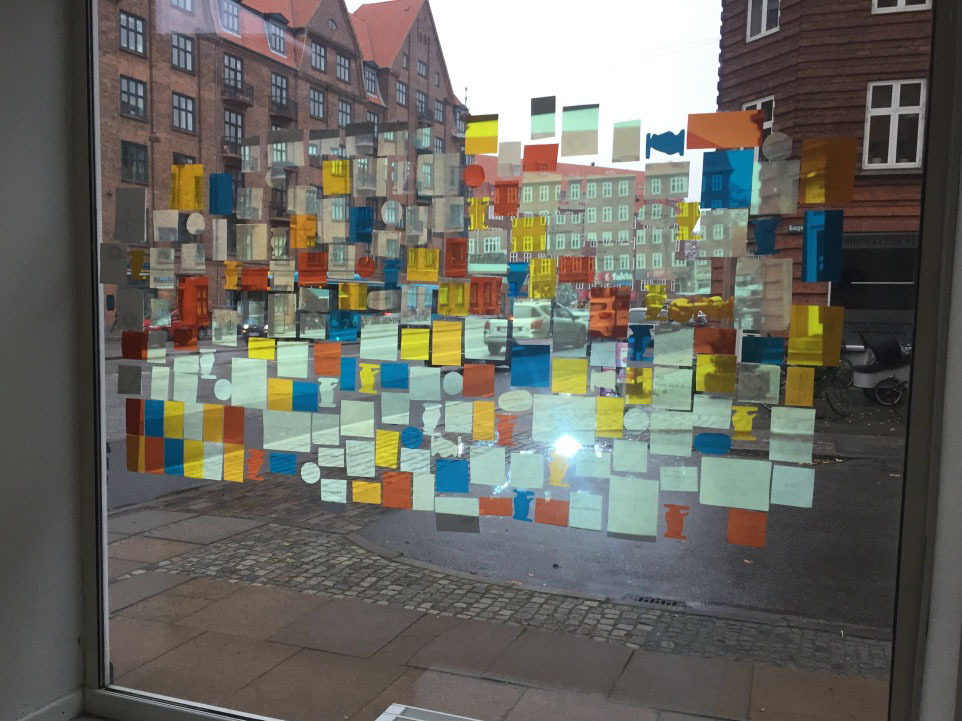
Explore our Global Networks
The motivation behind Global Networks is to cultivate inspirational and experimental learning environments and open up a world view for both student and tutor through exciting international projects. These optional projects, with one of our international partner organisations, aim to stretch and challenge the student’s art practice and critical faculties whilst simultaneously increasing their awareness of broader social contexts.