








As a BA (Hons) Textiles Design student at AUB, I got the opportunity in the second term to learn how to use the knitting machines, and I loved it.
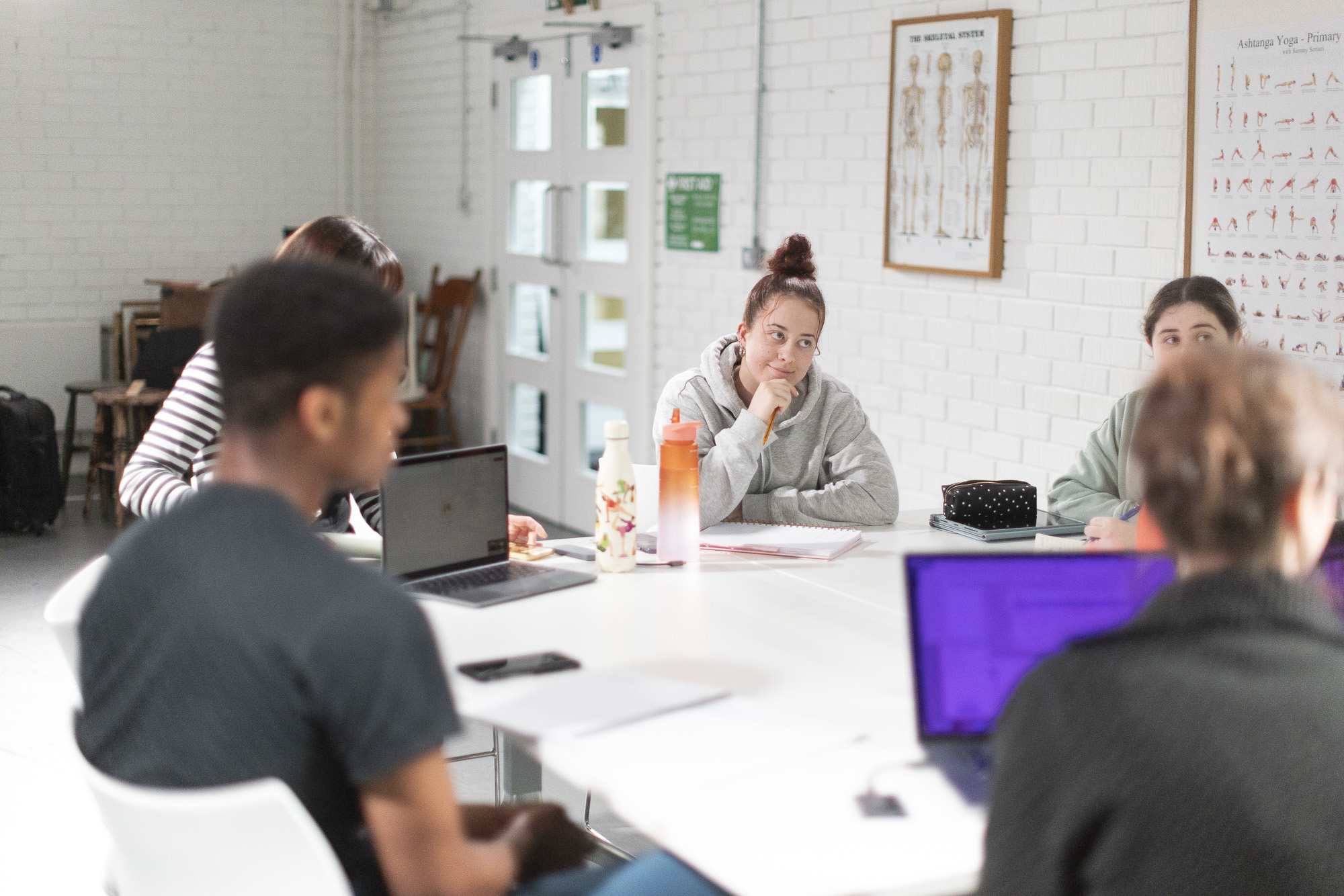
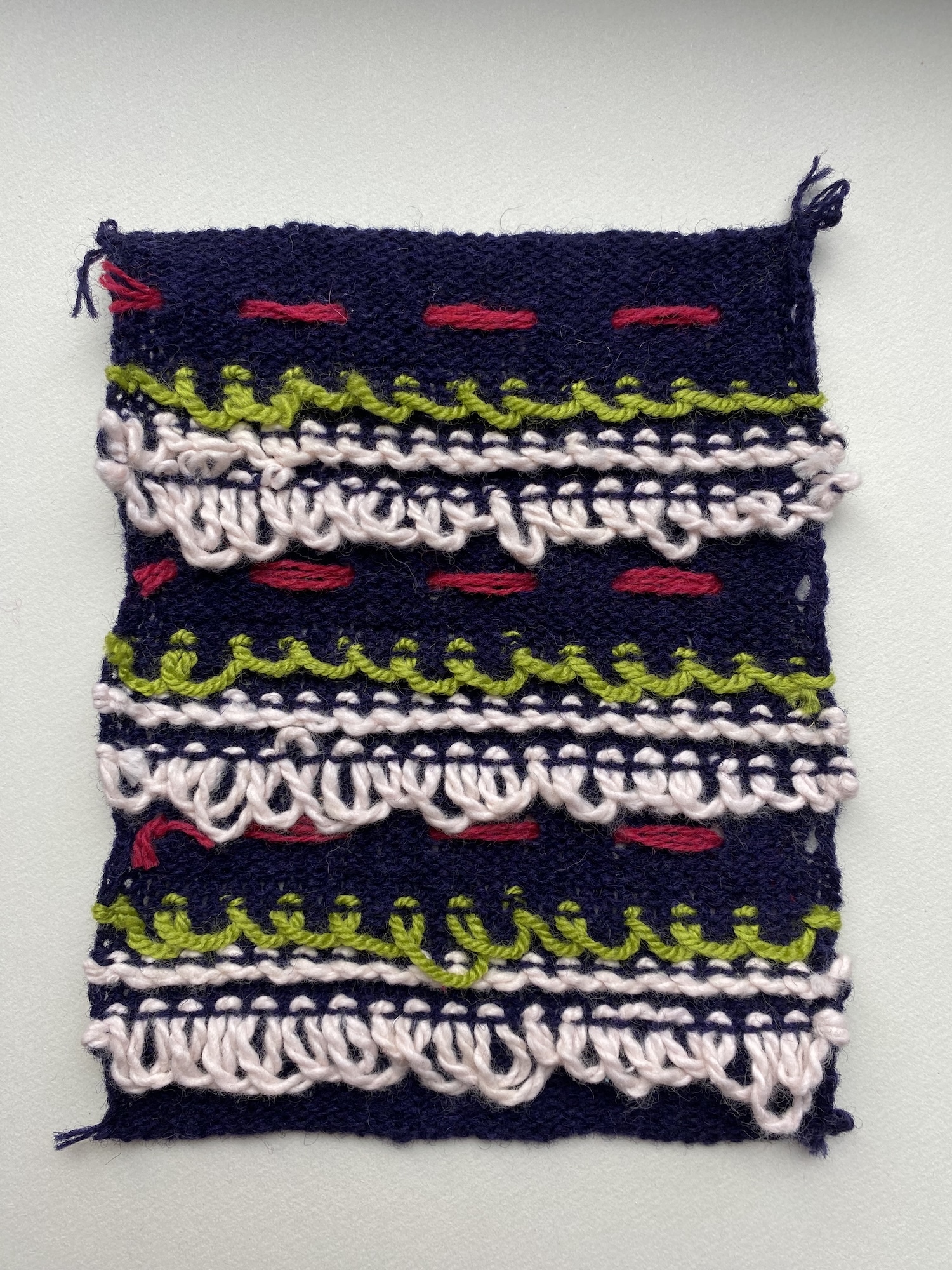
Over two days, I had small group workshops with two of our tutors to learn how to knit in simple rows, change colours for striped patterns, weave and make lace holes. The workshops were full, busy days with lots of trial and error, sample production and exploration, which was great fun.
I also got shown previous samples from first-, second-, and third-year students, and it was inspiring to see the quality develop as you learn and practise more. Our tutors were super patient and very energetic in showing us the endless possibilities.
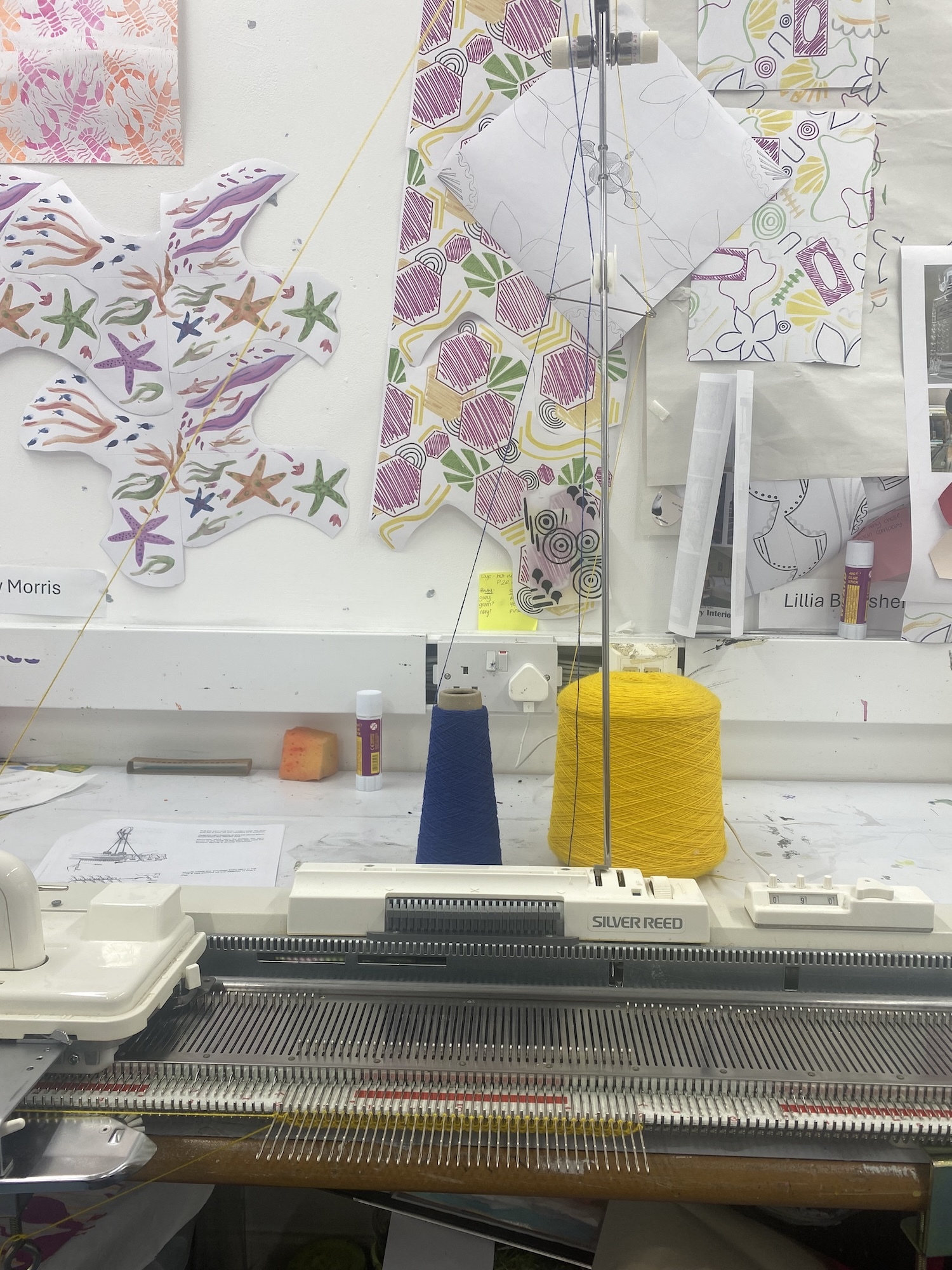
We began by learning how to set up the machine, checking all the equipment was there and threading it up correctly. It was interesting seeing how all the parts fit together, like how the carriage goes onto the needle bed for a smooth flow and how the tension guide and springs all work to keep a constant rhythm to the knitting. I had to set up and pack down the machine a few times before I felt comfortable doing it, almost establishing muscle memory for it. A good tip I have is to photograph what the case looks like when you first open it, so you know how it should fit together when packing it away!
I really enjoyed being able to trial different ply (thicknesses) of yarn and various textures. I found when I was first knitting that a simple, 3-4 ply yarn was best as it was thick enough to withstand the carriage without snapping, but it wasn’t too difficult to see the stitches. Sometimes with the really fine yarn, it snapped if you ran the carriage over it too quickly, which was extremely frustrating. Alternatively, a bouclé yarn or eyelash yarn, for example, that has a lot more strands or loops coming off the yarn, so they aren’t simple, can be hard to knit with when first learning, as the stitches aren’t so visible, and it’s easier for the yarn to catch in the system.
Also, using a smooth yarn means the stitches are more visible when using a darning needle to cast off. This is easier for learning, as you could see what you were doing more, so you didn’t drop the stitches quite so much. To cast off, you have to weave the needle through the stitches on the machine, almost like a running stitch, so it can be useful to do this in a different colour when you’re learning to see where you’re going.
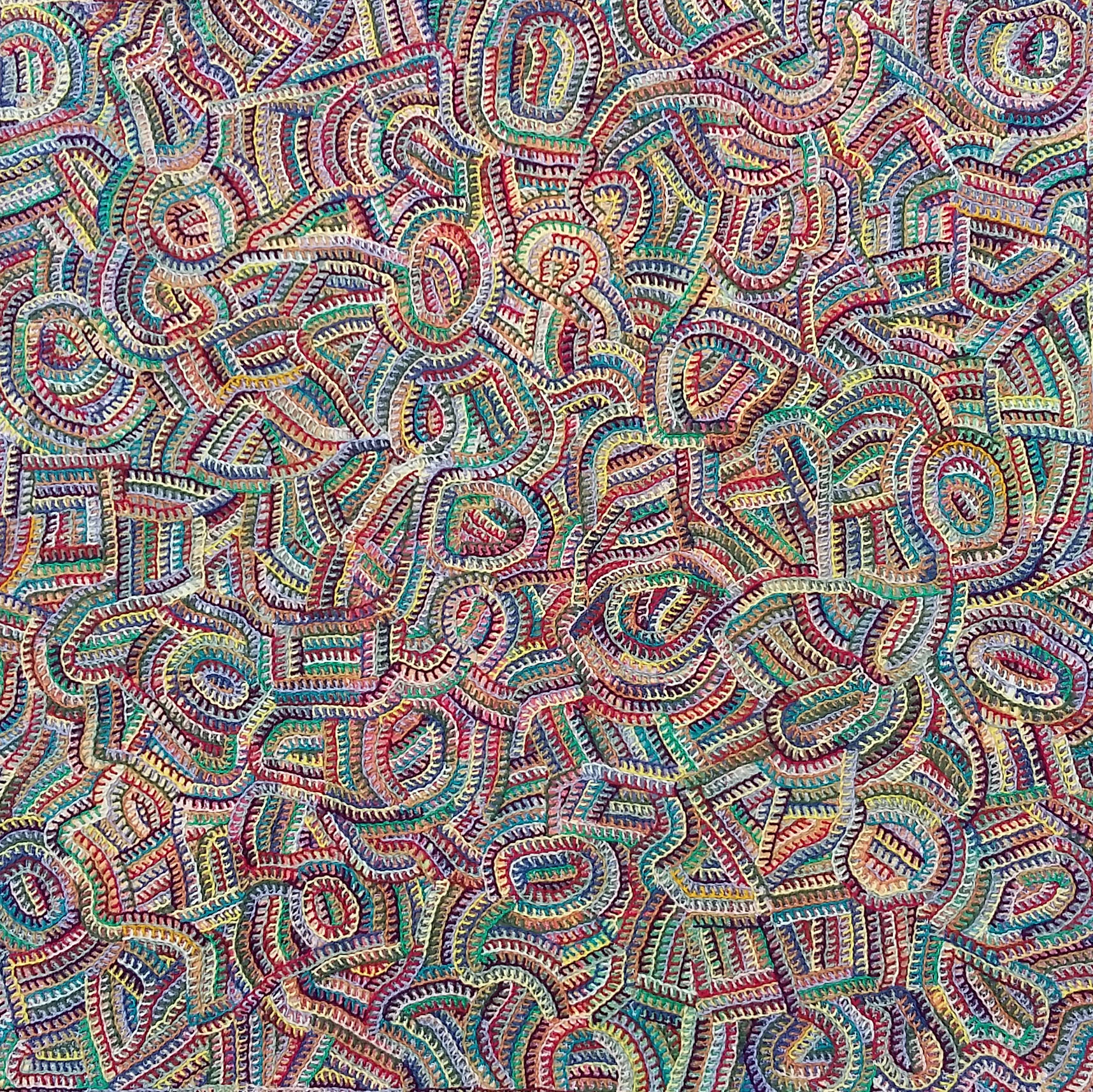
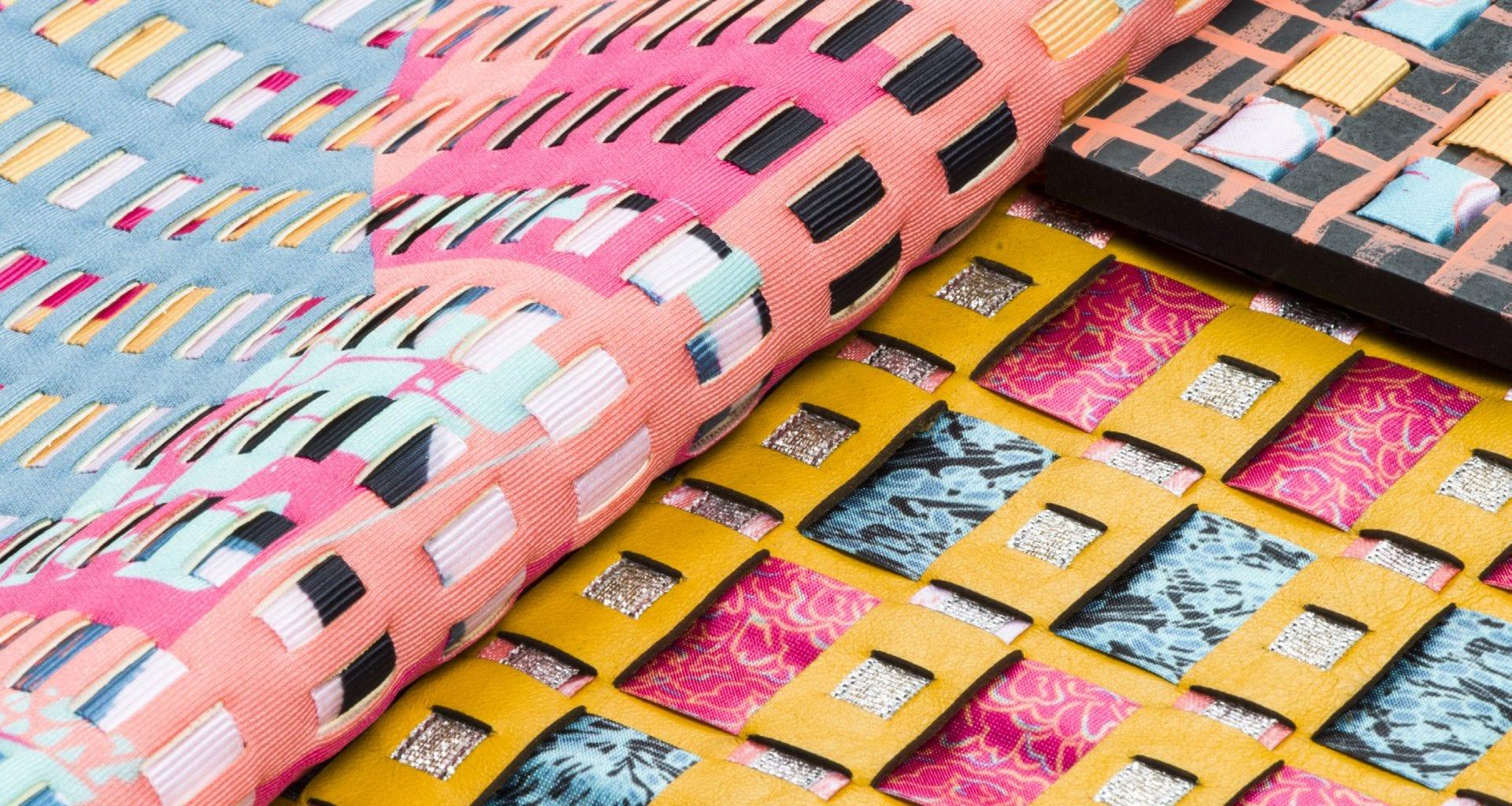
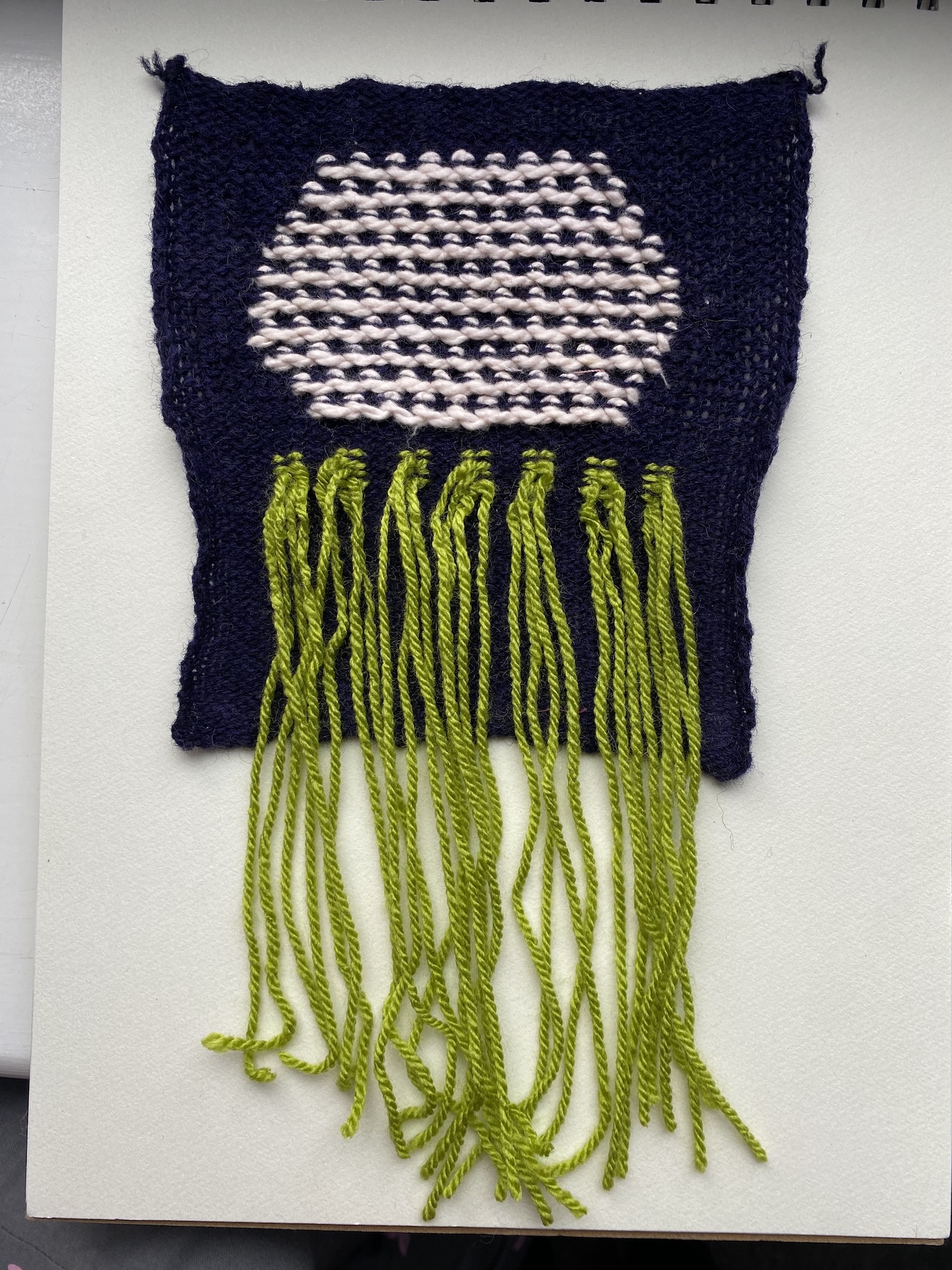
It was fun to bring metallic yarns into the weave, using the e-wrap method (wrapping the yarn around the needles in loops that look like the letter e) to add some visual interest and textural difference. Additionally, I really enjoyed weaving yarn into the knitting to form simple shapes such as hexagons and circles. I had to make sure I increased the tension when weaving yarn in, otherwise, it was too tight, and the carriage would jam and break the sample. I found it most helpful to use graph paper and draw out the shape I wanted, then cross off each row as I weaved it in, so I had a guide and could get an accurate shape.
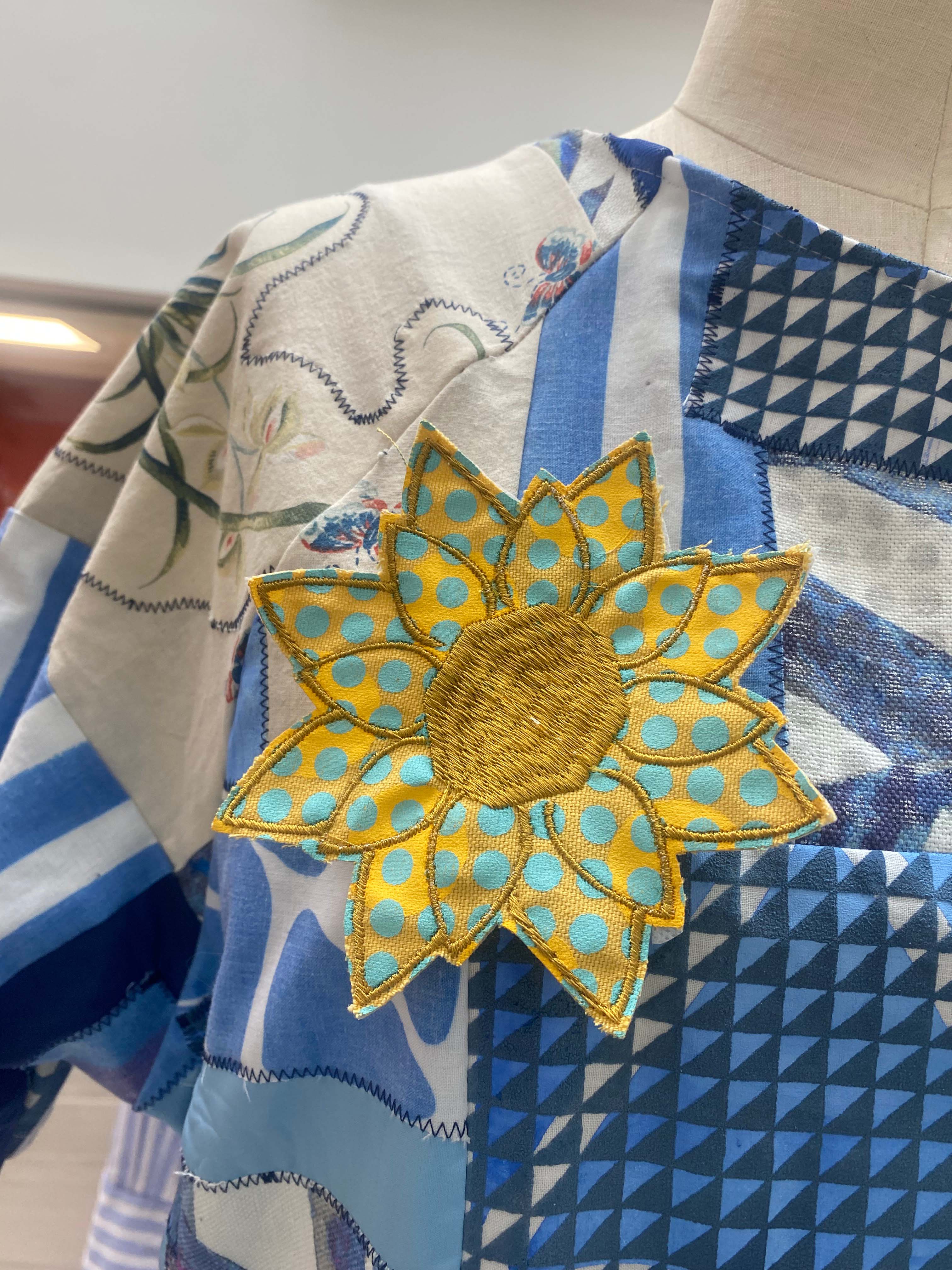
Another technique I loved learning was making a knitted tube. This was super quick and simple, only about 4-6 needles wide, so you could easily run the carriage back and forth and build length. We also learnt to swap the colours and build a stripe in the knitting, which was useful for incorporating more colours from our palette. I then applied this to my project by embellishing the knitted tube amongst other appliqué shapes, creating depth and texture to my piece and demonstrating my broadened skillset.
After completing my two days of workshops and booking out the machine to do additional knitting in my independent study time, I could build up a variety of samples to choose from for my project. A few key lessons I took from these workshops were:
- Think intuitively and creatively about your designs; be bold and original – At first, I thought using the knitting machines meant you could only do straight stripes and block colour – my mindset was very narrow. But after speaking with my tutors for inspiration relating to my project, I had ideas for weaving in different colours and yarns, varying the size of the loops being woven, forming different shapes and waves, making tassels and using other materials like lace or ribbon.
- Avoid Where’s Wally-style stripes – I saw how easy it was to produce basic, identical thickness stripes, which are block, solid colour – not very visual, nor does it show great skill or thought. My first stripes were like this while I was learning the method to it, but after a few attempts I tried to be more imaginative by using different widths of colour, adding in lace holes or varying the tension.
- When using the knitting machines, consider both the right and wrong side as the correct side to use – Sometimes the wrong side of a weave looked more appealing than what is considered to be the ‘right side’. This emphasises how you need to be open-minded and optimistic with your end result, open to change and responding to feedback.
All in all, definitely embrace being able to use and hire the domestic knitting machines – they are a fantastic, hands-on piece of equipment that can produce amazing 2D and 3D samples to complement your collection. And most importantly, have fun and enjoy playing – that’s where the best results come from!