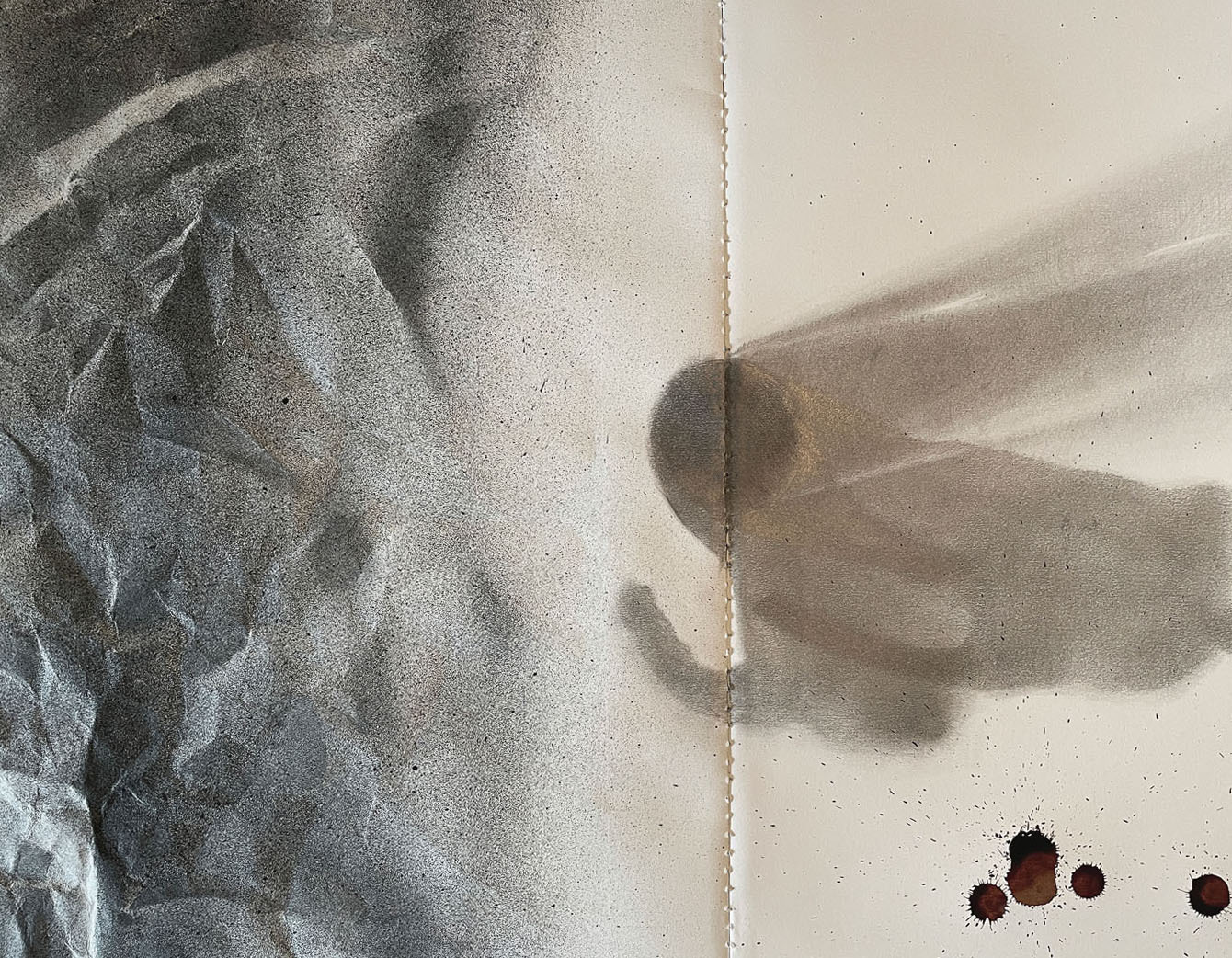
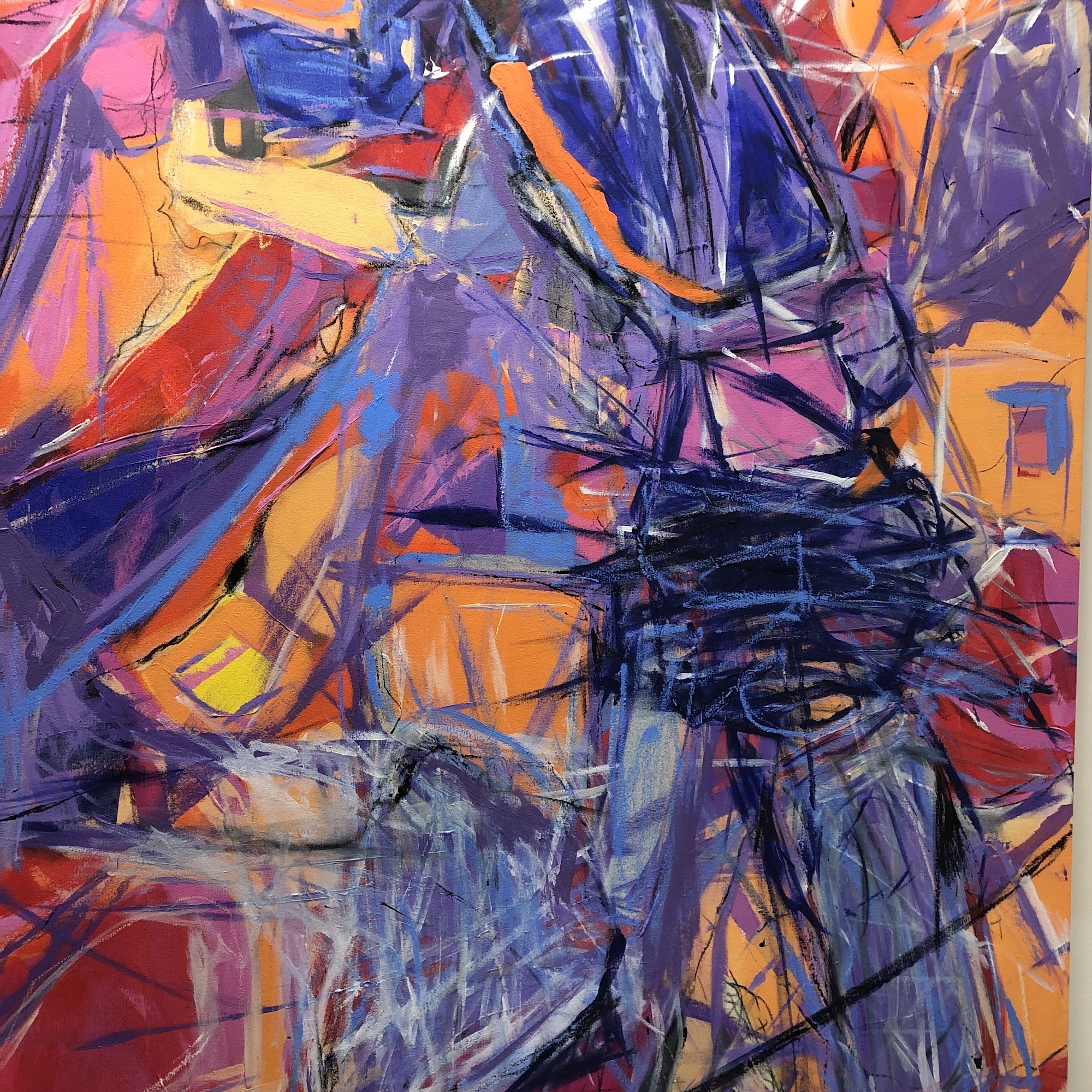
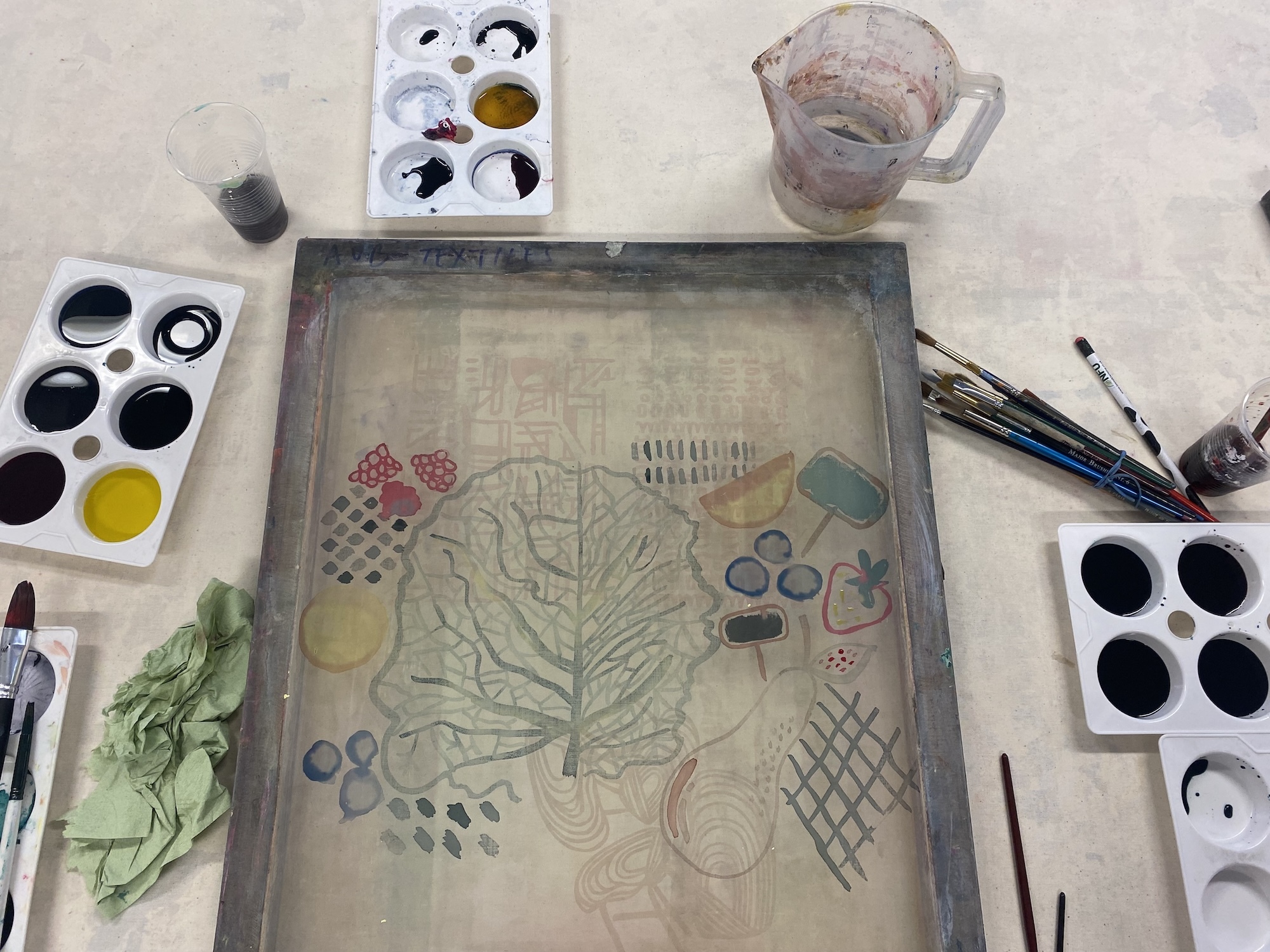
Procion mono printing is a method of producing singular prints using Procion MX dye (a form of dye powder) mixed as a liquid with a substance called Manutex and blank screen-printing screens.
I had an induction workshop to this technique as a second-year BA (Hons) Textiles Design student and I felt it gave me an opportunity for a very different style of art. This technique feels more freehand and loose compared to screen or digital printing, creating more of a hand-painted watercolour appearance.
You start by mixing the dyes into solutions in extraction booths and then you paint this mix onto clean screens using paint brushes or mark making tools. You then have to wait for it to be completely dry before you transfer it onto your fabric. When ready, you use Manutex to pull the design through the screen. Make sure your squeegee is big enough to pull over your full design, as you can only swipe down once, otherwise the colours will bleed. Then wait for the fabric to dry again before it has to be steamed and thoroughly washed with water and detergent.
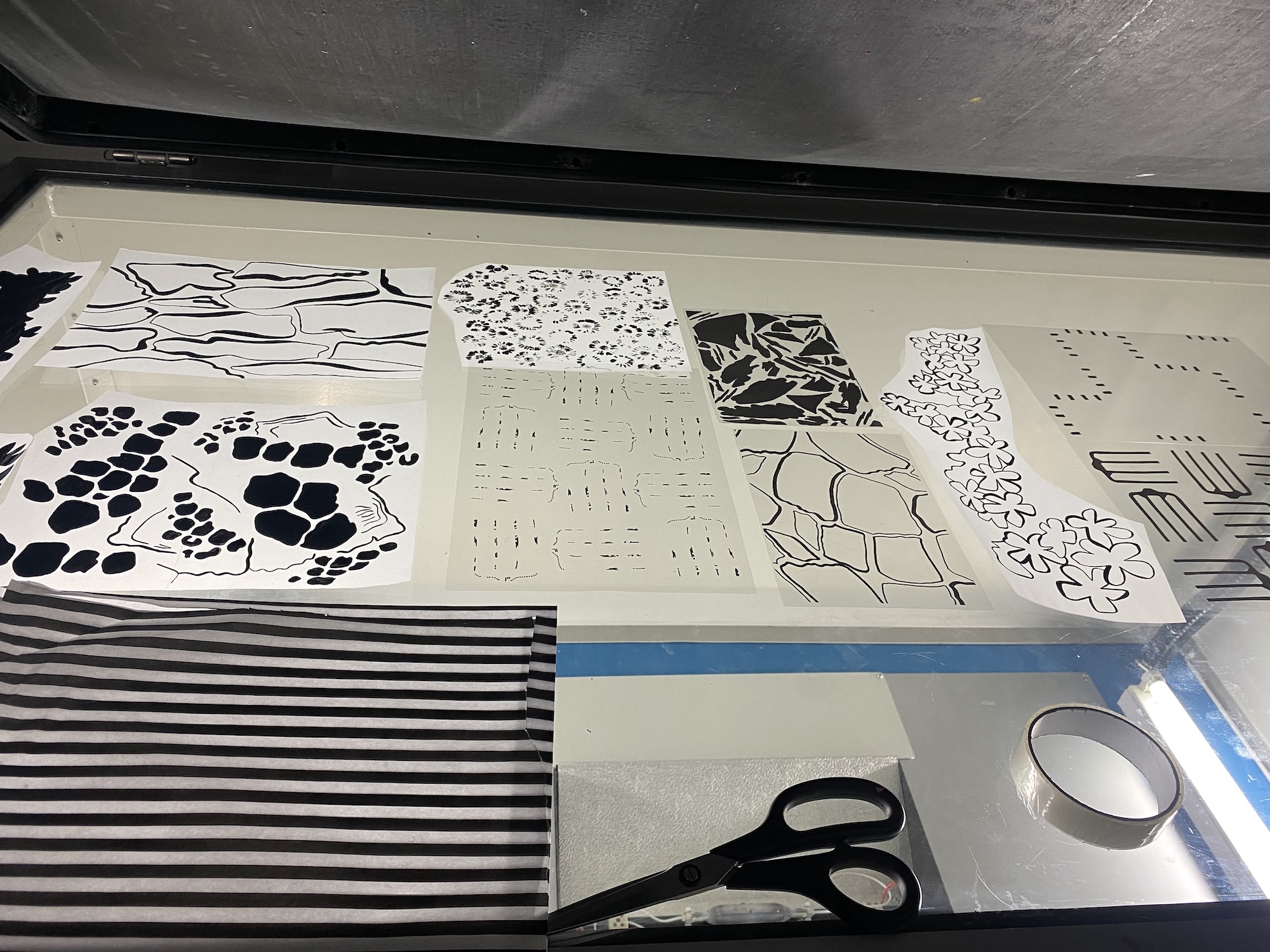
I liked this technique because you can achieve a design with lots of colour in one go, whereas with normal screen printing you would have to separate the design into different coloured screens and wait for each layer to dry, which is more time-consuming. I also liked how you can paint a design onto exposed screens, like stripes or polka dots, to capture it through other shapes. The colours are very vibrant and vivid, which was also nice.
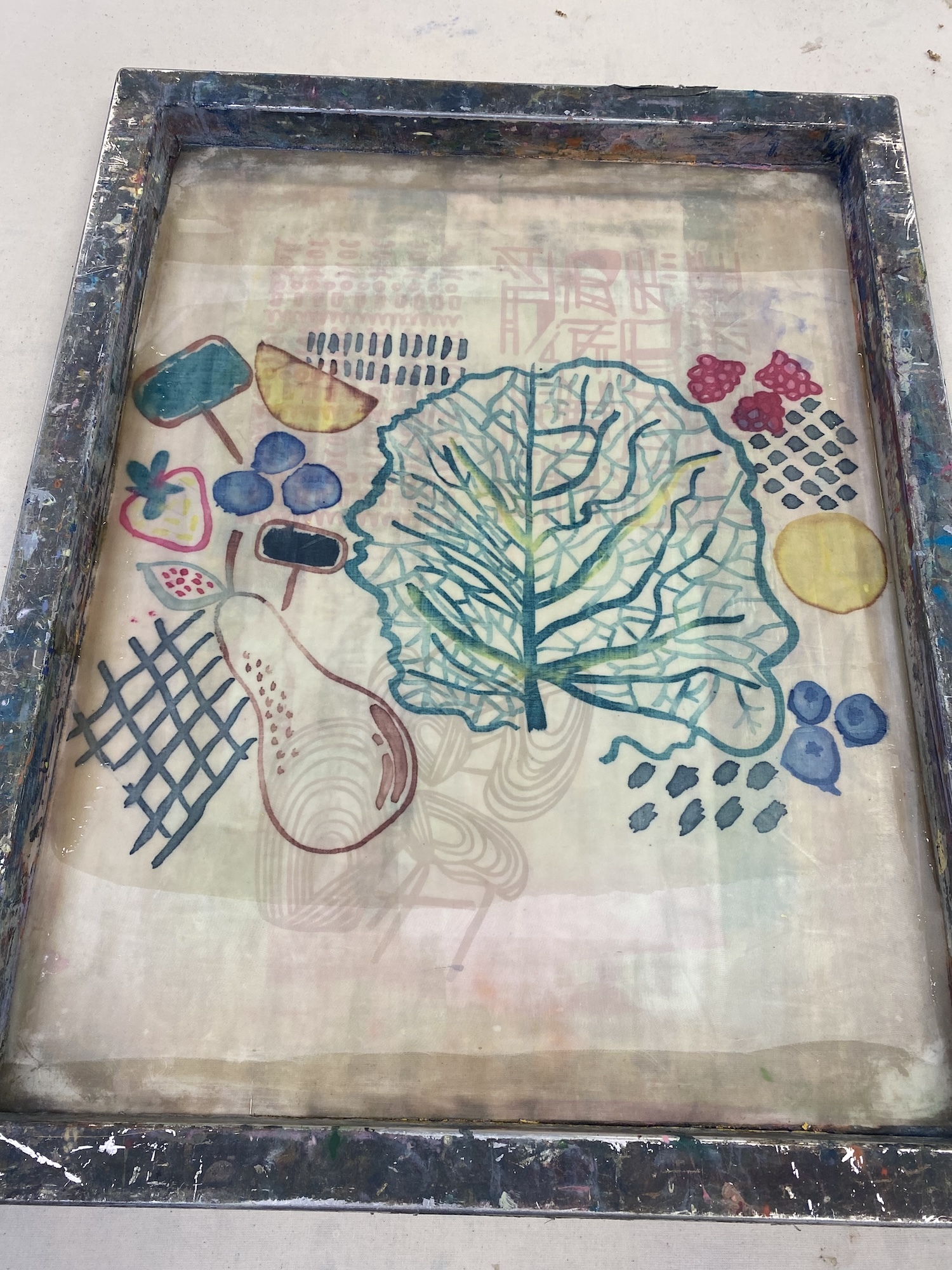
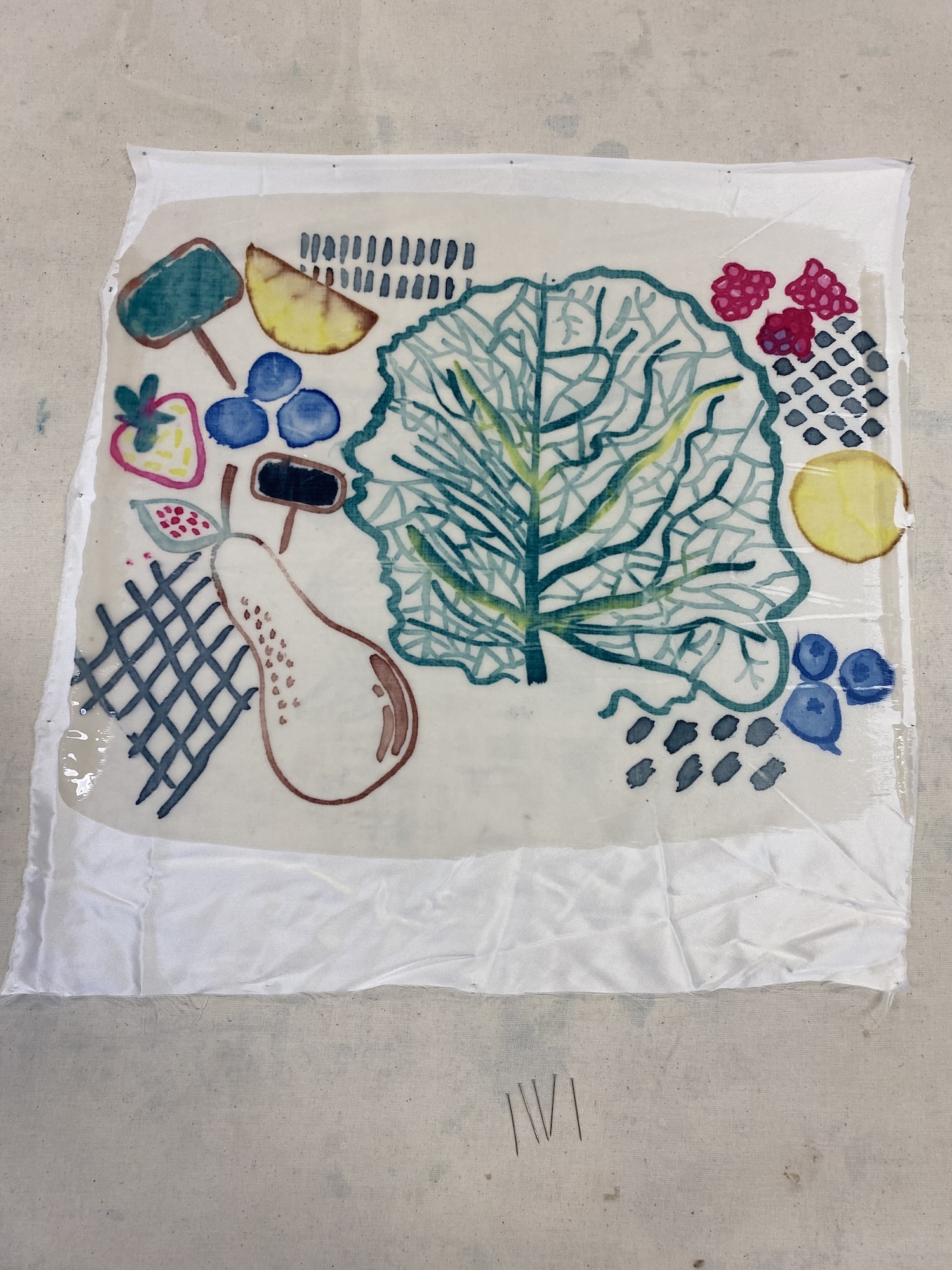
It felt strange at first to be painting straight onto a screen, but for trials and exploring ideas it’s a good way of starting, because you just have to begin and can’t overthink it too much. You can’t take back what you have done, unlike with drawing where it can be rubbed out. You can also lay a piece of paper below the screen with a drawn design on it and then almost “trace” over it, so it feels less daunting than filling a blank space freehand.
One aspect I found challenging was that sometimes it can smudge if not completely dry, as you pull the colours down the screen, and this can be slightly unpredictable. When you can only print the design once, redoing a design when it was freely drawn can take a while and be hard to replicate, if it does smudge.
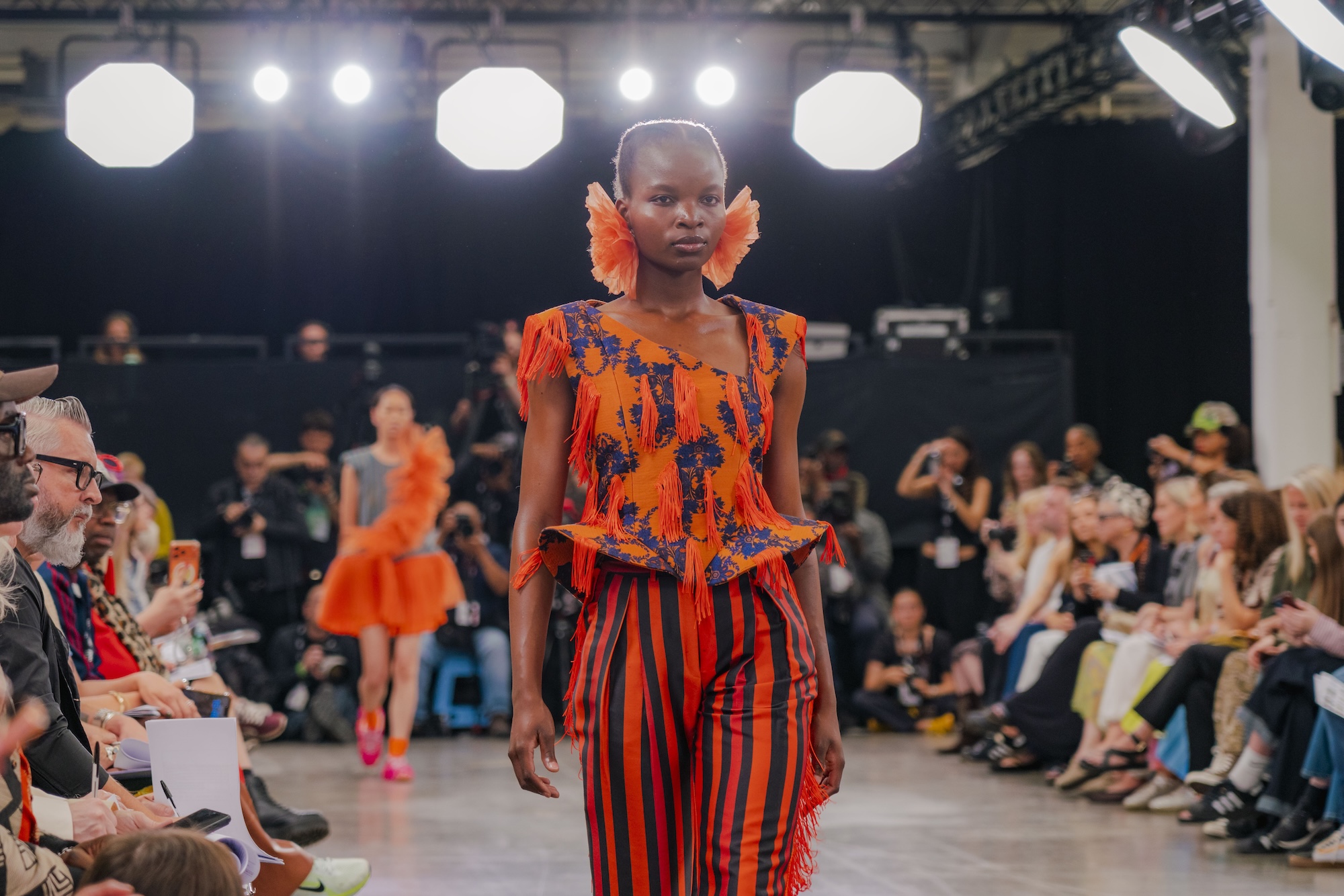
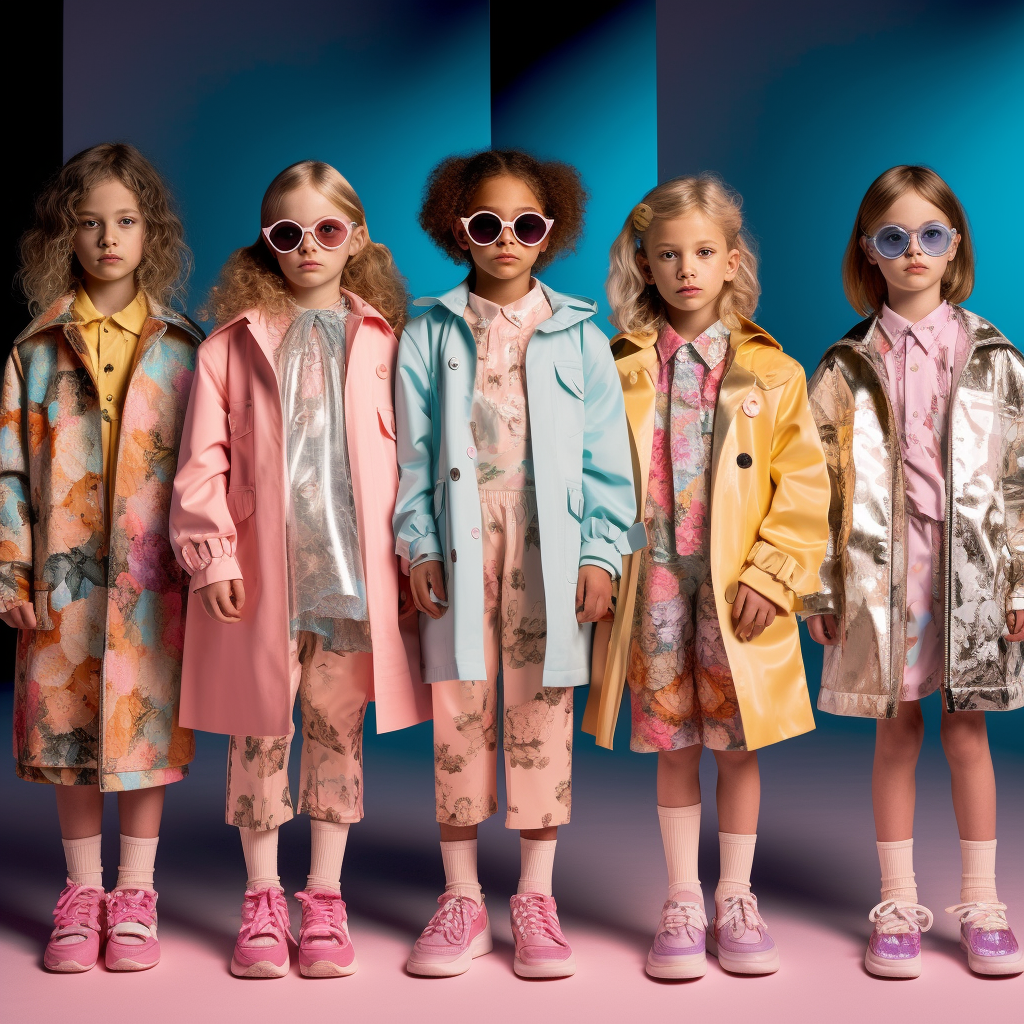
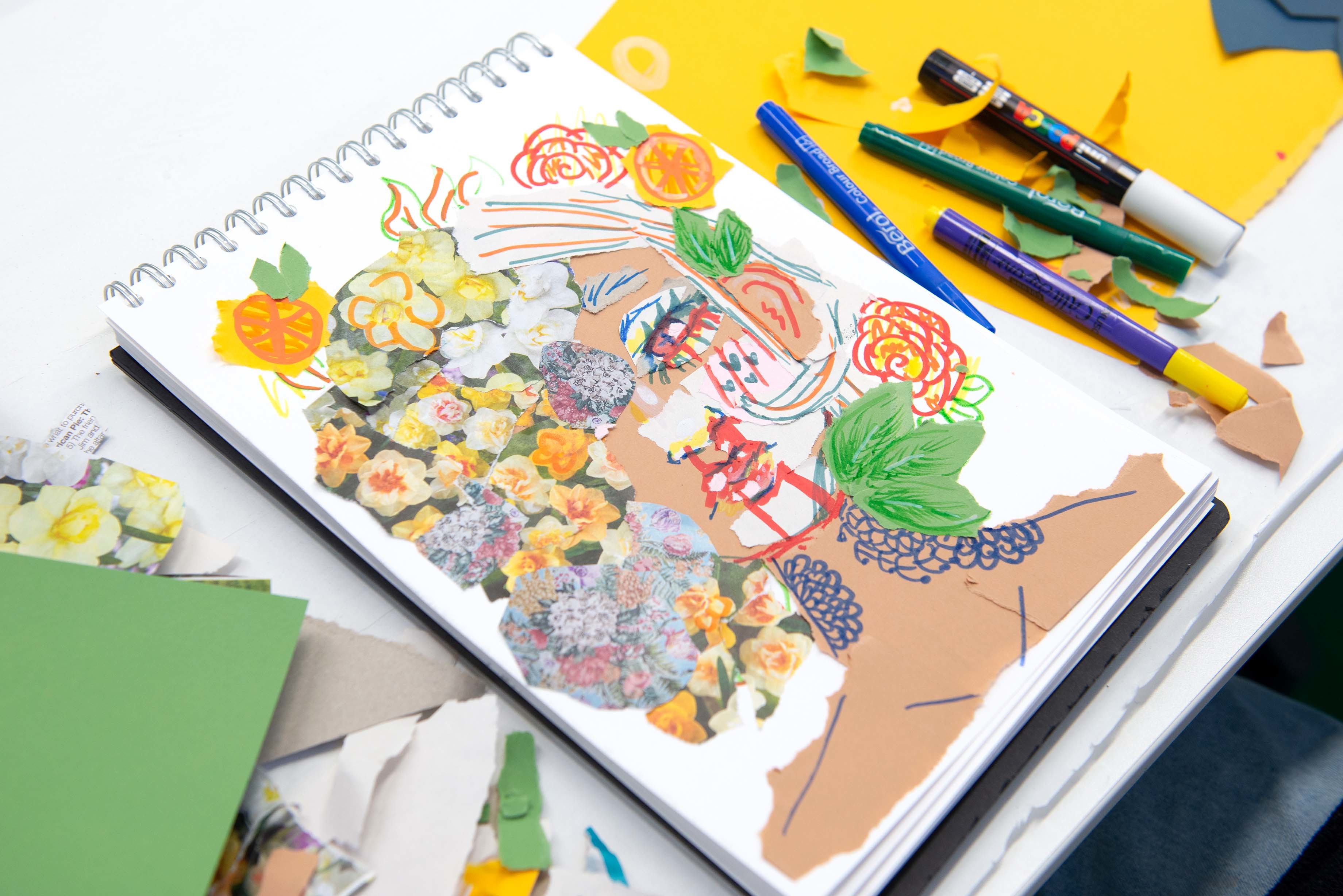
I can see this fitting well into a project based on organic themes like florals, where fluidity and motion is appropriate. If I do another fashion project in the future I might use it here, where the fabric is lighter and floatier to match the watercolour style. For me, I prefer screen printing with set, exposed artwork that’s consistent as I don’t do much illustrative drawing myself. However, I definitely enjoyed this process and would be open to trialling it again in the future for background patterns or mark-making textures.