
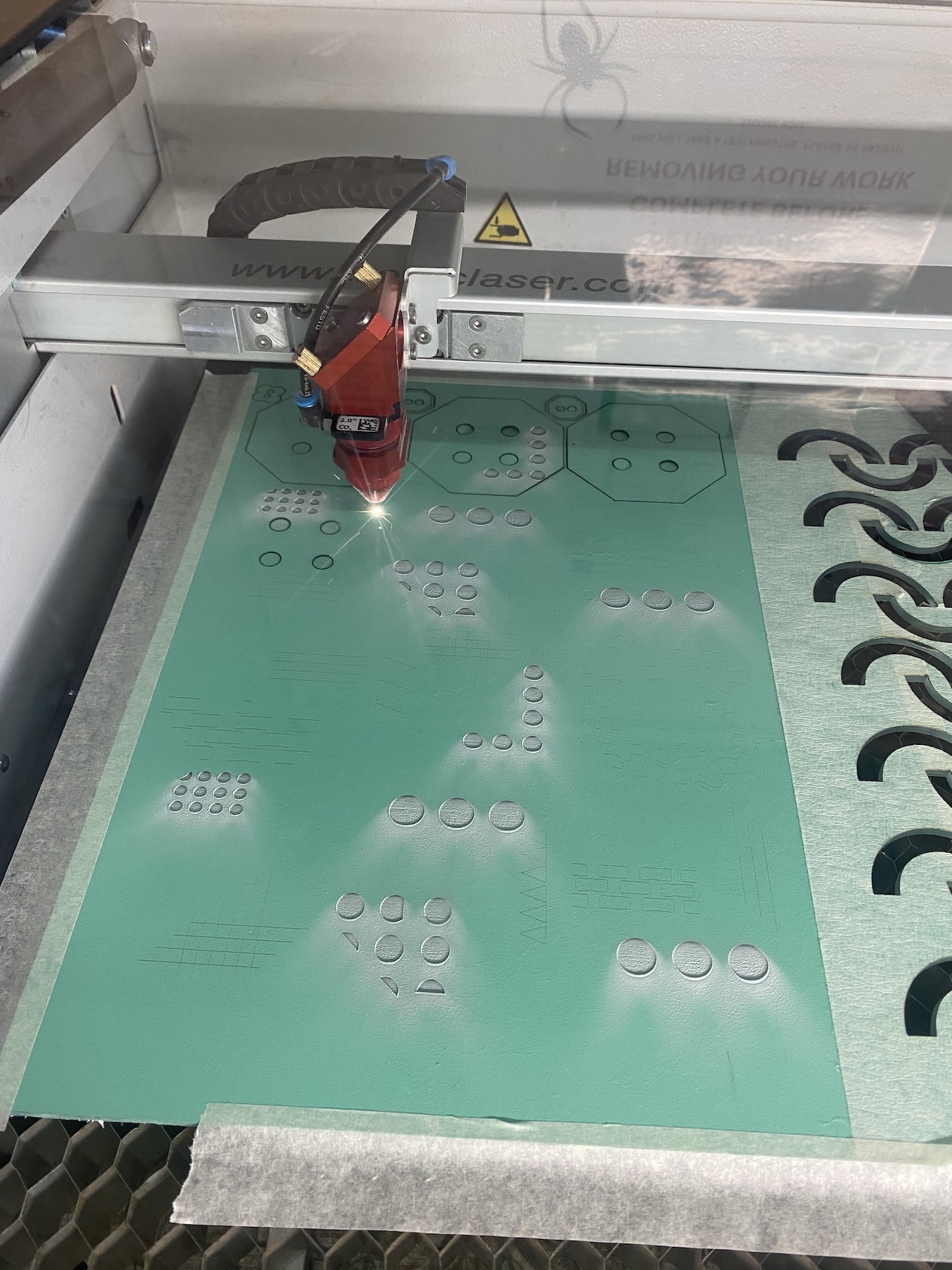
I got taught how to use the laser cutter in Term One of second year and I found it a super accessible and fun tool for my creative processes. I had had prior experience of laser cutting from Sixth Form, so I knew some basic information, but the software was new at uni and I also hadn’t used it independently before. I’m going to explain a bit about how I learnt to use it, what I used it for in my project and why I enjoyed it so much.
Laser cutting is a computer-aided process that uses vector design information to follow a predetermined path. Through the use of a light beam the material is burnt or vaporised away to leave your design, either etched onto the surface or cut out of the material. Depending on different material qualities the speed is altered and, for the workshop and textile lasers at least, all designs are drawn in RGB colour mode on Adobe Illustrator.
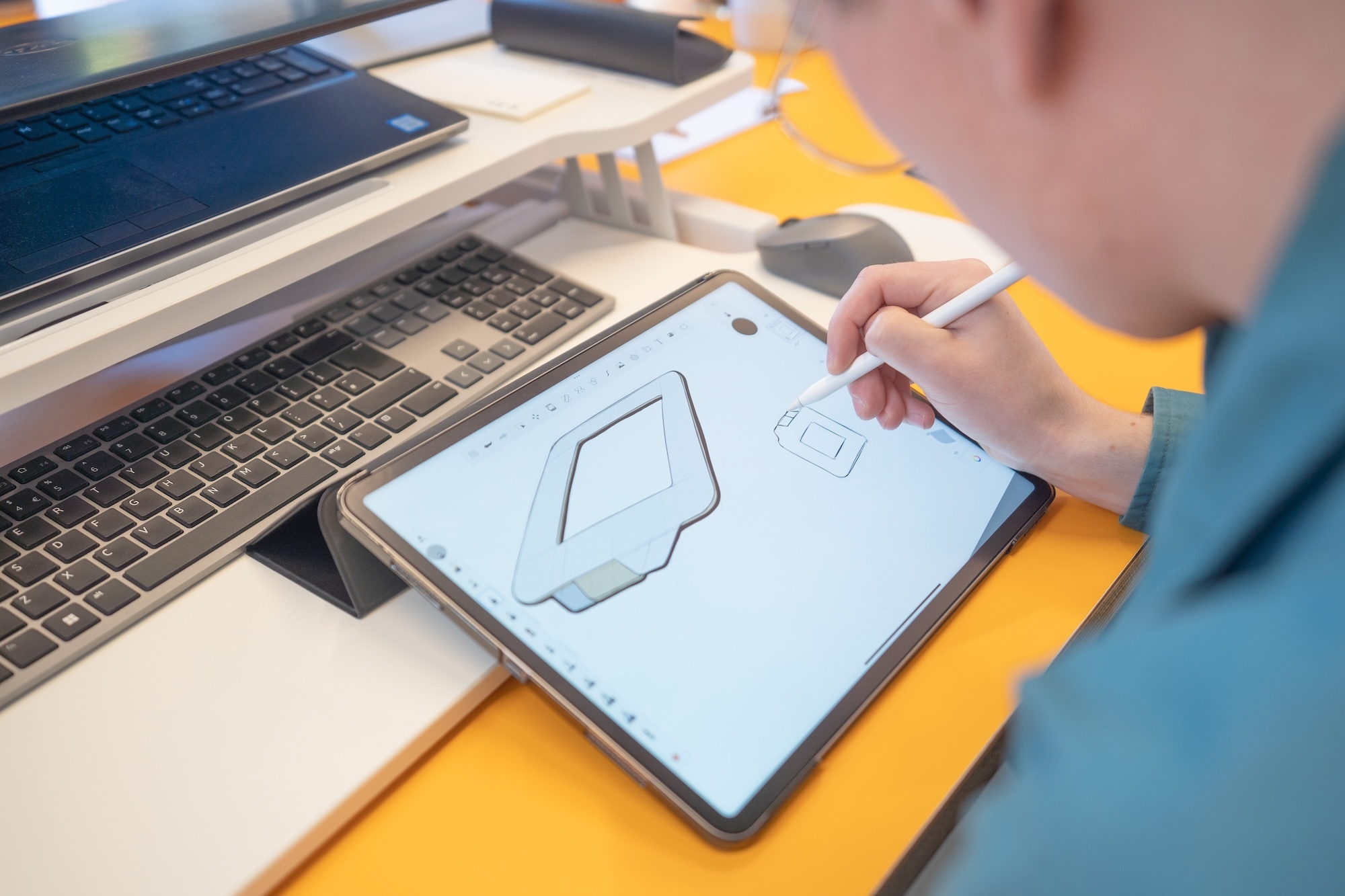
I found learning Illustrator pretty simple to pick up. It’s much more basic than Photoshop, so that’s a bonus. I had worked slightly with it before for my A-Levels but it had still been a while so I started with the basics. As part of our textiles curriculum, we had Illustrator sessions in our digital workshops to learn the skills, which was great. We then got inducted onto both the textiles and AUB workshop lasers – helpful for visually seeing the process of preparing the laser cutter. Both my course staff and the workshop staff were always willing to help too, which is extremely reassuring, so don’t be nervous!
The laser is booked out online, so everyone can access it and has an equal opportunity to use it; you just have to pre-plan and be organised when the time comes. It’s straightforward to book onto and your work can be cut in minutes. The setup is fast, so it doesn’t take too long either.
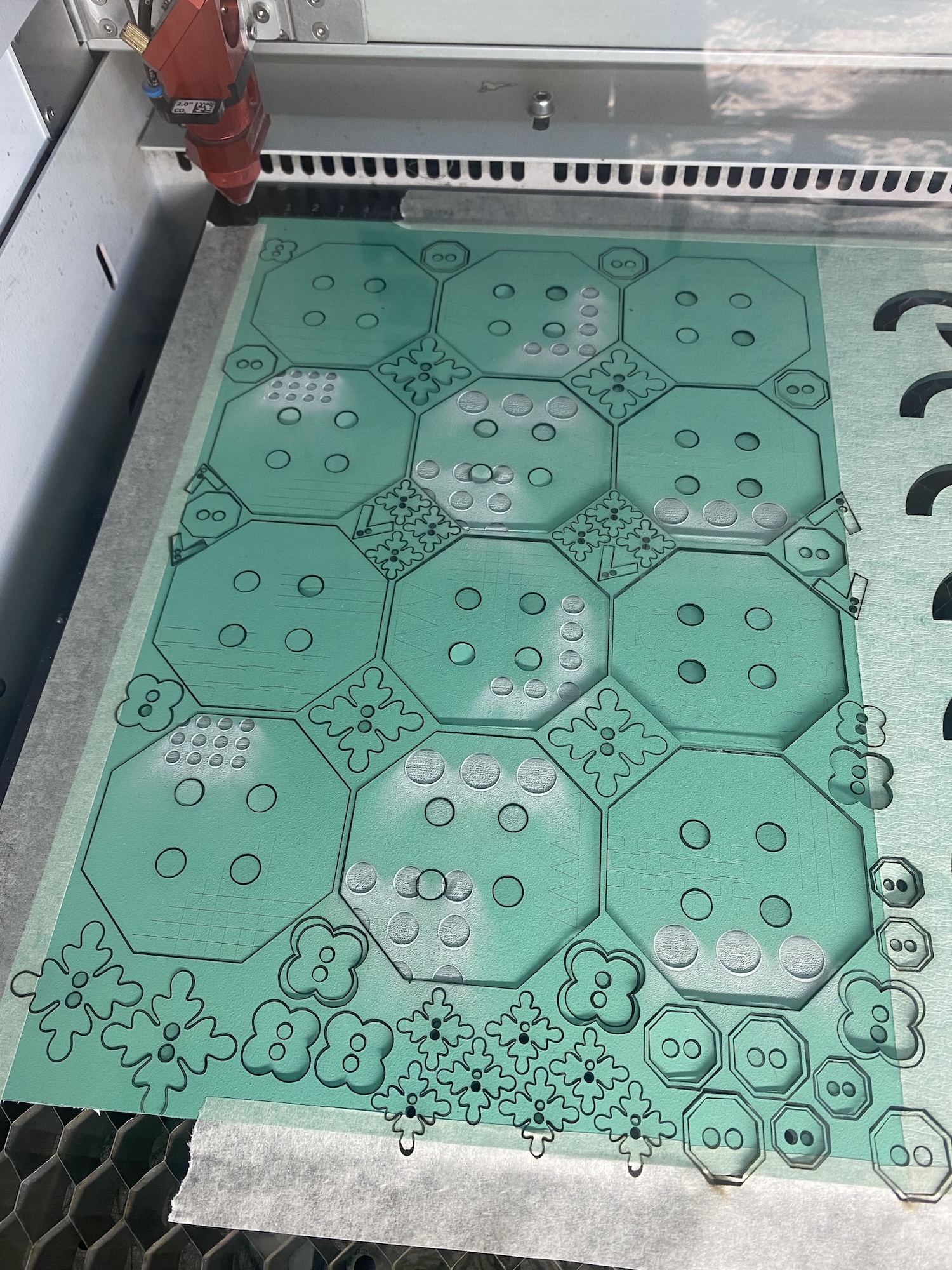
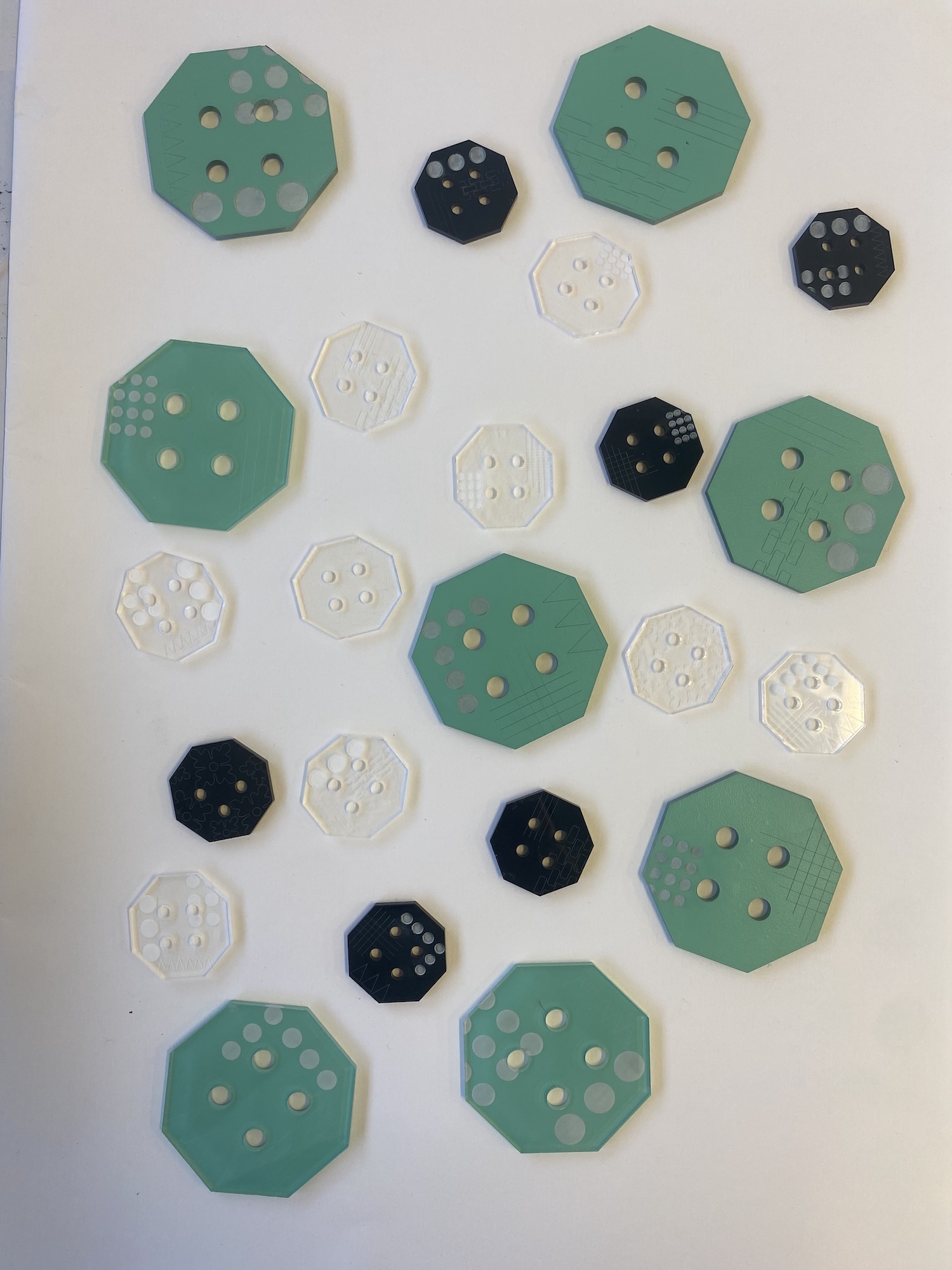
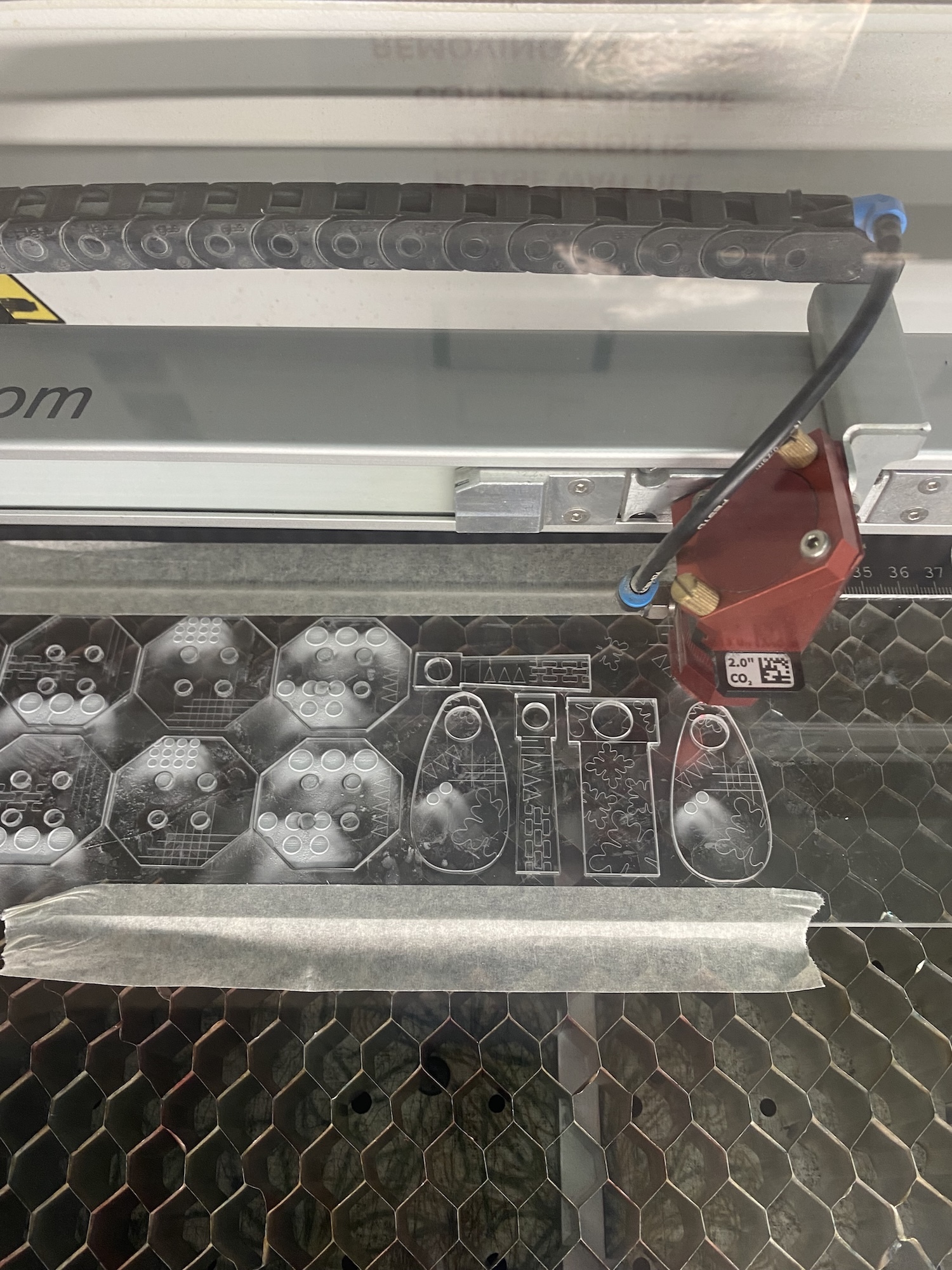
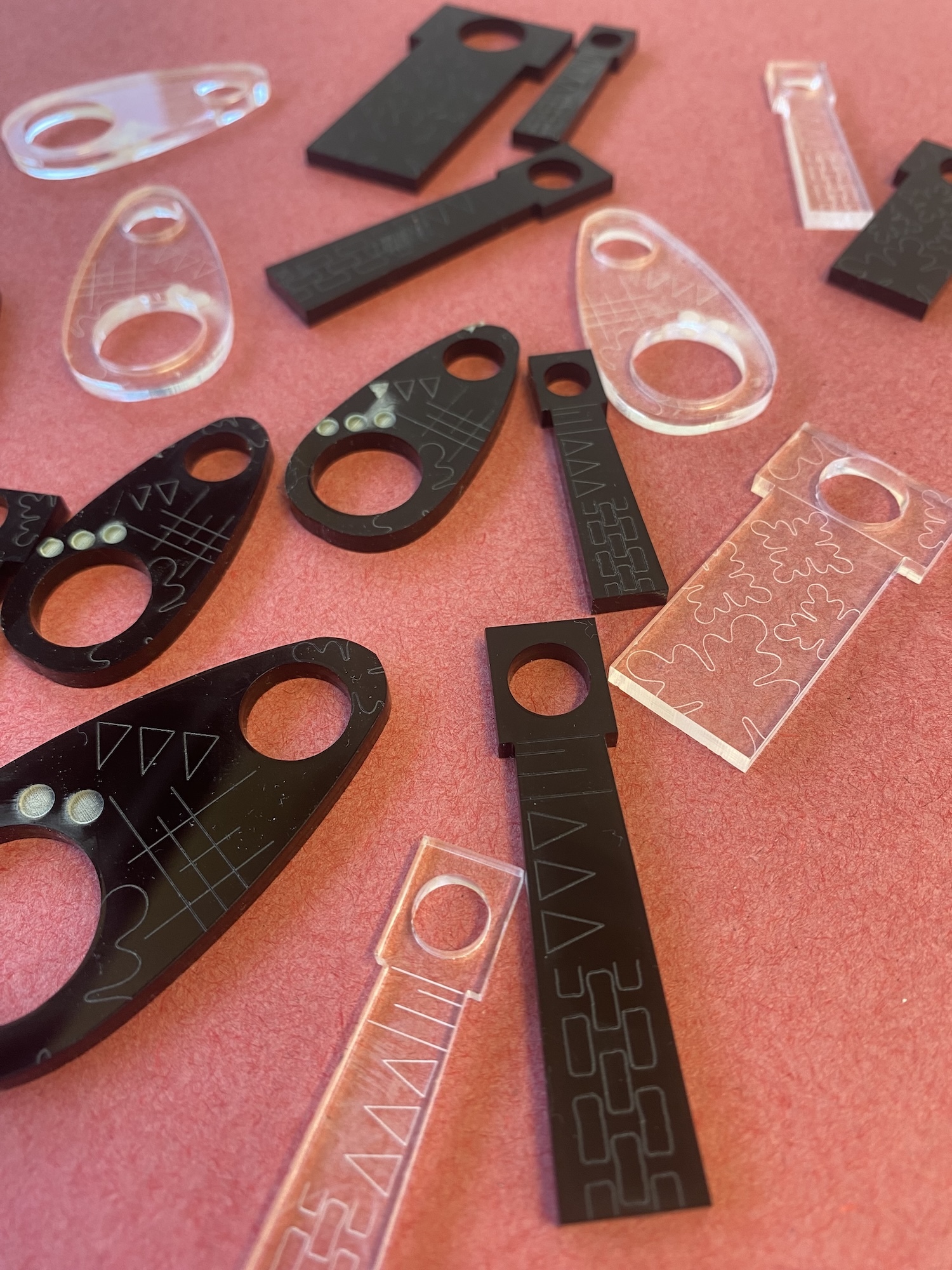
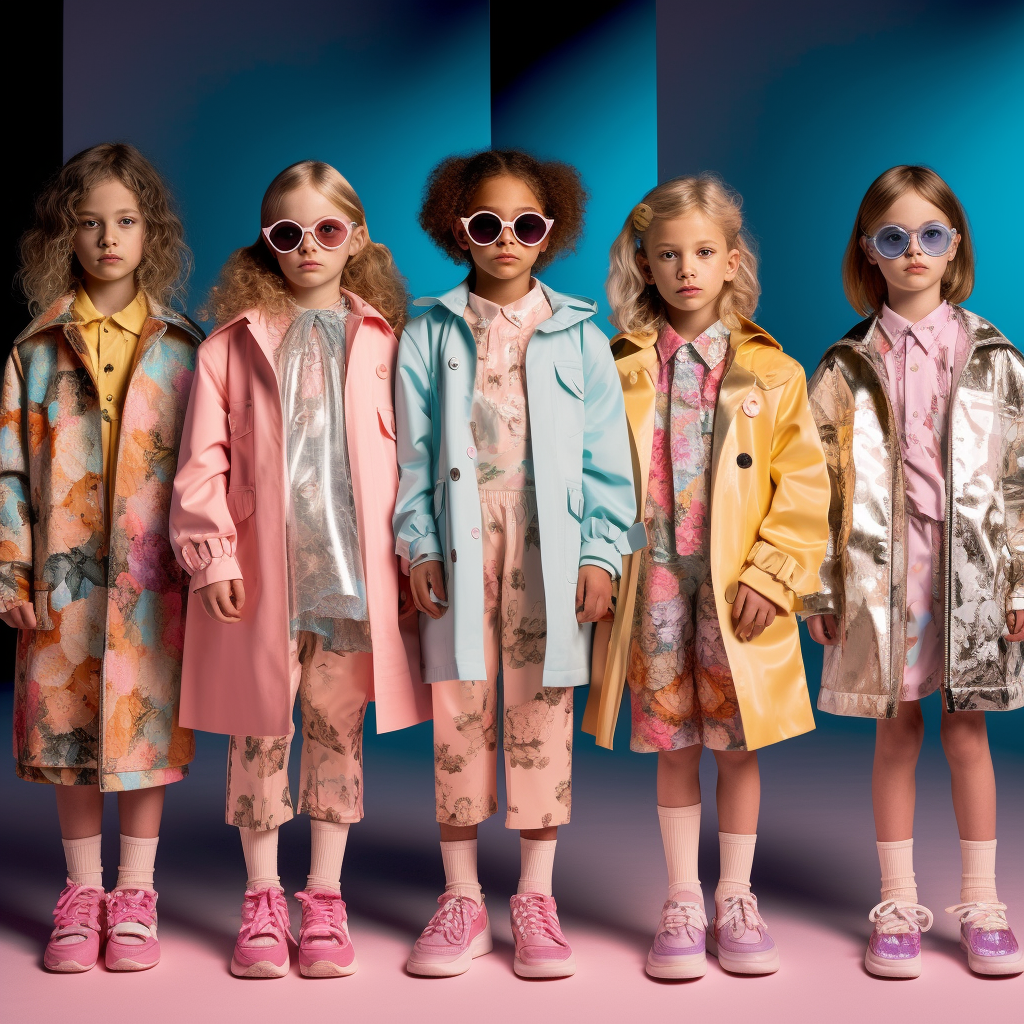
In the first term, I used it to etch and cut different coloured acrylic to make my own buttons and zipper pulls as accessories to my prints. This really helped enhance my collection and form a more well-rounded, thoughtful project as it showed my prints with appropriate fastenings for my context (children’s fashion), showing I was aware of more than just surface pattern. It also demonstrated an element of risk-taking, experimentation and creative skill.
This term, I would like to take this further and use it to etch a bigger piece of material with a full design on it. I would like to try this on a different hard surface, such as wood, to see how the speed and power change for other materials. This will also help improve and challenge my Illustrator skills as the design I laser cut will be more complex.
Additionally, I hope to incorporate screen-printed motifs with the etching to create depth and demonstrate higher technical ability. I am also interested in using it to cut and score fabric to then manipulate with, by pleating or folding back the material for 3D qualities and visual interest. Or, to try cut and score the fabric to create a more subtle print design.
Overall, I have thoroughly enjoyed using the laser cutter. I found it very user-friendly – easy to follow the instructions in the workshop. I love the precision you can achieve, working to millimetre measurements for clean, sharp resolutions that can be extremely small if needed.
I also liked the possibility of incorporating different materials with surface finishes I wouldn’t be able to achieve by hand into my project. For instance, I could screen-print onto acrylic or wood by hand, but I couldn’t etch the surface myself with precision. Whereas, on the laser cutter I can quickly and efficiently etch very fine detail to achieve a different surface quality, helping to diversify my skills and collection. On a similar note, I found it exciting that you could adjust the etching to light, medium or heavy for different outcomes. In my opinion, there is extensive flexibility with the laser cutter, and you can really achieve an outcome personal to your work and project, which is amazing.
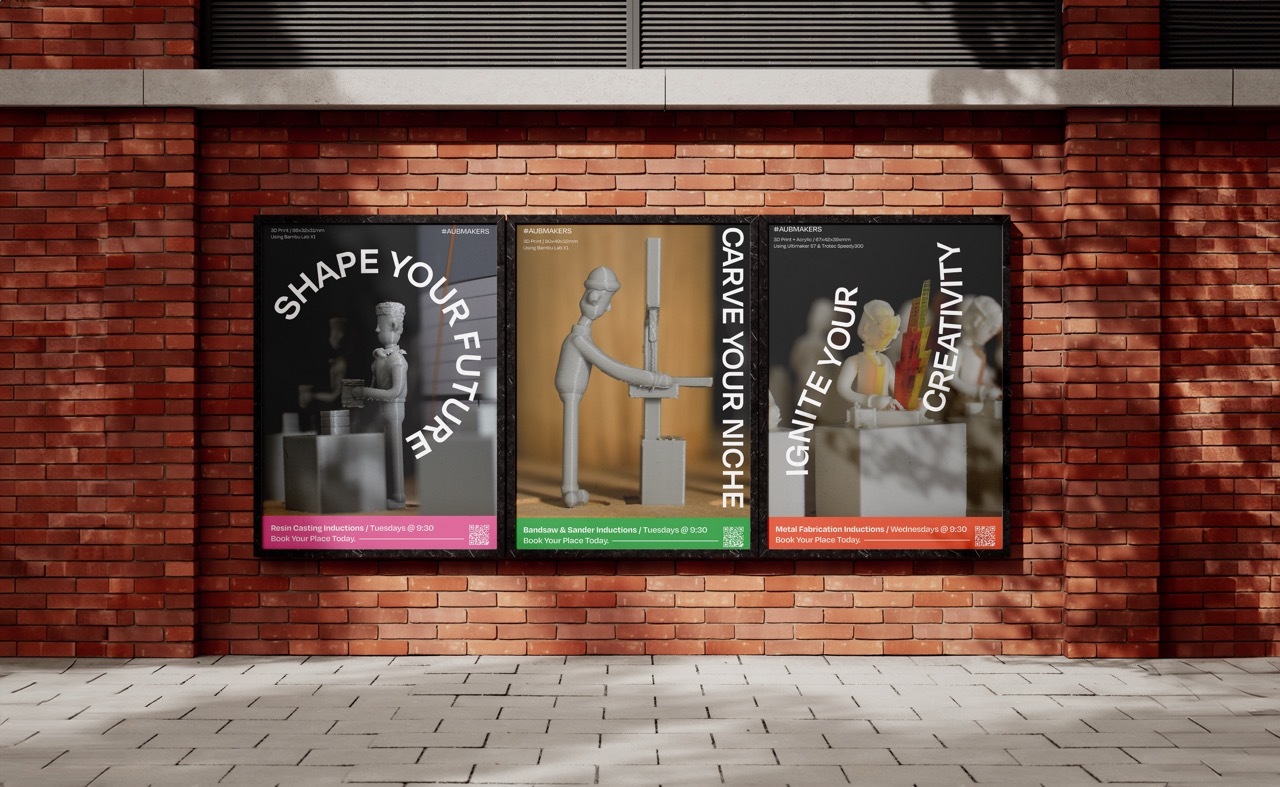
If you get the opportunity through your course, or just by the AUB workshop open inductions, I would definitely recommend giving your time to learn this piece of equipment! You don’t even have to use it for designs alone, you can make accessories like beads and sequins to then embellish with, which is an alternative way to bring in tactility and techniques. Don’t be put off if it seems scary at first – I was nervous but after going through it slowly and taking my time, I’m so pleased with the outcome and that I didn’t shy away from using it on my own!