














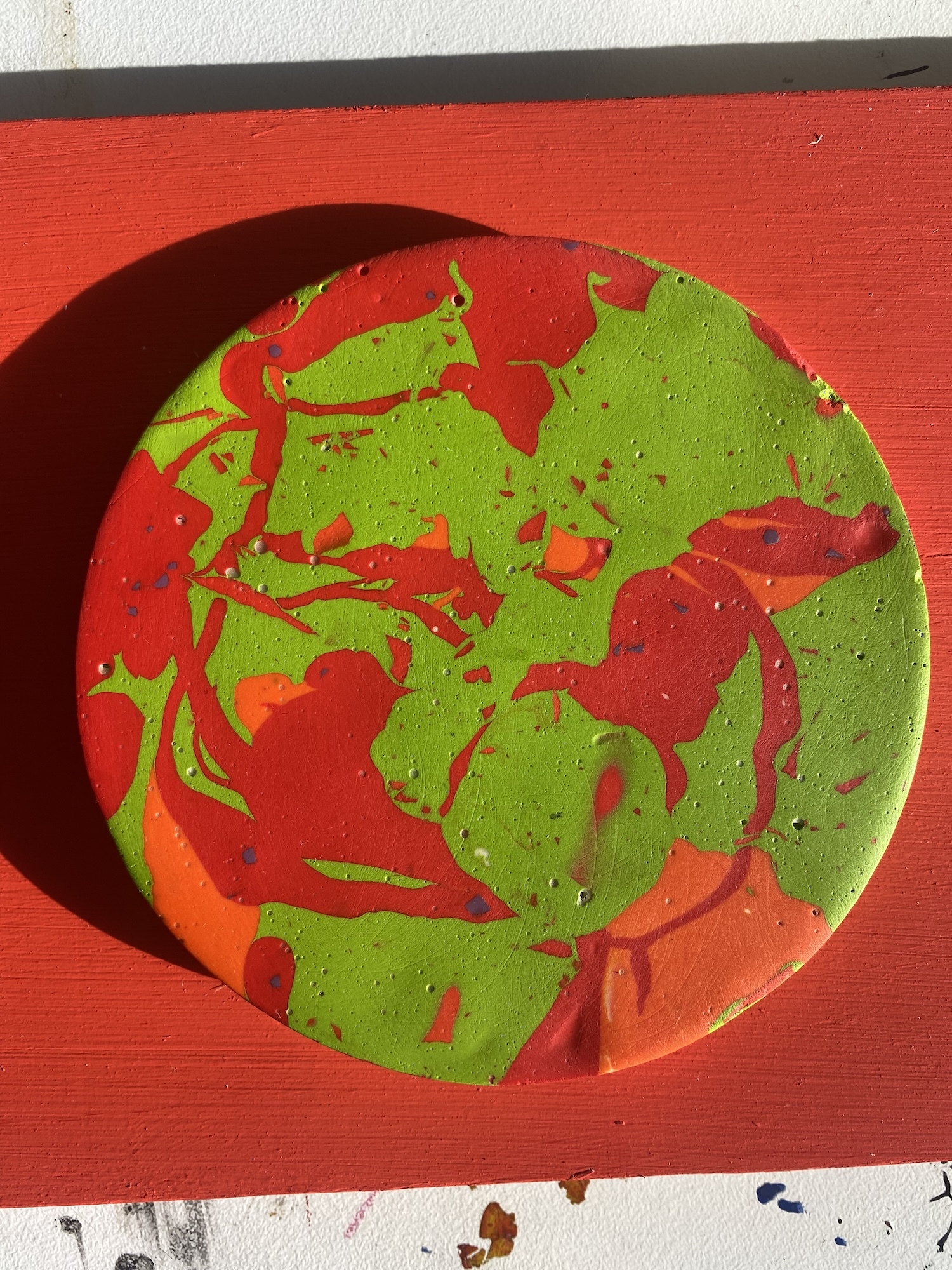
Jesmonite has been on the market for a while but became popular and “trendy” more recently, around lockdown time. I had a fantastic workshop during the spring term exploring the material, trialling different pouring methods and practising mixing colours up. I found the medium very user-friendly; it was simple but highly effective and a really nice addition to my other surfaces in my project, which are more fabric-based.
Firstly, Jesmonite is an eco-friendly composite material made from combining a water-based acrylic resin with a mineral powder and adding small amounts of pigment, which is highly concentrated. You pour the medium into moulds and let it set naturally. It begins to set within 30–60 minutes, but usually takes at least 24 hours to fully harden.
Jesmonite is used largely in homewares such as lampshade bases, coasters, soap dishes and trinket dishes, as well as fashion accessories like earrings, necklaces and pendants. But the possibilities are endless!
During my workshop I practised three different techniques with the material – terrazzo (a speckled outcome), marbling by pouring two colours at the same time, and by layering flickered colours and painting a design in. I’ll go through all three in a bit more detail:
- Terrazzo is an effect where you combine multicoloured chips, also made from Jesmonite but separately, into the mixture and then pour it into the mould. You begin by making small amounts of different coloured mixtures, which you then spread thinly (a couple of millimetres) over plastic sheets to set. Once they have hardened, you crumble them up into what are referred to as "chips" and combine these into your next mixture. After mixing it thoroughly, you pour it into your mould and let it set. When it’s hardened, you then have to sand the surface, working down from coarse to fine sandpapers, in order to gently remove the top layer and reveal the speckled "chips" throughout the piece. I really liked this method because it was minimalistic but effective, and a good way of bringing multiple colours in my palette together.
- The second method I tried was marbling. I did this by splitting my total mixture in half and mixing two separate colours. Then, simultaneously, I poured them into my mould so that both colours combined and swirled together. An alternative method to this is by making your entire composite one colour, then adding two or three very small dashes of a different pigment in; when you pour it out, these dashes will change into swirls as it moves into the mould. Personally, I felt marbling took more practice than the terrazzo finish, and was also less predictable as you can’t control how the colours flow together, whereas with the chips, you can control how big they are and how many you put in.
- Lastly, I sampled layering flickered colours in the mould and painting a design in. To do this I mixed small amounts of different colours up, and with a pipette flicked it across the base of the mould. You have to wait for each colour to set before you add the next so that they sit on top of each other and don’t mix, so it was a little more time-intensive. I also used a paintbrush to draw outlines of shapes and a checkerboard pattern, which I then covered in a solid mixture. I found painting with the brush challenging because the material sets quite fast and becomes thick and harder to work with. It’s definitely something I would like to try again though, as I think you can achieve some really interesting effects this way; I just need to have it planned out better and be more confident working with the material.
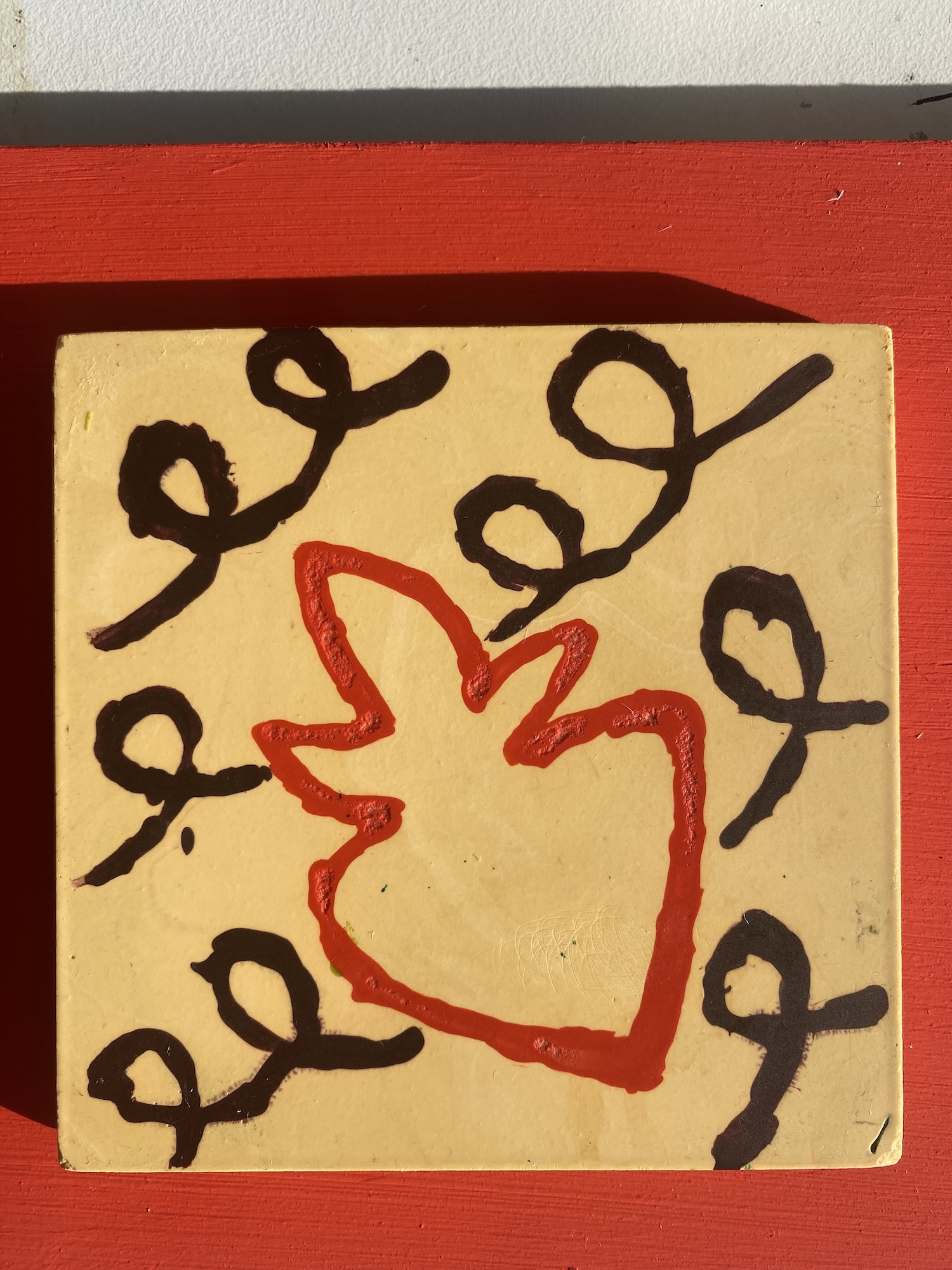
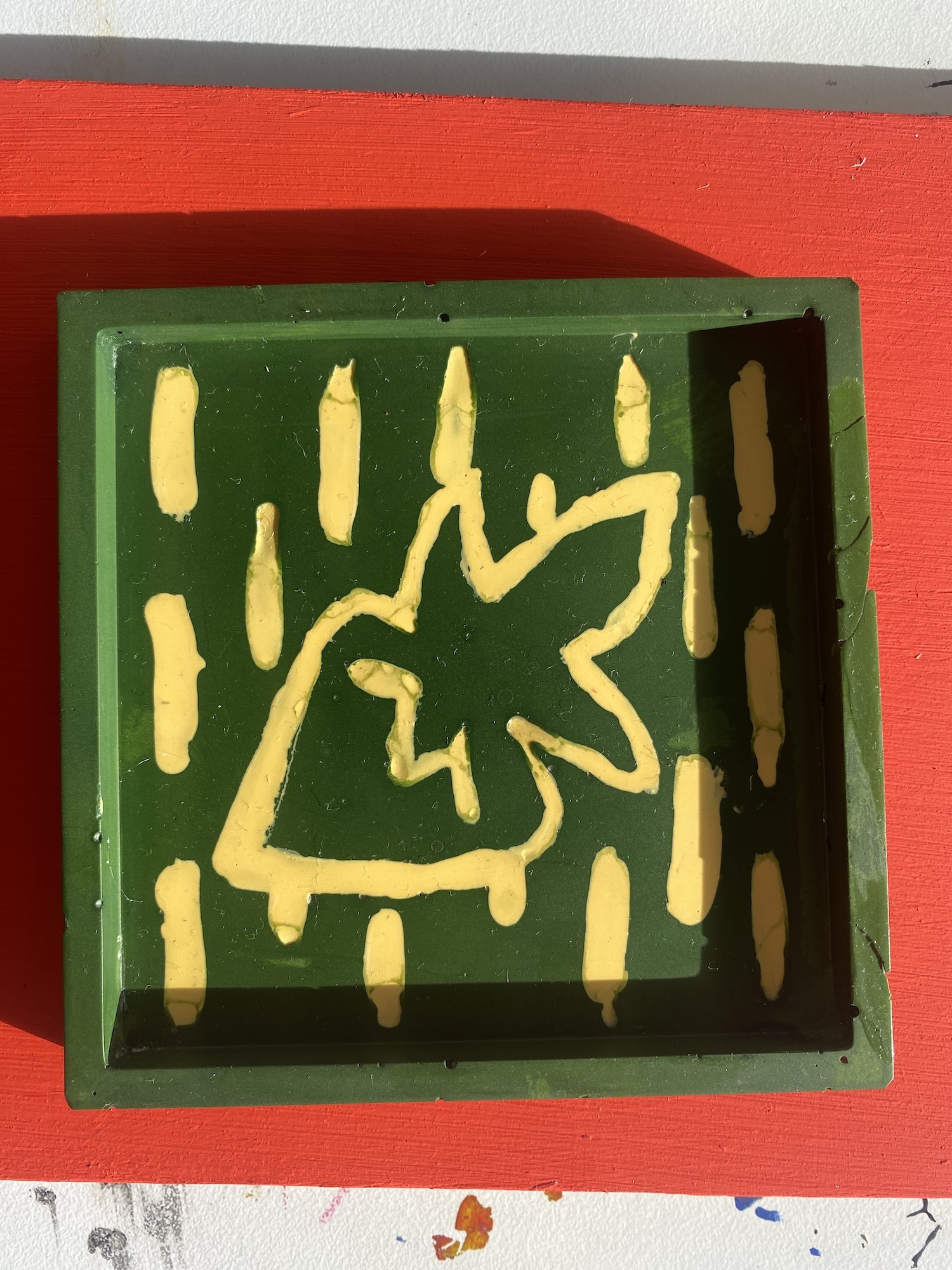
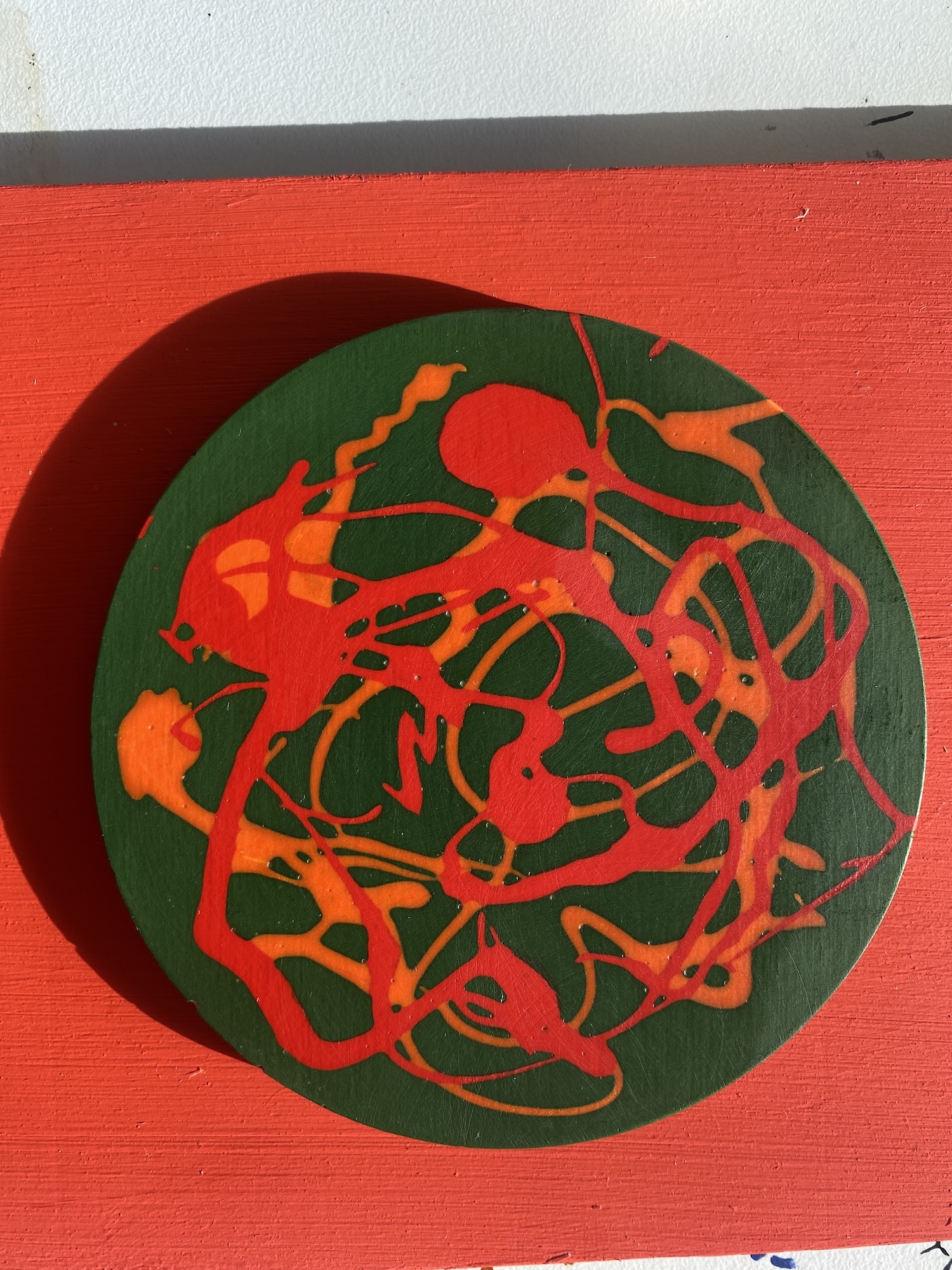
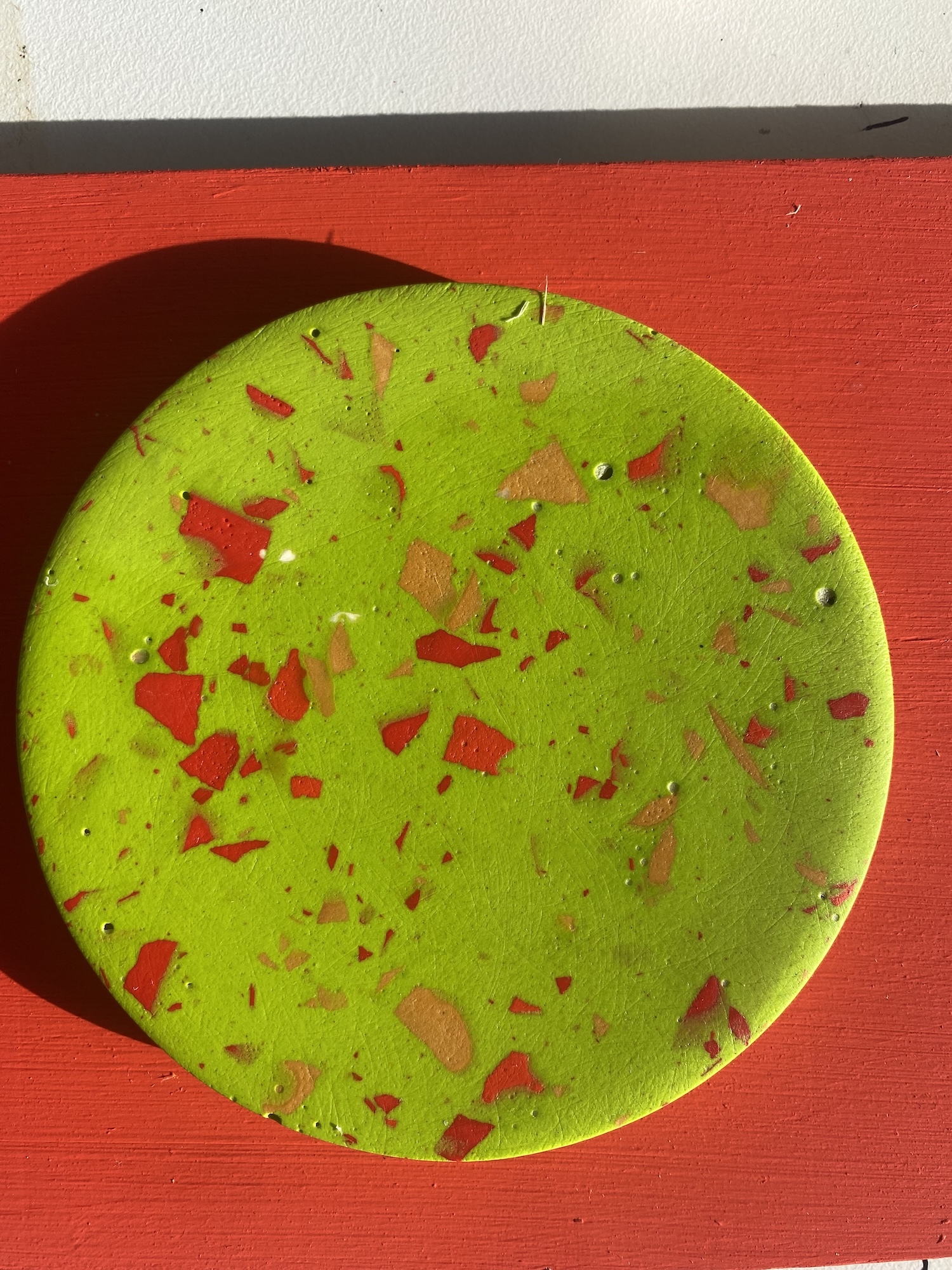
Overall, I enjoyed the workshop and definitely wish to use the material again in future projects as well as outside university. I particularly liked how easy the material was to pigment and colour-match to my project. It dried largely the same as what it was during mixing, which is really good, whereas some methods change colour after drying like with the dyeing fabric, so it’s more time-consuming to achieve the right shade. I also liked how many possibilities there are, because there are so many moulds available to buy, or you can make your own! I found silicone moulds were definitely easier to get the design out of, because they are flexible and you can just peel it off, whereas the vacuum-formed moulds from plastic didn’t bend. Lastly, I enjoyed this technique because of how fast it is. You can quickly mix and pour your material and tap out the air bubbles; then it just has to sit and dry. Sanding and finishing the final piece (adding a lacquer or coconut oil to seal the material, as it’s porous) doesn’t take too long either.
The only downside for me is that the material is very fragile, so can break or snap when trying to get it out of the cast or if it’s dropped. This is also why silicone moulds are beneficial.
For this project, I used Jesmonite as potential coasters because I was designing for a children’s bedroom space. In the future, I would like to use it to try form bases for lamps or accessory pendants for necklaces or key rings, depending on my context.