

As design students, we spend countless hours sketching, model making, refining concepts and preparing presentations. Most of that work exists within the walls of the studio, shared with tutors and classmates who understand the process behind it. Rarely do we stop to imagine what it would feel like to see our work displayed publicly, viewed by complete strangers passing by.
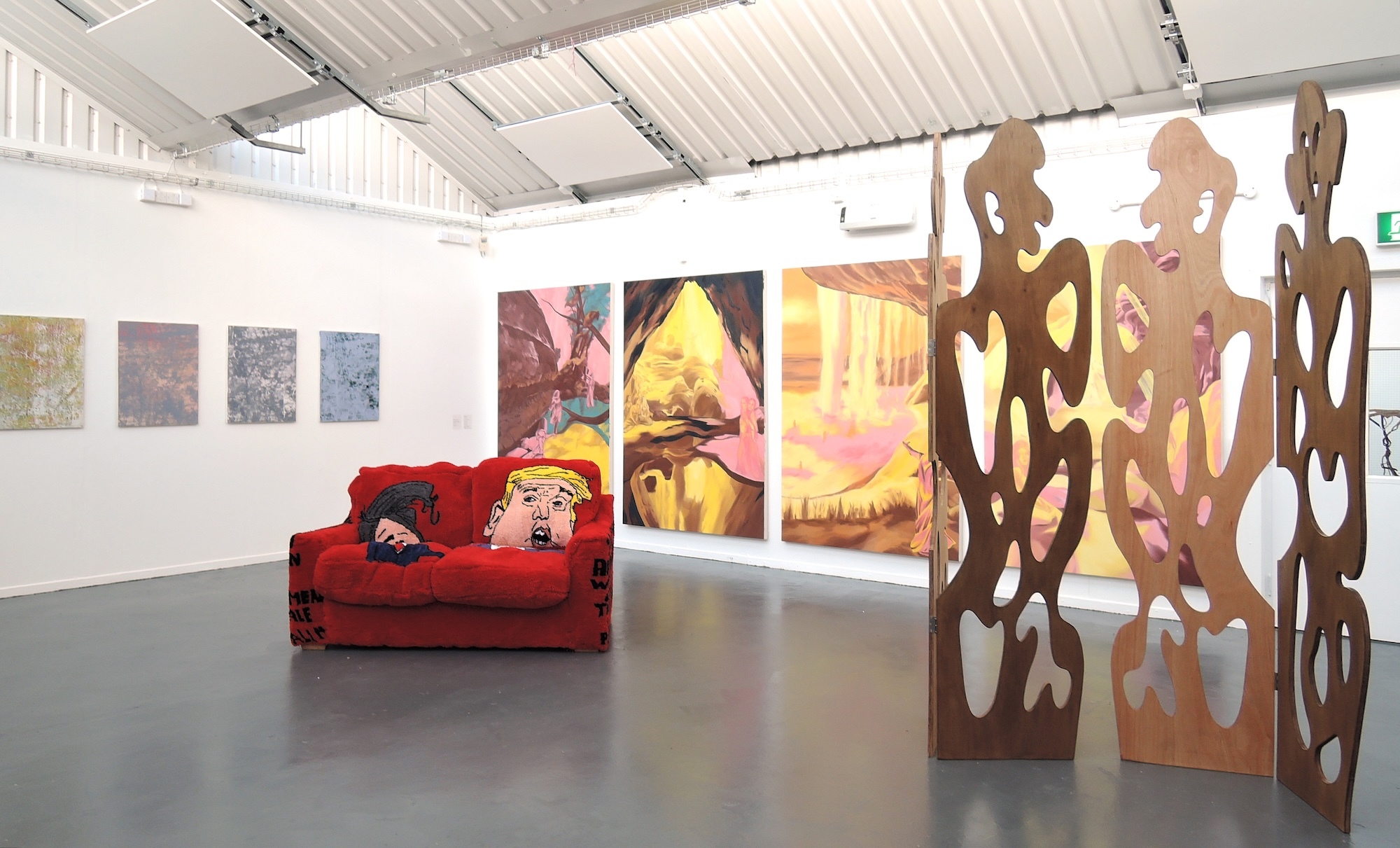
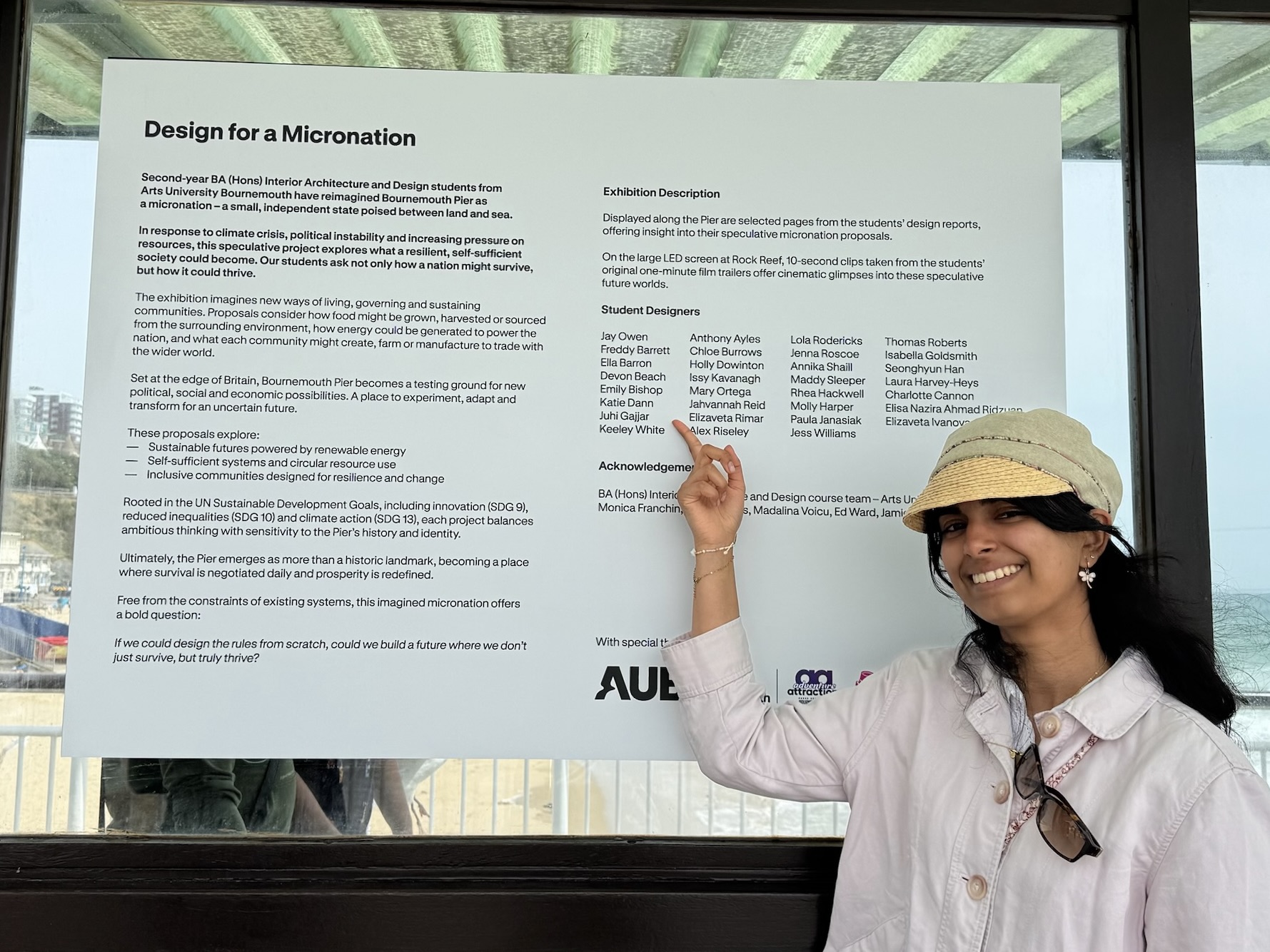
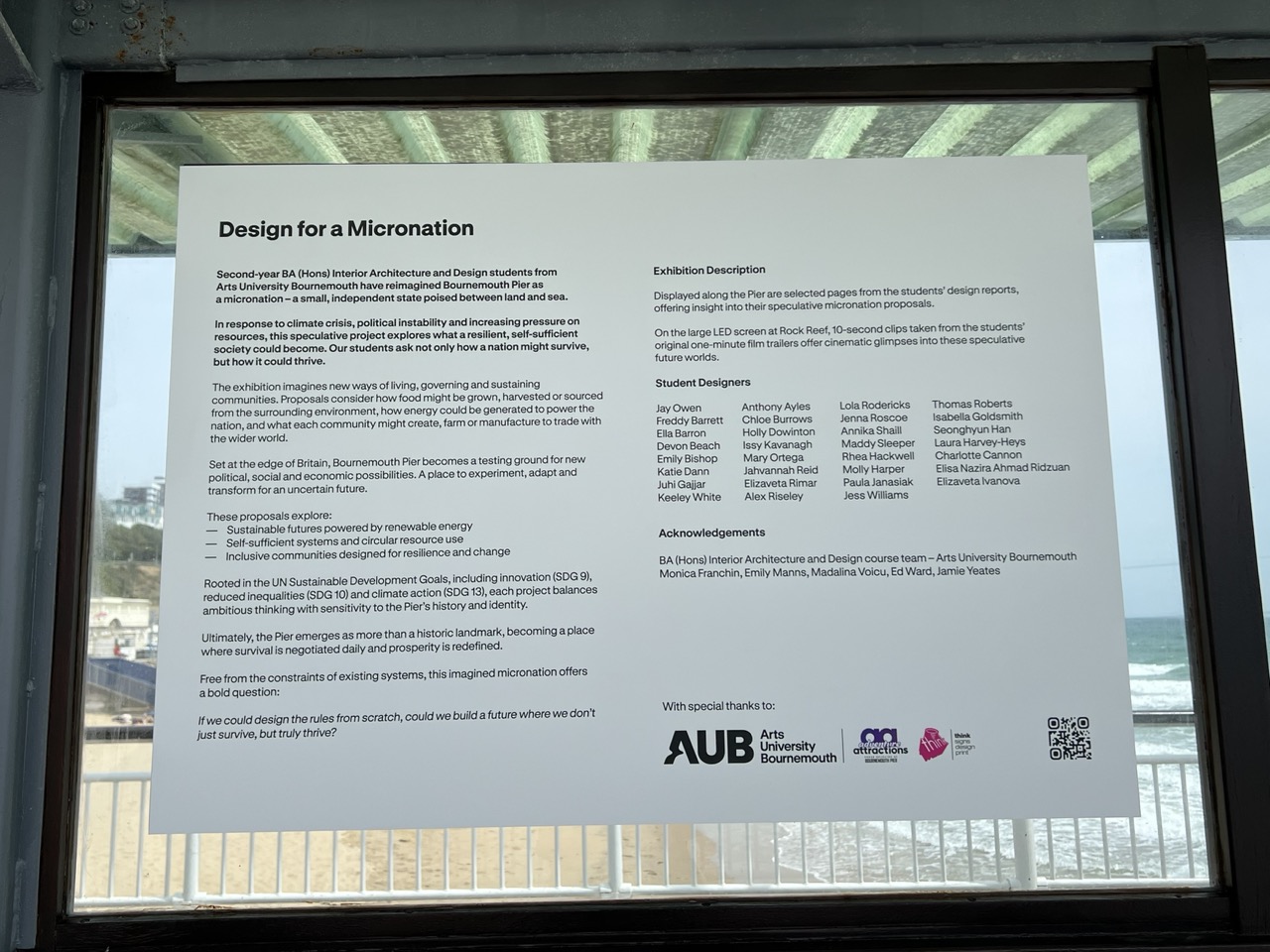
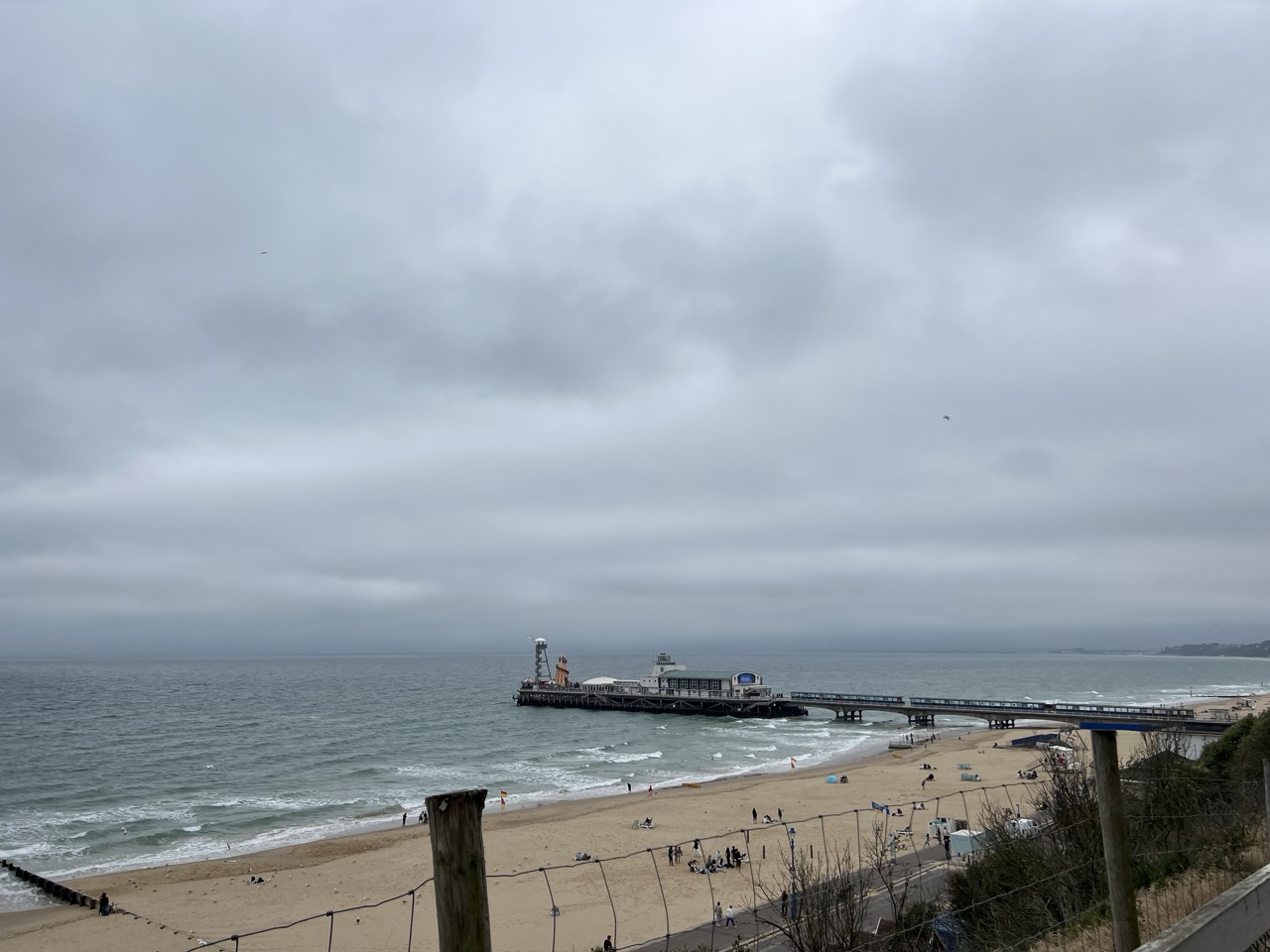
This June, I was fortunate enough to experience exactly that. Currently exhibited on Bournemouth Pier until 26 June, the BA (Hons) Interior Architecture and Design second-year exhibition showcases selected projects from our Design for a Micronation unit. The exhibition celebrates some of the exciting, imaginative and thought-provoking work produced by students across the year group, giving members of the public an opportunity to engage with our ideas beyond the university environment.
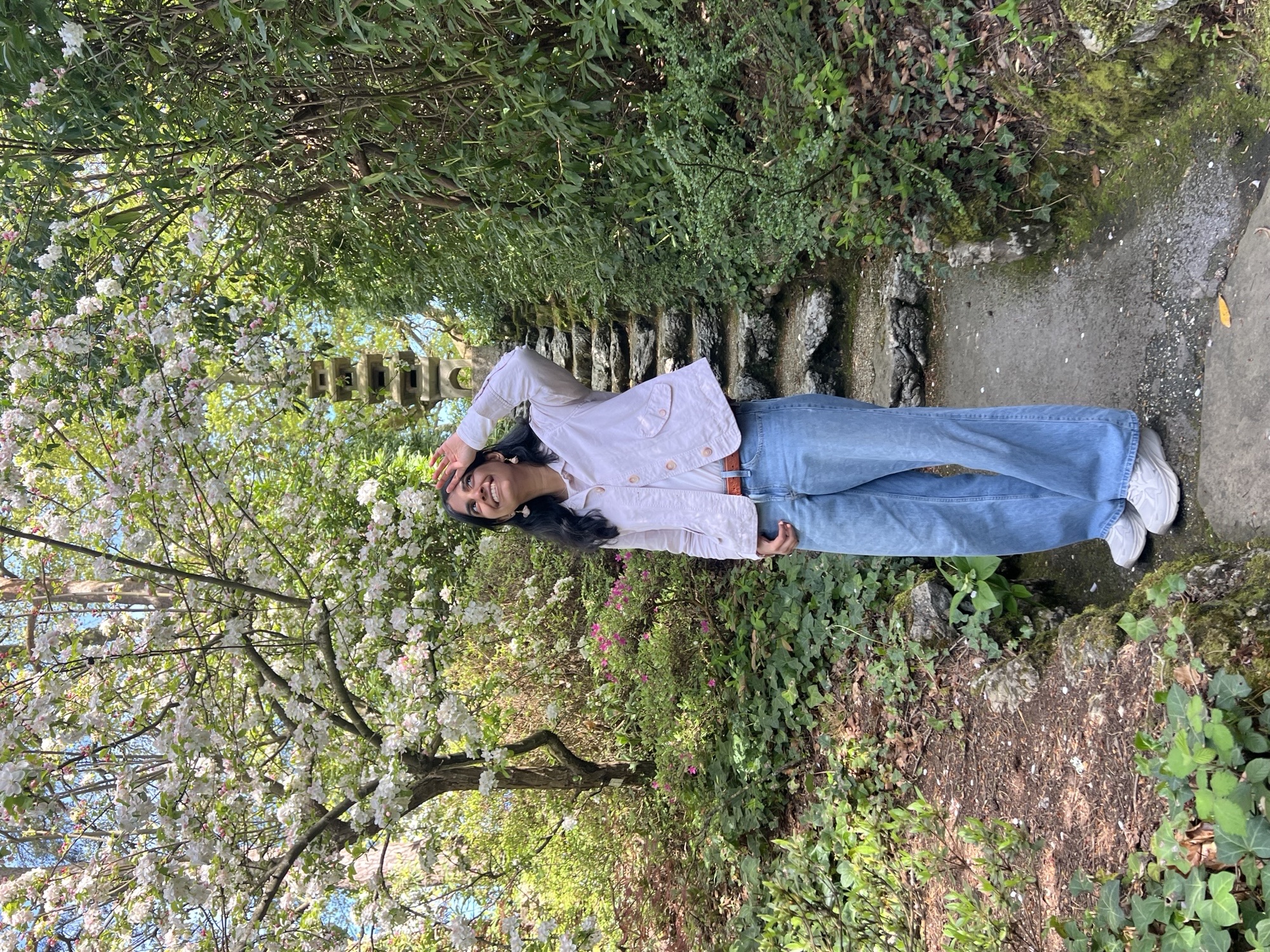
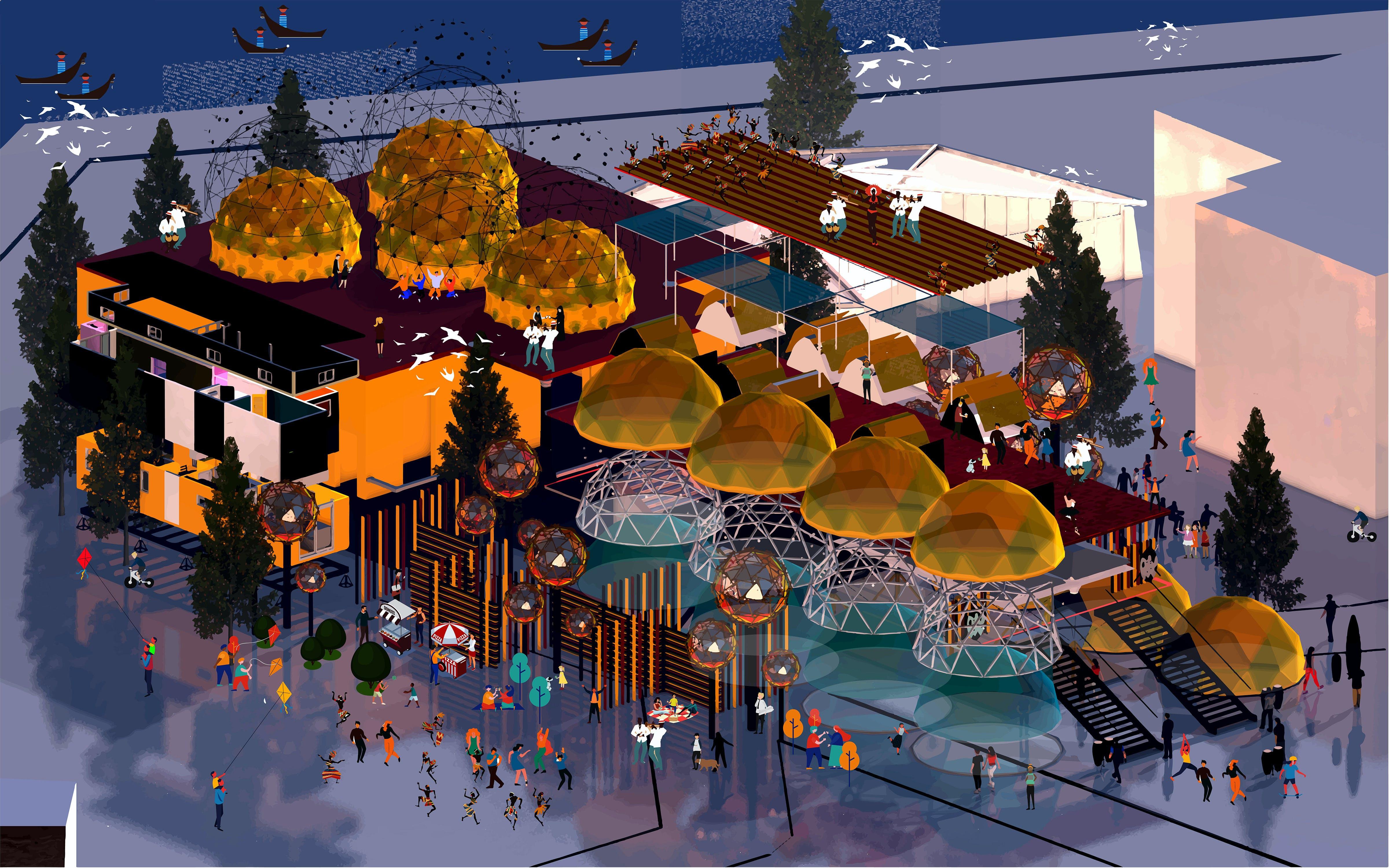
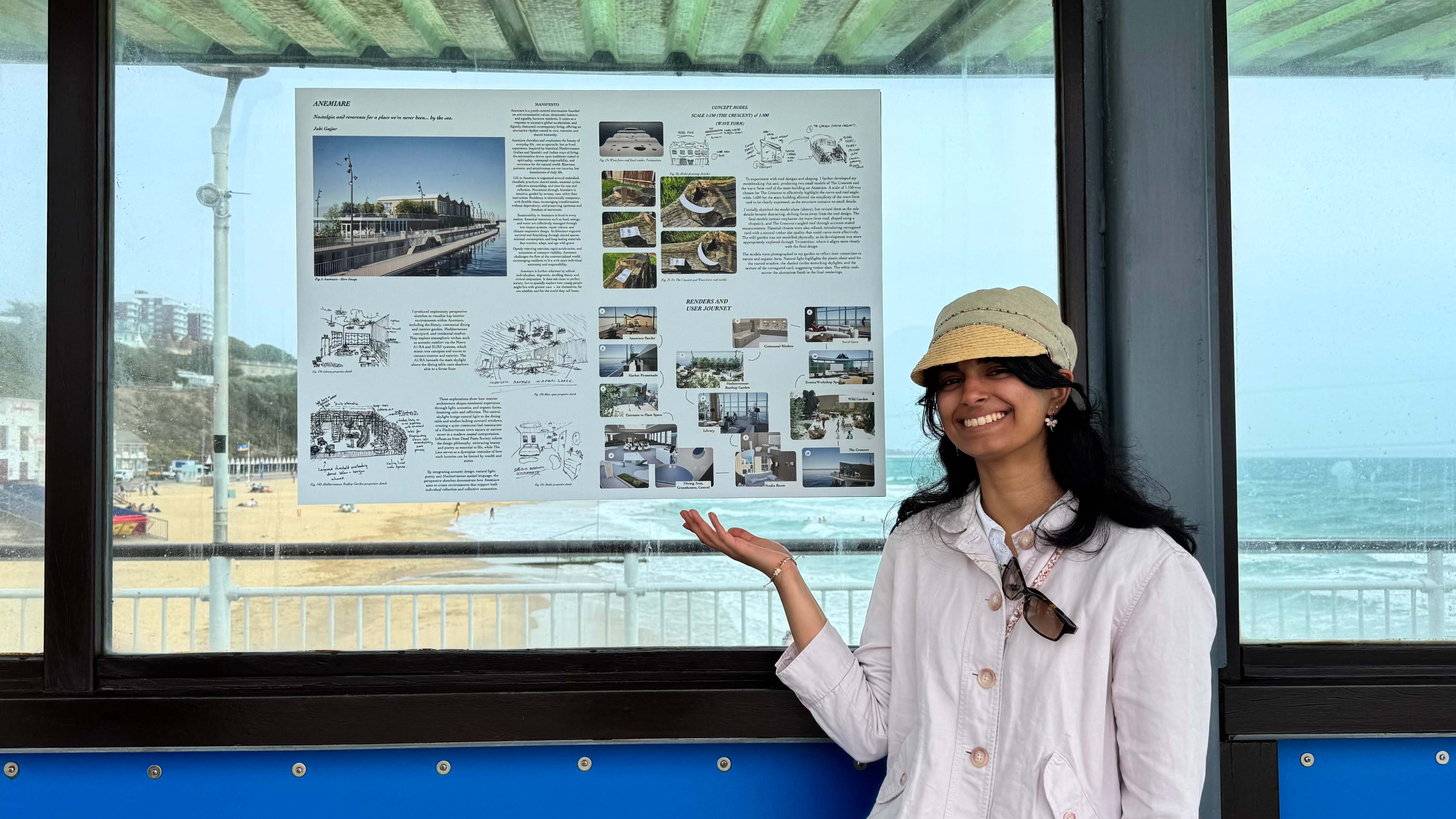
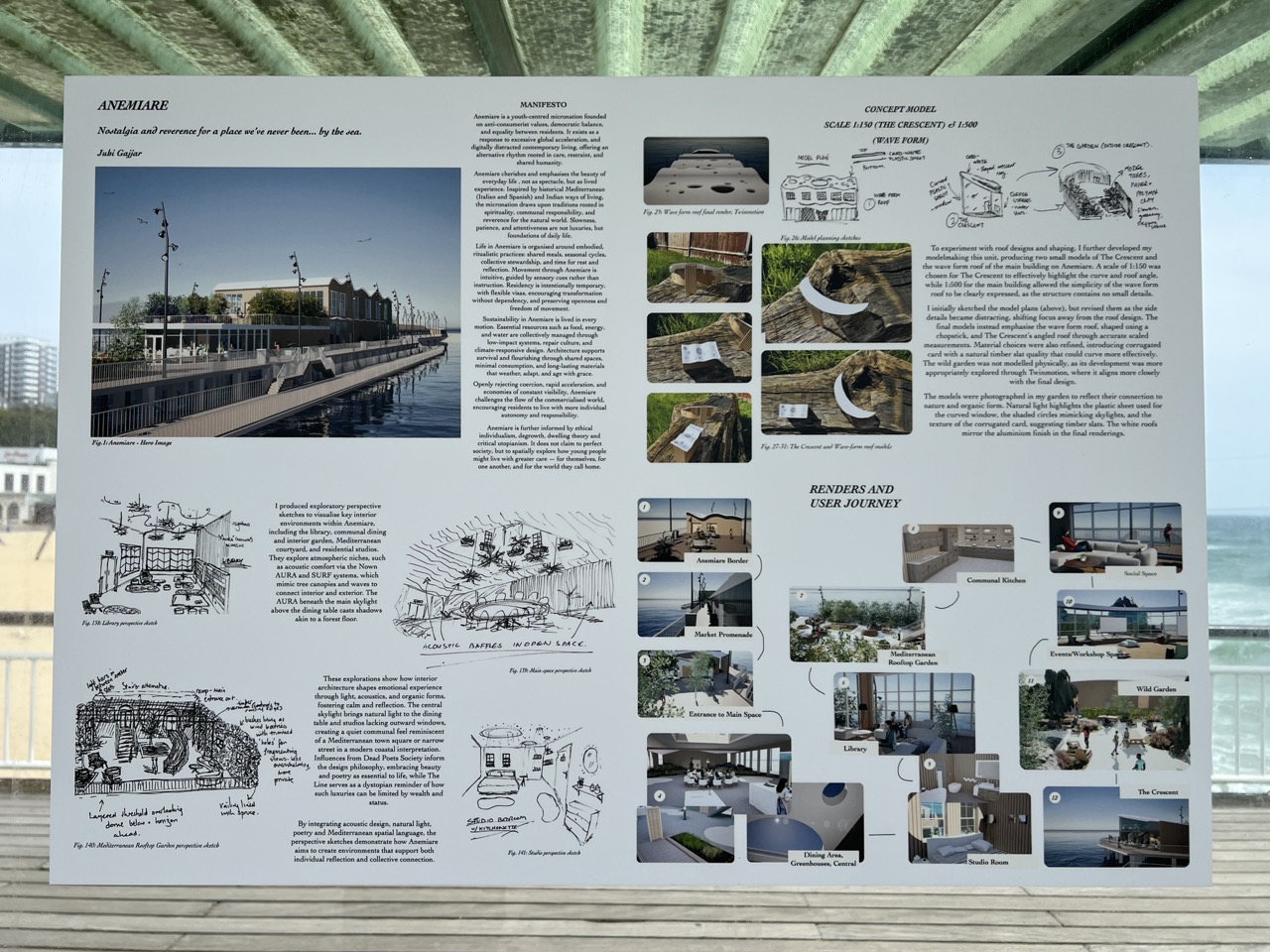
Among the projects on display is my own micronation proposal, Anemiare. Seeing it displayed for the first time was a surreal experience. I had initially signed up for this experience back in the first term and eagerly awaited to see if my work would be chosen, putting everything I had into it to make sure it would be exhibition worthy regardless of whether it would be picked or not. It all counted as professional growth and visibility, something I had yet to experience.
About Anemiare
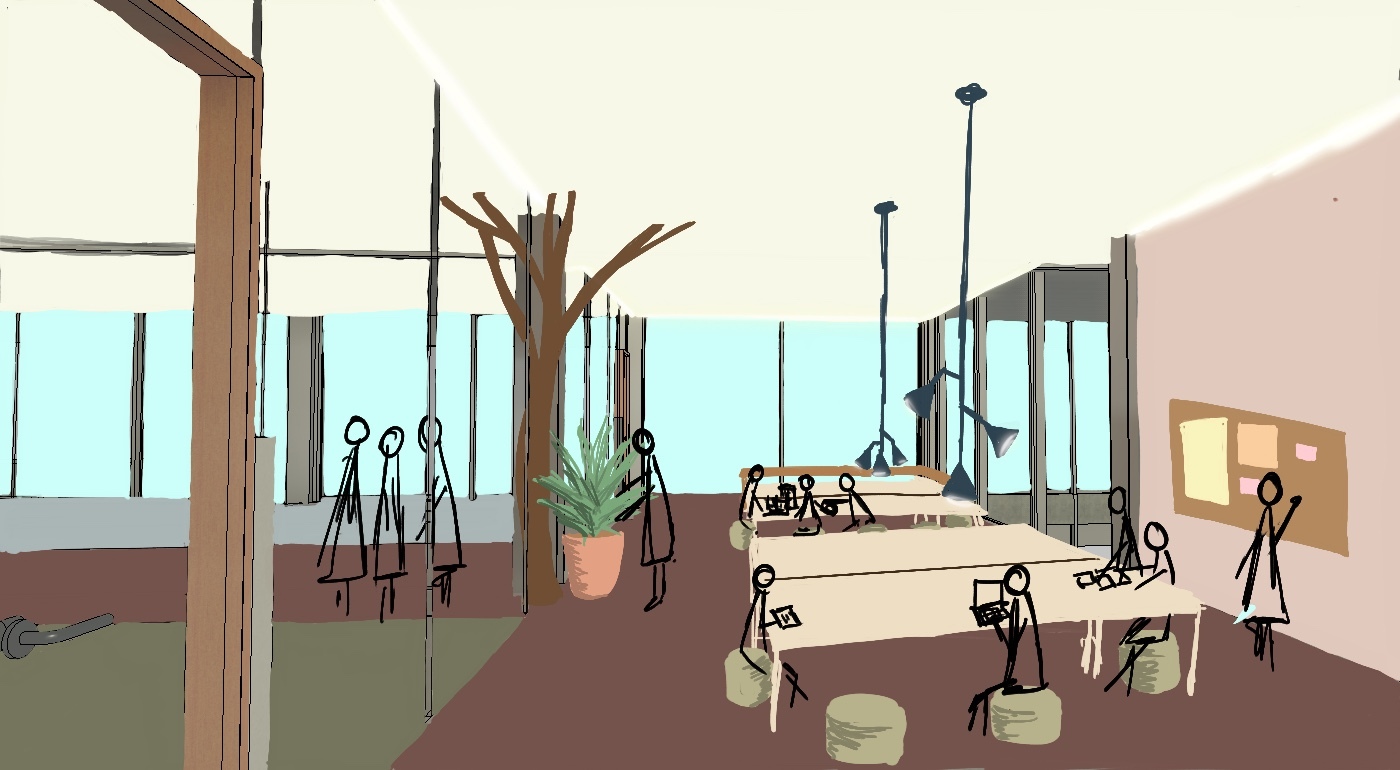
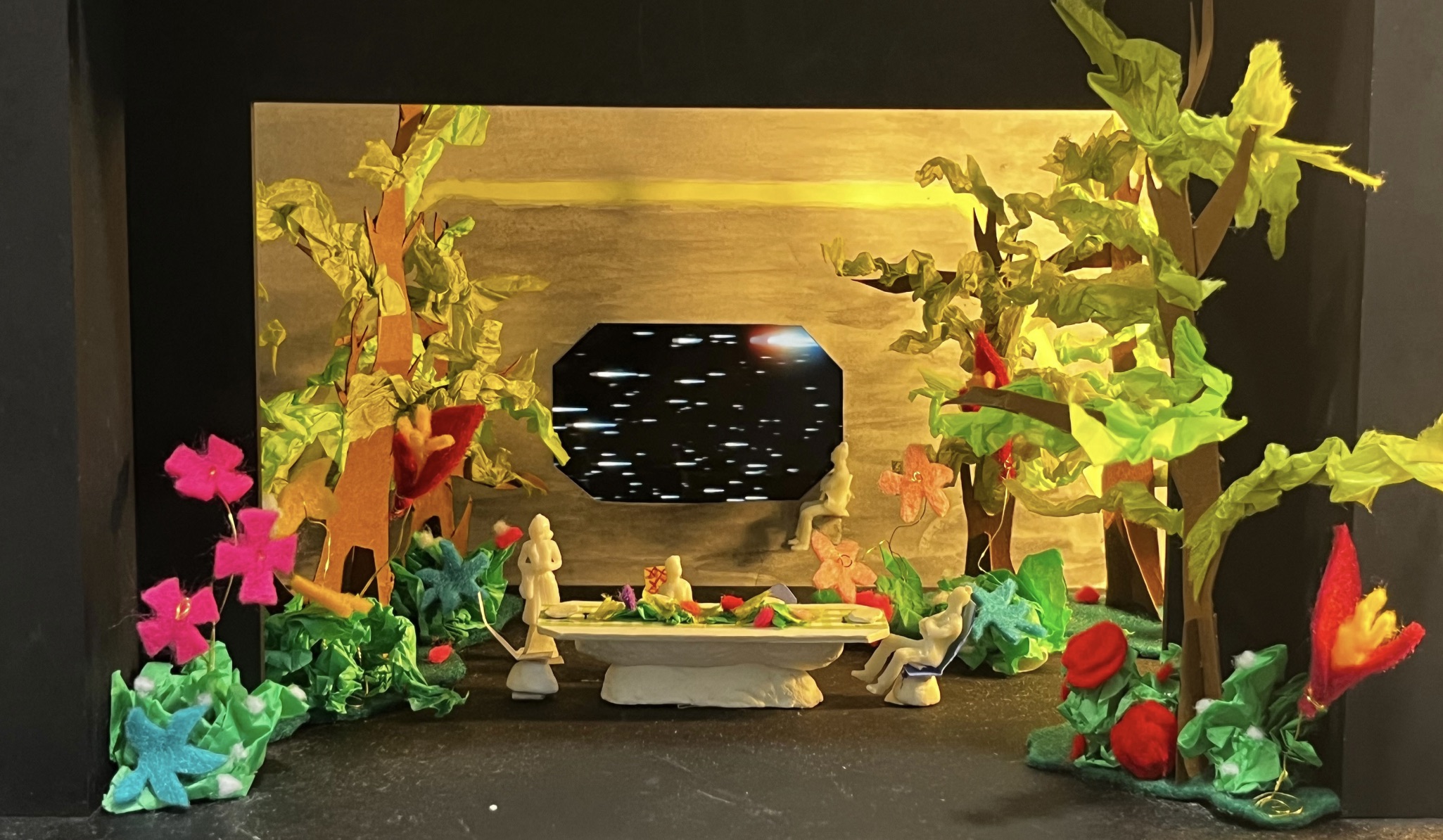
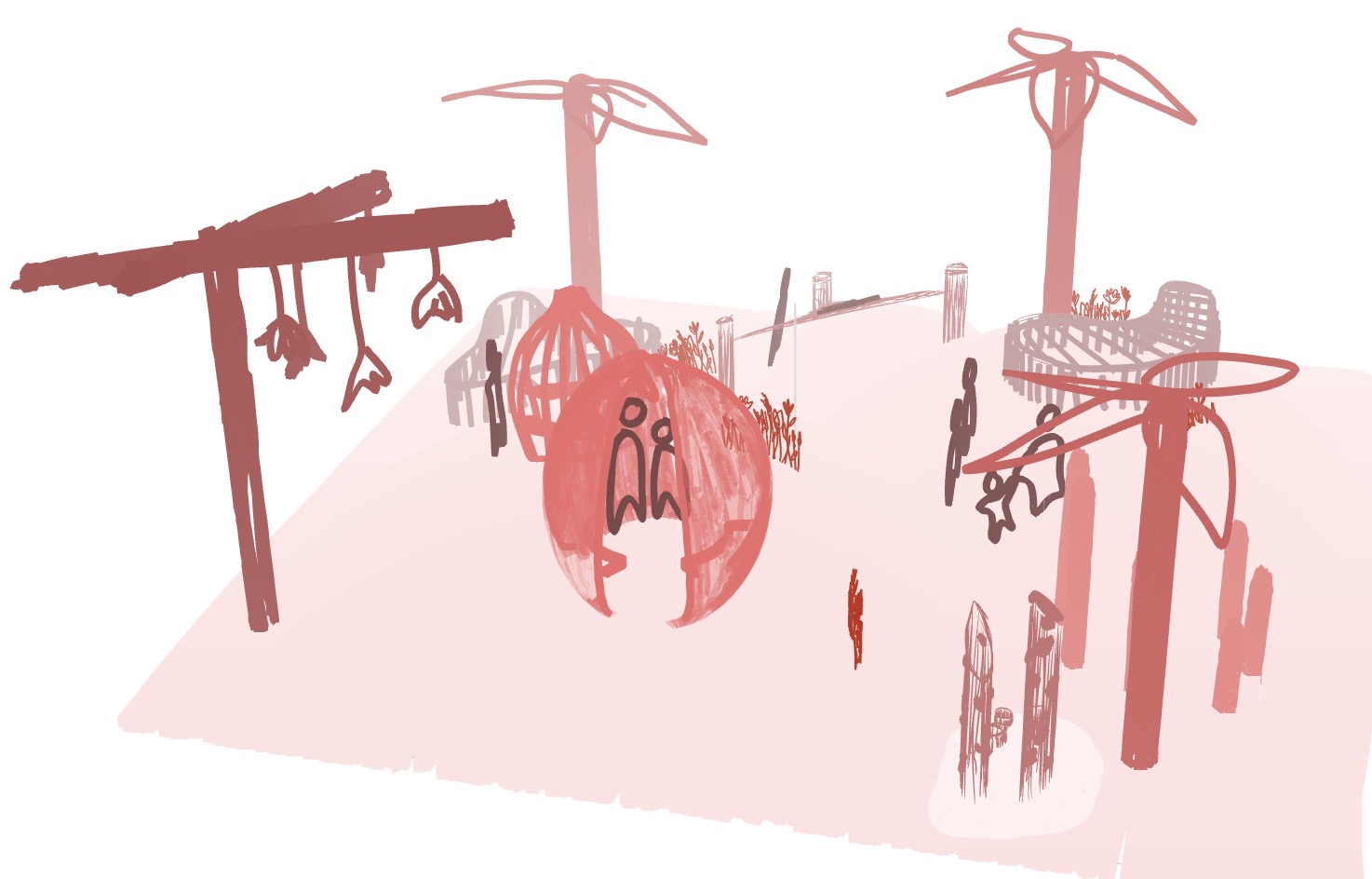
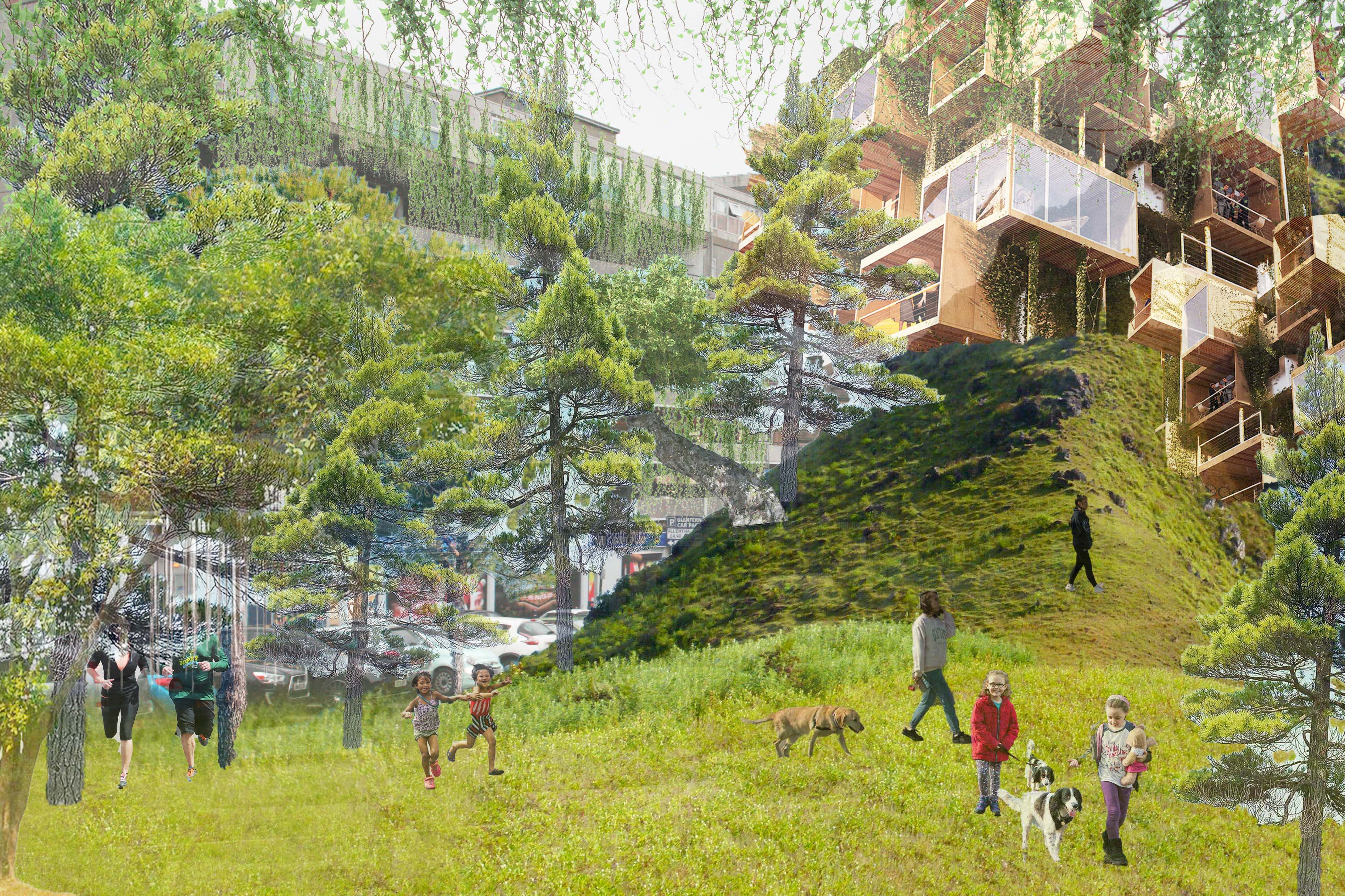
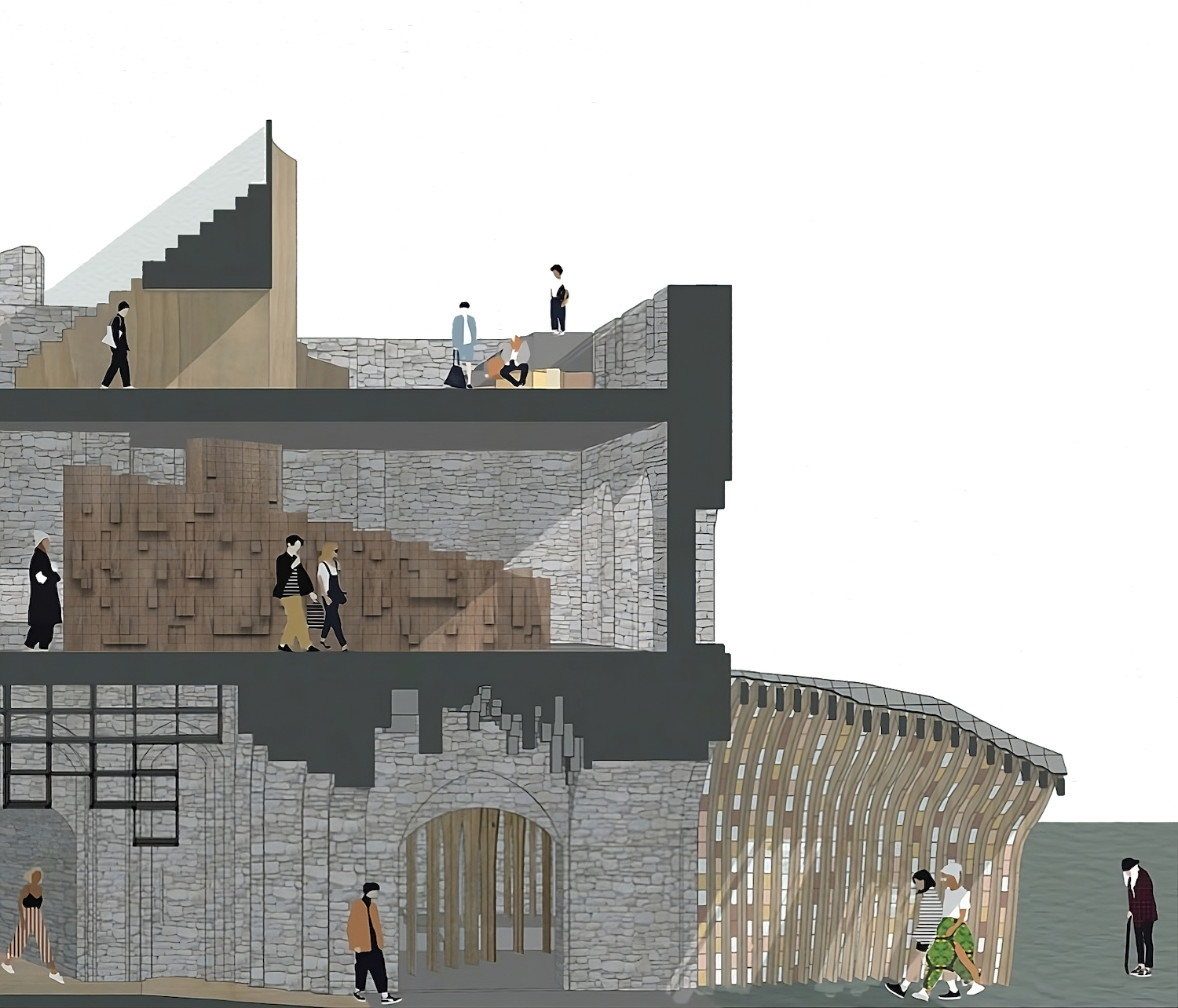
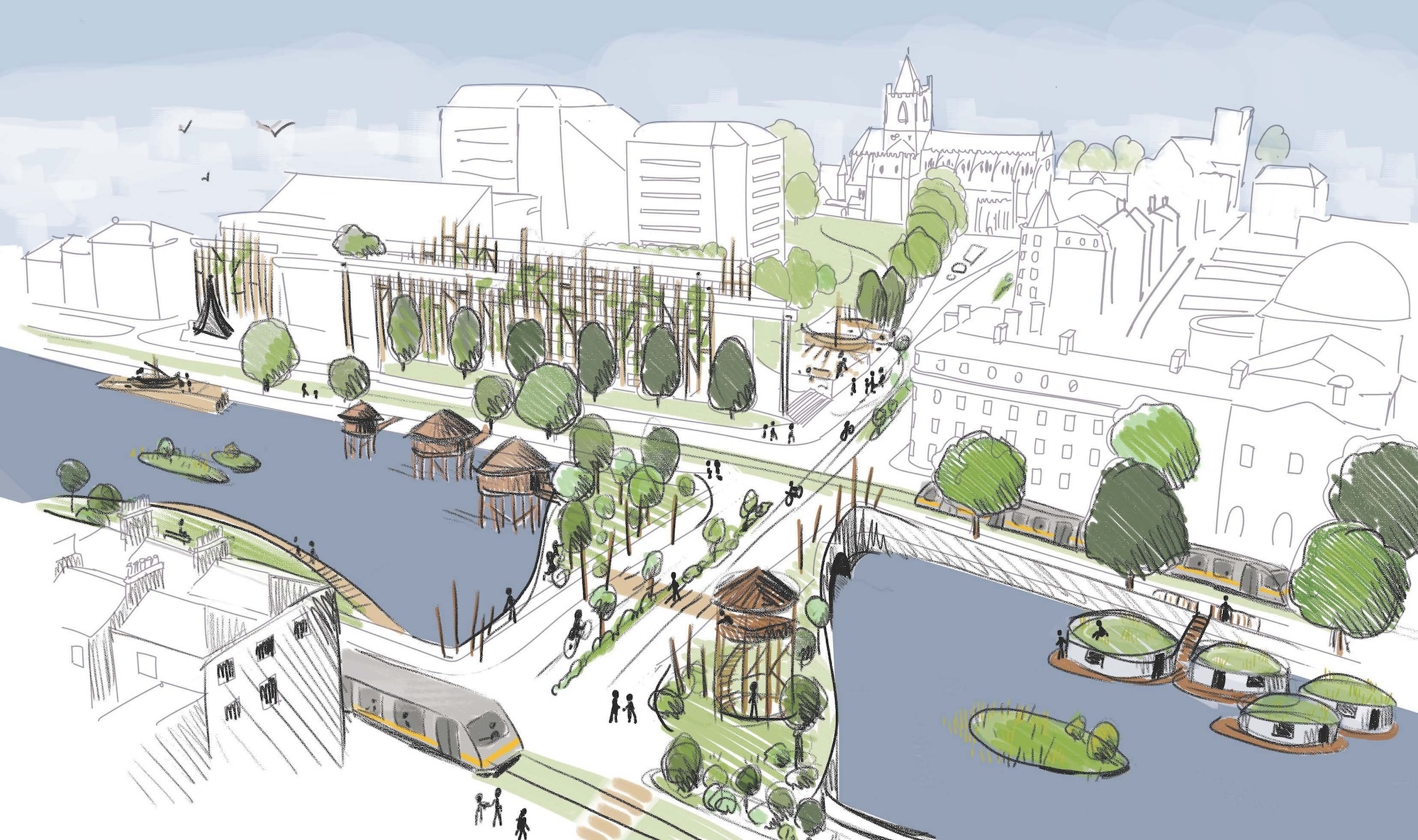
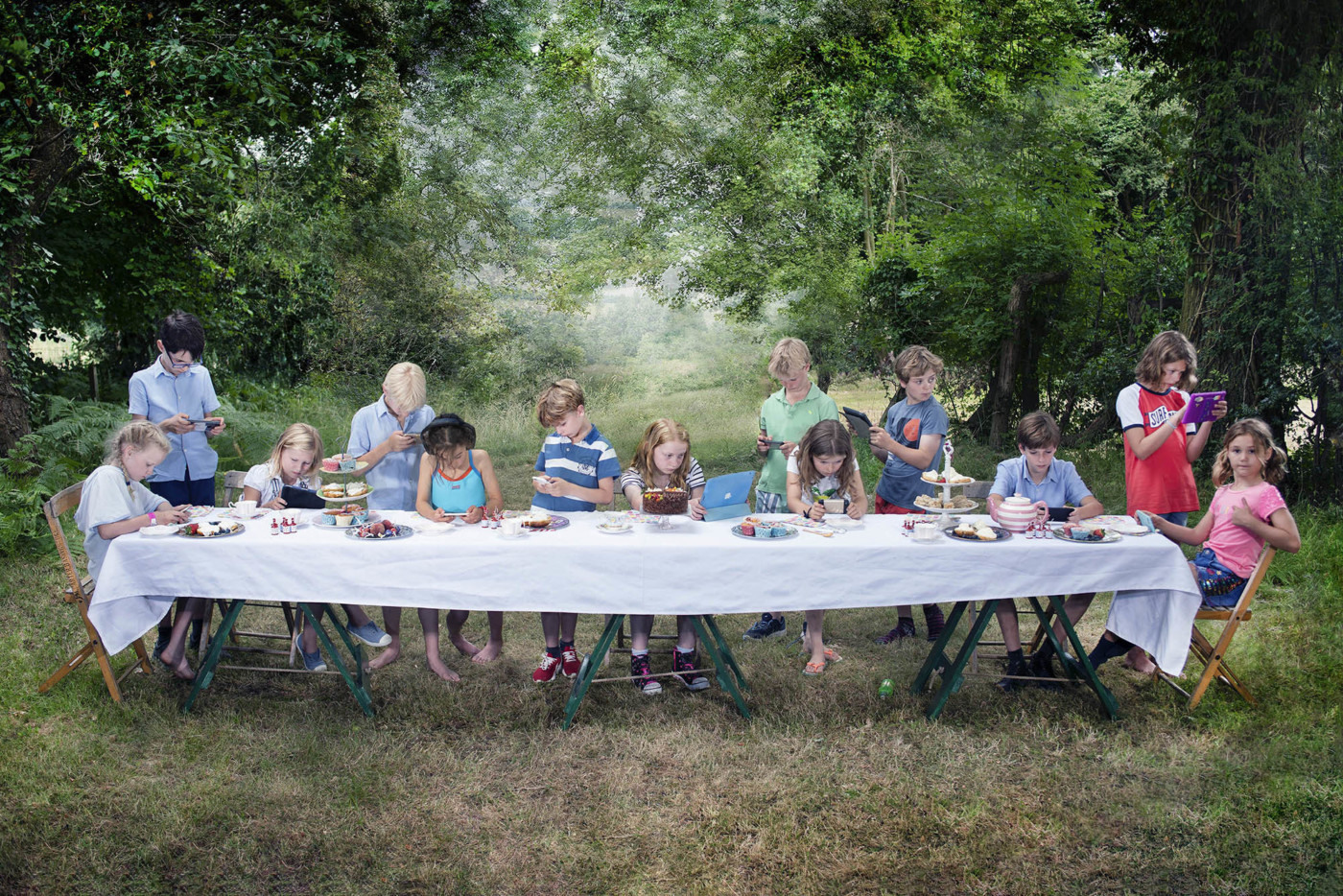
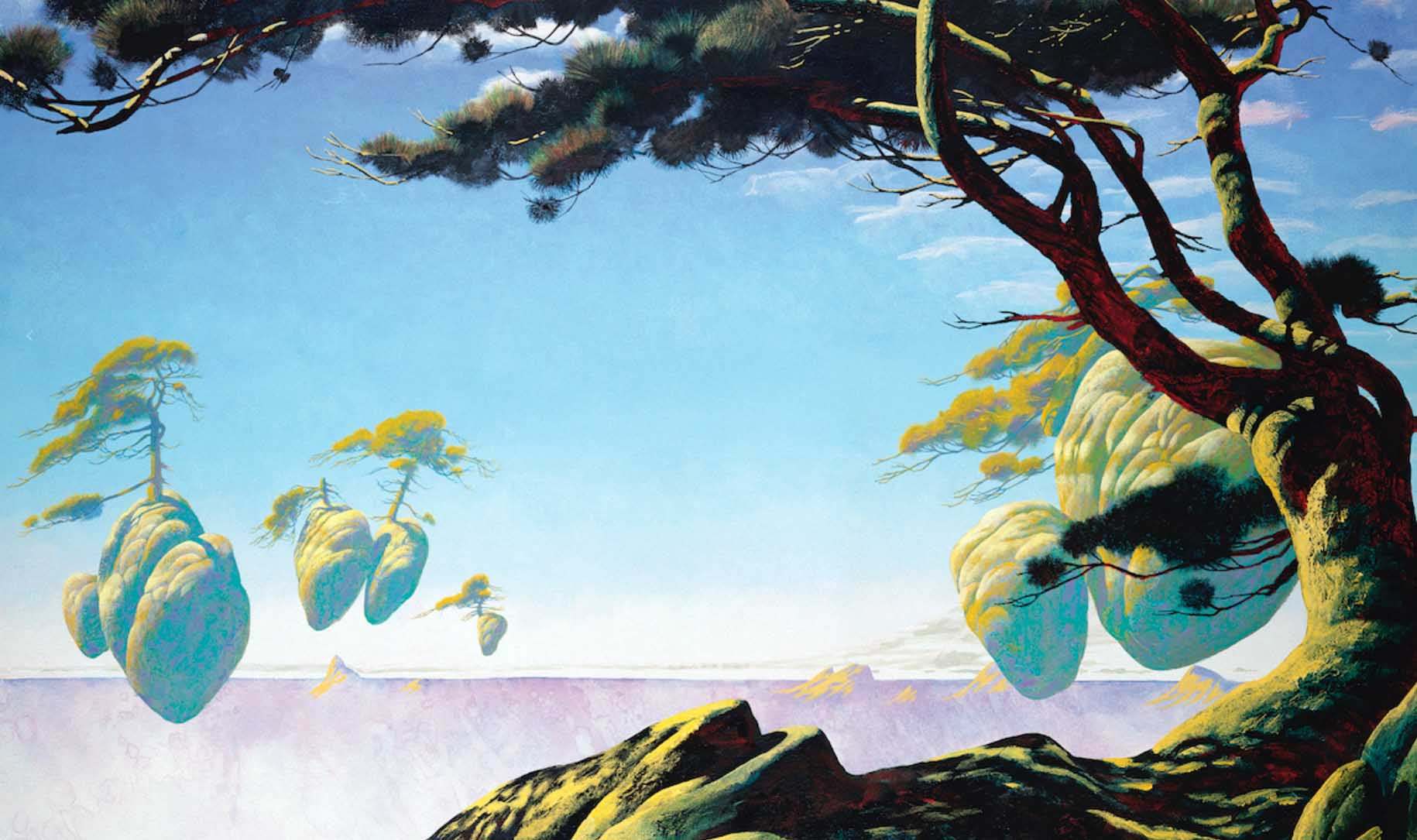
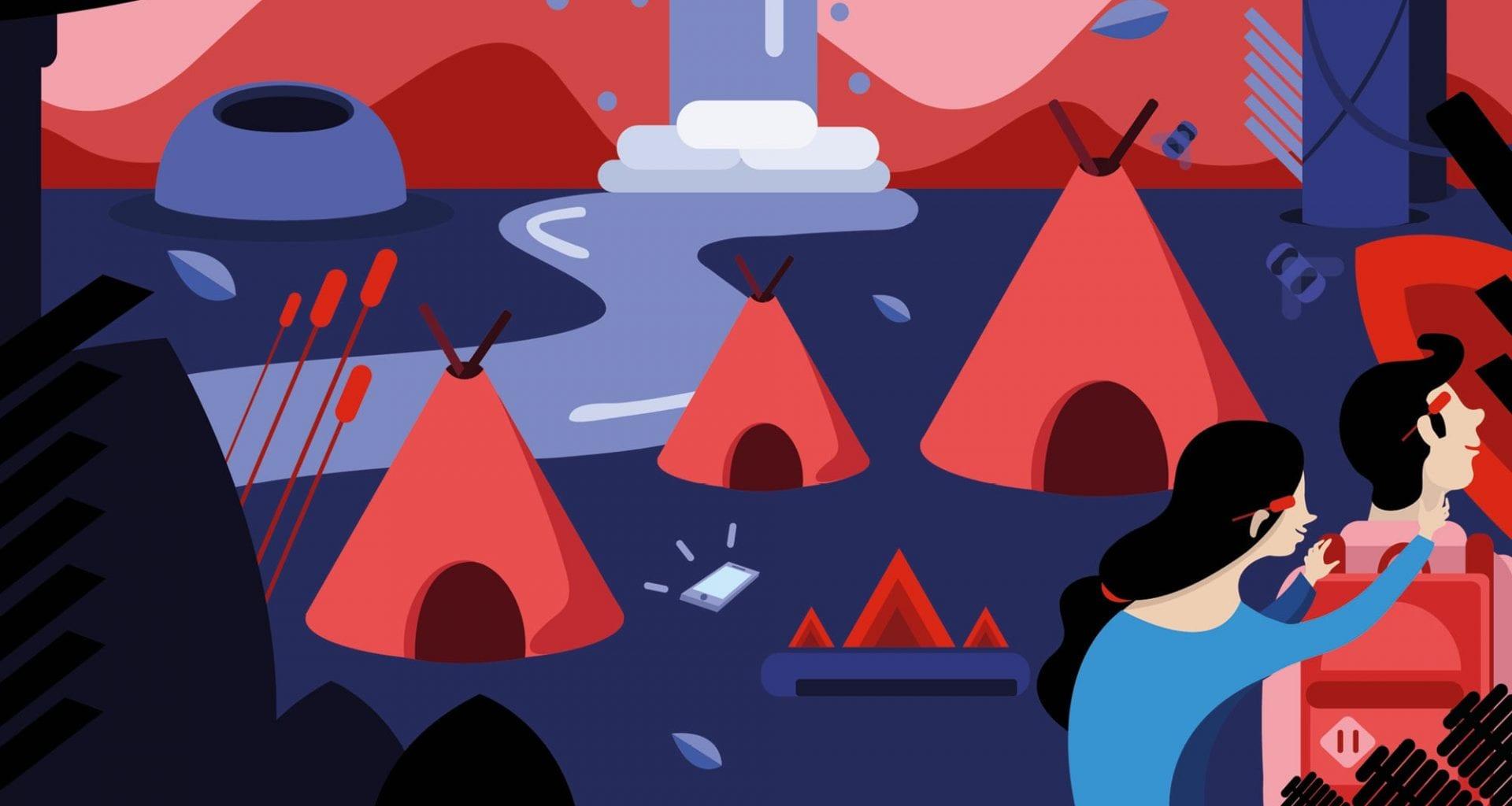
Developed throughout the Design for a Micronation unit, Anemiare explored themes of identity, belonging and community – how people are losing themselves to a digital whirlwind of misinformation, consumerism and influencer promoting. It was essentially a love letter to my inner self, how I've always felt polarised by the herd mentality, whether I could truly embrace nature, creativity and the simple joys of life without drowning in society's norms and expectations.
Anemiare was a political, social and environmental experiment at whether it was possible to create a logical utopia for temporary residence, a place where people could learn simpler, more intentional ways of living, to carry them through their life long after they leave.
Like many projects, it began as a blank page, gradually evolving through research, sketching, experimentation and countless design decisions. At the time, my focus was simply on creating the strongest project I could, through a personally challenging time. All I wanted was to achieve a grade I would be proud of, as well as approach the brief in the most personal way I could. I never imagined that months later I would be standing on Bournemouth Pier looking at my work mounted in a public exhibition.
After spending so long immersed in the project, I had become familiar with every sketch, drawing and detail. Yet seeing it outside the university setting felt completely different. Suddenly, it was no longer an assignment. It had become something that other people could discover, interpret and appreciate in their own way.
Public engagement on opening day
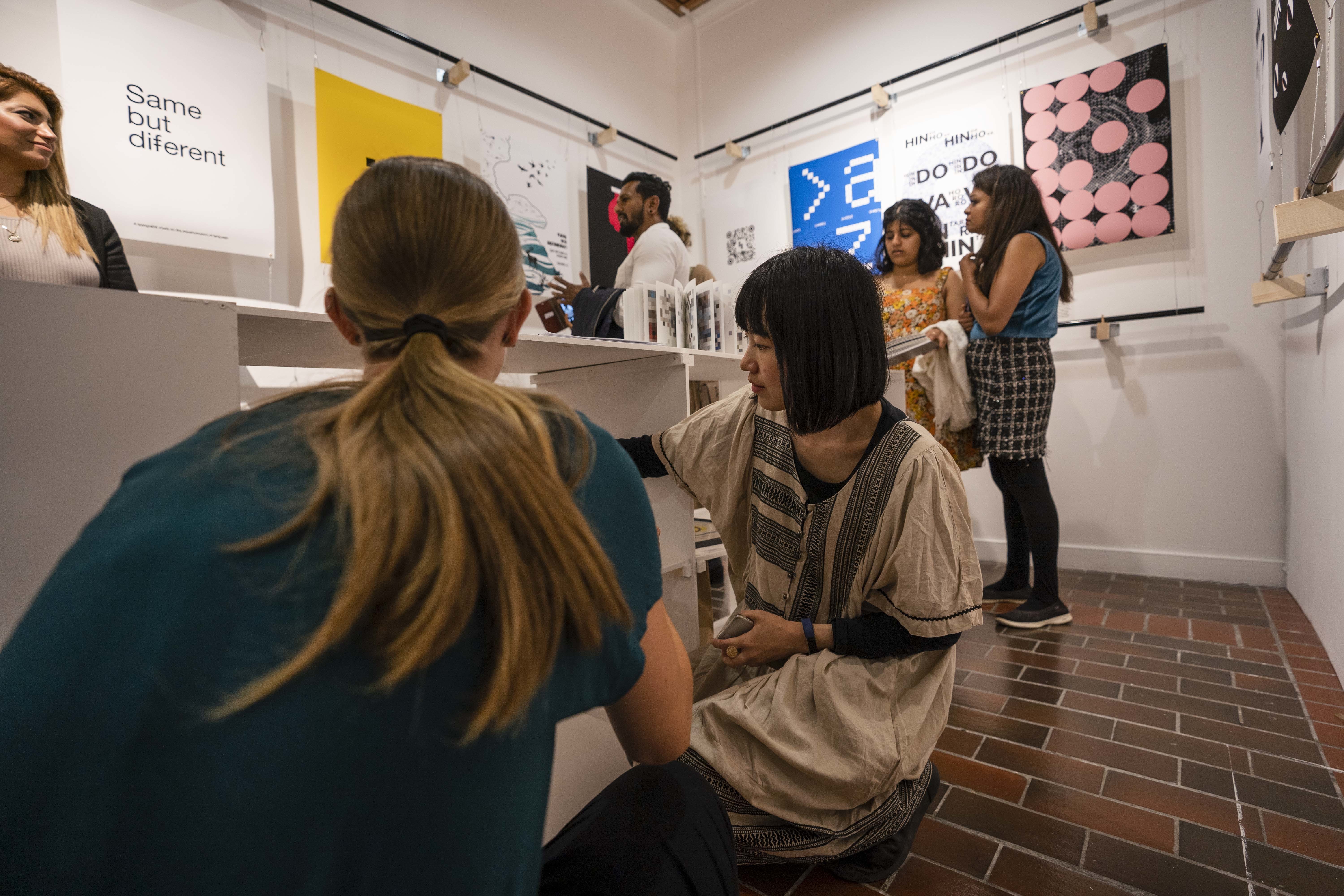
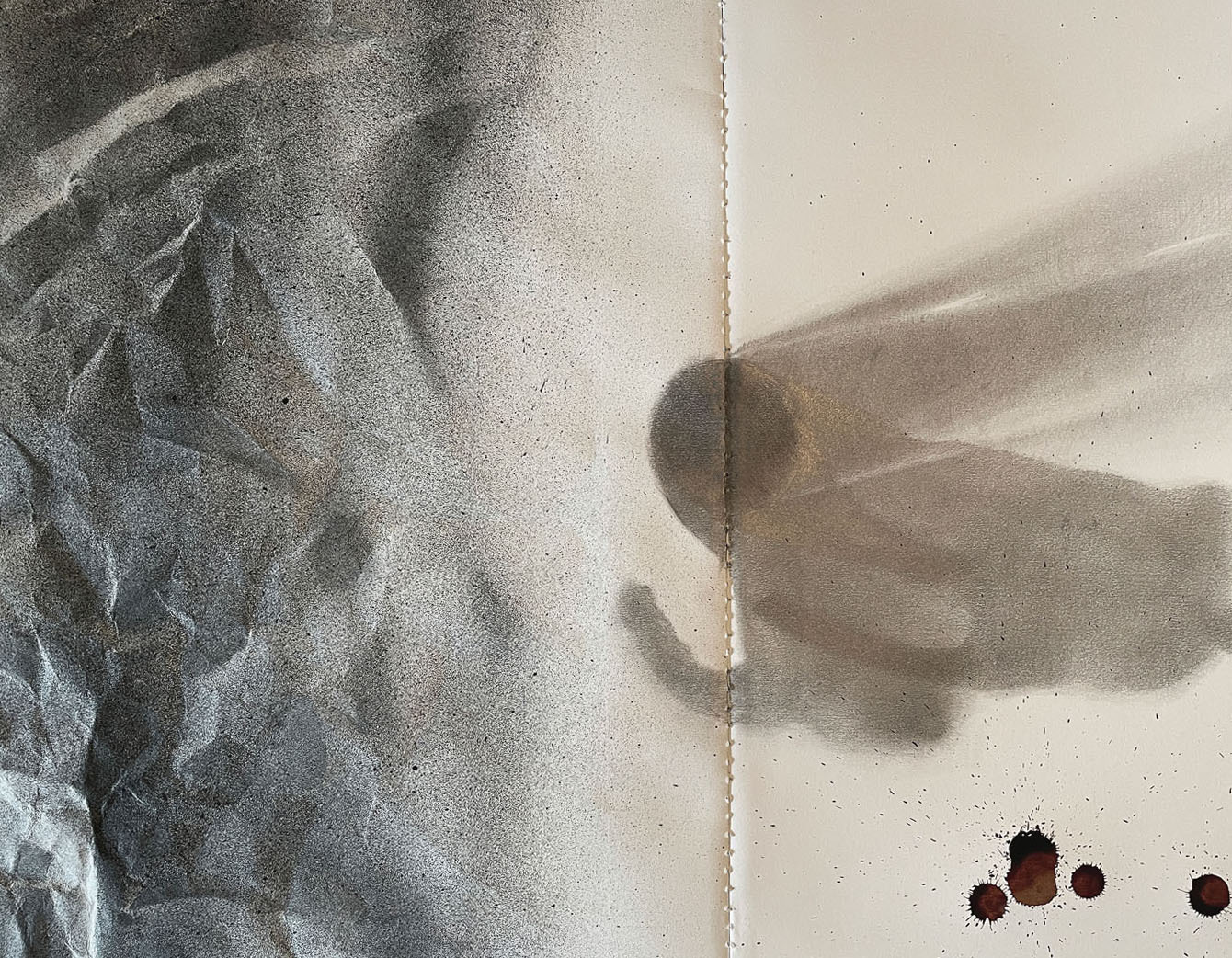
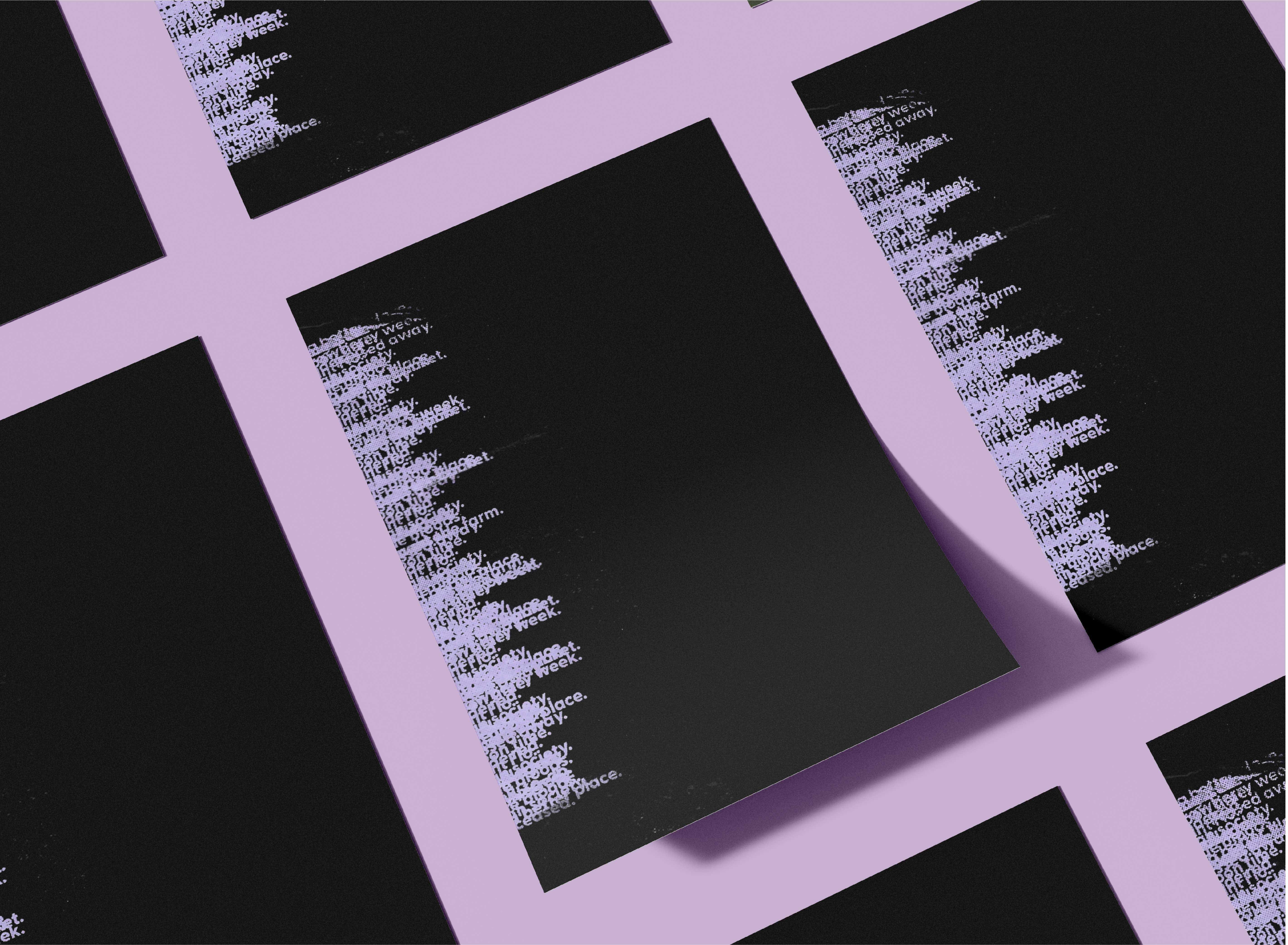
One of the most memorable parts of the day was observing the reactions of visitors and passers-by who were mainly there for the sunshine at first. People stopped to study my drawings, read the project information and discuss the work with one another. Some visitors took particular interest in the hand-drawn elements of my project, proudly shown on my poster, commenting on the sketches and visual development work that formed a key part of my design process.
As someone who genuinely enjoys sketching and analogue methods of communication, those conversations meant a great deal to me. I am a tactile designer who prefers to work with my hands than the screen. We live in a time when image generation technology can create visuals within seconds, yet people were still drawn to the imperfections, personality and craftsmanship of hand-produced work. Hearing strangers compliment my sketches and models (photographed in my garden for all to see!) reminded me that traditional creative skills continue to hold value, not only within design education but also in the eyes of the wider public. It fostered a great sense of pride within myself, to see what I was capable of, especially through the eyes of admirers.
The experience became even more meaningful because I was able to share it with my family. Design projects can often feel like solitary journeys. They involve long evenings, endless pot noodles (and often regret), moments of uncertainty and a significant amount of perseverance. Family members often hear about projects without fully seeing the scale of what goes into them. Watching my family view the exhibition and seeing how proud they were was one of the most rewarding moments of the entire experience. They've known me my whole life, and how from primary school I'd always aimed for perfection in everything I did, even when it wasn't so important. To see that hard work paying off created space for a nostalgic moment of reflection. It made me realise how much support exists behind every achievement, and how much my family's words mean everything to me.
Final thoughts
For me, seeing Anemiare exhibited felt like a glimpse into the future I am working towards. It transformed a university project into something tangible and public, reinforcing my ambition to pursue a career within design. Most importantly, it reminded me how far I have come.
If you happen to be in Bournemouth before 26 June, I would highly recommend visiting the exhibition on Bournemouth Pier. Alongside Anemiare, you’ll discover an incredible range of creative work produced by the talented second-year BA (Hons) Interior Architecture and Design students at AUB, each offering unique perspective on what a micronation could become.