




When you hear the words “dissertation,” most people think of stress, citations, and long nights staring at a screen. But for me, this project became one of the most rewarding parts of my second year at AUB. It didn’t feel like a chore, because it connected deeply with something I’ve loved since I was three: LEGO.
Our research brief was open-ended. We could explore any topic within the realm of design, brand, culture, communication, as long as it was research-driven. I instantly saw this as a creative opportunity rather than a traditional academic task. I’ve been collecting LEGO for as long as I can remember and have grown up alongside a dramatic shift in the brand’s direction.
The launch of the “Adults Welcome” range marked a clear pivot toward adult consumers. This shift coincides with broader generational changes, as children’s play increasingly moves into the digital realm, LEGO has responded by redefining what a toy can mean for older audiences. My proposal explored how LEGO evolved from a child-focused toy into a display and mindfulness-oriented object for adults, and what that evolution suggests about the future of toy design.
My topic explored how LEGO’s brand strategy is not only increasingly appealing to, but actively targeting “kidults,” adults who collect what’s traditionally considered a toy for reasons such as relaxation, display, nostalgia, or wellness. The kidult market is widely reported as one of the fastest-growing segments in the toy industry, and to maximise appeal, LEGO has expanded far beyond the stereotypical image of the nerdy adult collector.
I looked at the brand’s growing diversification, from Star Wars starships that cater to the legacy of AFOL (Adult Fan of LEGO) collectors, to its bestselling Botanical Collection and wall-mounted art sets. These products don’t just serve the function of play, they speak to aesthetic values, mindfulness, and interior design. The brand is now catering to a wider lifestyle audience, expanding both what LEGO is and who it’s for.
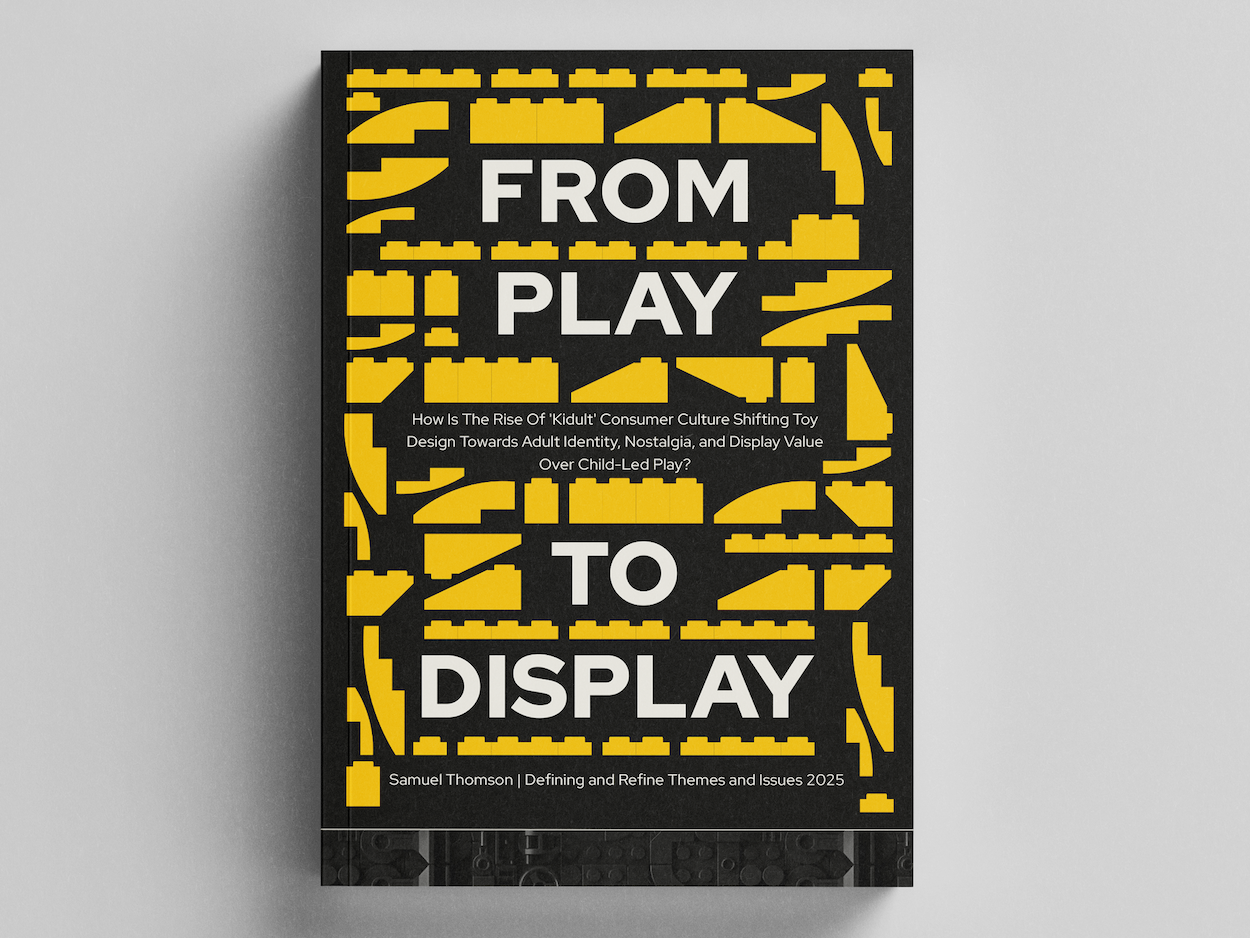
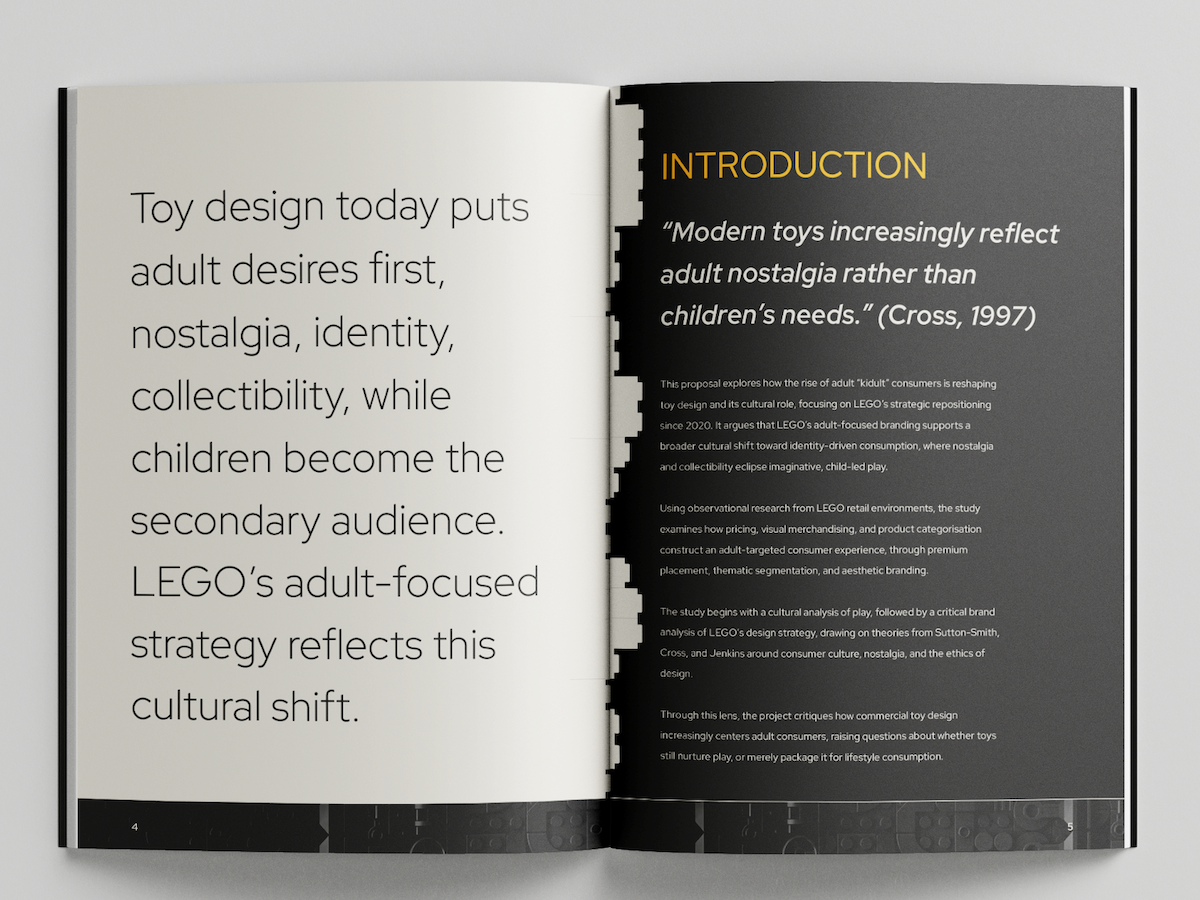
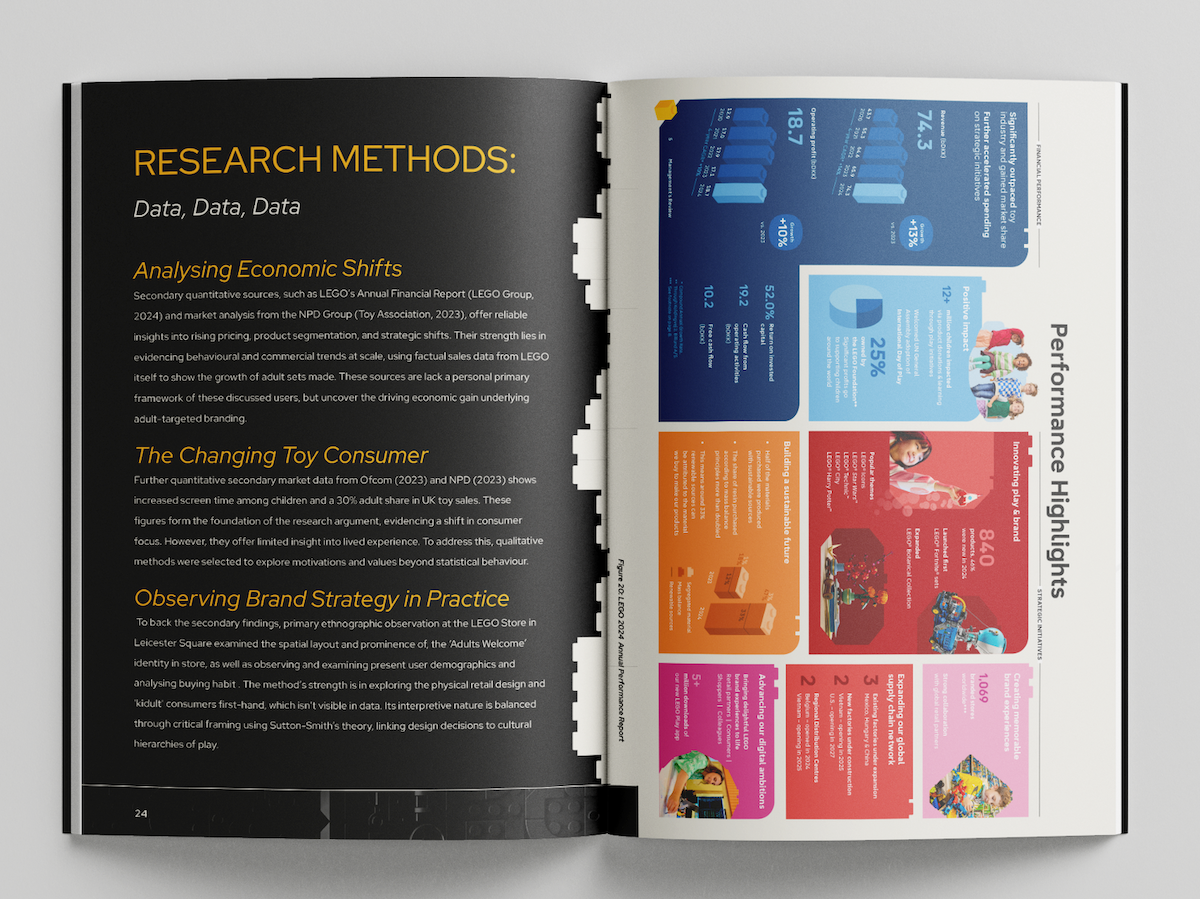
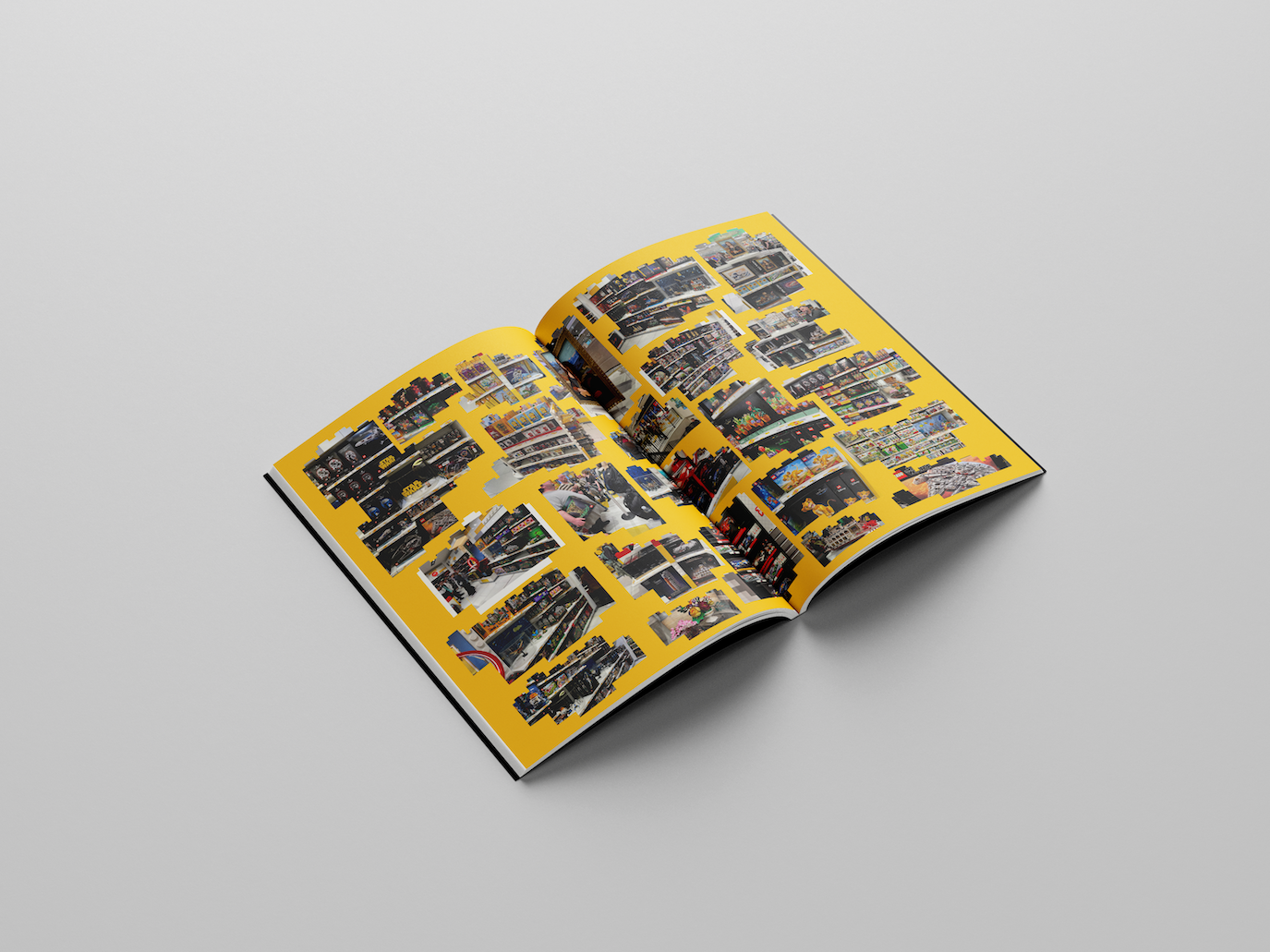
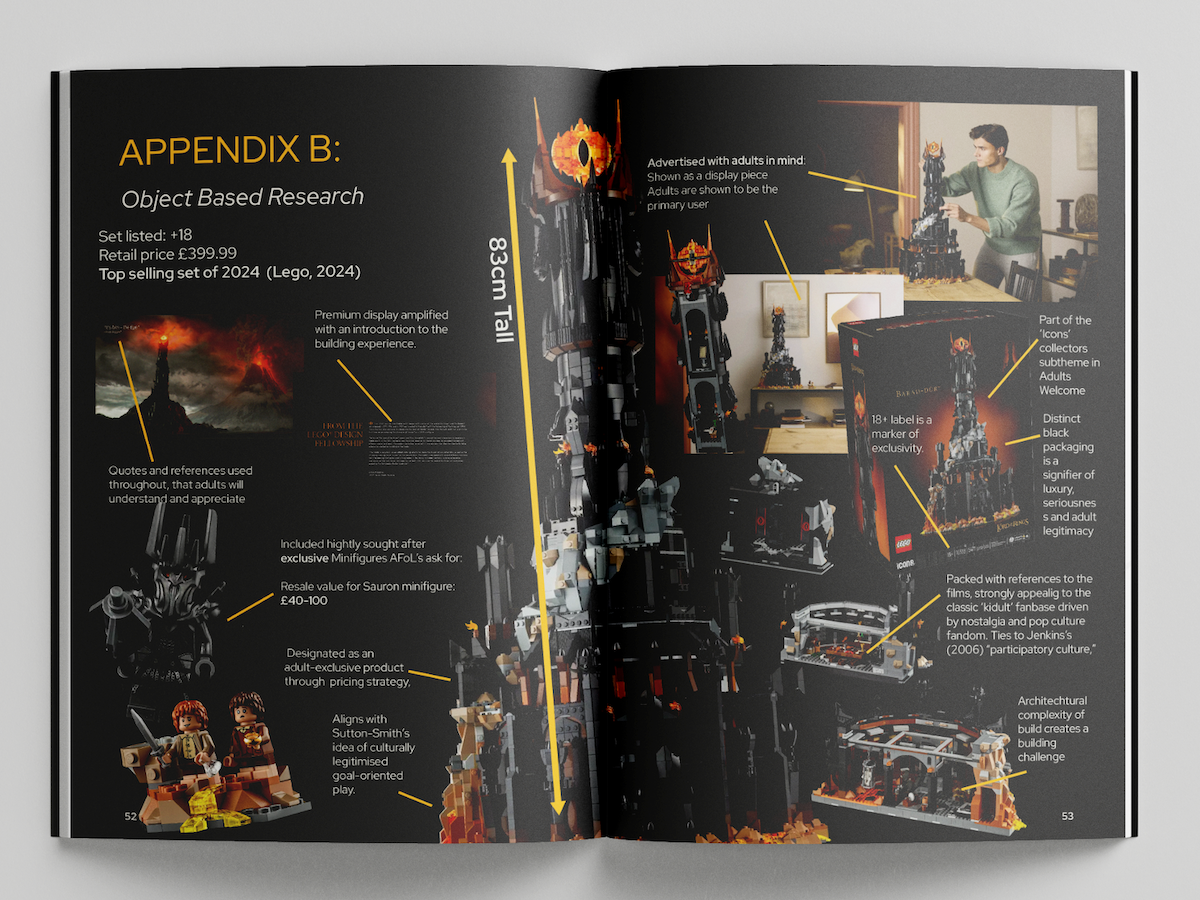
I immersed myself in primary and ethnographic research. I visited the flagship LEGO store in Leicester Square multiple times, observing which products drew the most engagement and noting the age range of customers interacting with different displays. I saw how adult-focused zones dominated the layout, highlighted through premium product placement and being highlighted on displays. I also attended the London Brick Festival to explore how passionate the AFOL community really is, building collaborative projects, setting up market stalls, and showcasing intricate personal creations.
These field observations were backed by close analysis of LEGO’s annual reports, sales trends, and bestseller data, as well as market research from NPD highlighting adult consumers as one of the fastest-growing categories in the toy sector. I also drew on theories of adult play to understand how toys today serve broader emotional, creative, and lifestyle needs.
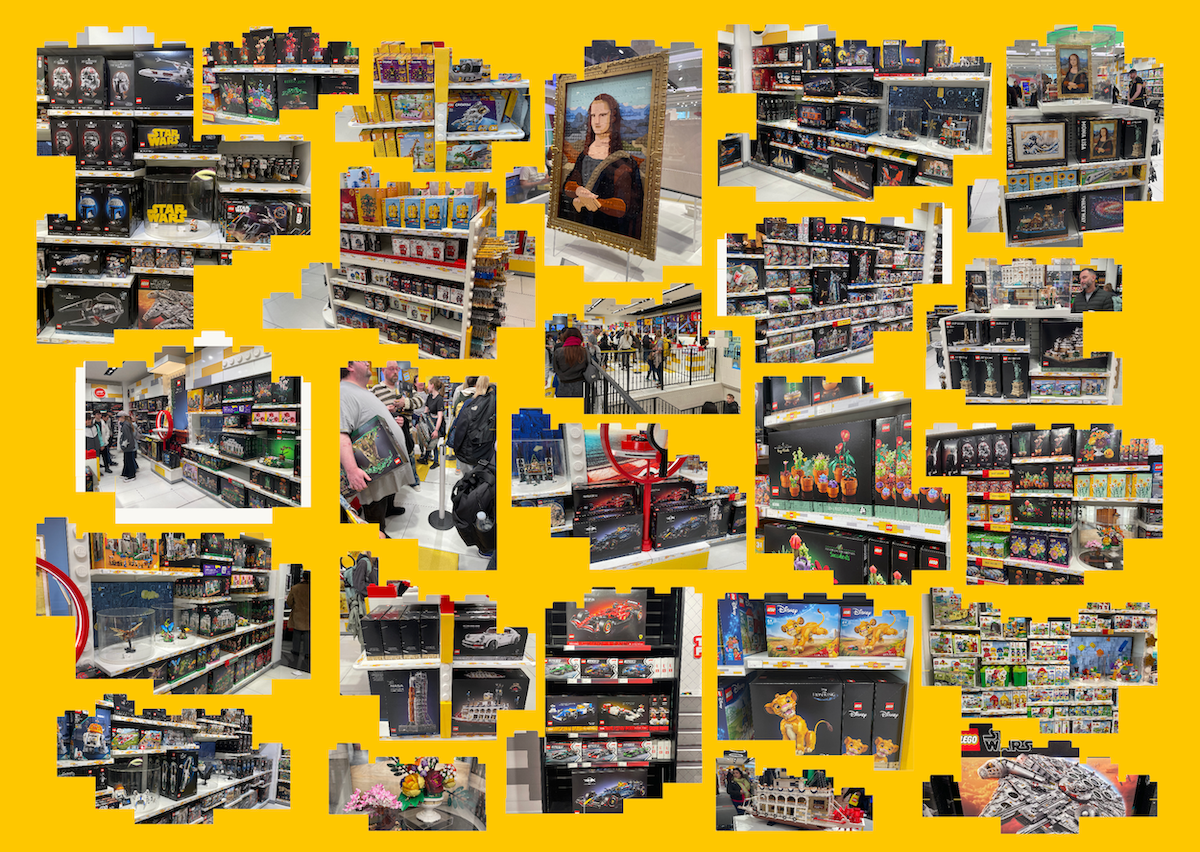
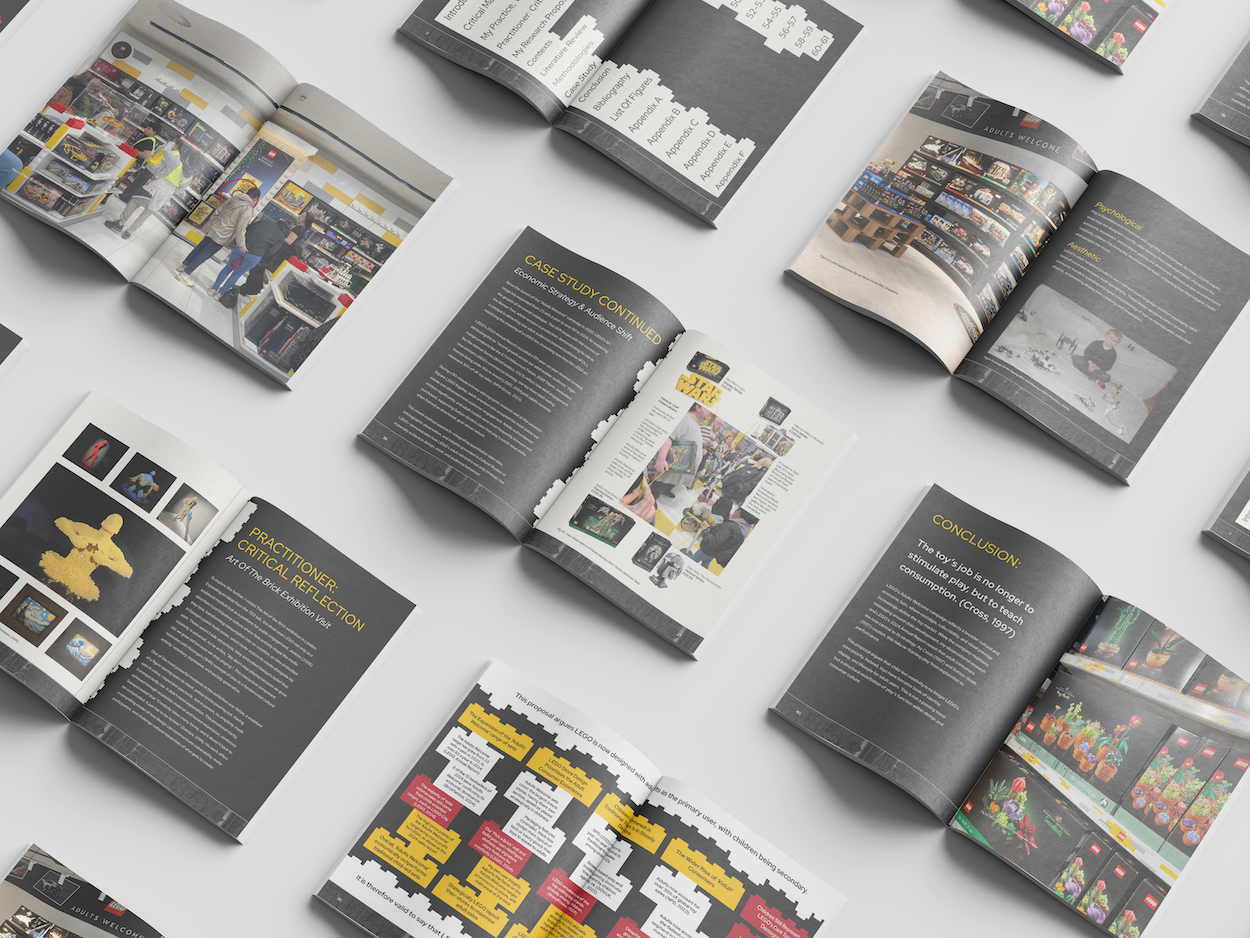
I also made a decision early on to treat this as a design project, not just a written one. That meant making the proposal feel like a brand document. I built it visually from the ground up using colour, layout, and typographic systems inspired by LEGO’s identity. It lives as a fully designed piece of editorial design that sits proudly in my portfolio. Designing it made the process genuinely enjoyable. Instead of producing a static academic submission, I created something I was excited to show others. It didn’t just work as a piece of research, it worked as a piece of design. The design became the hook that made the whole thing click.
Now, with summer ahead, I’m expanding the project further in preparation for the full dissertation next year. I’m visiting LEGOLAND Windsor to observe how LEGO is still being marketed to children and families, offering a sharp contrast to the adult-facing strategies I’ve been analysing. I’ll also be flying to Billund, Denmark, the original home of LEGO, to conduct research at the LEGO House. It houses the official LEGO museum and archive, tracing the evolution of the brand over decades. It’s an opportunity to engage directly with the company’s roots, both culturally and commercially. I’m also planning to set up creative workshops using LEGO as a participatory research tool to deepen my insight.
If you’re heading into your research proposal, my advice is this: pick something that actually excites you. I know it might sound like more work to go out and do all these extra things, site visits, design work, but it makes the process not only easier and more fun, but something you’ll genuinely look forward to. When you’re curious, you’ll want to keep researching, writing, building. It becomes less of a task and more of a project you’re proud of. Make it visual, make it active, and make it yours.
Turns out a research proposal can be fun. Who knew?