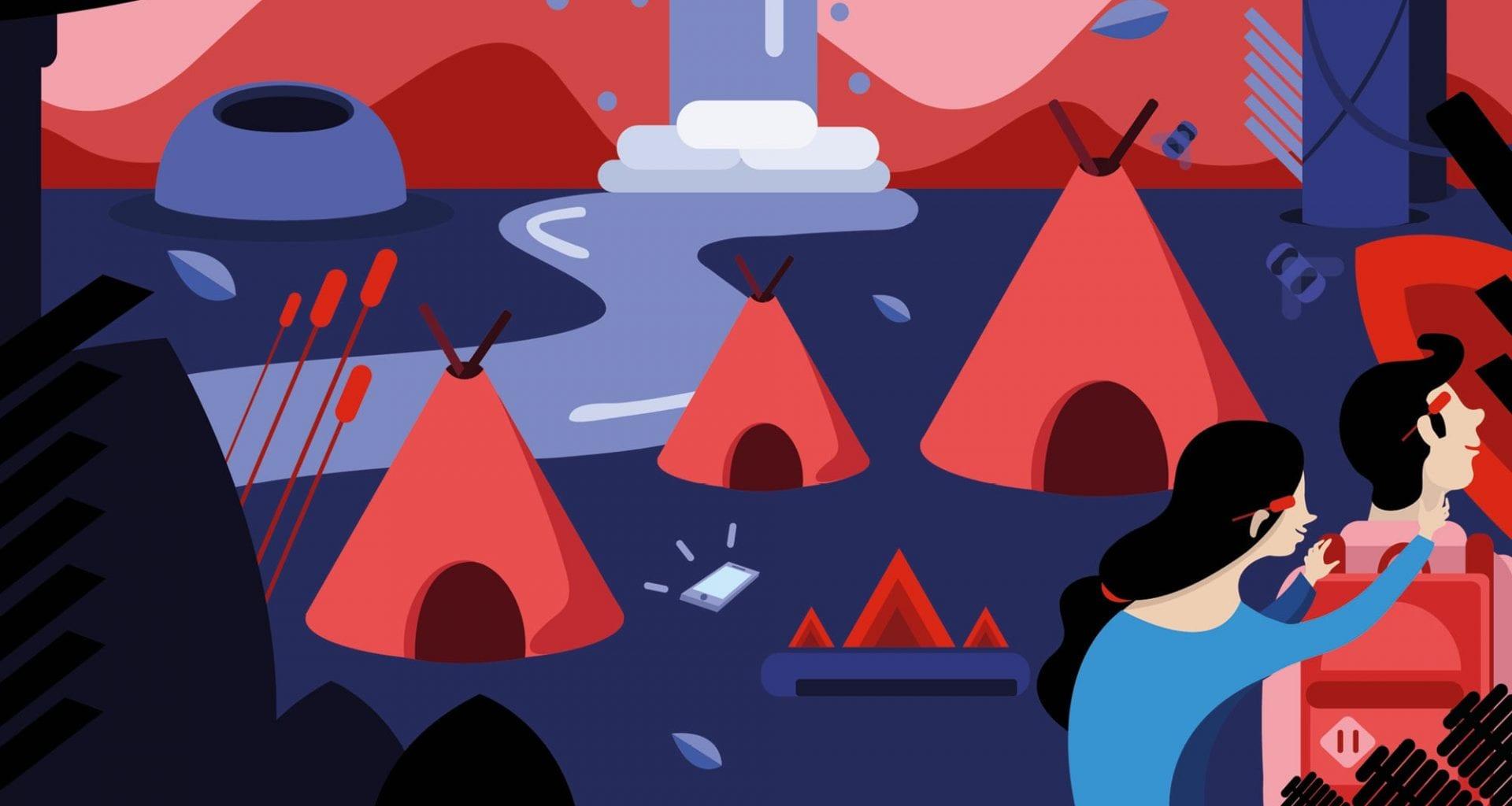
Be The Spark began with a brainstorming session in our studio. It was an open brief in terms of audience, so we explored a range of potential demographics, from jazz music enthusiasts to adults who have not used their imagination since childhood.
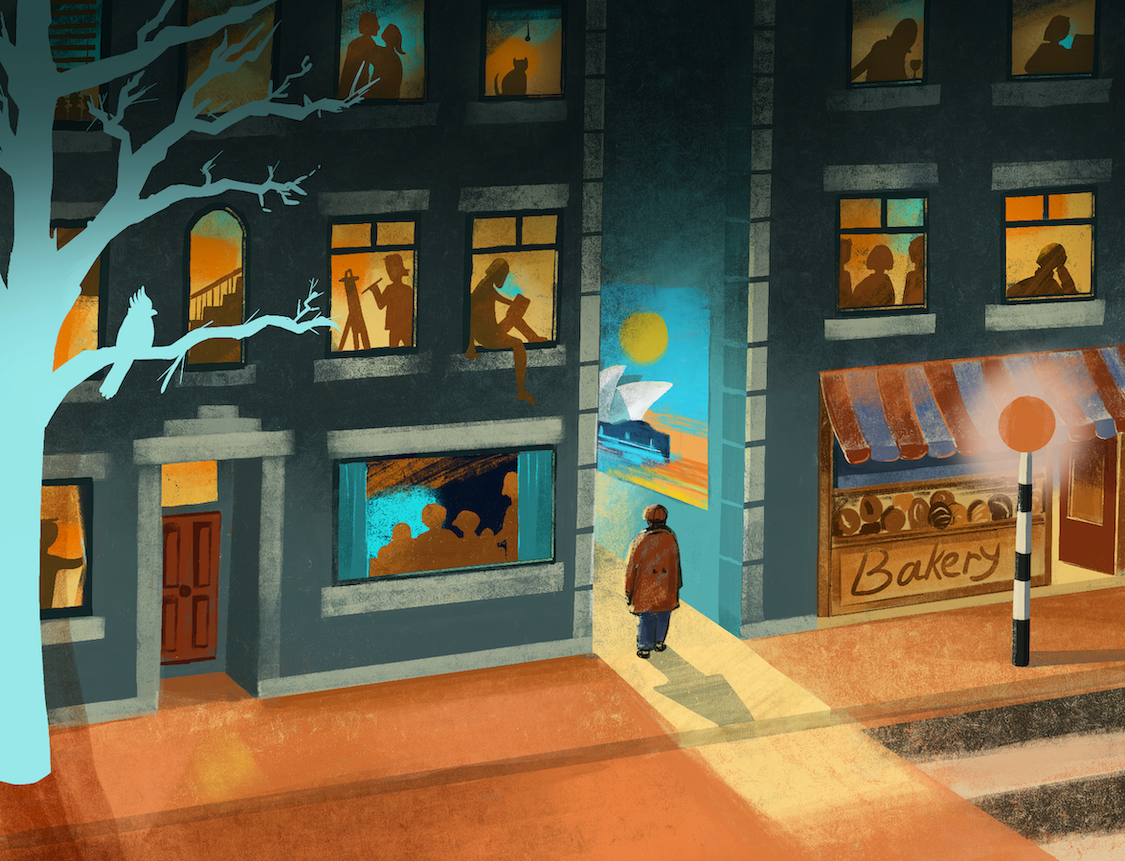
Our focus on elderly loneliness began to take shape when Lauren mentioned her next-door neighbour Phil, who her family hosts every Christmas. We collectively agreed to centre our animation on inspiring other young people to volunteer, knowing the lasting positive impact such actions can have for the older generation. The charity Re-Engage UK emerged in our research and we immediately resonated with their ethos of breaking this cycle of social isolation.
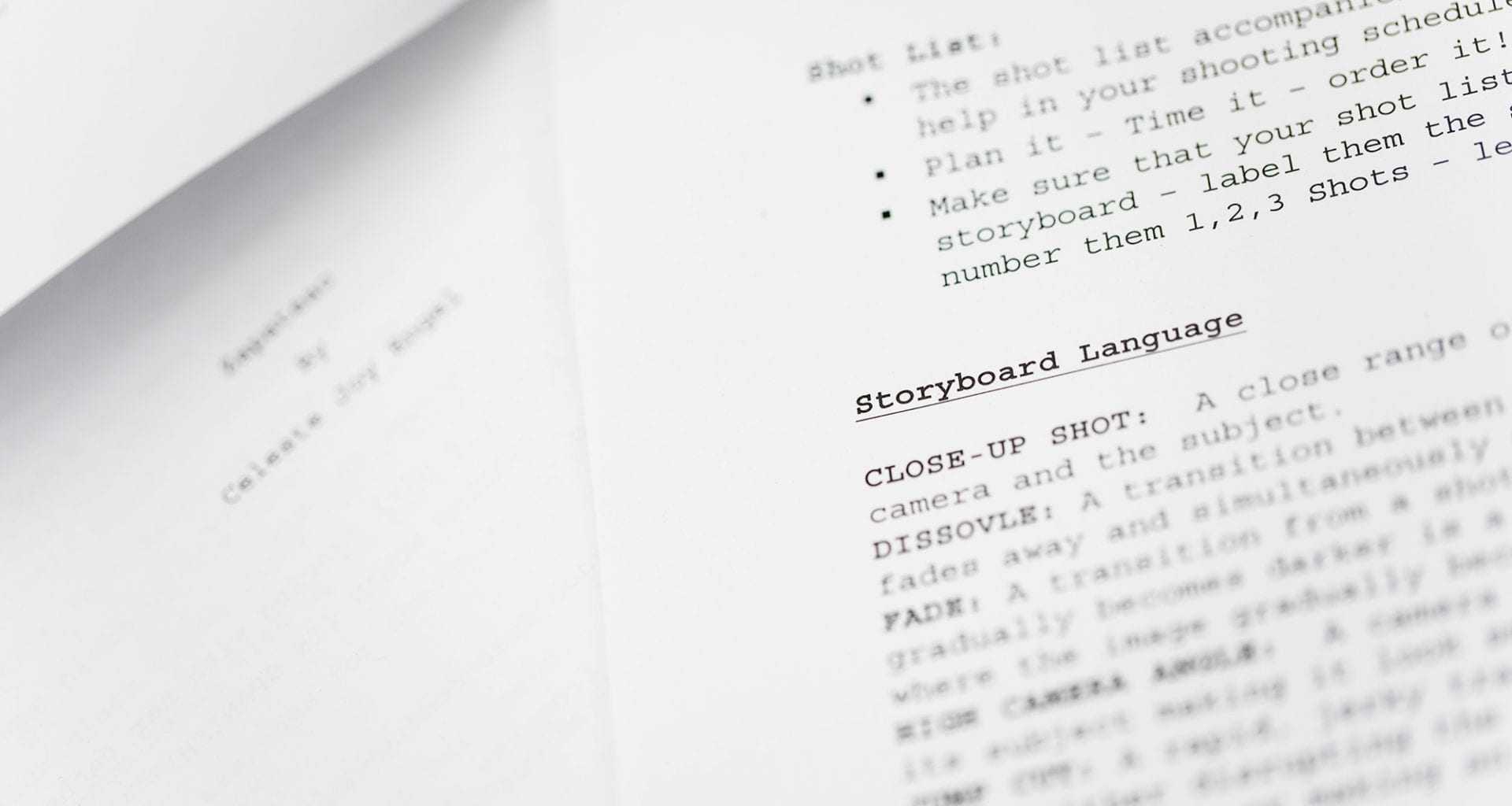
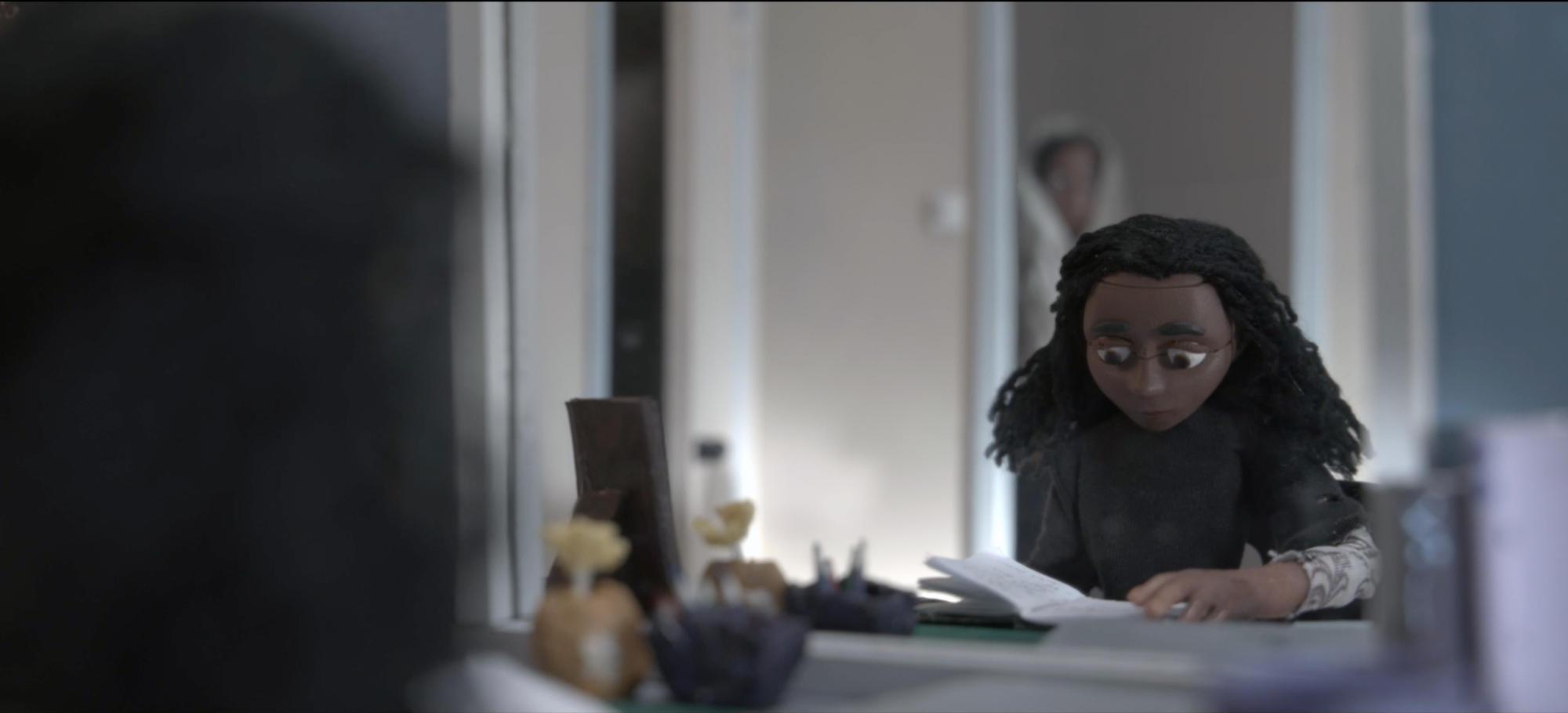
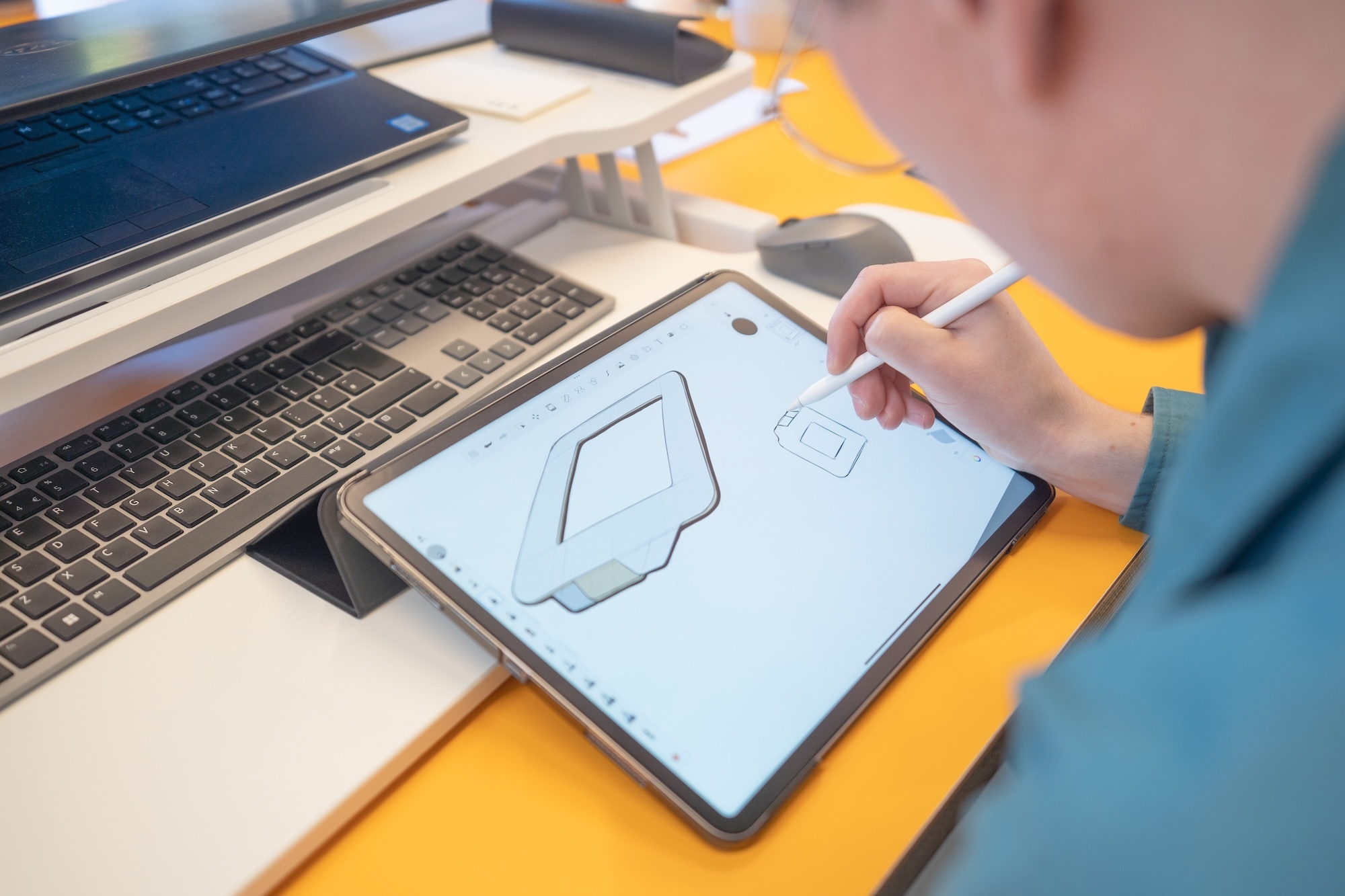
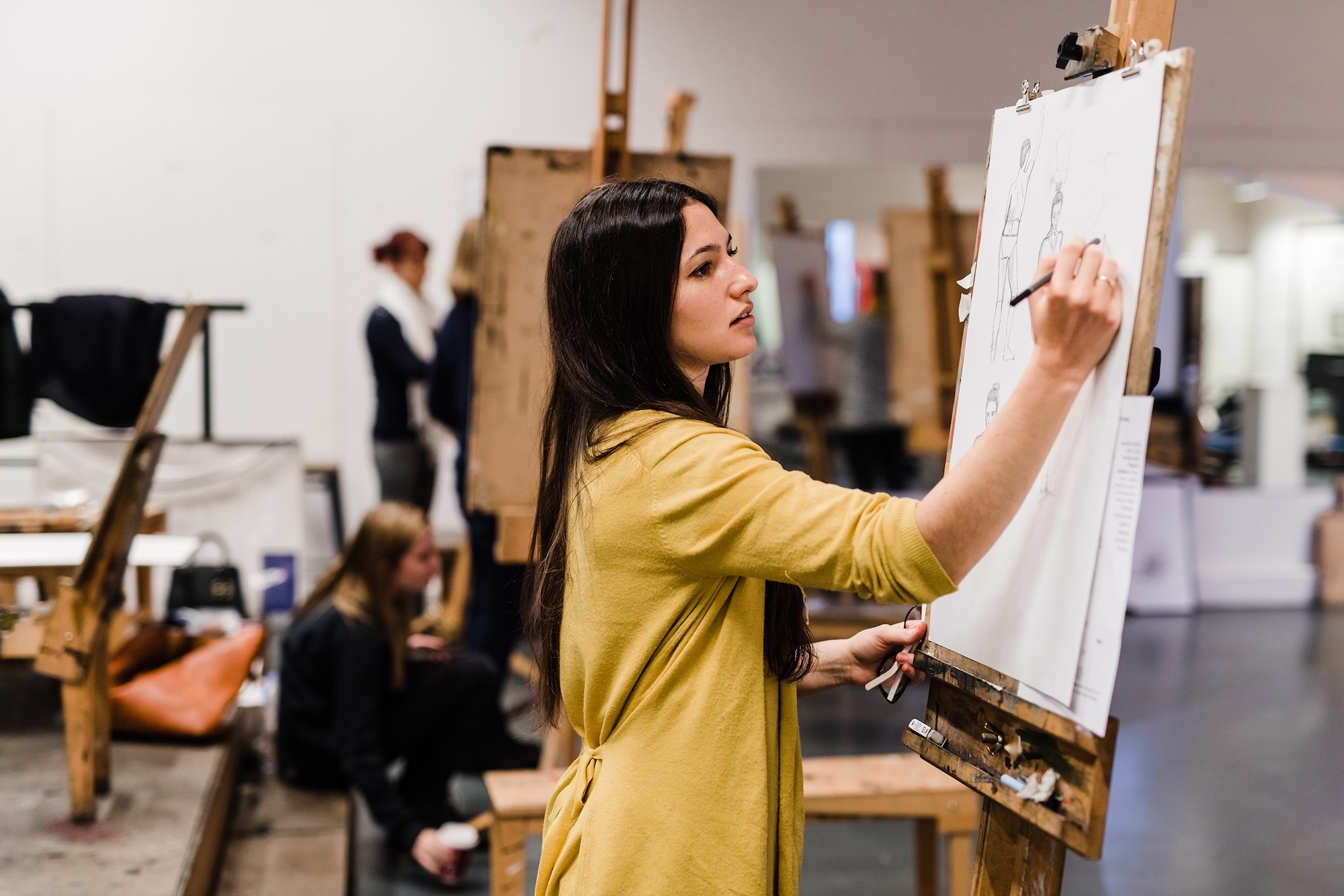
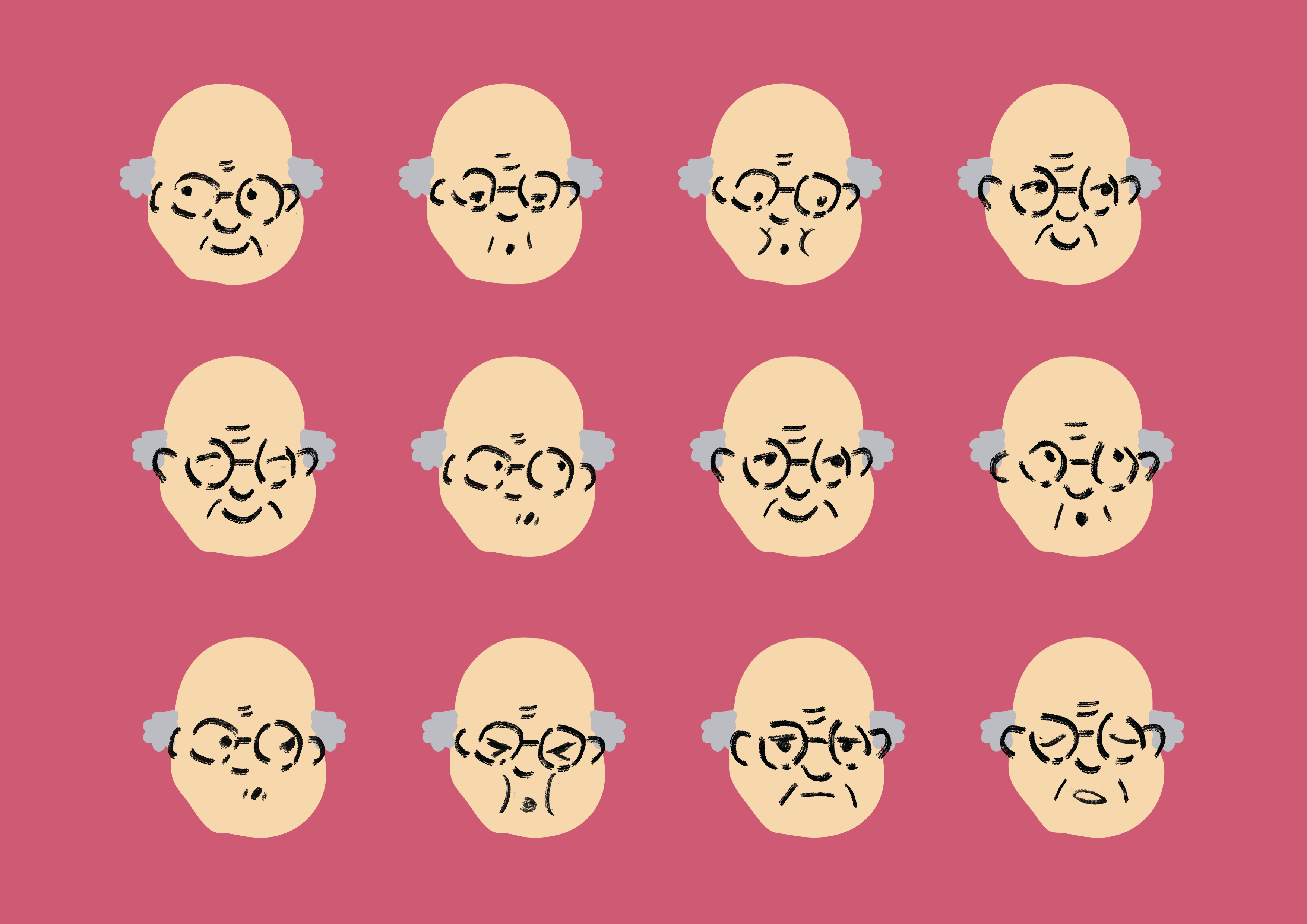
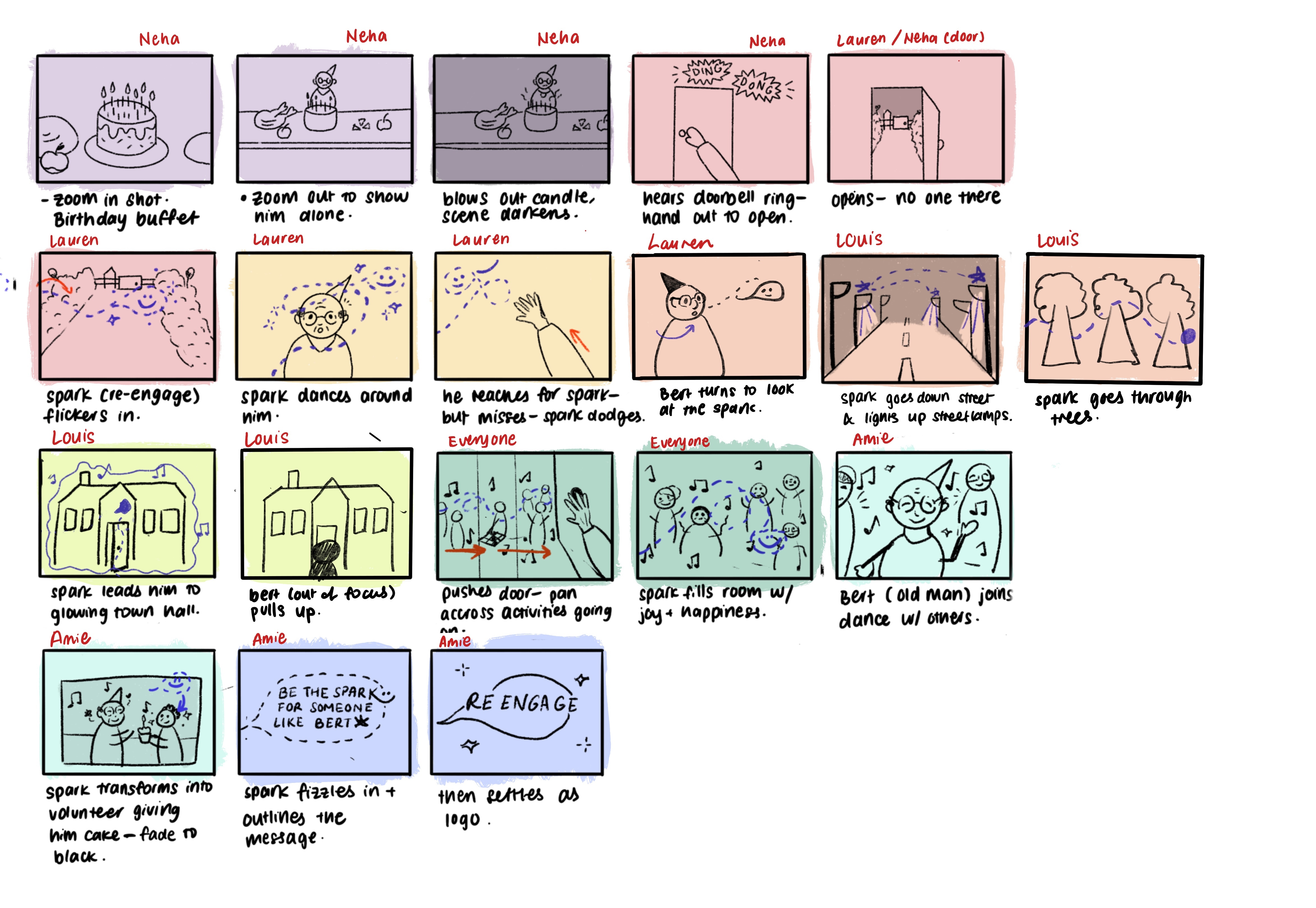
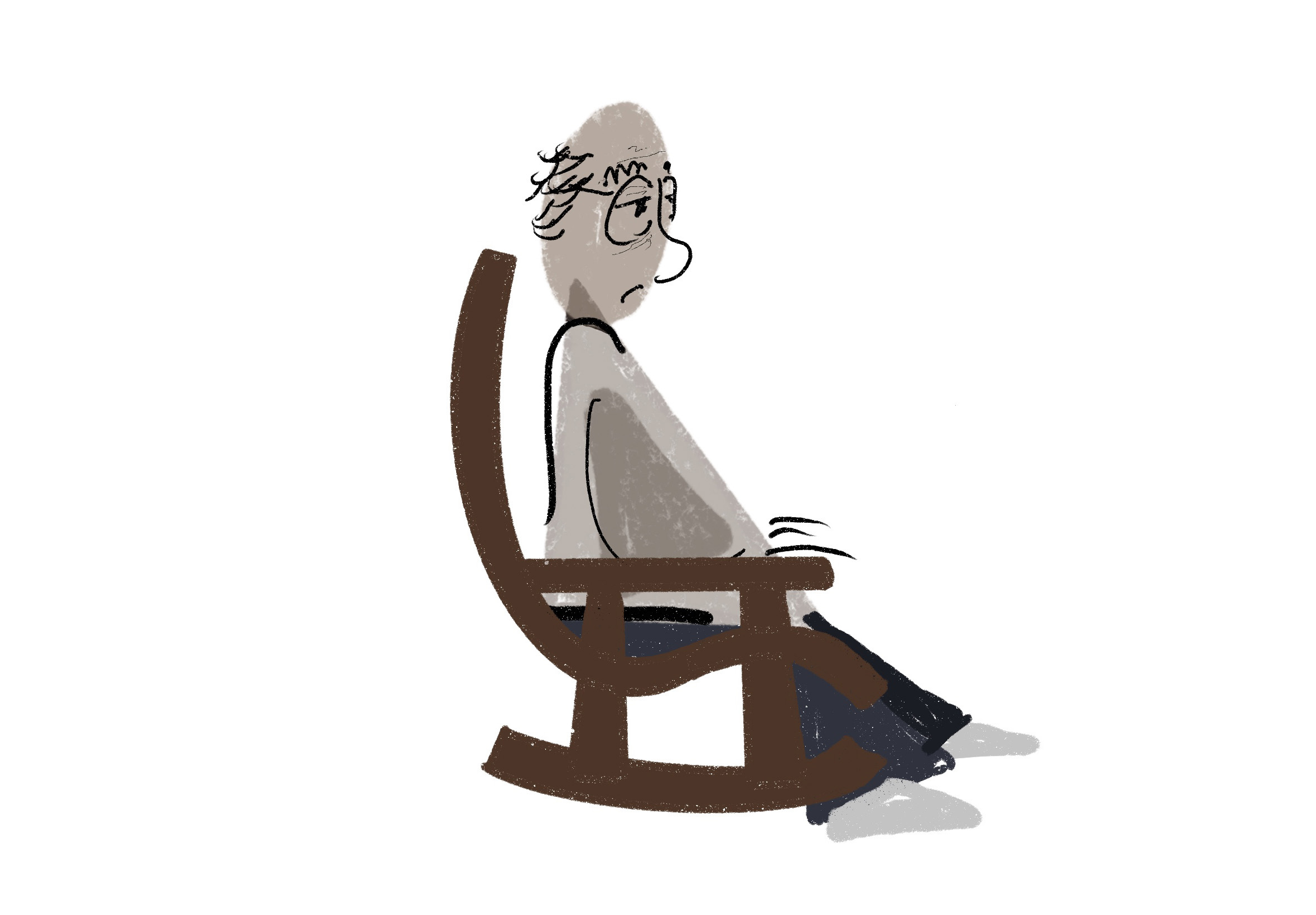
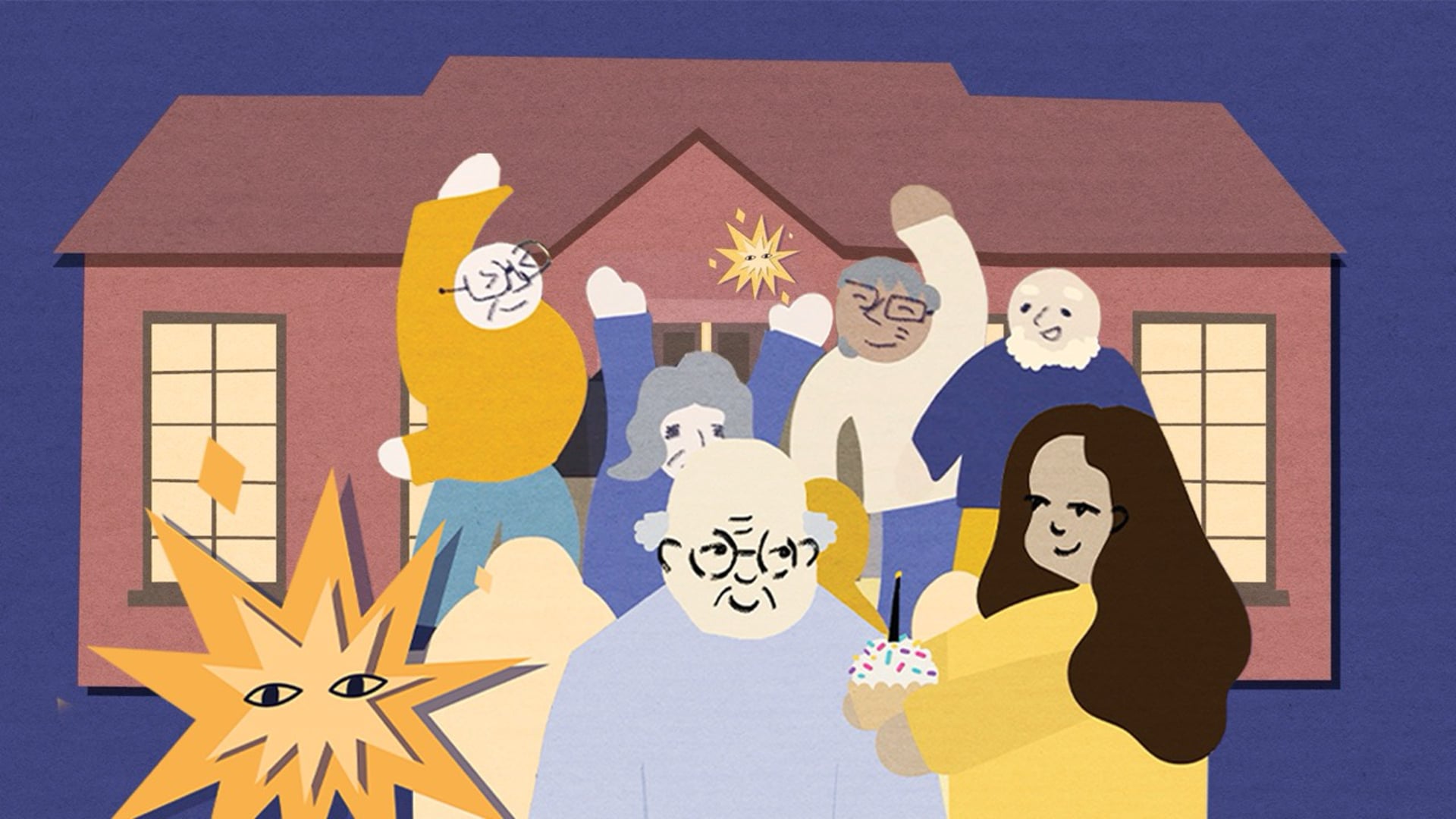
As designers, we were eager to begin visualising our concept, so we quickly moved into storyboarding and playing around with illustrative styles. I love sketching people, so I particularly enjoyed this part of the project – problem-solving what our elderly protagonist, who we called Bert, was going to look like. Through refining his character, we almost developed a clearer sense of his personality. This way, we could better understand his mannerisms, how he’d potentially react to a volunteer – the spark – arriving at his door, and how he’d feel when reconnecting with his local community.
Bert’s entire world was carefully curated by us. We all felt connected to his character and believed the audience could as well.
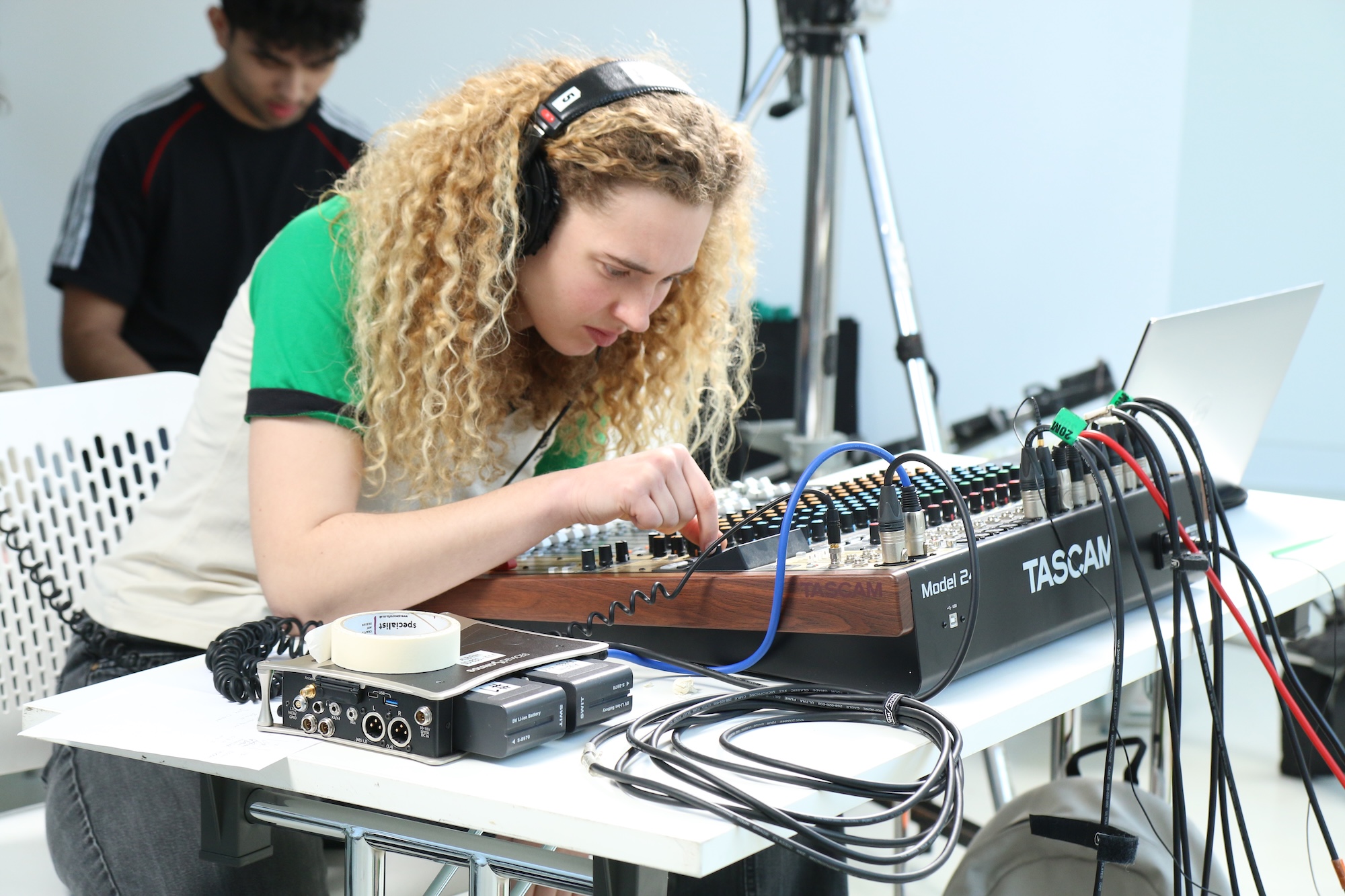
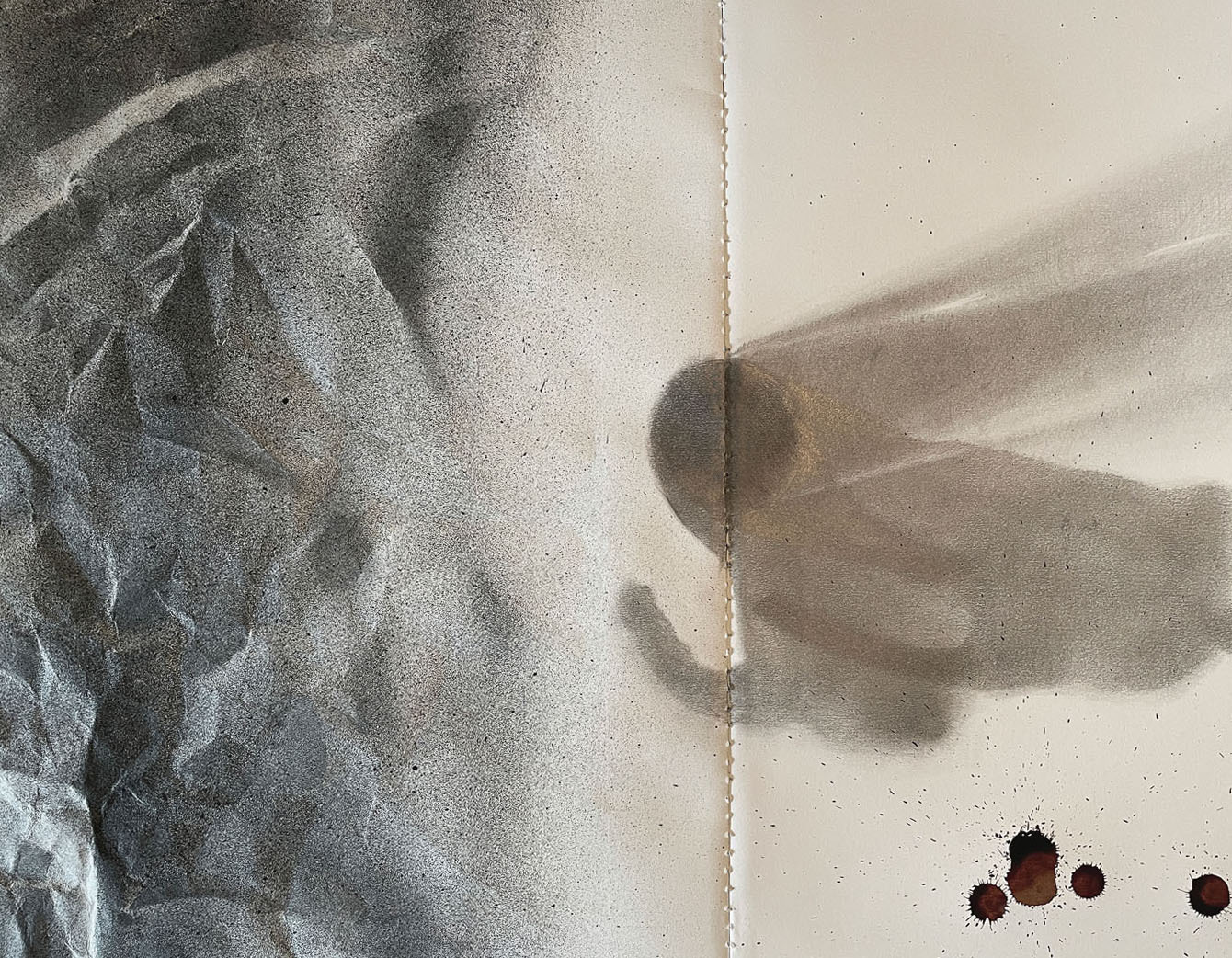
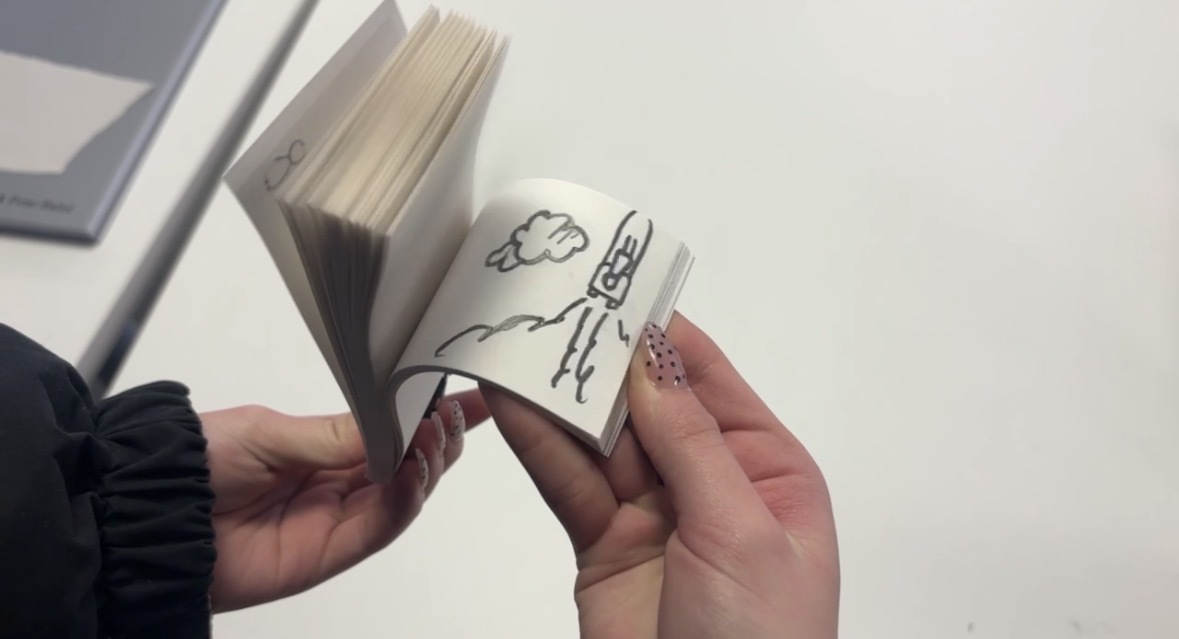
A standout feature of our course is its emphasis on exploring other creative practices alongside graphic design. I mentioned my enjoyment for illustration, but I had no experience in animation, so this was entirely outside my comfort zone. It was super beneficial to start experimenting with the basics. Some of my favourite workshops included designing our own flipbooks, curating a simple stop-motion animation with clay, and following a step-by-step After Effects tutorial led by our tech demonstrator, Ben. We also had sessions learning about animatics and the importance of sound within animation, which really helped us when it came to developing (and pitching) our idea.
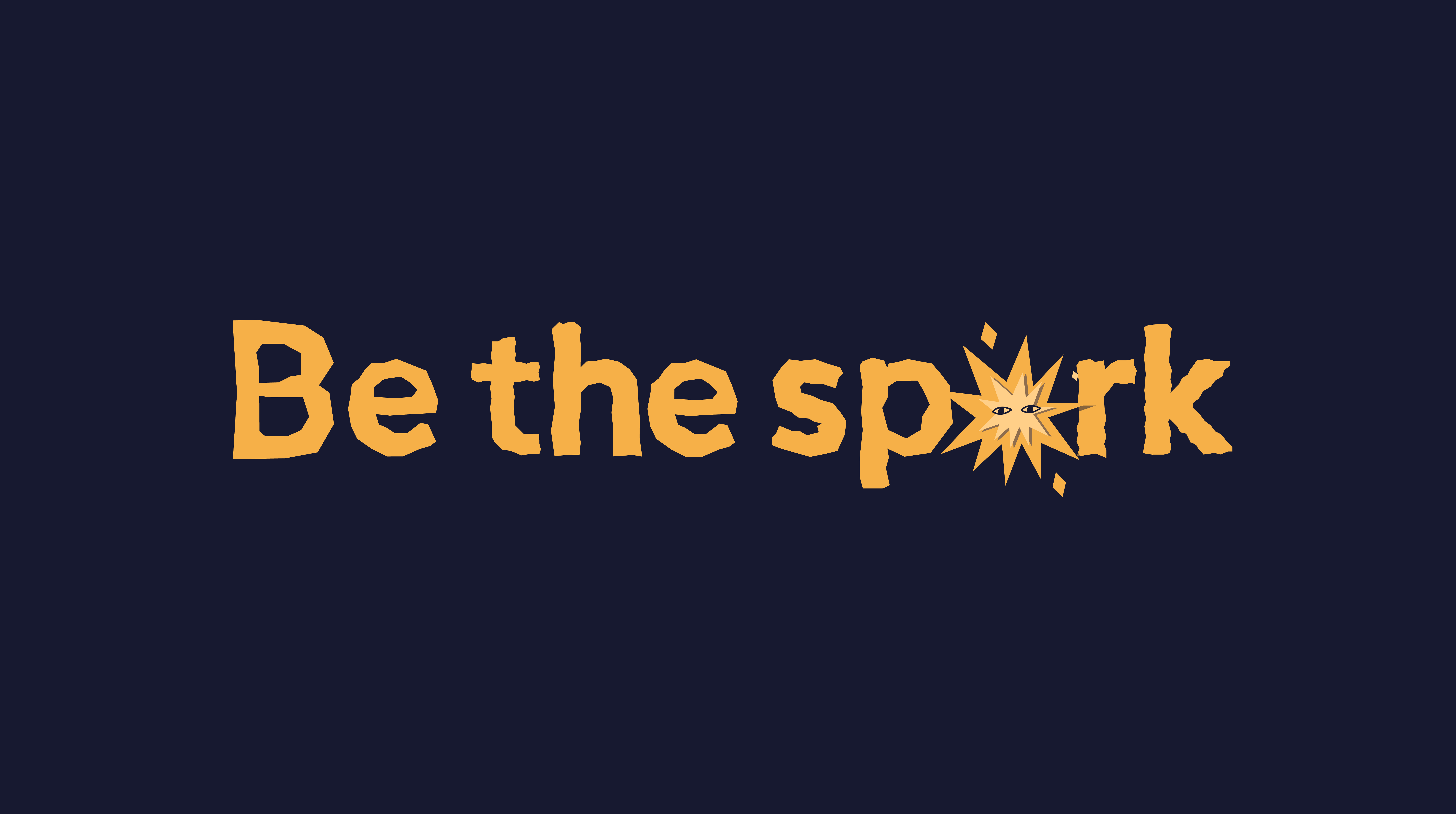
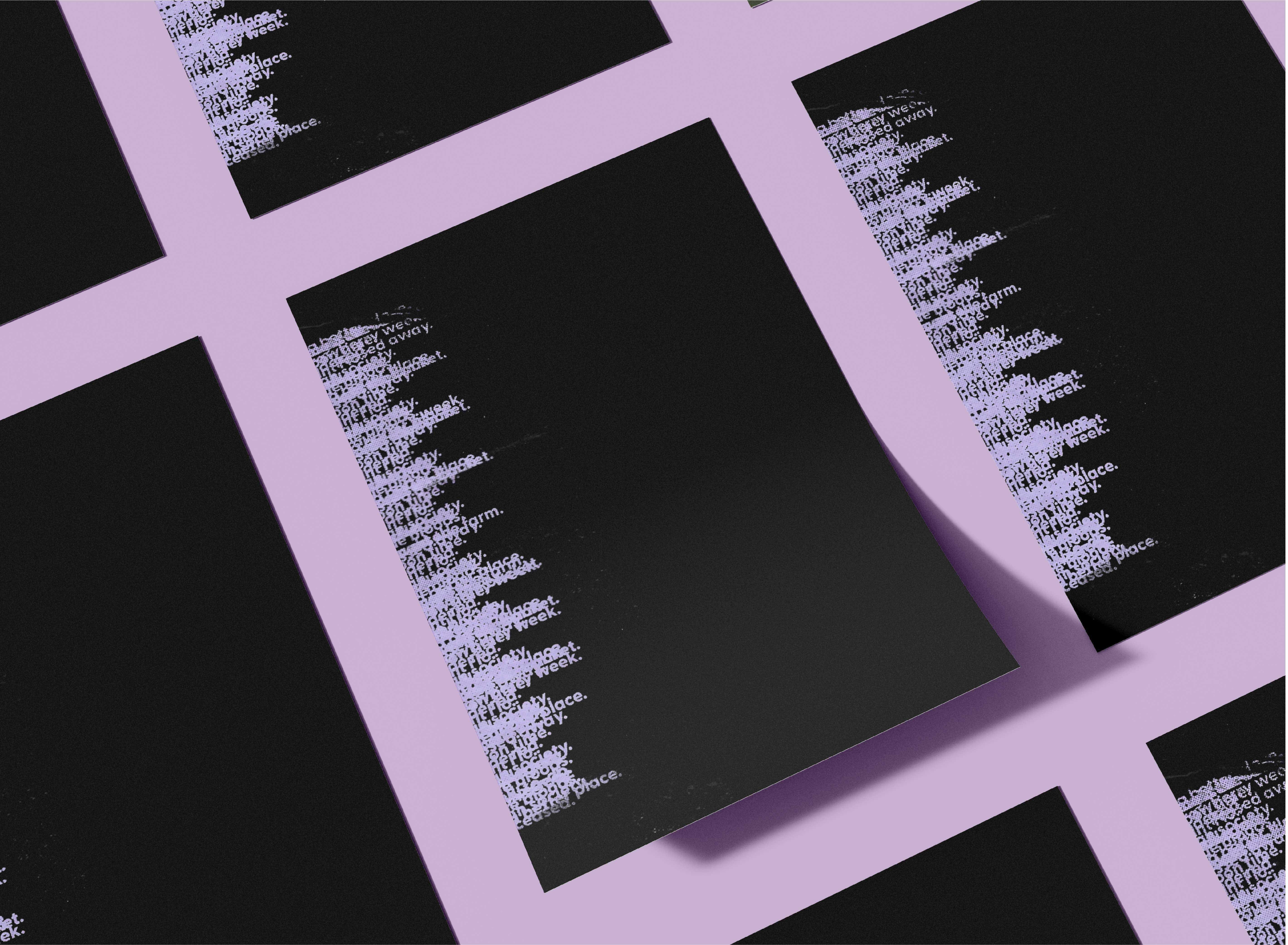
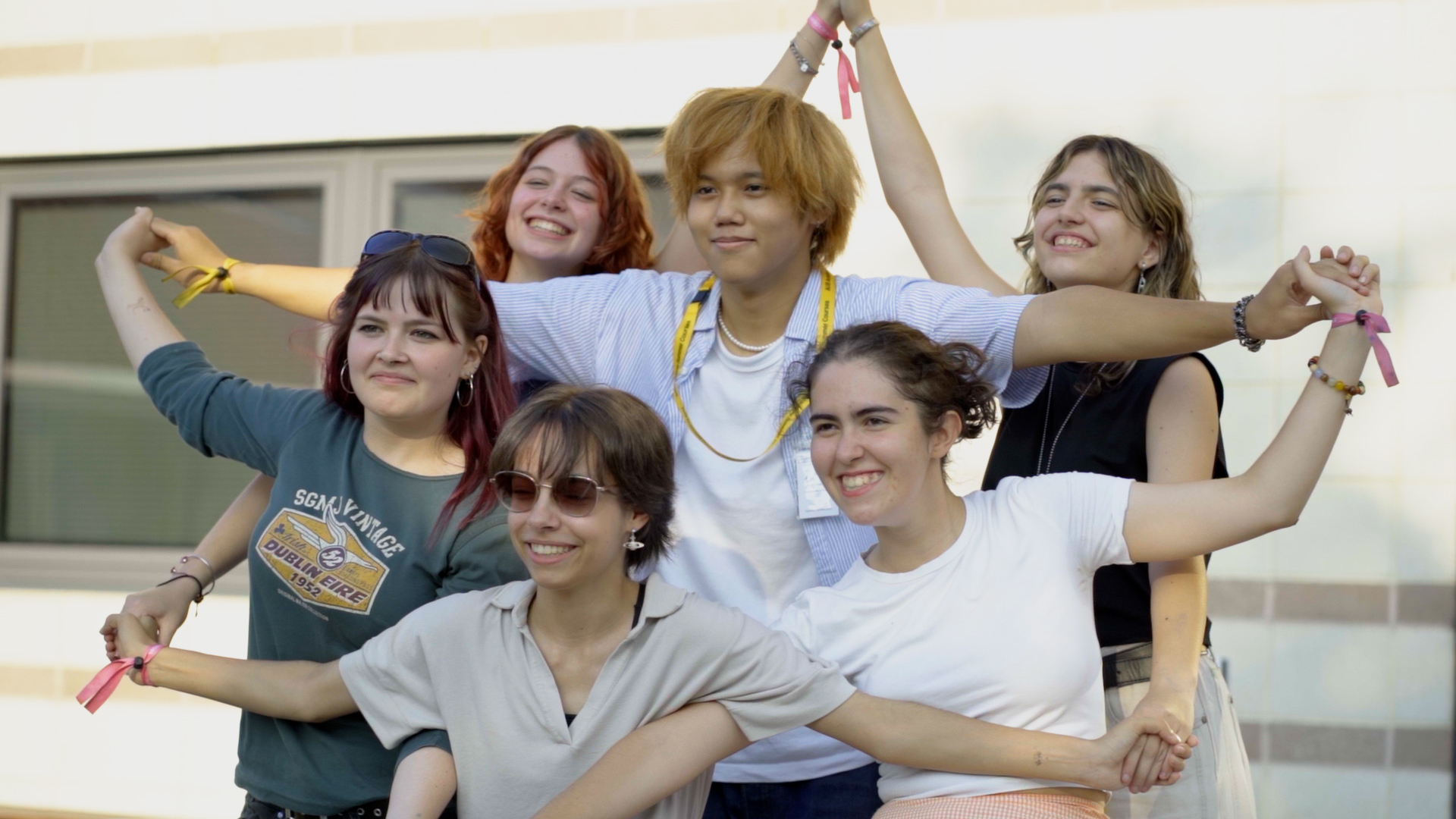
From the outset, having a talented team around me helped me feel more comfortable taking on tricky parts. That’s the best part of collaborative projects in my opinion: everyone brings different skills to the table, and in any areas you’re not sure about you get help, and vice versa. For instance, I loved creating a custom ‘crackling spark’ typeface for our animation and learnt a lot whilst bringing it to life. By trying something new and slightly scary, with the help of my team and Ben, I gained motion skills that I now apply to every project I do.
The response has been incredible. Through Lauren sharing our animation on her socials, Re-Engage UK has got in touch to say how much they loved our work and to find out more about the project. We’re so grateful for their support and engagement with Be The Spark, and hope it’s useful to them if they wish to use it. If you’re curious about volunteering, their website has lots of useful resources.
My biggest advice for collaborative projects is to work with a diverse range of people throughout your time at university. I’ve grown as a designer by reaching out to people I hadn’t necessarily worked with before and learning something from each of them. It can feel daunting, but it helps you become a more refined creative and better prepares you for industry, where you’ll likely collaborate with a variety of personalities.
On our BA (Hons) Graphic Design course, we’ve explored avenues from animation and web design to film and video editing. Really dive in regardless of how confident you are and take full advantage of the flexibility of your course to find out what excites you and what you want to keep developing in your practice. University is the perfect time to experiment and grow as a creative.
Watch 'Be the Spark'
This content can't be displayed, please accept marketing, statistics cookies to view
Accept to view