





















You are using an outdated browser. Most of this website should still work, but after upgrading your browser it will look and perform better.
- Home
- Postgraduate Courses
- MA Interior Design (Online)
- Course details
MA Interior Design (Online)
- Mode of study: Part-time
- Study location: Online
- How to apply: Apply directly to us
MA Interior Design (Online) course information
There's an increasing demand for designers from different specialisms who can rise to the needs of contemporary living, both indoors and outdoors. Experts are needed who can create spaces, buildings and environments that aren't only creative and diverse, but also recognise current and future sustainable and wellbeing standards.
Whether you’re a graduate with a related degree, an interior design professional or an aspiring designer wanting a career switch to further your existing practice knowledge, the MA Interior Design (Online) course will help you make your mark on this exciting field.
It'll provide opportunities for those interested in enhancing their existing specialist practice knowledge in the subjects of design, business, or the interior, architectural, product or textile design disciplines, providing a broad spectrum of knowledge to take forward into future careers.
The course is also an official signatory of Interior Design Declares.
Three reasons to study MA Interior Design (Online) at AUB:
- The course can provide opportunities for those interested in enhancing their existing specialist practice knowledge in various subjects of design, including the interior, architectural, product or textile design disciplines, providing a broad spectrum of knowledge to take forward into future careers.
- You'll be taught by experienced academics who are practicing industry professionals, and you’ll have opportunities for real-world practical experience.
- The units within the course have been crafted to strengthen your research capabilities and understanding of a range of sectors.
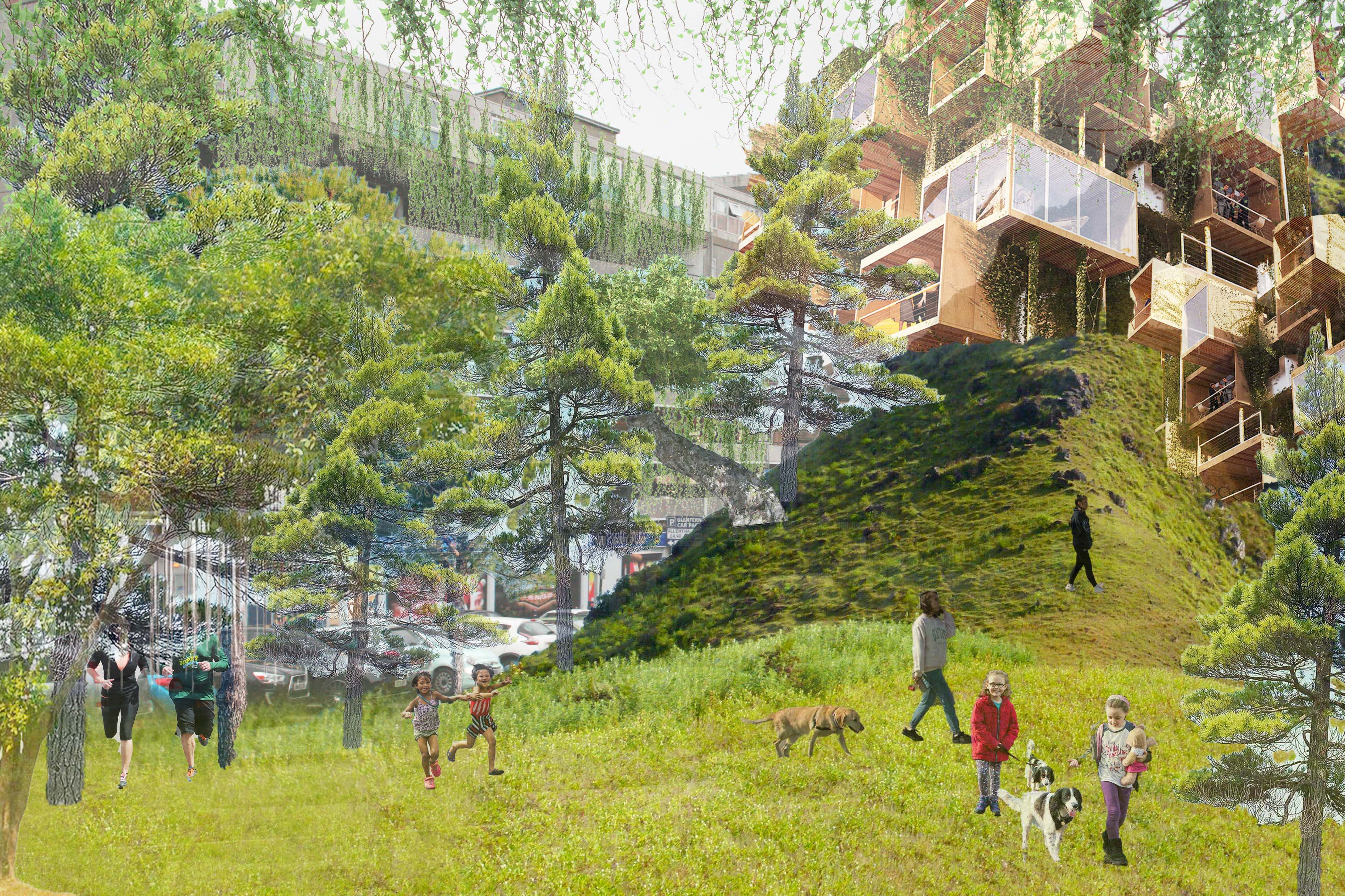
This unique course is designed to blend research and practice with creative theory. MA Interior Design (Online)'s varied curriculum considers interior design in its broader context with a strong underpinning delivery of sustainability and design for wellbeing, including the benefits of biophilic design, which increases connectivity to the natural environment through the use of direct nature, indirect nature, and space and place conditions.
The multi-faceted elements of the course encourage new ways of creative thought. Each unit looks at existing problems and how designers can respond to the changing needs of clients in a creative, experimental way.
Through discussion and theoretical exploration, linked to evidence-based design solutions, this will guide you in developing a thoughtful approach to designing interiors, installations, and buildings. You’ll also understand how to create solutions and spaces for occupants, in a variety of self-selected environments.
Just as importantly, we’ll explore topics such as collaboration, experience, transition, inclusivity, and diversity – and you’ll learn how to translate these points into interior design solutions that spearhead an inspiring, sustainable existence.
Led by our experienced academics, the units within this course have been crafted to strengthen your research capabilities and understanding of a range of sectors. Do you hope to move forward in the spatial design world? Or is architectural design your calling? Whatever your ambitions, your studies will prepare you to start the next stage of your professional journey.
Please note: course content is subject to change.
Introduction (15 credits)
This introductory unit will equip you with the knowledge needed to tackle your studies with confidence. We’ll go over the course structure, research and academic standards, learning and assessment methods, project outcomes and expectations, and evidence-based design techniques.
Specialism/Practice (15 credits)
We’ll investigate the different forms of interior design across various sectors, such as retail, hospitality, leisure, education, exhibition, and healthcare design. You’ll get to explore your own specialist practice interests and define a personal research focus for your studies.
Sustainable Futures (15 credits)
With this unit, you’ll focus on how to implement a sustainable approach to domestic and commercial design projects. You’ll learn about identifying and sourcing materials, fixtures and fittings for sustainable wellbeing, plus concepts such as biophilic design and Passivhaus approaches to deliver net-zero-ready new and existing buildings.
Collaboration (15 credits)
As its title suggests, the Collaboration unit focuses on developing a collaborative, practice-based approach to interior design. We’ll look at integrating interior design techniques with healthcare and lifestyle living, and what can be accomplished from collaborative usability.
Experience (15 credits)
This unit focuses on the interior design of commercial spaces – from the initial concept stages through to planning and interior detailing. You’ll study the principal aspects of commercial interior design including function, aesthetic, user requirements, and constraints of the building envelope.
Reinvent (15 credits)
Together, we’ll explore the meaning of reinvention within interior design and how designs can be enhanced by transforming old features into new ones. Through this unit, you’ll understand how to make creative, sustainable work by repurposing materials, styles, spaces, and structures.
Transition (15 credits)
Your lessons and coursework for this unit will introduce you to a different view about how we use the five senses – vision, hearing, smell, taste and touch – to enhance the user experience. Alongside this, we’ll explore complex theories around spatial awareness, premonition, intuition, and meanings of interiority, space and time.
Inclusivity (15 credits)
During this unit, you’ll learn about designing for diverse occupancy within domestic, work, and educational environments. By examining cultures from across the world, we’ll also research how designers can create spaces that support multigenerational and community living.
Research Methods (15 credits)
The Research Methods unit will help you investigate and select a strong, original topic for your Master’s Project. You’ll be introduced to a range of approaches to research design and how to make effective links between theoretical frameworks and their practical application.
Master's Project (45 credits)
As the final part of the course, your Master’s Project will require you to work independently under supervision, to produce a research-informed project on a topic chosen by you. It’s your opportunity to further explore your specialism of interest and showcase all the knowledge you’ve gained.

APPLICATIONS ARE OPEN
Time to take your studies to the next level.
Apply directly to us to begin your postgraduate journey at AUB.
WE'RE HERE TO HELP
Whether you have any burning questions or you just want to find out more about our courses, you can book a one-to-one call with our course team at any time.

AUB SHOWCASE
We're proud of our alumni, and rightfully so.
Explore the incredible work of our graduates in our online AUB Showcase.
Browse work by course, student or theme.
Course costs
The fee you pay AUB provides the necessary equipment and training for you to complete your course.
In most cases, you don't need to buy any specific items of kit before you start the course. You may also choose to buy some items of personal equipment such as a laptop or tablet computer, but this isn't required – desktop and laptop computers are available for you to use in common study areas, including a loan system in the Library.
It isn't possible to be precise about the likely additional costs that you may incur, because this depends on the choices you make and the projects you undertake. The University provides some basic materials, and you'll be encouraged to work sustainably and to reuse materials where possible, but you should still expect to make some financial investment.
For more information, including costs relating to certain courses, visit our Course Costs page.