













You are using an outdated browser. Most of this website should still work, but after upgrading your browser it will look and perform better.
- Home
- Postgraduate Courses
- MA Graphic Design (Online)
- Careers and industry
MA Graphic Design (Online)
- Mode of study: Online, part-time
- Study location: Online
- How to apply: Apply directly to us
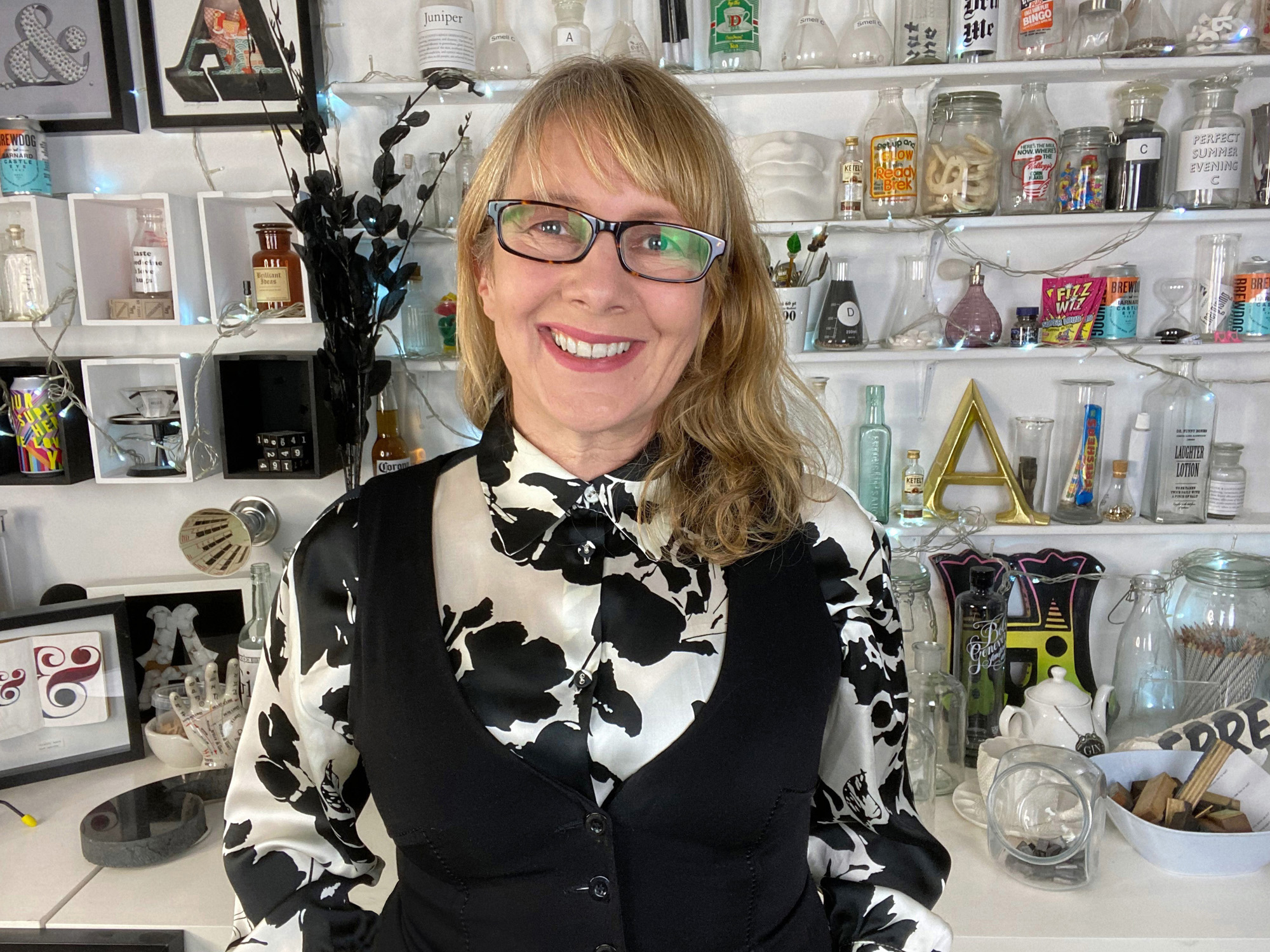
Meet our Industry Patron – Sarah Hyndman
Meet the Industry Patron for MA Graphic Design (Online), Sarah Hyndman.
Sarah is the founder of Type Tasting and the author of Why Fonts Matter. She entertains audiences with her unique blend of science, activities and sense-hacking, and has been measuring emotional and multi-sensory responses to fonts since 2013. She’s also a TEDx speaker and a judge for the D&AD Awards.
Career destinations
As a graduate of the MA Graphic Design (Online) course, you’ll unlock a diverse range of varied, rewarding career options in the future. Innovative designers are in high demand at companies worldwide. With the knowledge you acquire at AUB, you’ll stand as someone who can help them meet their sustainability and inclusivity goals – and you'll be able to navigate these issues with confidence.
The international network you’ll develop with your peers and tutors will also broaden your knowledge and help you get established as an in-house or freelance graphic designer. Whichever route you choose, your industry-ready skills will empower you to spearhead positive change in the world and drive companies toward success.
Of course, establishing yourself as a graphic designer is just the tip of the iceberg – there are many areas in which you can apply your skills. Whether you’d like to bolster eco-conscious brands, advise businesses on sustainable practice, design eco-friendly packaging with recyclable materials, or branch out into inclusive web design, your dream job will be within reach.
Here are just a few of the options you could pursue as an MA Graphic Design (Online) graduate:
- Sustainable design consultant
- UX/UI designer
- Director of interaction/experience design
- Brand/design strategist
- Creative director
You could also pursue opportunities in innovation strategy, UX research, and packaging design.
Guest speakers
Exclusively offered to students on the course is the ability to have access to presentations from industry professionals. This not only provides an insight into current industry practice but a wealth of research sources and networking links.
- Clara Gaggero Westaway – Co-founder and Creative Director of Special Projects. Clara is a designer, inventor, and educator focused on creating meaningful and sustainable innovations that enhance well-being and our relationship with technology. She has designed award-winning products for major brands, exhibited globally, and leads design education initiatives at prestigious institutions.
- Clare Nattress – Clare Nattress is an interdisciplinary artist, researcher, and educator exploring environmental interconnectedness through art and science, often collaborating with researchers to develop new perspectives. Her minimalist lifestyle and year-long cycling journey have shaped her practice-led PhD and artistic focus on air pollution, while she also lectures at York St John University and curates international exhibitions.
- Damian Rees – Damian is founder of Make Human. As an expert in UX, CX and human-centred design, he's deeply committed to developing solutions that genuinely address people’s needs and help fix bad design. Damian is passionate about making technology more human and finding ways tech can solve the real-world problems people face in their day-to-day lives.
- Emma Bice – Award-winning international designer Emma Bice specialises in furniture, fixtures, and surfaces, creating bespoke interior and exterior solutions through her consultancy. With a focus on sensory design, she blends comfort, style, and craftsmanship to shape spaces that reflect both property and inhabitant. We consult Emma about how she uses the sensory aspects of brand design in physical spaces.
- Erik Brandt – Erik Brandt is a graphic designer and educator, and runs a graphic design studio (and Konditorei), Typografika. He's currently Chair of the Design Department and Professor of Graphic Design at MCAD (Minneapolis College of Art and Design) in Minneapolis, Minnesota. He's a member of the Alliance Graphique Internationale (AGI) and was appointed International President in 2022. His work has been published and exhibited internationally.
- Fan Sissoko – Designer, artist and storyteller. Fan Sissoko is a designer and researcher based in Reykjavík. She works with charities and the public sector to improve health, care and food systems. She is also an artist whose work revolves around storytelling.
- Jason Bascombe – Jason Bascombe is a Creative Technologies lecturer at AUB, and a photography practitioner. He researches generative AI and its role in creative disciplines, focusing on integrating these tools while preserving human agency.
- Jean Hewitt – Jean is the Inclusive Environments Technical lead at Buro Happold. She's currently the Disability Access Ambassador for the Built Environment, a voluntary role appointed by the Cabinet Office. Jean contributes to the discussions on inclusive design.
- Maki Suzuki/Åbäke – Maki Suzuki is one of four members that make up Åbäke. The others are Patrick Lacey, Benjamin Reichen, and Kajsa Ståhl. They met at the Royal College of Art in London while studying for their MA in Communication, Art and Design. Åbäke's members each have their own practice within the group.
- Paul “Nobby” Davies – ‘Nobby’ Davies is founder of the Creative Elder and a multi-award-winning creative with over 40 years of experience in advertising, branding, and design. As the Creative Elder, he helps creators reach their full potential and contributes to discussions on the creative process in problem-solving.
- Phil Jones – Dr Phil Jones is a designer, academic, and author. His research applies cognitive science to communication design, explored in his book Towards a Cognitivist Understanding of Communication Design (June 2024), which examines how cognitive theories enhance creativity and design practice.
- Rejane Dal Bello – Rejane Dal Bello is an award-winning designer and AGI member with over 20 years of experience in graphic design and branding, having worked with top agencies like Wolff Olins and Studio Dumbar. As the founder of Studio Rejane Dal Bello in London, she creates impactful, purpose-driven designs for global clients, contributes to design education, and shares her creative process through lectures and workshops.
- Richard Gillingwater – Richard Gillingwater explores how brands use design and visual storytelling to communicate effectively in a world saturated with visual stimuli. By leveraging psychology and media theory, he highlights how nonverbal cues evoke emotions, shape perceptions, and influence behaviour.
- Sarah Hyndman – We're delighted to have designer, researcher, author and speaker Sarah Hyndman as our course's Industry Patron. Sarah contributes to the course by sharing her unique sensory experiments, connecting words and senses to shape transformative experiences. Visit Type Tasting's website for more information.
- Sonnaz Nooranvary – Sonnaz Nooranvary is a UK-based creative entrepreneur and upholstery expert, best known for her role on BBC’s The Repair Shop. With a passion for craftsmanship, sustainability, and inspiring future creatives, she runs her own interiors business and launched House of Sonnaz in 2024 to promote ethical manufacturing. Sonnaz contributes to discussions on design and branding in physical spaces