
























You are using an outdated browser. Most of this website should still work, but after upgrading your browser it will look and perform better.
- Home
- Undergraduate Courses
- BA (Hons) Interior Architecture and Design
- Course details
BA (Hons) Interior Architecture and Design
- Duration: 3 or 4 years full-time
- Placement year: Optional 1 year
- Course code: KW12 (UCAS)
- Institution code: A66 (UCAS)
BA (Hons) Interior Architecture and Design course information
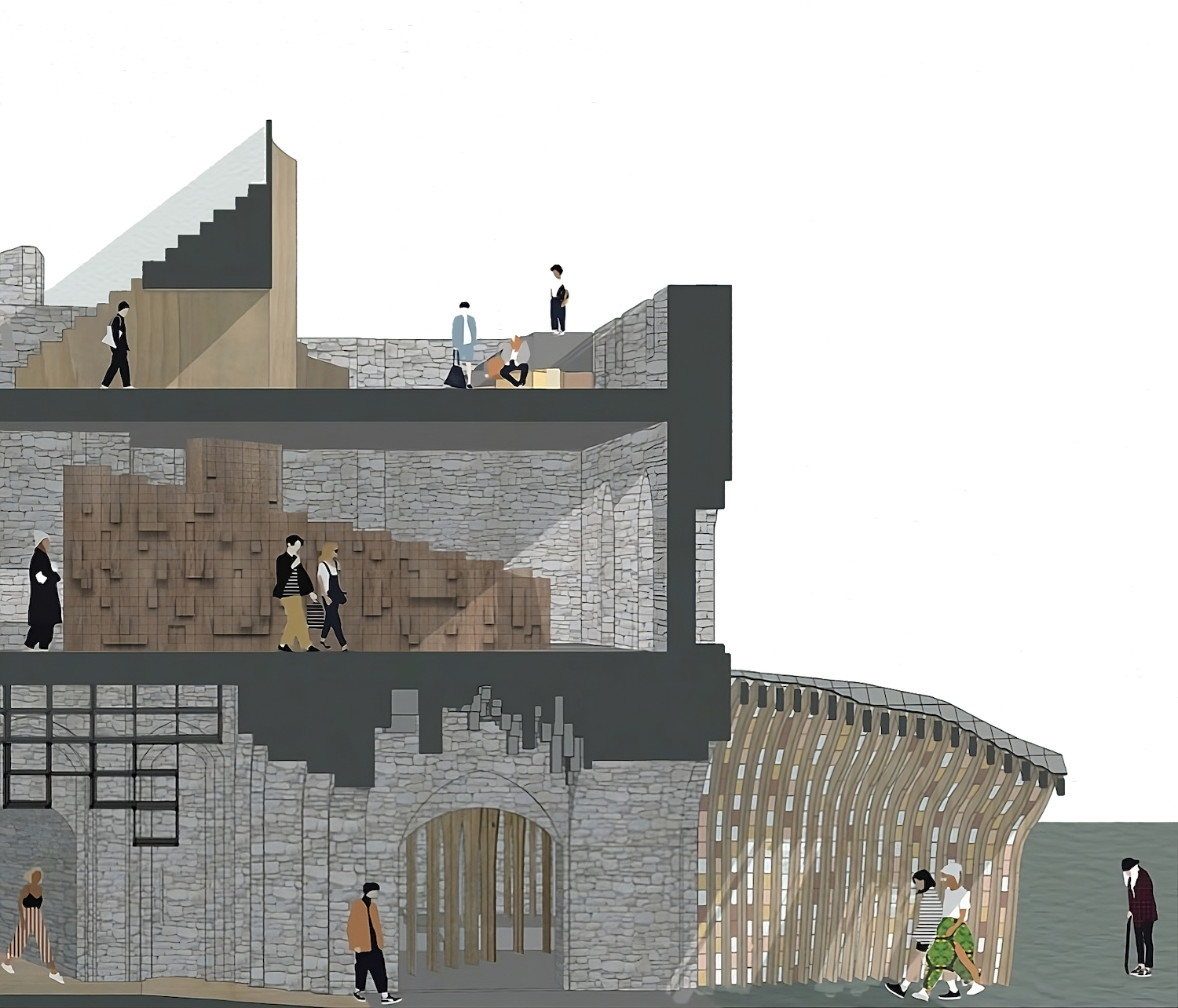
Through the adaptive reuse, rebranding, remodelling, recycling and re-communication of existing spaces, structures and environments, BA (Hons) Interior Architecture and Design offers you the skills, knowledge and work experience that you need to become a leader in one of the most dynamic, creative, economically valuable and diverse areas of design.
Interior Architecture and Design has an enviable record in graduate employment, often working with clients on real design projects in a studio-based, professionally focused learning environment.
We offer you the chance to gain extended work experience in an optional placement year to get under the skin of an industry, organisation and the role to assist you with making better-informed decisions about your future career prospects.
This course will teach you to understand the three-dimensional potential, the atmosphere, and the identity of the spaces in which we live, work, rest, and play, placing a strong emphasis on sustainability, environmental and social responsibility into the projects.
You'll also have the opportunity to gain a named award in one of a number of specialist areas:
- BA (Hons) Interior Architecture and Design (Health and Wellbeing)
- BA (Hons) Interior Architecture and Design (Immersive Technologies)
- BA (Hons) Interior Architecture and Design (Styling and Detailing)
Three reasons to study BA (Hons) Interior Architecture and Design at AUB:
- We have excellent facilities, including professional studios, workshops, and advanced digital tools. We'll equip you with the practical skills and innovative mindset needed for success in this industry. We're part of a vibrant, creative community that encourages interdisciplinary collaboration, offering invaluable opportunities for aspiring designers to thrive.
- We have strong connections with leading design and architecture firms, providing you with opportunities for industry placements, networking events, and guest lectures from professionals. It features hands-on assignments and live projects that help you develop your professional career. With great career support services, our graduates are well prepared for employment or further study in the field.
- We're focused on innovative solutions and sustainable design practices, both key aspects of today’s industry. We teach in design spaces that aren't only functional and aesthetically appealing, but also environmentally responsible. Our structure combines theoretical knowledge with practical projects with a focus on effective communication, providing you with the chance to tackle real-world ethical challenges and build a professional portfolio.
Placement year
All undergraduate courses at AUB offer an optional placement year, to be taken between your second and third years of study.
If you’re unsure about this optional placement, you don’t need to decide now. Once you’re here and studying with us, the course team will discuss the placement options with you, so when the time comes, you can make a decision that’s right for you.
Exchange and international summer programmes
Students on BA (Hons) Interior Architecture and Design have the chance to broaden their horizons through exciting exchange and international summer programmes. These opportunities allow you to study abroad at one of our brilliant partner institutions, experience different cultures, and enhance your academic journey.
Level 4 (first year)
Understanding the interior, 'The individual dimension'
Level 4 aims to generate a fundamental understanding of space: its analysis, theoretical manipulation, habitation, technological construction and materiality and scale.
At this level, you'll concentrate on acquiring fundamental skills essential for your progression throughout subsequent years of study and into professional practice. This foundational period is characterised by an emphasis on mastering core abilities and techniques integral to the disciplines. Through structured course work and hands-on experiences, you'll cultivate a solid understanding of key principles, methodologies, and tools relevant to the interior architecture and design discipline.
During the first year, you'll understand the principle of a user-centred approach within the field of Interior Architecture and Design. This approach places importance on understanding and accommodating the needs, preferences, and experiences of people as central to the design, operation, and delivery of services within interior spaces.
Additionally, you'll be introduced to Careers and Enterprise activities appropriate to this Level.
Level 5 (second year)
Up-thinking the interior, 'The community dimension'
Level 5 aims to consolidate and refine the skills delivered at Level 4 and encourage you to develop your own methods of realisation and visualisation. Your second year has been designed to enhance your development both creatively and professionally.
Technical knowledge (construction/light/sound/materiality) will also be further developed with design units being used to demonstrate how your knowledge and critical understanding of the well-established principles of interior architecture and design have developed.
Technological developments and developments in the nature of interior practice will be explored such as the communication of semiotics, atmosphere and identity, ideas of brand and image, interactivity, the real and the virtual.
In Level 5, design will progress from the concentration on the personal and intimate at Level 4 to ideas of community – and the deeper understanding of scale, complexity and hierarchy in space that this will necessitate. By adopting a community-centred approach, interior architecture and design interventions aim to foster inclusivity and accessibility within built environments. This approach seeks to create holistic solutions that cater to diverse community needs and facilitate collaborative partnership among stakeholders.
Also in Level 5, there'll be a deliberate emphasis on utilising theory as a fundamental tool for the design process. Through theoretical exploration and analyses, you'll harness conceptual frameworks to inform and enrich your design decisions, fostering depth and sophistication in your creative work
The course in general at Level 5 allows for interdisciplinary collaborations across different courses, schools or external partners, this allows a culture of collaboration to develop among students.
Additionally, you'll be introduced to Careers and Enterprise activities appropriate to this Level.
Level 6 (third year), 'The global dimension'
Redefining the interior
Your final year is your opportunity to bring all your learning, skills and knowledge together in the production of a package of professionally orientated, creative work that will examine and emphasise your research theme.
One of the fundamental strengths of the course is that it does not attempt to define the interior for you, rather it encourages you, over three years, to challenge, theorise, conceptualise, realise and visualise your notion of the “interior” in contemporary society: in other words we encourage you, in your final year, to look at what the interior can be.
Units at Level 6 will look to consolidate this approach through the work that has been undertaken at Levels 4 and 5. In addition, the course will encourage you to build on your Level 5 experience to contextualise the work in a professional studio environment that emphasises practice, law and the ethical and ecological roles and responsibilities of you as a designer.
At the end of the year, you'll have produced a comprehensive body of written and design work that'll demonstrate to both specialist and non-specialist audiences your practical and thinking skills and intellectual and critical engagement in the complex design of interior spaces.
Having undertaken this work in a professional setting, you'll evidence your readiness for the move to either practice or postgraduate study and you'll be proud of what you have achieved.

APPLICATIONS ARE OPEN
It's not too late to apply! Now that you've found the perfect course, it's time to join our creative community.
Check out our handy 'how to apply' guide and our portfolio top tips.
OPEN DAYS
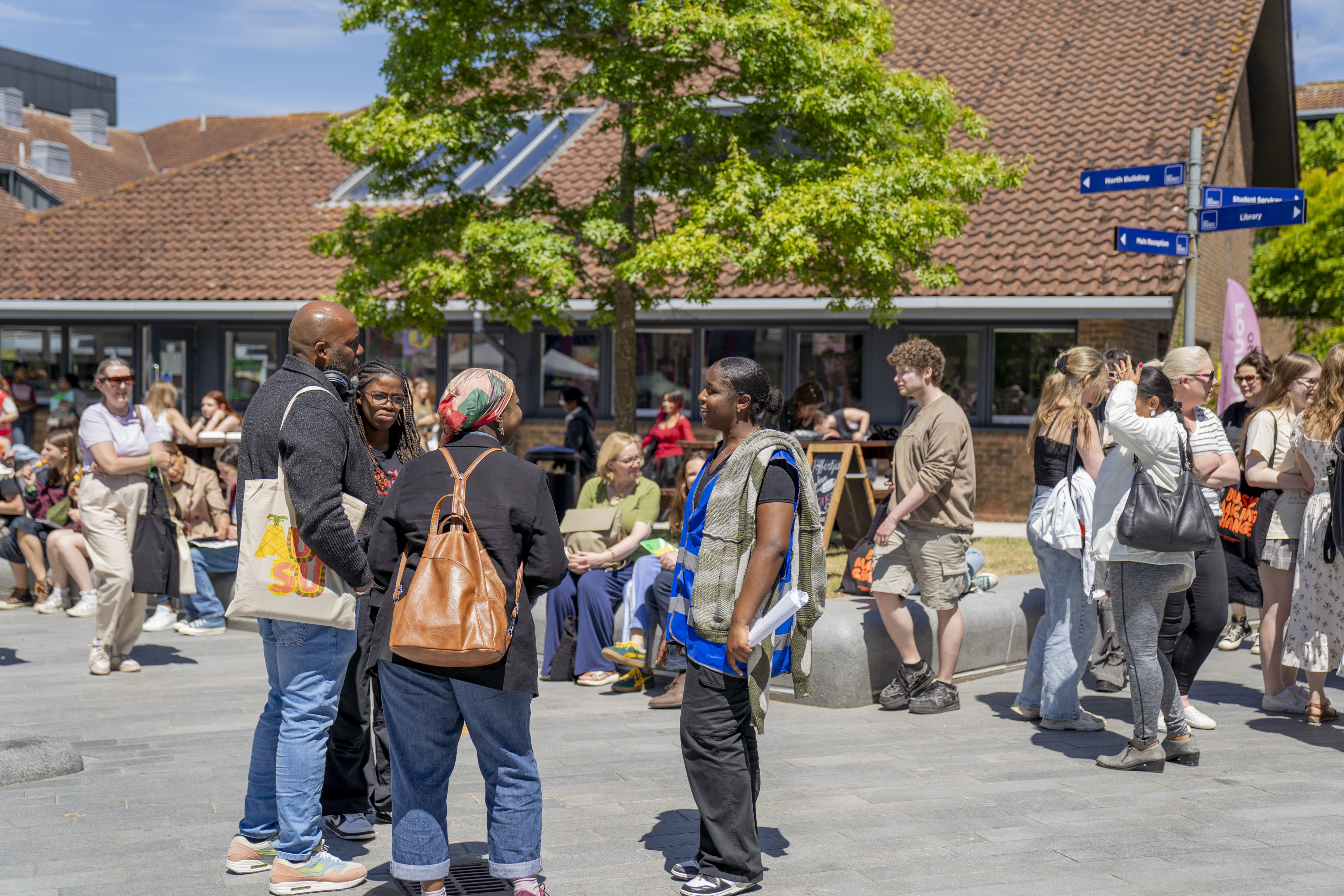
Open Days are a great way to get a feel for undergraduate life at AUB. At an Open Day, you'll be able to explore the campus, talk to course teams and discover our industry-standard facilities.
Visit us on:
- 7 November
- 5 December
STEP INTO INDUSTRY
Your journey to the creative industries begins with us, while you're studying.
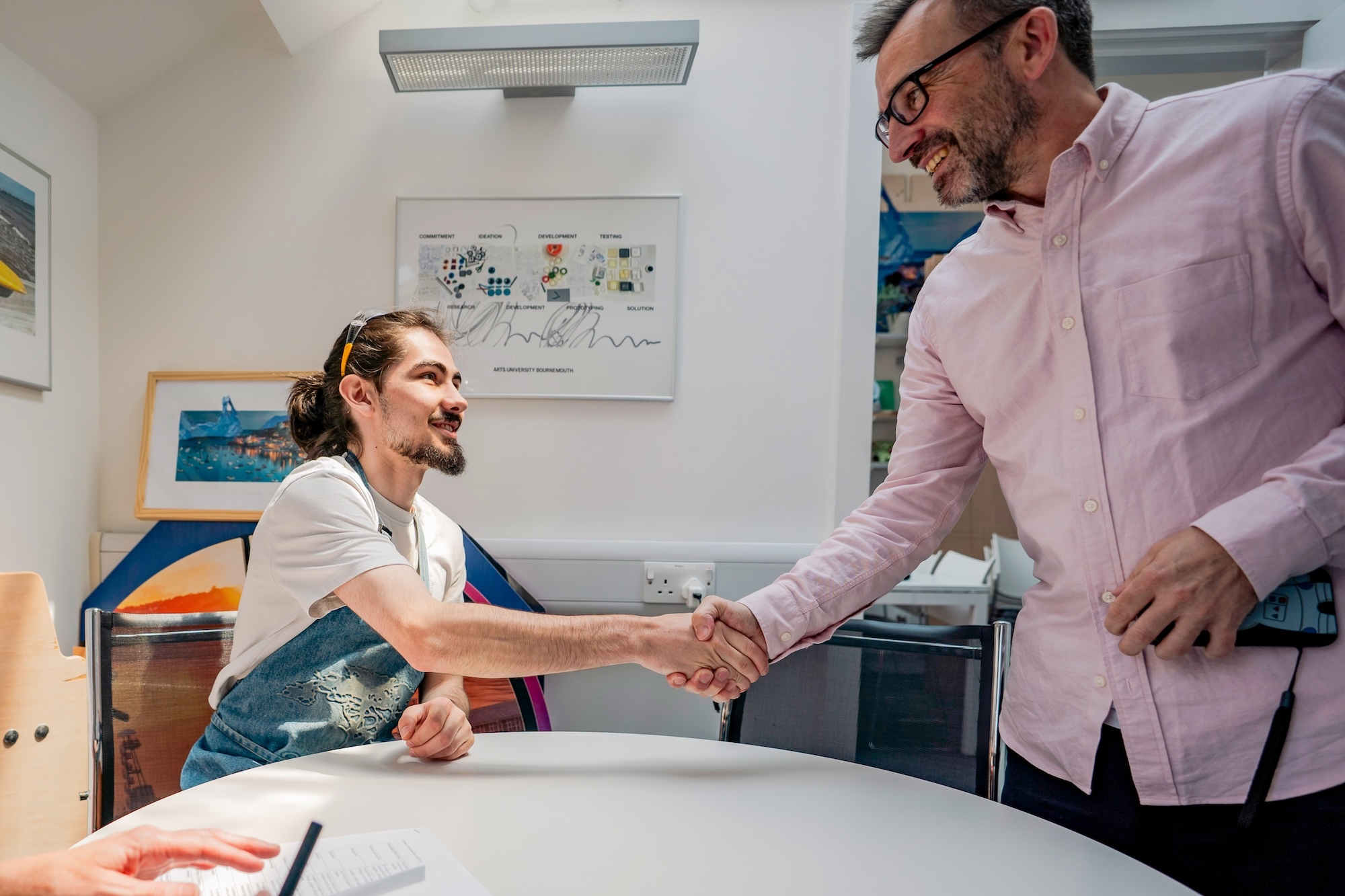
Whether it's on a placement, working on a live brief with your course Industry Patron, or even in a one-to-one with our careers and enterprise service, we equip you with the skills to enter the largest sector in terms of employment in the UK.

AUB SHOWCASE
We're proud of our alumni, and rightfully so.
Explore the incredible work of our graduates in our online AUB Showcase.
Browse work by course, student or theme.
Teaching, learning and assessment
The studio and a studio culture are central to the ethos of the course. From before you join the course (at open days and interviews) you'll have appreciated that, whilst not mimicking practice, the studio is central to your practice. The diversity of the student group brings benefits of cross-disciplinary and cross-cultural experience; you can learn so much from making use of your space.
Each unit is assessed separately, and the assessment forms part of the unit. Assessment both provides a measure of your achievement, and also gives you regular feedback on how your learning is developing.
The course objectives are met by deploying a wide variety of teaching and learning methods including projects, lectures, seminars, group critiques and tutorials. In consultation with the Course Leader, staff are responsible for co-ordinating individual units of study, and for selecting appropriate methods of delivery according to subject matter and student experience.
The methods employed induct you to the disciplines required of a creative practitioner and promote the development of transferable skills.
The study time allocated to each unit in the course incorporates a balance of formal teaching, tutorial support and independent learning.
BA (Hons) Interior Architecture and Design is structured progressively to provide increased opportunities for independent learning as you reach the later stages of the course.
The tutor leading the unit will employ a variety of methods of delivery in order to encourage your participation in the learning process. These will be dependent on the nature of the unit and the progress of the unit. Throughout the units within a year (and year on year) in the course, you're encouraged to gradually become more autonomous, progressively being asked to consider yourself as a professional designer.
The understanding of the role and appropriateness of communication is essential: as designers of space – something that cannot be experienced in reality until it is built, and something that will not be built unless it has been communicated beyond any level of doubt – clarity and professionalism in the verbal, visual and written communication of the self, of ideas and solutions to problems is prioritised on the course from the moment you join us.
The progressive promotion of independent learning reflects your anticipated maturity as a student and allows you to direct your learning towards individual goals. The teaching across the course is directed at providing you with the judgements necessary to take increasing responsibility for the management of your own learning.
Teaching is directed at supporting individual engagement in learning, although there will be opportunities for you to work in teams to enable you to learn the value of peer co-operation.
Contact hours include all scheduled teaching sessions, but also supervised time in the workshop or studio. In line with national guidance, we include in our calculation of contact hours all the time which is scheduled in the studio for independent study which is also supported by staff (either academic staff, or technicians).
The information provided below gives the proportion of your study time which constitutes contact hours. Where there are optional routes through the course, we have used the figures for the most popular option.
For every unit of your course, we'll inform you of what you're expected to learn; what you have to submit; how your work will be assessed; and the deadline for presenting your work for assessment. This is made available through Unit Information, which is on your course blog.
You'll receive a final mark for each unit in the form of a percentage, which will be recorded on your formal record of achievement (transcript). Each component of assessment is graded using a notched marking scale, whereby only certain marks are used within each grade. The only marks available within any ten-point band are *2, *5 and *8 (e.g. 62, 65, 68). These marks correspond to a low, mid, and high level of achievement within each grade band.
The University has agreed that, during 2019/20, it will run a pilot project. This will mean that on some courses, one unit at Level 4 will be assessed on a Pass / Fail basis only, with written feedback but no numerical grade. If your course has been selected for the pilot, your Course Leader will tell you this, and the details will be clearly expressed on the Unit Information Sheet.
All learning outcomes must be passed to successfully complete the unit.
On successful completion of your Honours degree course, you'll be awarded a degree classification based on your unit marks. The final classification is determined using all unit marks at Levels 5 and 6 using two different algorithms, which are detailed in the HE Student Regulations. If the two algorithms produce different results, you'll be awarded the higher class of degree.
If you have joined Level 6 through either the Recognition of Prior Learning (RPL) route or having completed a Foundation Degree (FdA), the final classification is determined using only your unit marks at Level 6.
For further information on assessment, progression, awards and classifications, please visit https://viewpoint.aub.ac.uk
Course costs
The fee you pay AUB provides the necessary equipment and training for you to complete your course.
In most cases, you don't need to buy any specific items of kit before you start the course. You may also choose to buy some items of personal equipment such as a laptop or tablet computer, but this isn't required – desktop and laptop computers are available for you to use in common study areas, including a loan system in the Library.
It isn't possible to be precise about the likely additional costs that you may incur, because this depends on the choices you make and the projects you undertake. The University provides some basic materials, and you'll be encouraged to work sustainably and to reuse materials where possible, but you should still expect to make some financial investment.
For more information, including costs relating to certain courses, visit our Course Costs page.
AUB Human newspaper
The AUB Human newspaper features AUB student and staff work from the Environmental Connection project with BA (Hons) Interior Architecture and Design and BA (Hons) Graphic Design courses. The project was undertaken in collaboration with Activate Performing Arts, in relation to the Green Space Dark Skies project at Maiden Castle in June 2022.