





























You are using an outdated browser. Most of this website should still work, but after upgrading your browser it will look and perform better.
- Home
- Undergraduate Courses
- BA (Hons) Games Art and Design
- Course details
BA (Hons) Games Art and Design
- Duration: 3 or 4 years full-time
- Placement year: Optional 1 year
- Course code: I620 (UCAS)
- Institution code: A66 (UCAS)
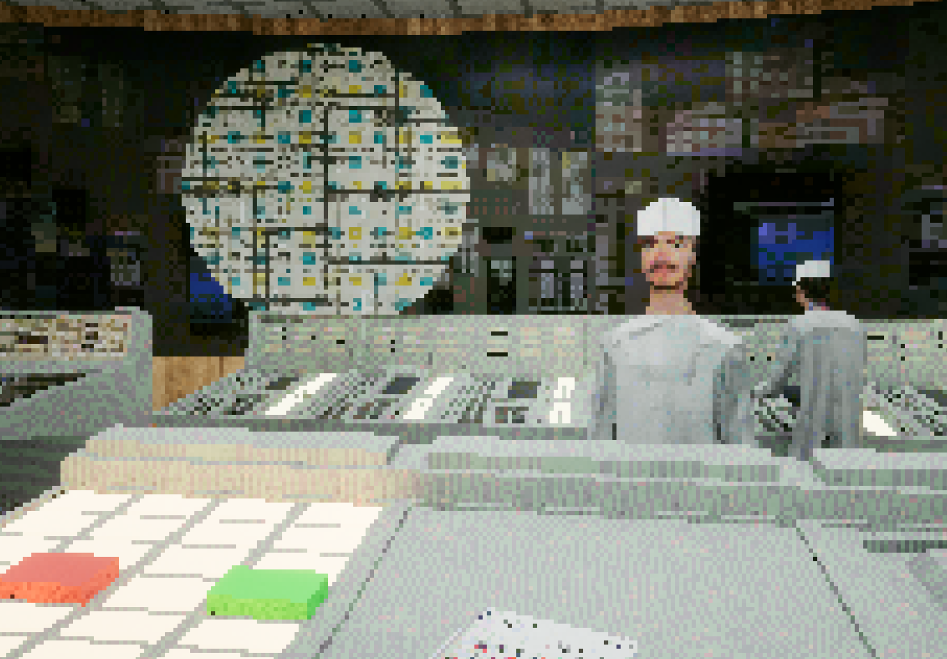
BA (Hons) Games Art and Design course information
The BA (Hons) Games Art and Design degree gives you the chance to grow creatively and conceptually, as well as to research games, test out ideas, gain valuable knowledge of the gaming industry. You'll generate original concept art, learn character animation techniques, undertake experimental gameplay and understand emerging technologies such as AI scripting. The direction of the course is to create impactful games, meaning you'll graduate with specialist knowledge required for roles in the gaming industry, and informed perspectives on game creation that considers equality, diversity, and inclusion.
You'll be able to produce your own games via software such as Unity and Unreal and will acquire critical viewpoints on games and their cultural and social relevance. You'll cover topics like power, identity and ethics, as well as the function that games play in social change, health and educational endeavours. Throughout the course, you'll collaborate and undertake different roles in the creation of games, preparing for a career in the games industry or for postgraduate study. As this course is delivered within a specialist university, you'll work alongside other like-minded and creative individuals, who all add to the unique dynamic of our creative campus.
The course focuses on creating fun but ‘meaningful’ games that showcase concepts with value-driven design to gain critical perspectives on cultural and social significance. They could include issues such as power, identity and ethics, as well as the role of games in education, health, and social change initiatives.
Placement year
All undergraduate courses at AUB offer an optional placement year, to be taken between your second and third years of study.
If you’re unsure about this optional placement, you don’t need to decide now. Once you’re here and studying with us, the course team will discuss the placement options with you, so when the time comes, you can make a decision that’s right for you.
Level 4 (first year)
The first year of BA (Hons) Games Art and Design degree is an introduction to study at higher education and provides you with the principles of games creation. The course gives an understanding of the concept of identity within gaming, including avatar and character development, which is crucial for creating engaging and immersive games. The first year also introduces concept art and aesthetics, game mechanics and the basics of software, which are essential skills for game design and development.
In addition to technical skills, the course also emphasises research and understanding the history of gaming through its development, both digital and non-digital. You'll gain a thorough understanding of the concept of "play" and how it has evolved over time. The importance of storytelling will also be delivered, as it's an essential aspect of creating successful games.
Units:
- Identity and Avatar
- Gaming and Play
- Storytelling Through Games
Level 5 (second year)
In the second year, you'll be challenged to consolidate your skills and knowledge by producing a skills audit. This helps to identify areas where you may need to improve and where your strengths lie. You'll then collaborate in groups on a set project in different roles used in the games industry. Enabling you to gain experience in different aspects of game design and development, preparing for your future careers.
In addition to technical skills, the second year of the course emphasises the importance of gender, identity and values in designing games. You'll explore how these factors influence the design of games and how they can be addressed in game development. This provides a deeper understanding of the role of games in society and how they can be used to promote equality, diversity and inclusion.
The second year of the course also includes a wide range of creative challenges, including undertaking competition briefs, learning how to launch your own games business, writing a self-initiated project and producing a case study of companies or designers that relate to your interests.
Units:
- Gender/Identity/Values
- Self-Initiated Project
- Launchpad
Level 6 (third year)
The final year is designed to prepare you to enter the games industry or to consider postgraduate study. The curriculum provides the opportunity to work on industry-set projects, allowing you to gain practical experience and evidence their skills with a professional viewpoint.
In addition to industry projects, the third year of the course allows time to compile a portfolio of work. This includes the Final Major Project, which has significance from a technical and conceptual viewpoint, this project will be the focal point of your portfolio, showcasing skills and abilities to future employers or clients.
To support this, you'll also write an industry-focused report, helping to understand which aspect of the industry you want to progress into, or to see where your business enterprise will lead.
Units:
- Industry/Live Project
- Industry In Focus Report
- Final Major Project
- Reflective Journal

APPLICATIONS ARE OPEN
It's not too late to apply! Now that you've found the perfect course, it's time to join our creative community.
Check out our handy 'how to apply' guide and our portfolio top tips.
OPEN DAYS
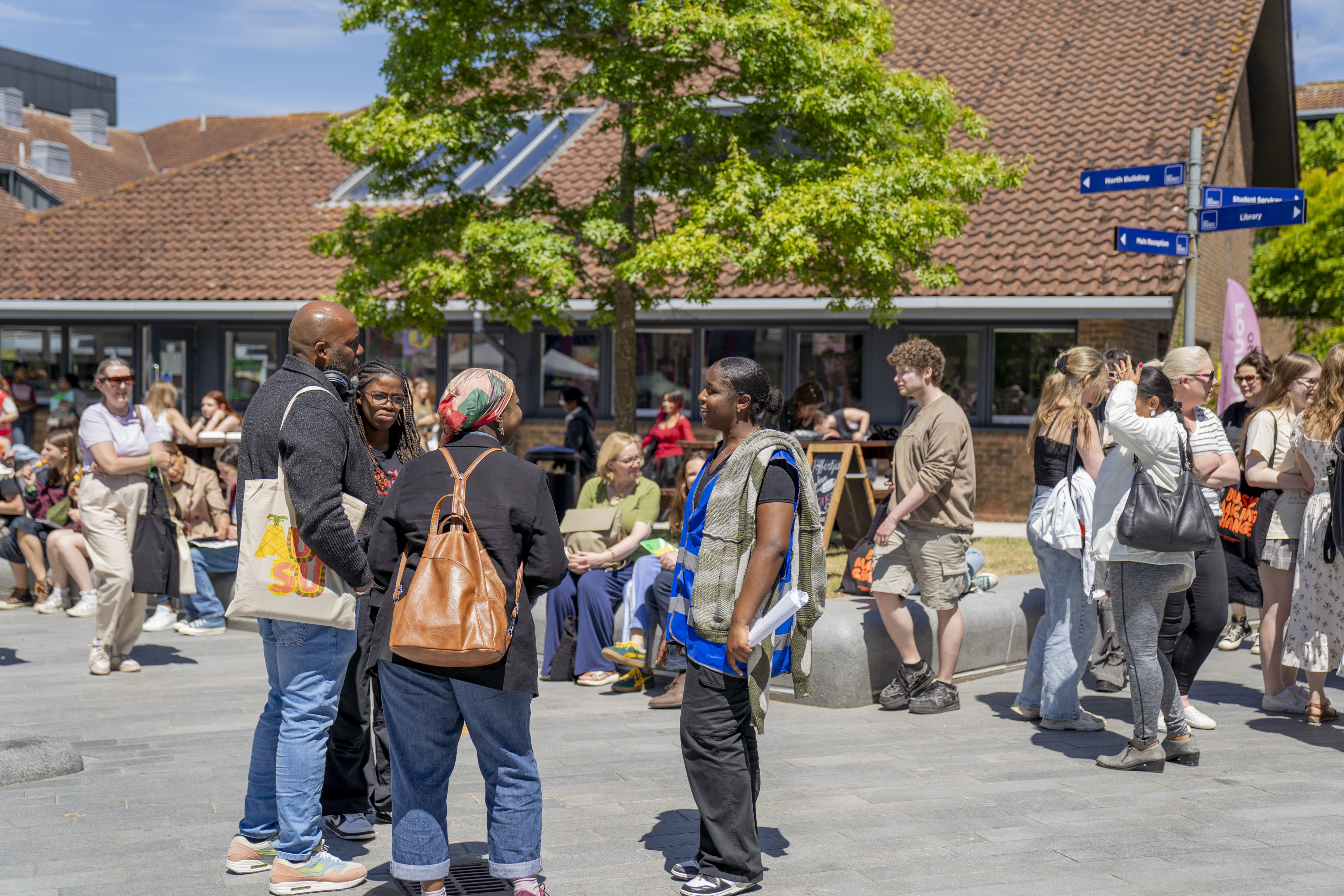
Open Days are a great way to get a feel for undergraduate life at AUB. At an Open Day, you'll be able to explore the campus, talk to course teams and discover our industry-standard facilities.
Visit us on:
- 7 November
- 5 December

STEP INTO INDUSTRY
Your journey to the creative industries begins with us, while you're studying.
Whether it's on a placement, working on a live brief with your course Industry Patron, or even in a one-to-one with our careers and enterprise service, we equip you with the skills to enter the largest sector in terms of employment in the UK.

AUB SHOWCASE
We're proud of our alumni, and rightfully so.
Explore the incredible work of our graduates in our online AUB Showcase.
Browse work by course, student or theme.
Teaching, learning and assessment
BA (Hons) Games Art and Design is taught through a blend of theoretical instruction, practical application and understanding the concept of ‘Play’. It utilises a variety of methods, including lectures, workshops, and studio-based practice. Emphasis is placed initially on hands-on learning, developing concepts through to digital construction. Students will frequently engage in individual and group projects that reflect their ideas and concepts.
Industry-standard software and hardware are used extensively to provide students with valuable, up-to-date technical skills. Regular feedback from tutors ensures continuous improvement, while guest lectures from industry professionals provide unique insights. The course encourages self-directed study, fostering creativity and independent problem-solving skills.
Independent learning is integral to BA (Hons) Games Art and Design. It empowers students to explore their unique interests and styles within the gaming industry. Assignments often involve self-guided research, creative concept development, and problem-solving, promoting critical thinking. Students also engage in independent game projects, from conception to execution, providing a platform to apply learned skills.
Beyond studio-based learning, students are encouraged to stay updated with industry trends and software. This self-directed approach cultivates a sense of ownership, resilience, and adaptability, crucial traits for future careers in the ever-evolving gaming industry. Ultimately, it supports the development of well-rounded, independent game artists and designers.
Each unit is assessed separately, and the assessment forms part of the unit. Assessment both provides a measure of your achievement and also gives you regular feedback on how your learning is developing.
You'll receive a final mark for each unit in the form of a percentage, which will be recorded on your formal record of achievement (transcript). Each component of assessment is graded using a notched marking scale, whereby only certain marks are used within each grade. The only marks available within any 10-point band are *2, *5 and *8 (e.g. 62, 65, 68). These marks correspond to a low, mid, and high level of achievement within each grade band.
All learning outcomes must be passed to successfully complete the unit.
On successful completion of your Honours degree course, you'll be awarded a degree classification based on your unit marks. The final classification is determined using all unit marks at Levels 5 and 6 using two different algorithms, which are detailed in the HE Student Regulations. If the two algorithms produce different results, you will be awarded the higher class of degree.
If you've joined Level 6 through either the Recognition of Prior Learning (RPL) route or having completed a Foundation Degree (FdA), the final classification is determined using only your unit marks at Level 6.
Firstly, through regular review of coursework you'll receive feedback on how your learning is developing towards the achievement of the learning outcomes – formative assessment. This process is delivered through the tutorial and critique experience; by engaging with this process, you'll develop your knowledge and skills.
You can experience the assessment process from an increased personal perspective and make serious critical decisions in conjunction with the teaching staff regarding their peers’ work.
Formative assessment is provided during tutorials where an action plan is formulated to develop your work. Viewings and critiques offer indications of the quality of work and how it relates to the assessment criteria. Formative assessment points will be outlined in the online unit information and within the scheme of work.
The second purpose is to provide a measure of your achievement, in the form of a mark or classification, at the end of a defined period of study, i.e. unit, level, or final award – summative assessment.
Course costs
The fee you pay AUB provides the necessary equipment and training for you to complete your course.
In most cases, you don't need to buy any specific items of kit before you start the course. You may also choose to buy some items of personal equipment such as a laptop or tablet computer, but this isn't required – desktop and laptop computers are available for you to use in common study areas, including a loan system in the Library.
It isn't possible to be precise about the likely additional costs that you may incur, because this depends on the choices you make and the projects you undertake. The University provides some basic materials, and you'll be encouraged to work sustainably and to reuse materials where possible, but you should still expect to make some financial investment.
For more information, including costs relating to certain courses, visit our Course Costs page.