





























You are using an outdated browser. Most of this website should still work, but after upgrading your browser it will look and perform better.
- Home
- Undergraduate Courses
- BA (Hons) Film Production
- Course details
BA (Hons) Film Production
- Duration: 3–5 years full-time
- Placement year: Optional 1 year
- Course code: W610 (UCAS)
- Institution code: A66 (UCAS)
BA (Hons) Film Production course information
Communication, passion, creativity, technical ability, vision, research, commitment, respect and professionalism – these are all essential characteristics of those who work in film.
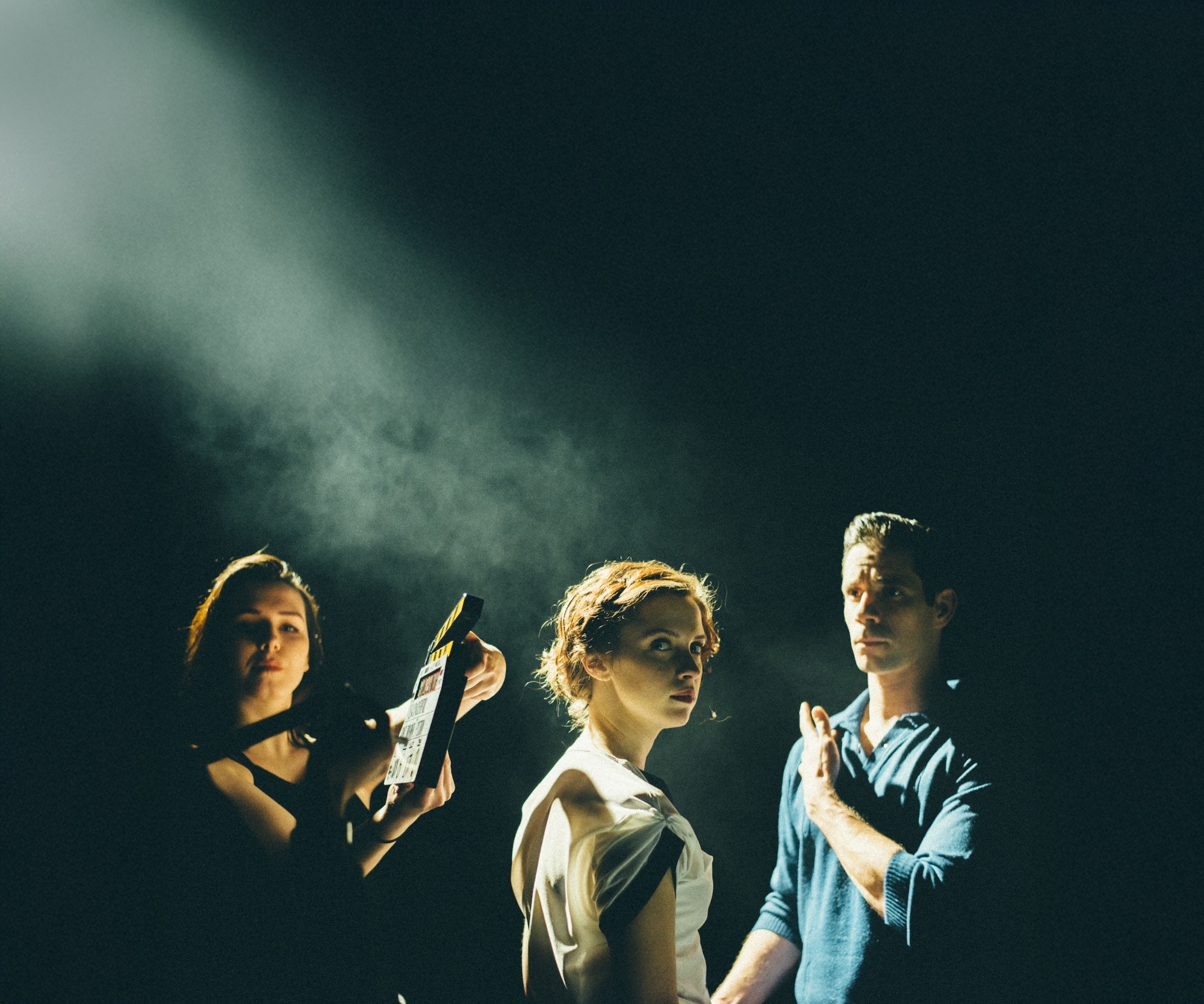
The BA (Hons) Film Production course is designed to foster these skills and abilities through a wide range of exciting and challenging film production experiences – from the moment of a film’s inception to its final distribution to cinema, streaming platforms or other media to be viewed by the audience.
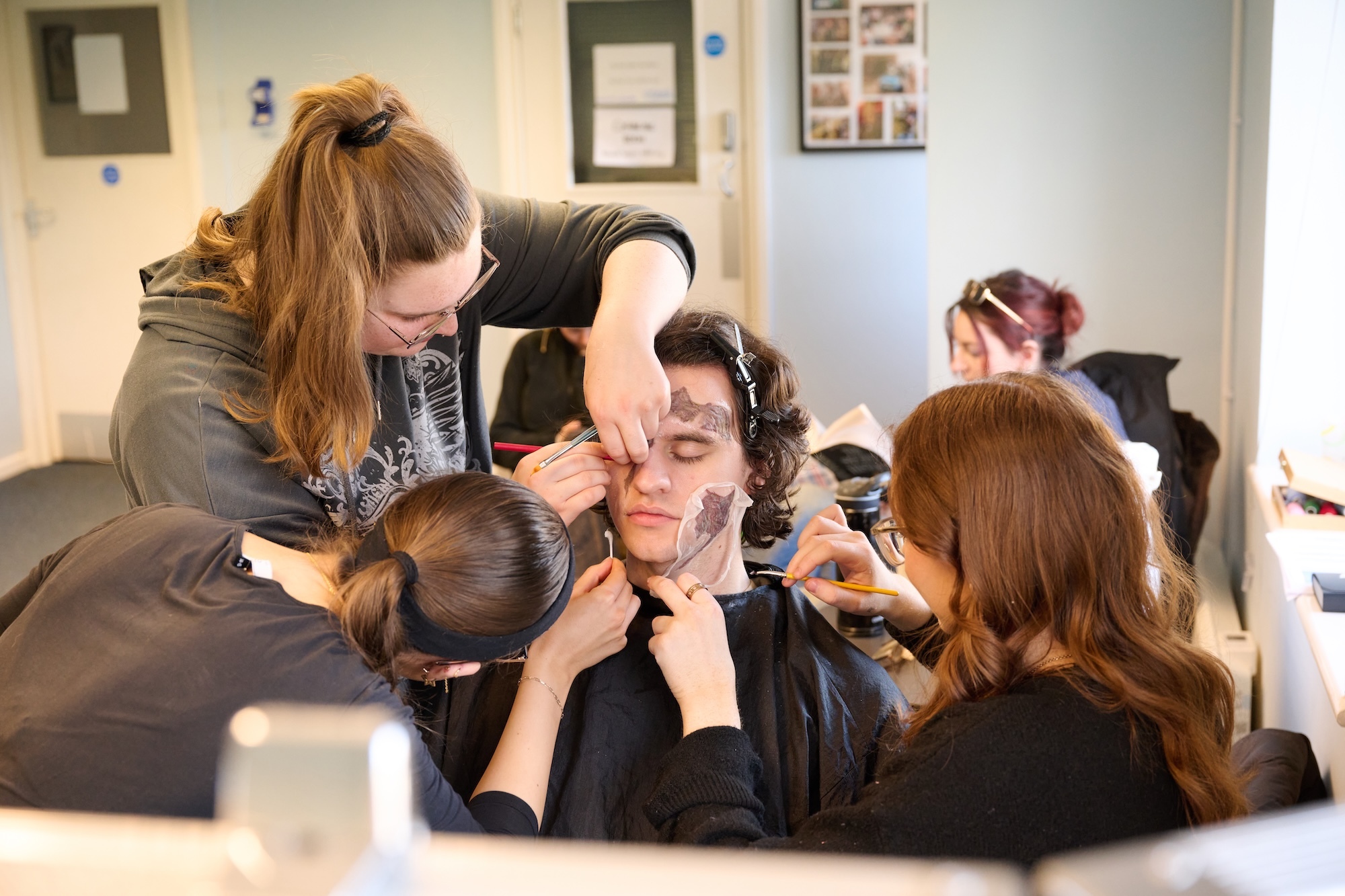
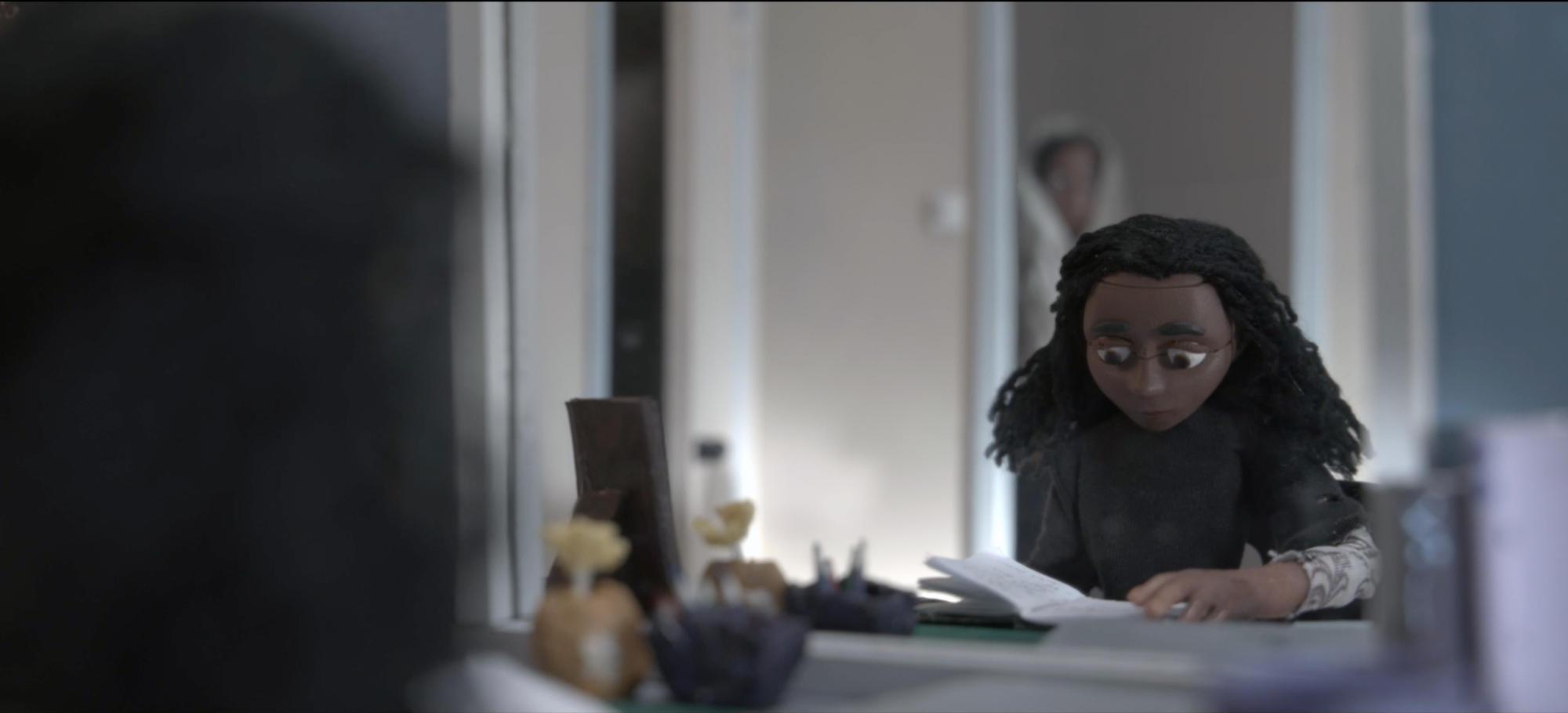
As in the industry, at AUB, making films is a collaborative process and teamwork is a key part of the course. You won’t only work with your peers, lecturers, and technicians on the course, but across other subject areas at AUB too, including BA (Hons) Acting, BA (Hons) Animation Production, BA (Hons) Costume, BA (Hons) Make-up, Hair and Prosthetics, and others. These collaborations are what builds our creative community here at AUB, with BA (Hons) Film Production at its core.
Integrated Foundation Year
On BA (Hons) Film Production, you have the option to take a specialised Integrated Foundation Year, or Year 0.
The Integrated Foundation year allows you to explore and develop your skills and knowledge at an introductory level, gaining a better understanding of what the subject area has to offer before joining the degree.
Placement year
All undergraduate courses at AUB offer an optional placement year, to be taken between your second and third years of study.
If you’re unsure about this optional placement, you don’t need to decide now. Once you’re here and studying with us, the course team will discuss the placement options with you, so when the time comes, you can make a decision that’s right for you.
Exchange and international summer programmes
Students on BA (Hons) Film Production have the chance to broaden their horizons through exciting exchange and international summer programmes. These opportunities allow you to study abroad at one of our brilliant partner institutions, experience different cultures, and enhance your academic journey.
First year (Level 4)
At this level, you’re asked to consider how film production relates to the current media environment and today's world. You’re introduced to the core principles of film production through technical tuition, practical application and historical and contextual study. You’re also encouraged to experiment with your practice and back up your decision-making with informed research and reflection.
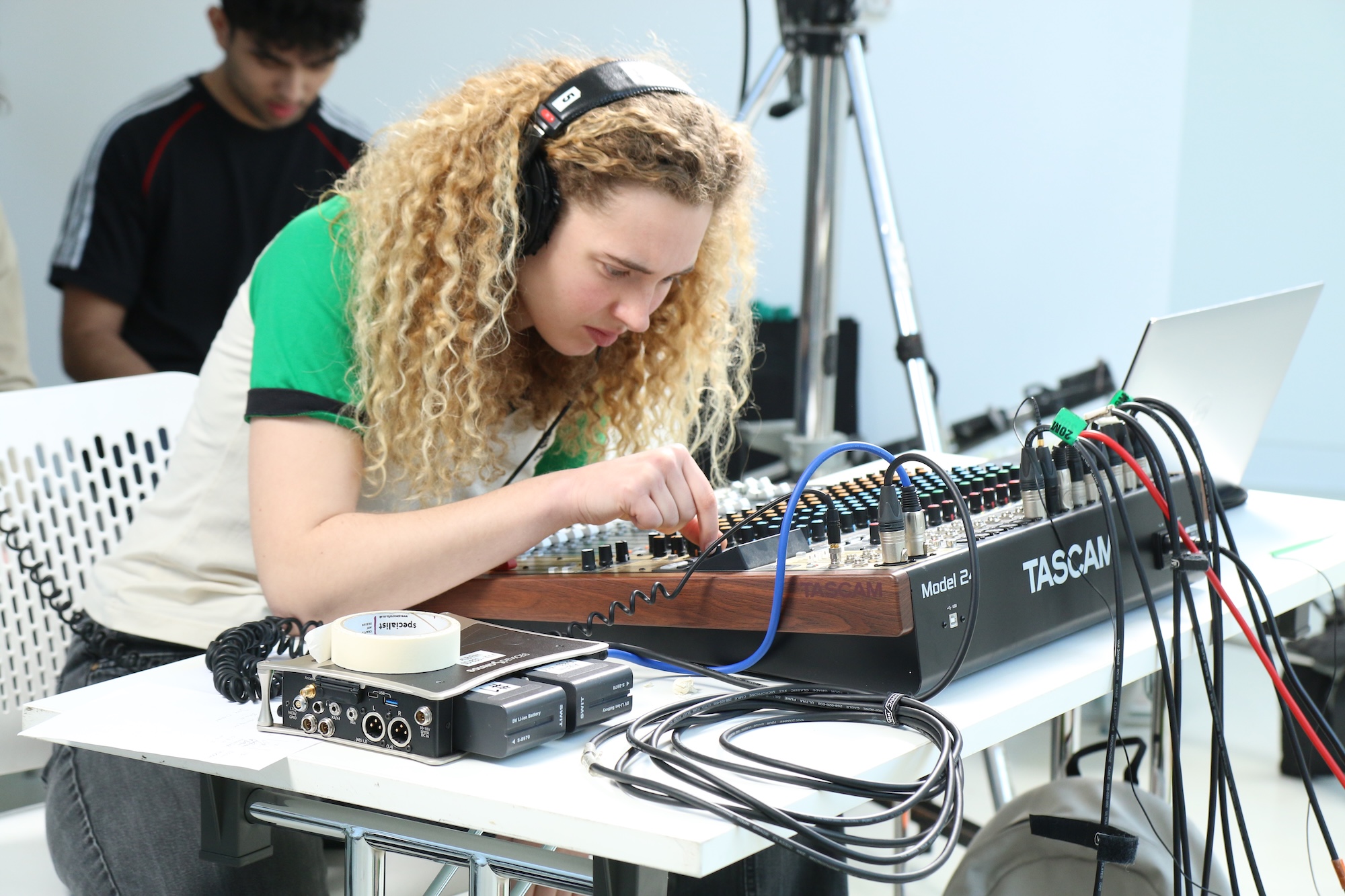
You'll learn set protocols, effective collaboration and health and safety, essential within the film industry, and which will be reinforced throughout the course. Through practical workshops you engage in many aspects of the production process, enabling an informed and guided choice of specialism at the end of the year.
Second year (Level 5)
During Level 5, your specialist skills are developed, your practical and critical abilities are enhanced, and you become further accustomed to the teamwork that’s an essential feature of the film production process. You deepen your specialist learning and develop your ability to reflect on and evaluate your work. Your contextual knowledge and understanding are extended, and you become prepared for the more rigorous pace and scale of work demanded by Level 6.
Relevant health and safety practice continues to be emphasised throughout the year of study. Specialist skills training, some of which is certified, is offered as part of the curriculum and will continue into Level 6.
Third year (Level 6)
Final year students demonstrate their abilities within their respective specialist roles and their commitment to the collective responsibility for the pre-production, production and postproduction of graduation films. Level 6 enables you to develop and consolidate your specialist production roles, building on your previous learning. You’re required to undertake significant independent study while also contributing effectively as a team member to the production process.
Successful fulfilment of the demands of Level 6 will allow you to demonstrate your professional practice, your creative and technical abilities, and intellectual maturity, all of which are necessary for effective operation in the film and media industries, or for progression to postgraduate study.

APPLICATIONS ARE OPEN
It's not too late to apply! Now that you've found the perfect course, it's time to join our creative community.
Check out our handy 'how to apply' guide and our portfolio top tips.
OPEN DAYS
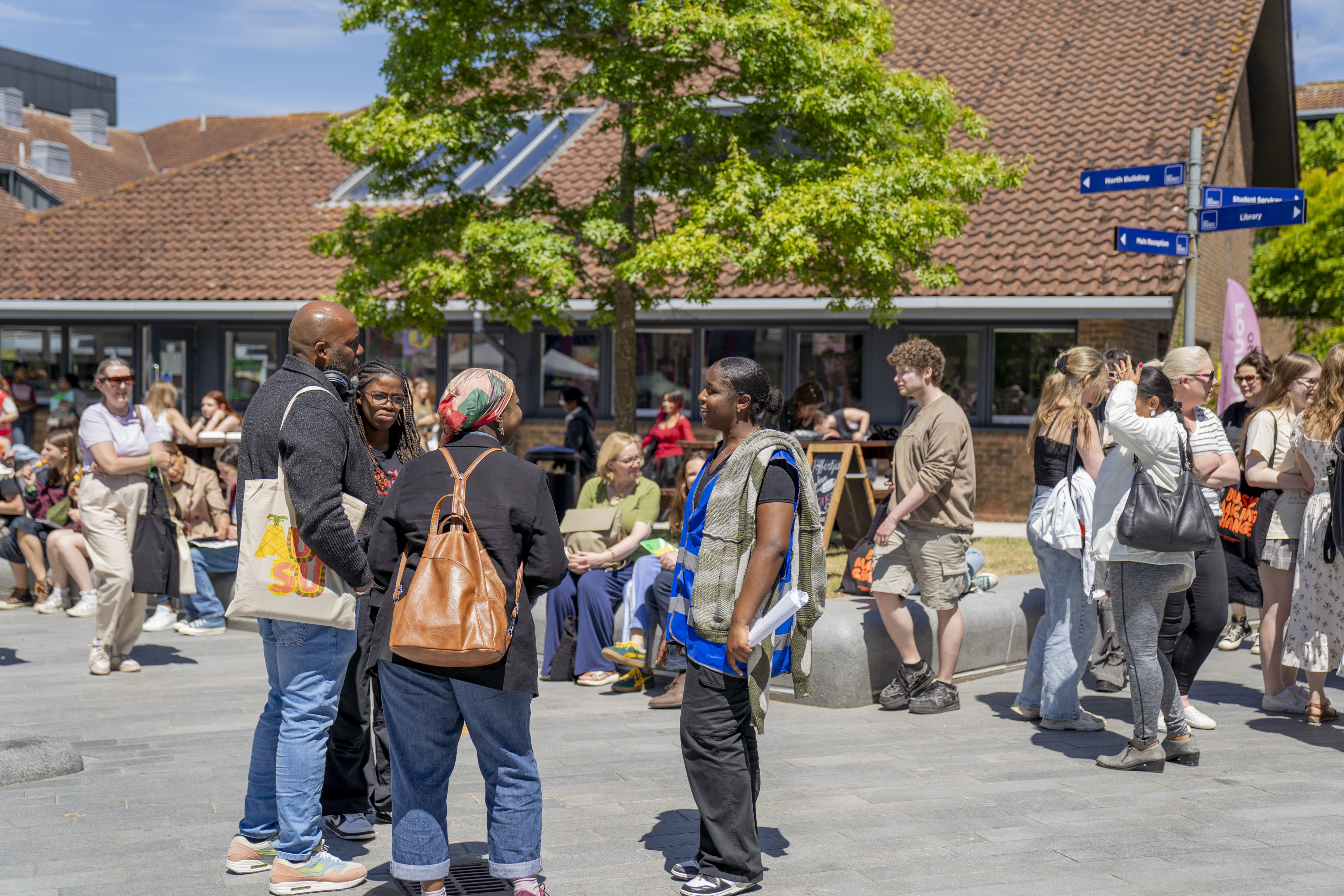
Open Days are a great way to get a feel for undergraduate life at AUB. At an Open Day, you'll be able to explore the campus, talk to course teams and discover our industry-standard facilities.
Visit us on:
- 7 November
- 5 December

STEP INTO INDUSTRY
Your journey to the creative industries begins with us, while you're studying.
Whether it's on a placement, working on a live brief with your course Industry Patron, or even in a one-to-one with our careers and enterprise service, we equip you with the skills to enter the largest sector in terms of employment in the UK.

AUB SHOWCASE
We're proud of our alumni, and rightfully so.
Explore the incredible work of our graduates in our online AUB Showcase.
Browse work by course, student or theme.
Teaching, learning and assessment
The course objectives are met by deploying a wide variety of teaching and learning methods. These include productions, exercises, lectures, seminars, workshops, certified training, tutor and peer-led critiques, discussion groups and tutorials, and both directed and independent self-studies.
Each unit is assessed separately, and the assessment forms part of the unit. Assessment both provides a measure of your achievement and gives you regular feedback on how your learning is developing.
In consultation with the Course Leader, staff are responsible for co-ordinating individual units of study, and for selecting appropriate methods of delivery according to subject matter and student experience.
The methods employed introduce you to the disciplines required of a creative practitioner and promote the development of transferable skills.
The study time allocated to each unit on the course incorporates a balance of formal teaching, directed self-studies and independent self-studies. The course is structured progressively to provide increased opportunities for self-directed study as you reach the later stages of the course. At Level 4, your work will be closely supervised, and you’ll work to set briefs. At Level 5 there’ll be a mix of specialist teaching and independent study. At Level 6 you’ll work primarily on self-directed projects, with tutorial and workshop support.
Teaching supports individual learning, but there are ample opportunities for you to work in teams, enabling you to learn the value of peer co-operation and collaborative working. At Level 4, there’s a positive emphasis on the acquisition of research and academic writing skills, and students are encouraged to work with the Subject Librarian. These skills are sustained and developed further at Levels 5 and 6.
Contact hours include all scheduled teaching sessions, but also supervised time in the workshop or studio. In line with national guidance, we include in our calculation of contact hours all the time which is scheduled in the studio for independent study which is also supported by staff (either academic staff, or technicians).
The information provided below gives the proportion of your study time which constitutes contact hours. Where there are optional routes through the course, we have used the figures for the most popular option.
For every unit of your course, we'll inform you of what you're expected to learn, what you’ll submit and how you’ll be assessed, and the deadline for presenting your work for assessment. This is made available through Unit Information on your course blog.
Formal feedback on assessed work is given to students not more than four weeks after work has been handed in. However, feedback is also provided on a rolling basis through individual and group critiques.
A minimum of one unit at Level 4 will be assessed on a pass/fail basis, with written feedback but no numerical grade. Details of this will be clearly expressed on the Unit Information Sheet. All other units will be given a percentage mark.
The final mark for each unit will be recorded on your formal record of achievement (transcript). Except for the pass/fail unit, each component of assessment is graded using a notched marking scale, whereby only certain marks are used within each grade. The only marks available within any ten-point band are *2, *5 and *8 (e.g. 62, 65, 68). These marks correspond to a low, mid, and high level of achievement within each grade band.
All learning outcomes must be passed to successfully complete the unit.
On successful completion of your Honours degree course, you’ll be awarded a degree classification based on your unit marks. The final classification is determined using all unit marks at Levels 5 and 6 using two different algorithms, which are detailed in the HE Student Regulations. If the two algorithms produce different results, you’ll be awarded the higher class of degree.
If you’ve joined Level 6 through either the Recognition of Prior Learning (RPL) route or having completed a Foundation Degree (FdA), the final classification is determined using only your unit marks at Level 6.
For further information on assessment, progression, awards and classifications, please visit our Regulations page.
Assessment components include practical exercises and film productions, e-portfolios, written essays, and presentations, as appropriate to the student and unit. The course uses both formative and summative assessment and fosters inclusivity.
Course costs
The fee you pay AUB provides the necessary equipment and training for you to complete your course.
In most cases, you don't need to buy any specific items of kit before you start the course. You may also choose to buy some items of personal equipment such as a laptop or tablet computer, but this isn't required – desktop and laptop computers are available for you to use in common study areas, including a loan system in the Library.
It isn't possible to be precise about the likely additional costs that you may incur, because this depends on the choices you make and the projects you undertake. The University provides some basic materials, and you'll be encouraged to work sustainably and to reuse materials where possible, but you should still expect to make some financial investment.
For more information, including costs relating to certain courses, visit our Course Costs page.