




























You are using an outdated browser. Most of this website should still work, but after upgrading your browser it will look and perform better.
- Home
- Undergraduate Courses
- BA (Hons) Creative Writing
- Course details
BA (Hons) Creative Writing
- Duration: 3–4 years full-time
- Placement year: Optional 1 year
- Course code: W800 (UCAS)
- Institution code: A66 (UCAS)
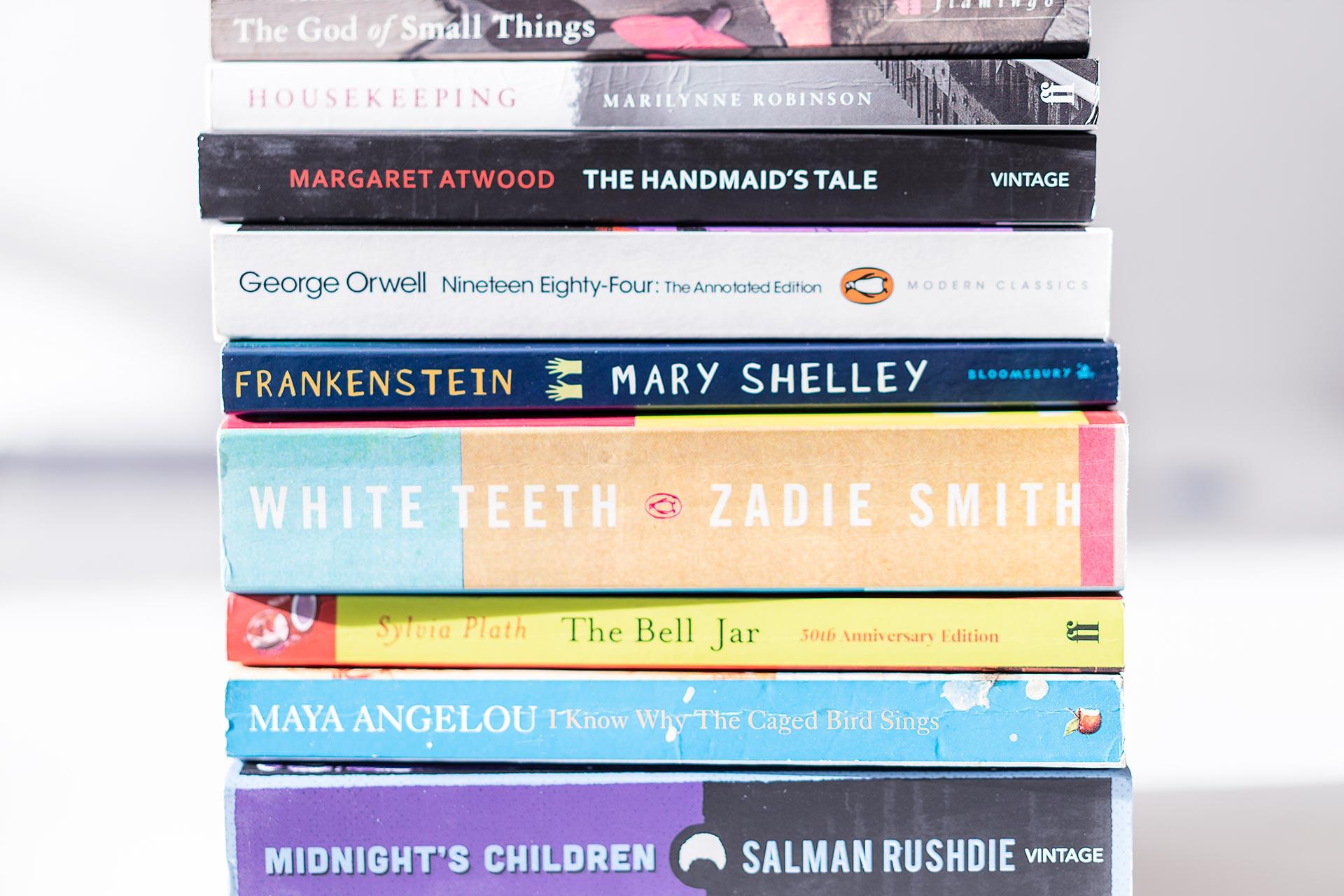
BA (Hons) Creative Writing course information
A career in creative writing could see you working in publishing, a literary agency, freelancing or in education — and that’s just the start. Whether you want to create prose, scripts, poetry or non-fiction, we’ll help you turn writing into a career.
With visits from published writers and industry professionals, you’ll be able to explore career opportunities and build contacts. When you graduate, you’ll have a strong portfolio and a professional network to kick-start your career.
Writers rarely work alone, so BA (Hons) Creative Writing will give you the opportunity to collaborate with other courses. You might write scripts with animators or filmmakers, or explore narratives with illustrators.
Three reasons to study BA (Hons) Creative Writing at AUB:
- Unique opportunities such as the chance to be mentored by a published writer in your chosen field.
- Industry-focused guidance on how to make a living as a writer in today's world.
- The choice to pick any form or genre that's of interest to you – shape your own creative journey and follow your passions.
Placement year
All undergraduate courses at AUB offer an optional placement year, to be taken between your second and third years of study.
If you’re unsure about this optional placement, you don’t need to decide now. Once you’re here and studying with us, the course team will discuss the placement options with you, so when the time comes, you can make a decision that’s right for you.
Exchange and international summer programmes
Students on BA (Hons) Creative Writing have the chance to broaden their horizons through exciting exchange and international summer programmes. These opportunities allow you to study abroad at one of our brilliant partner institutions, experience different cultures, and enhance your academic journey.
Level 4 (first year)
First year allows you to experience different areas of Creative Writing, providing you with a toolkit of fundamental creative and academic skills. A dynamic series of workshops, lectures and seminars, facilitated by staff and visiting industry professionals, are designed to build your competency. You'll read widely throughout this level, gaining a solid knowledge of other authors and their work, and an understanding of how this research can impact on your own practice.
At the core of the course experience will be writing workshops that provide a safe environment for you to share your work with lecturers and peers, gaining invaluable constructive feedback. These workshops will build confidence in sharing your work with others and develop strategies for giving and receiving feedback.
Level 5 (second year)
Second year encourages you to apply your developing skills in the area, form, and genre of your choice, exploring where you can take your practice beyond university.
You'll develop an awareness and understanding of publishing and production options, literary agencies and publishers, and other creative arts and literature-based organisations. You'll also undertake practical community or industry-based live projects that reflect your interests.
You'll actively explore the mechanics of being a professional writer, developing knowledge in the areas of self-promotion, marketing and managing finances, gaining key employable skills and Graduate Attributes.
Level 6 (third year)
You'll enter your third year looking to strengthen existing industry links and networks introduced in second year through further practical engagement and experiences. You'll be paired with a professional writer or editor, where possible, who'll guide you, alongside academic staff, as you undertake a project in your chosen specialism.
You’ll underpin your creative practice with a critical essay that consolidates your understanding of creative writing theory, practice, and contexts.
Concluding the year, you'll work on an extended project in your chosen area of interest, allowing you to develop a strong portfolio of work that best reflects you as a writer.

CLEARING IS NOW OPEN
By joining our Clearing Front Row, you'll get exclusive access, including an offer ahead of Results Day, guaranteed accommodation, a fast and easy application process, guaranteed accommodation, and more.
If you'd like to discuss Clearing further:
- Call our Clearing team on 01202 363225 (09.00–16.30, Monday–Friday).
- Get in touch with them an email.
OPEN DAYS
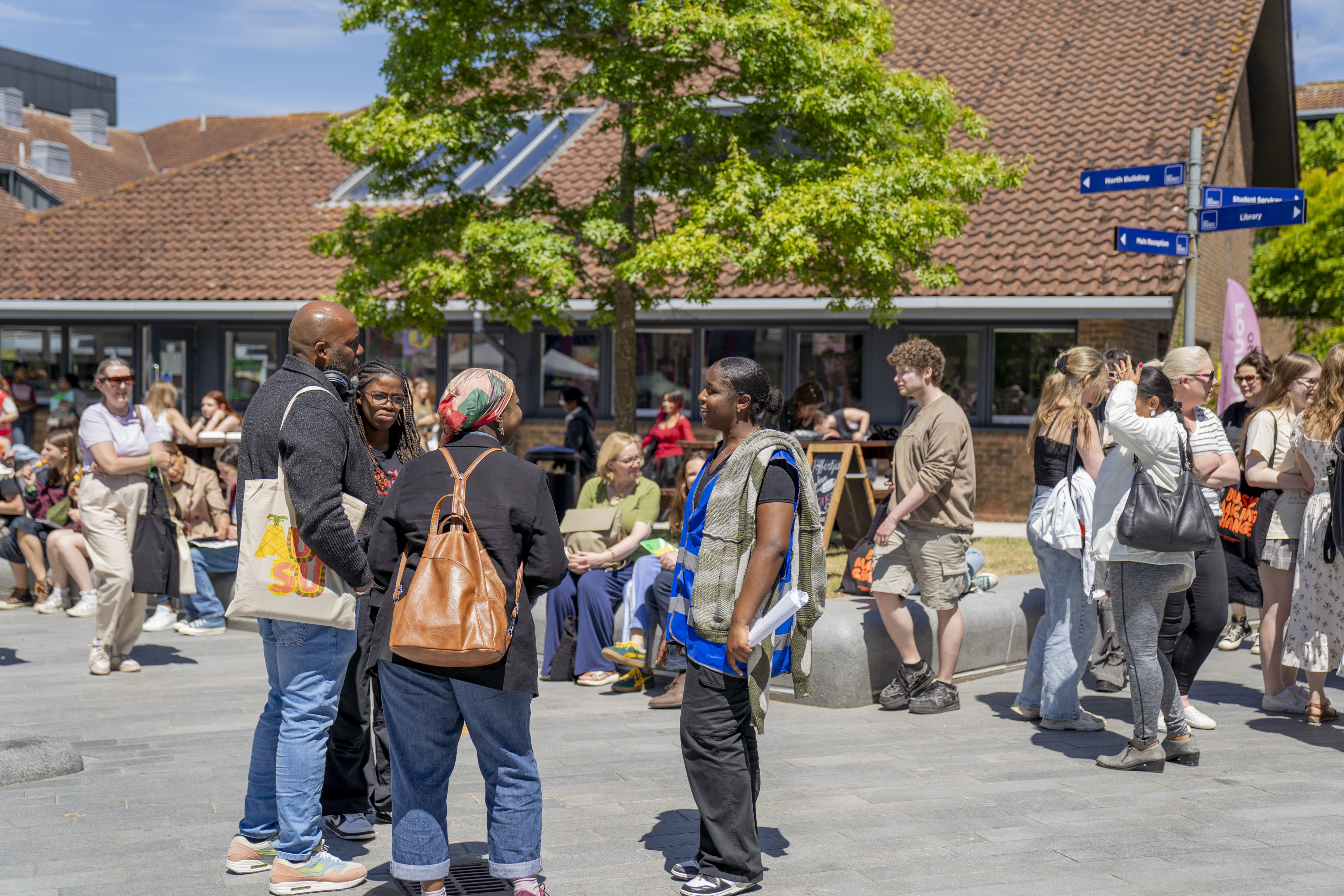
Open Days are a great way to get a feel for undergraduate life at AUB. At an Open Day, you'll be able to explore the campus, talk to course teams and discover our industry-standard facilities.
Visit us on:
- 10 October
- 7 November
- 5 December

STEP INTO INDUSTRY
Your journey to the creative industries begins with us, while you're studying.
Whether it's on a placement, working on a live brief with your course Industry Patron, or even in a one-to-one with our careers and enterprise service, we equip you with the skills to enter the largest sector in terms of employment in the UK.

AUB SHOWCASE
We're proud of our alumni, and rightfully so.
Explore the incredible work of our graduates in our online AUB Showcase.
Browse work by course, student or theme.
Teaching, learning and assessment
The course has been designed to offer you experiences in a diverse mix of learning and teaching methods to ensure your time at the university is both stimulating and enriching.
Each unit is assessed separately, and the assessment forms part of the unit. Assessment both provides a measure of your achievement and also gives you regular feedback on how your learning is developing.
Teaching will largely be delivered through lectures, seminars and workshops, supplemented by individual and group tutorials, presentations, and critiques. In consultation with the Course Leader, the teaching team is responsible for co-ordinating individual units of study, and for selecting appropriate methods of delivery according to subject matter and student experience. Level 4 provides you with an introduction to key writing and academic skills through the ‘Fundamentals’ series, while Levels 5 and 6 see a progression towards more independent learning and greater autonomy over projects and areas of interest.
The Writing Workshop
At the core of the course experience will be writing workshops that provide safe environments for you to read your work in front of your lecturers and peers, to gain invaluable constructive feedback. This is an essential part of the writing process and you'll be encouraged to translate the feedback into your practice through editing and redrafting, while also offering generous and critical feedback to others. The course aims to foster critically reflective writers and the workshop is an excellent space in which to develop these skills.
Crafting with Writers
The Level 5 experience offers an exciting opportunity to follow your independent interests and develop projects while guided and mentored by professional writers and/or editors. The aim here is to let you explore, experiment, and hone your craft, nurtured by experts in your chosen field of study.
Learning environments
Throughout all levels, your learning will be enhanced by opportunities to leave the campus and write on location, responding to different environments and geographies. Possible venues include the New Forest, the Jurassic Coast, the Earthouse at Cranborne, and Thomas Hardy’s Cottage, amongst others.
Contact hours include all scheduled teaching sessions, but also supervised time in the workshop or studio. In line with national guidance, we include in our calculation of contact hours all the time which is scheduled in the studio for independent study which is also supported by staff (either academic staff, or technicians).
The information provided below gives the proportion of your study time which constitutes contact hours. Where there are optional routes through the course, we've used the figures for the most popular option.
For every unit of your course, we'll inform you of what you are expected to learn, what you have to submit, how your work will be assessed, and the deadline for presenting your work for assessment. This is made available through Unit Information, which is on your course blog.
You'll receive a final mark for each unit in the form of a percentage, which will be recorded on your formal record of achievement (transcript). Each component of assessment is graded using a notched marking scale, whereby only certain marks are used within each grade. The only marks available within any ten-point band are *2, *5 and *8 (e.g. 62, 65, 68). These marks correspond to a low, mid, and high level of achievement within each grade band.
All learning outcomes must be passed to successfully complete the unit.
Course costs
The fee you pay AUB provides the necessary equipment and training for you to complete your course.
In most cases, you don't need to buy any specific items of kit before you start the course. You may also choose to buy some items of personal equipment such as a laptop or tablet computer, but this isn't required – desktop and laptop computers are available for you to use in common study areas, including a loan system in the Library.
It isn't possible to be precise about the likely additional costs that you may incur, because this depends on the choices you make and the projects you undertake. The University provides some basic materials, and you'll be encouraged to work sustainably and to reuse materials where possible, but you should still expect to make some financial investment.
For more information, including costs relating to certain courses, visit our Course Costs page.