


















You are using an outdated browser. Most of this website should still work, but after upgrading your browser it will look and perform better.
- Home
- Undergraduate Courses
- BA (Hons) Creative Direction
- Course details
BA (Hons) Creative Direction
- Duration: 3–5 years full-time
- Placement year: Optional 1 year
- Course code: W222 (UCAS)
- Institution code: A66 (UCAS)
BA (Hons) Creative Direction course information
Creative Directors are employed across all sectors of the creative economy, whether that's advertising, the arts, design, fashion, gaming, music, publishing or TV and film. They develop an intimate knowledge of their brand’s customers and direct all communication, controlling every point where their brand encounters their audiences, customers, and users. They do this by developing a team of creatives from a range of disciplines to assist in the design, development and delivery of their organisation’s products or services.
This course aims to nurture innovative and forward-thinking individuals who can shape and influence the creative landscape. It provides a platform for you to explore your creativity, develop leadership qualities, and become industry-ready professionals capable of making a significant impact in the evolving creative industries.
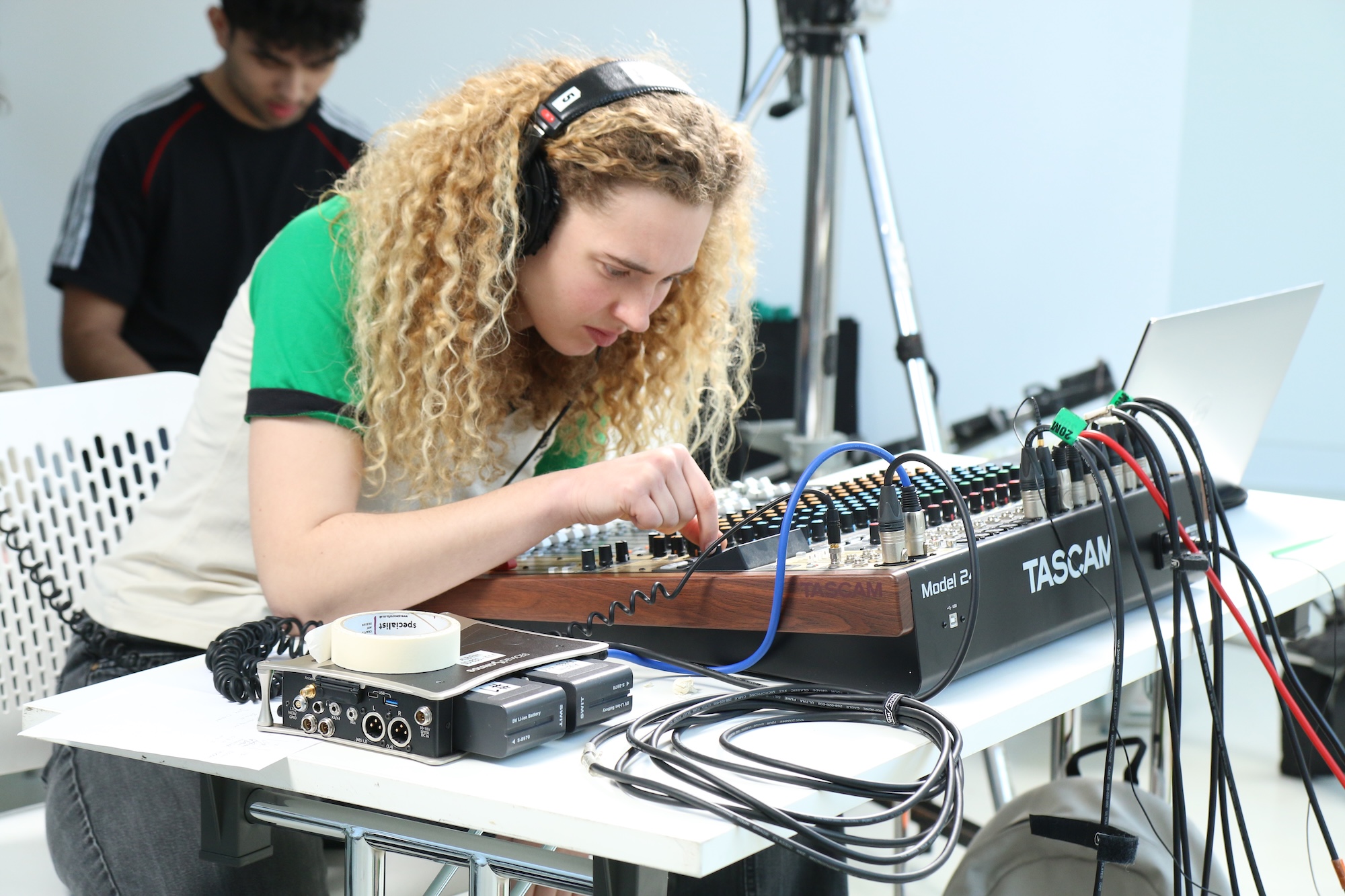
There'll be opportunities to engage in a range of hands-on projects, collaborative exercises, and industry simulations, applying learning in real-world contexts. You'll also have the opportunity to work with industry professionals, agencies, and clients, gaining valuable insights and building a professional network.
It's the blend of real-world experience, project management and design skill that makes BA (Hons) Creative Direction unique. At AUB, we're a creative community that represents the industry as a university-wide team. This course places you at the very heart it as you learn to express yourself, design, develop and deliver as a Creative Director.
Three reasons to study BA (Hons) Creative Direction at AUB:
- Exclusive industry patronage – Fiona Hayes. One of this course’s unique advantages is our Industry Patron, Fiona Hayes, a globally recognised creative director. With an impressive career at Condé Nast, she's played a key role in launching seven Vogue titles worldwide. Her involvement ensures that you'll gain insider knowledge, mentorship opportunities, and industry-relevant insights from one of the best in the field. This direct connection to the professional world sets AUB apart from the others.
- Comprehensive skill development and design thinking. This course nurtures forward-thinking and innovative individuals by combining design thinking, problem-solving, and leadership training. You'll be encouraged to experiment and develop creative strategies that reflect the ever-changing landscape of the industry. The curriculum will equip you with the ability to respond to complex creative challenges with unique and impactful solutions.
- Collaborative, industry-focused learning environment. We emphasise real-world collaboration by allowing students to work alongside designers, photographers, illustrators, and content creators. This interdisciplinary approach mirrors professional creative direction environments, preparing you to deliver high-quality, multi-platform creative solutions. Combined with industry mentorship and project-based learning, this makes BA (Hons) Creative Direction at AUB one of the most career-focused and immersive courses available.
Integrated Foundation Year
On BA (Hons) Creative Direction, you have the option to take a specialised Integrated Foundation Year, or Year 0.
The Integrated Foundation year allows you to explore and develop your skills and knowledge at an introductory level, gaining a better understanding of what the subject area has to offer before joining the degree.
Placement year
All undergraduate courses at AUB offer an optional placement year, to be taken between your second and third years of study.
If you’re unsure about this optional placement, you don’t need to decide now. Once you’re here and studying with us, the course team will discuss the placement options with you, so when the time comes, you can make a decision that’s right for you.
Level 4 (first year)
Forming small production teams with support from course tutors and the technical team, you'll learn to design and deliver creative projects; delivering your first project during the first term of the first year of the course.
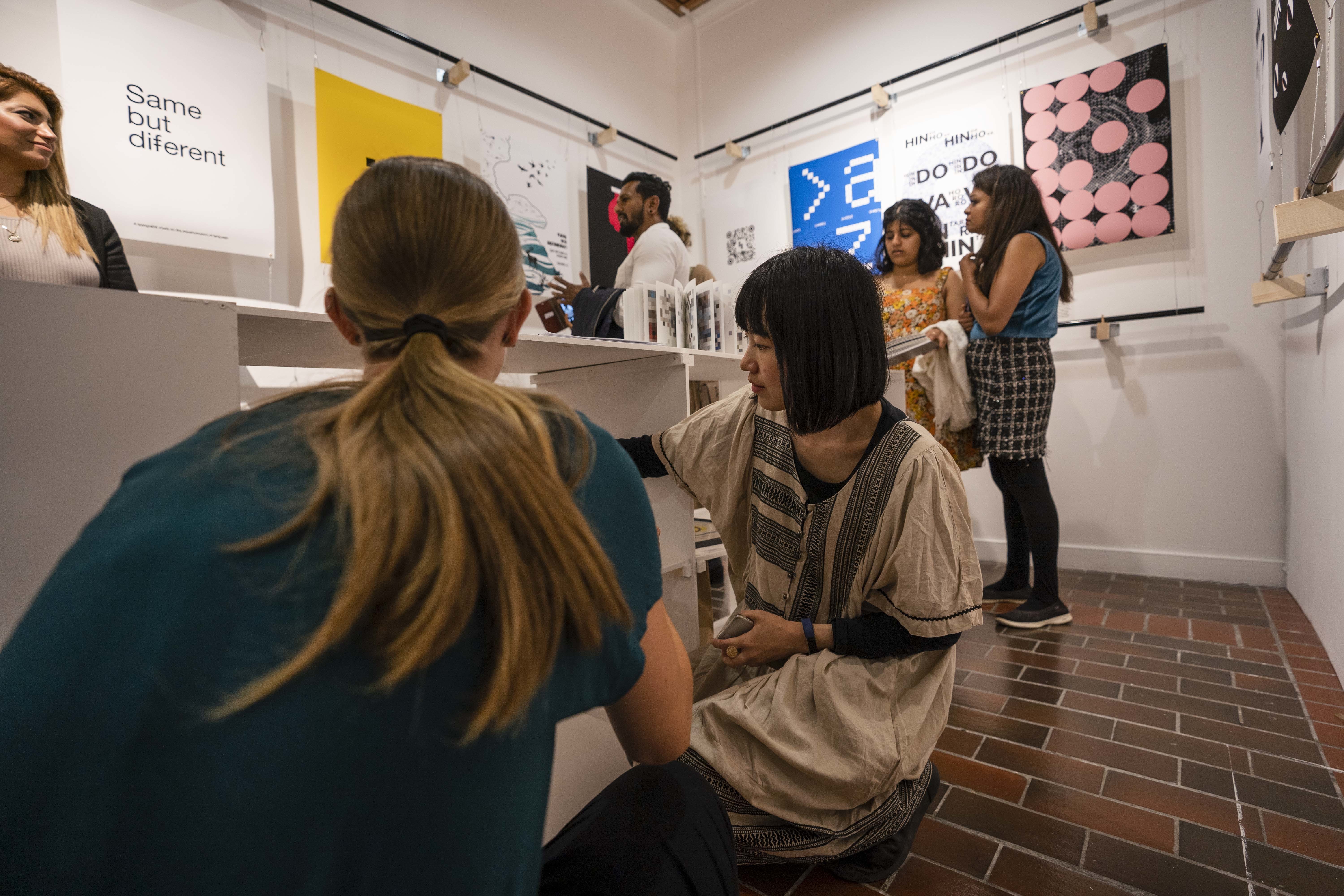
With guest lectures from specialist speakers, you're introduced to different sectors of the creative industries and the way they operate. We'll also take some time to research and understand the potential impacts of creative work on the environment and the communities and stakeholders that engage with it. Finally, student-led creative projects will be delivered to an external audience during the summer term.
Level 5 (second year)
In the second year of the course, you'll progress to more specialist study, building on experience gained during the first year. Creative projects will provide an opportunity for you to work with an external client, designing a solution that responds to their needs. You'll also acquire strong research skills, developing their insights into industry and learning how to pitch for investment for a new creative enterprise.
During second year, you can choose between undertaking a six-week work placement during the final term or spending a whole year on placement before returning to complete your studies. This allows you to put your skills into practice, working within an industry setting.
Level 6 (third year)
In the third year, the focus is on independent learning, preparing you to transition into the world of work. Students can design a major creative project and pitch their idea to colleagues, stakeholders, and alumni. Working as part of a production team with funding from the course, support from tutors and the technical team, the culmination of learning will be to conceive and deliver a project that helps each student to stand out from the crowd and become a source of inspiration to those that'll follow them.
You can also choose between either working with an organisation from industry, researching their business to operate as a consultant and make recommendations for their future strategic planning; or researching a topic in depth and producing a dissertation that allows you to become an expert in your chosen field.

APPLICATIONS ARE OPEN
It's not too late to apply! Now that you've found the perfect course, it's time to join our creative community.
Check out our handy 'how to apply' guide and our portfolio top tips.
OPEN DAYS
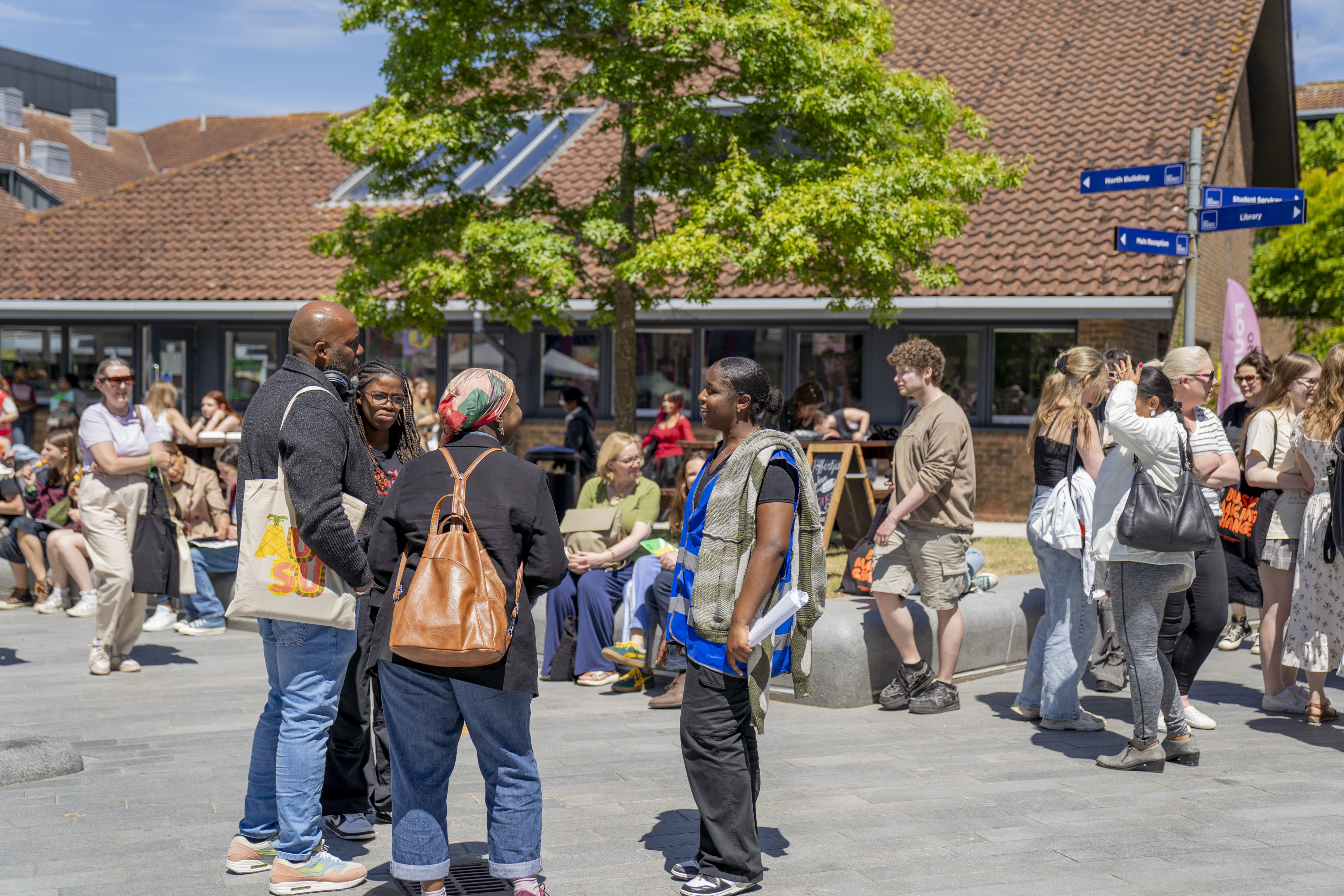
Open Days are a great way to get a feel for undergraduate life at AUB. At an Open Day, you'll be able to explore the campus, talk to course teams and discover our industry-standard facilities.
Visit us on:
- 7 November
- 5 December

STEP INTO INDUSTRY
Your journey to the creative industries begins with us, while you're studying.
Whether it's on a placement, working on a live brief with your course Industry Patron, or even in a one-to-one with our careers and enterprise service, we equip you with the skills to enter the largest sector in terms of employment in the UK.
AUB SHOWCASE
We're proud of our alumni, and rightfully so.
Explore the incredible work of our graduates in our online AUB Showcase.
Browse work by course, student or theme.
Teaching, learning and assessment
In consultation with the course developer, staff are responsible for co-ordinating individual units of study, and for selecting appropriate methods of delivery, according to subject matter and student experience. The methods employed introduce you to the disciplines required of a creative practitioner and promote the development of transferable skills.
The study time allocated to each unit in the course incorporates a balance of formal teaching, tutorial support and independent learning. The course is structured progressively to provide increased opportunities for independent learning as you reach the later stages of the course.
Teaching is directed at supporting individual engagement in learning and there'll be opportunities for you to work in teams to enable you to learn the value of peer co-operation.
Lectures, seminars, and tutorials are by team members, as appropriate, in the creative course spaces.
The progressive promotion of independent learning reflects your anticipated maturity as a student and allows you to direct your learning towards individual goals. The teaching in Level 4 is directed at providing you with the knowledge, concepts, and skills to take increasing responsibility for the management of your own learning.
Contact hours include all scheduled teaching sessions, but also supervised time in the workshop or studio. In line with national guidance, we include in our calculation of contact hours all the time which is scheduled in the studio for independent study, which is also supported by staff (either academic staff, or technicians).
All your assessments reflect the world of work and are designed to accurately reflect typical tasks that you'll undertake regularly when you graduate and embark on your career. The core of the course is based on practical project-based assessments with some reflection and evaluation on your learning via reports and presentations. You'll also have to pitch ideas to your colleagues and your clients. Finally, you'll undertake research tasks that have a written output, either as a report or extended essay.
You'll receive a final mark for each unit in the form of a percentage, which'll be recorded on your formal record of achievement (transcript). Each component of assessment is graded using a notched marking scale, whereby only certain marks are used within each grade. The only marks available within any ten-point band are *2, *5 and *8 (e.g. 62, 65, 68). These marks correspond to a low, mid, and high level of achievement within each grade band.
All learning outcomes must be passed to successfully complete the unit.
On successful completion of your Honours degree course, you'll be awarded a degree classification based on your unit marks. The final classification is determined using all unit marks at Levels 5 and 6 using two different algorithms, which are detailed in the HE Student Regulations. If the two algorithms produce different results, you'll be awarded the higher class of degree.
If you've joined Level 6 through either the Recognition of Prior Learning (RPL) route or having completed a Foundation Degree (FdA), the final classification is determined using only your unit marks at Level 6.
For further information on assessment, progression, awards and classifications, please visit viewpoint.aub.ac.uk.
Course costs
The fee you pay AUB provides the necessary equipment and training for you to complete your course.
In most cases, you don't need to buy any specific items of kit before you start the course. You may also choose to buy some items of personal equipment such as a laptop or tablet computer, but this isn't required – desktop and laptop computers are available for you to use in common study areas, including a loan system in the Library.
It isn't possible to be precise about the likely additional costs that you may incur, because this depends on the choices you make and the projects you undertake. The University provides some basic materials, and you'll be encouraged to work sustainably and to reuse materials where possible, but you should still expect to make some financial investment.
For more information, including costs relating to certain courses, visit our Course Costs page.