


























You are using an outdated browser. Most of this website should still work, but after upgrading your browser it will look and perform better.
- Home
- Undergraduate Courses
- BA (Hons) Acting
- Course details
BA (Hons) Acting
- Duration: 3–5 years full-time
- Placement year: Optional 1 year
- Course code: W410 (UCAS)
- Institution code: A66 (UCAS)
BA (Hons) Acting course information
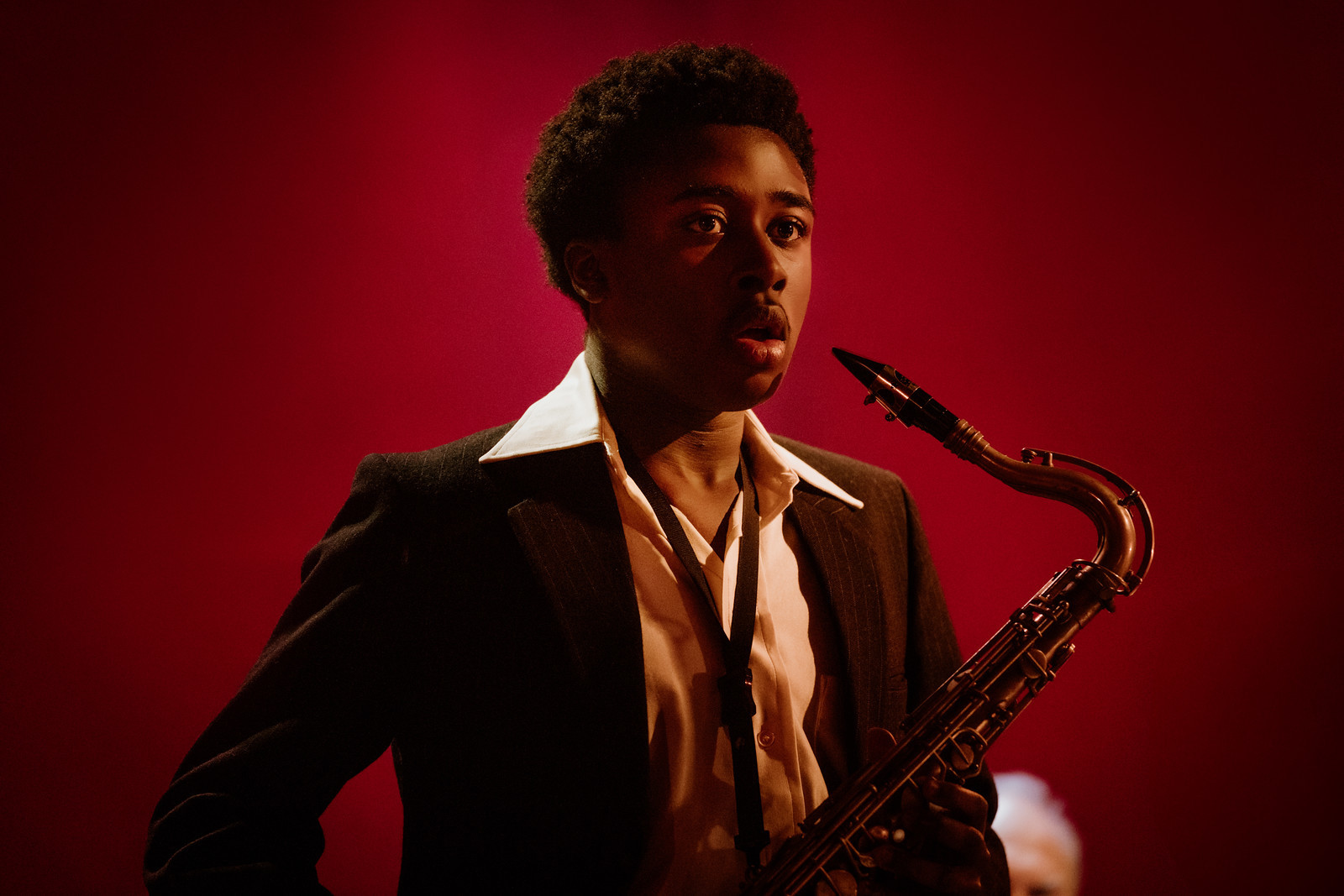
The theatre, screen and media industries are constantly changing, but consistently demanding. On BA (Hons) Acting, you'll be provided with contemporary, professional actor training, allowing you to collaborate and deepen your skills, knowledge and experience.
Our course integrates a range of disciplines, covering the principles of contemporary acting techniques; you'll work in practical, tutor-led movement, vocal, improvisation, acting and contextual classes. The course is also distinct in that it advances from the foundations of the physical acting (stage and screen fighting methods and choreography) to incorporate these methods through innovative technology used for camera, such as motion capture.
As BA (Hons) Acting students, you'll broaden your vocabulary of acting for stage in front of live audiences, learning the most current devising methods, and generating your own creative work.
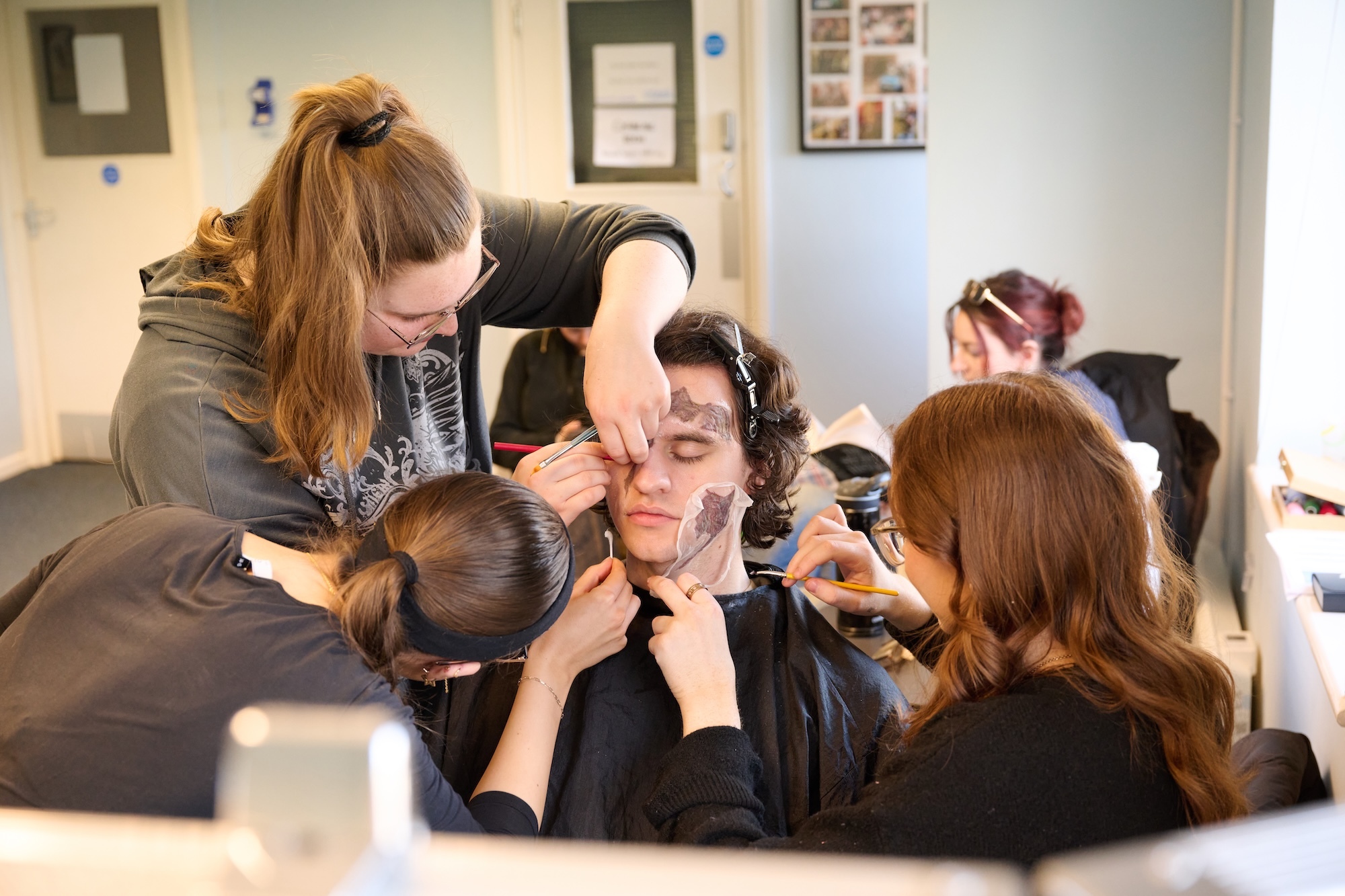
You'll be placed in collaborative settings, learning at points throughout the degree alongside your peers on BA (Hons) Acting for Screen, and working on productions with students from other AUB courses such as BA (Hons) Film Production, BA (Hons) Costume, and BA (Hons) Makeup, Hair and Prosthetics.
Three reasons to study BA (Hons) Acting at AUB:
- You'll study the craft of being an actor and develop the skills required, while also having the opportunity to create your own work – the work that you want to see in the world.
- You'll be a part of Bournemouth Film School and receive training in performance for recorded media such as film, radio and self-taping.
- You'll have the opportunity to collaborate with other courses (such as BA (Hons) Film Production, Costume, and Makeup, Hair and Prosthetics) throughout your time on the course. This will enable you to develop a diverse portfolio of work and a large network of creative artists.
Integrated Foundation Year
On BA (Hons) Acting, you have the option to take a specialised Integrated Foundation Year, or Year 0.
The Integrated Foundation year allows you to explore and develop your skills and knowledge at an introductory level, gaining a better understanding of what the subject area has to offer before joining the degree.
Placement year
All undergraduate courses at AUB offer an optional placement year, to be taken between your second and third years of study.
If you’re unsure about this optional placement, you don’t need to decide now. Once you’re here and studying with us, the course team will discuss the placement options with you, so when the time comes, you can make a decision that’s right for you.
Exchange and international summer programmes
Students on BA (Hons) Acting have the chance to broaden their horizons through exciting exchange and international summer programmes. These opportunities allow you to study abroad at one of our brilliant partner institutions, experience different cultures, and enhance your academic journey.
Level 4 (first year)
You'll share all units through first year with your peers on BA (Hons) Acting for Screen.
Throughout the course, you'll focus on fundamental questions and approaches to acting, ensemble, autonomy, spontaneity, repetition, self and character, play and presence. This will be a process of experimentation as you build your own meaning and processes of working.
You'll work on the idea of being in the moment, heightened awareness, precision to detail, and working on the voice and language through dramatic texts. During the year, we also look at exploring vulnerability, openness, risk-taking in making visible what normally, in society, is invisible.
We also introduce you to collaborative, visceral and sensual practices that enhance your stamina, physicality and imagination. You'll play group games, learn how to work together as an ensemble, and have fun by making mistakes and improvising on the spot.
The Acting for Screen and Media unit will enhance your curiosity, sustaining and deepening your awareness of how texts and narratives move into recorded performance, through a range of creative development processes and rehearsals. You'll develop your understanding of how performance in different contexts (recorded or filmed) requires shifts in techniques and technologies.
Level 5 (second year)
In second year, you'll continue to learn alongside BA (Hons) Acting for Screen for the first term.
This year consists of more advanced work, concerned with aspects of dramatic structure and the implications of style for the actor. Building on key skills and concepts introduced at Level 4, you'll continue to expand your skills, knowledge and experience of voice and body work as a core spine through the level. As with first year, lessons in acting, movement, voice and singing run throughout the different units in this level.
The acting is developed to a more advanced level in the Shakespeare and Acting 3 units. With historical and contemporary texts and scores, you'll be further challenged to apply existing skills and knowledge with making and staging these works, as well as opening new opportunities to acquire new skills and sensibilities within workshop, rehearsal, and performance settings.
In the Acting 3 unit, we also introduce you to acting for camera through a Meisner or an equivalent technique. You'll also gain skills in acting for innovative technologies (motion capture) and develop your understanding of stage and screen fighting techniques.
From the second term, you'll begin developing stage and devising techniques by learning to create devised, physical and imaginative theatre shows as well as introduction to how to create their companies, and the touring industry. The unit is supported by learning the foundations of dramaturgy and making it a practical skill when devising. You'll then go on to being in your first production. The Staged Mini Production unit is designed to give you a first-hand experience of performing in front of the audience – an integral part of developing your confidence.
The Professional Practice and Research unit is shared part of the Bournemouth Film School (BFS) experience, with common aims and learning outcomes across all courses. You'll have the opportunity to choose from a multitude of different courses within BFS to enhance your curiosity and knowledge in a new field, or undertake a research to suit your specific discipline or focus. This unit gives you the chance to build on your knowledge and practical skills within a professional, industry-relevant environment, encouraging creativity and innovation.
Level 6 (third year)
Your final year enables you to extend the scope and depth of your exploration of the acting process, and test the working methods developed in Levels 4 and 5, with a range of creative challenges. At this level, you'll focus on public-facing performance or film recordings, working with a wide range of external screen, theatre and media practitioners, enhancing your skills of collaboration and working to tight professionalised deadlines.
As BA (Hons) Acting students, you'll work on a full-length, public-facing production, both as cast and crew, in collaboration with other BFS courses on AUB Productions. After that project, you'll also create your own ensemble piece (devised, scripted or new writing), which will be performed to the public and industry experts.
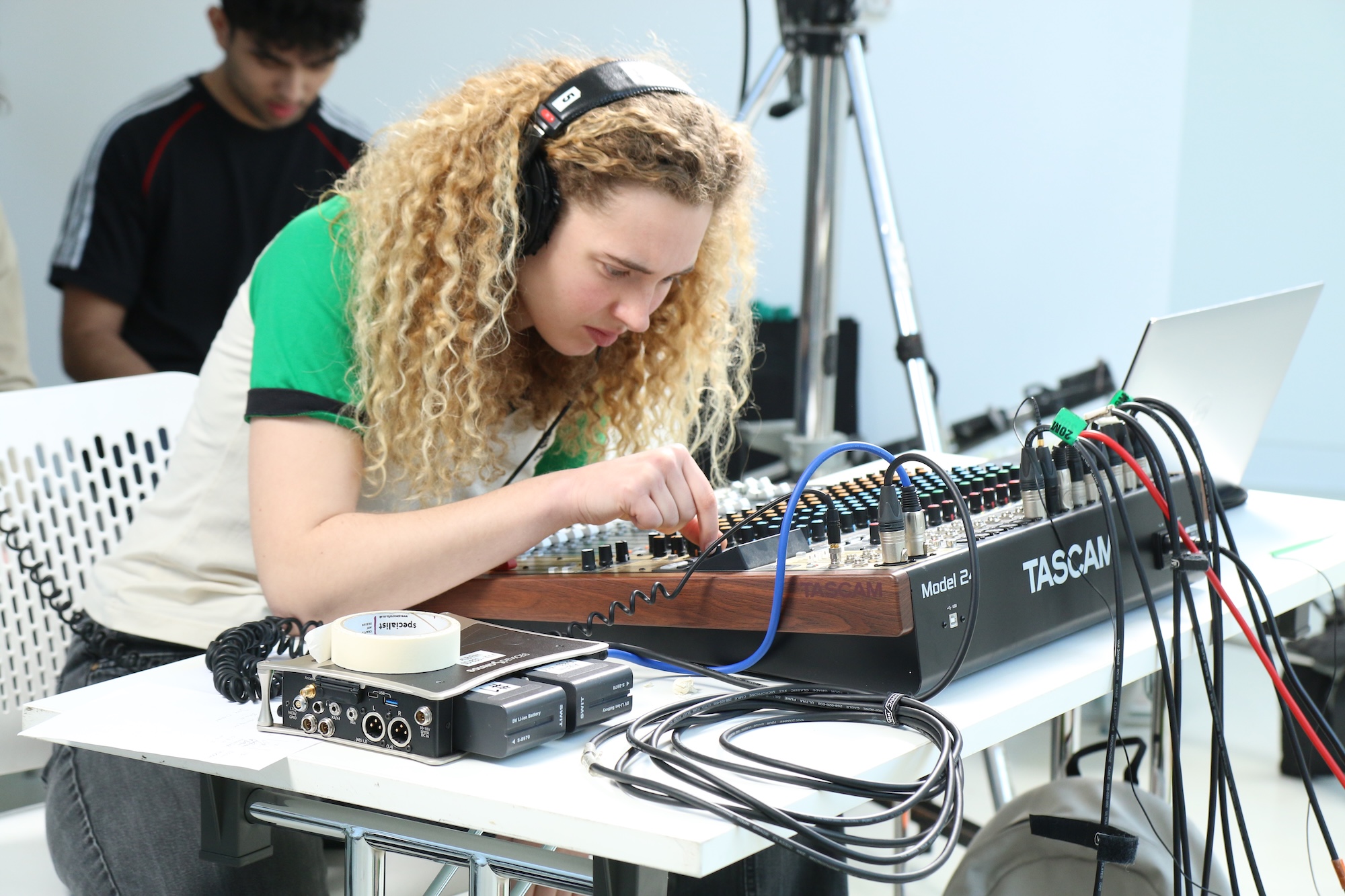
You'll collaborate with your BA (Hons) Acting for Screen peers during Graduate Showreels and Showcase and Professional Preparation units, which enable you to build a digital portfolio of work and further your understanding of audio and media work within the profession. You'll present your skills in front of industry agents in Showcase in London and prepare for professionally filmed showreels for the Spotlight platform.
This work is documented and forms an important aspect of the public-facing professional portfolio for each individual student.
In your final unit, you'll design and complete an independent research project on a topic of your choice. The research should be relevant to the subject specialism, but doesn't need to be restricted to acting alone.

APPLICATIONS ARE OPEN
It's not too late to apply! Now that you've found the perfect course, it's time to join our creative community.
Check out our handy 'how to apply' guide and our portfolio top tips.
OPEN DAYS
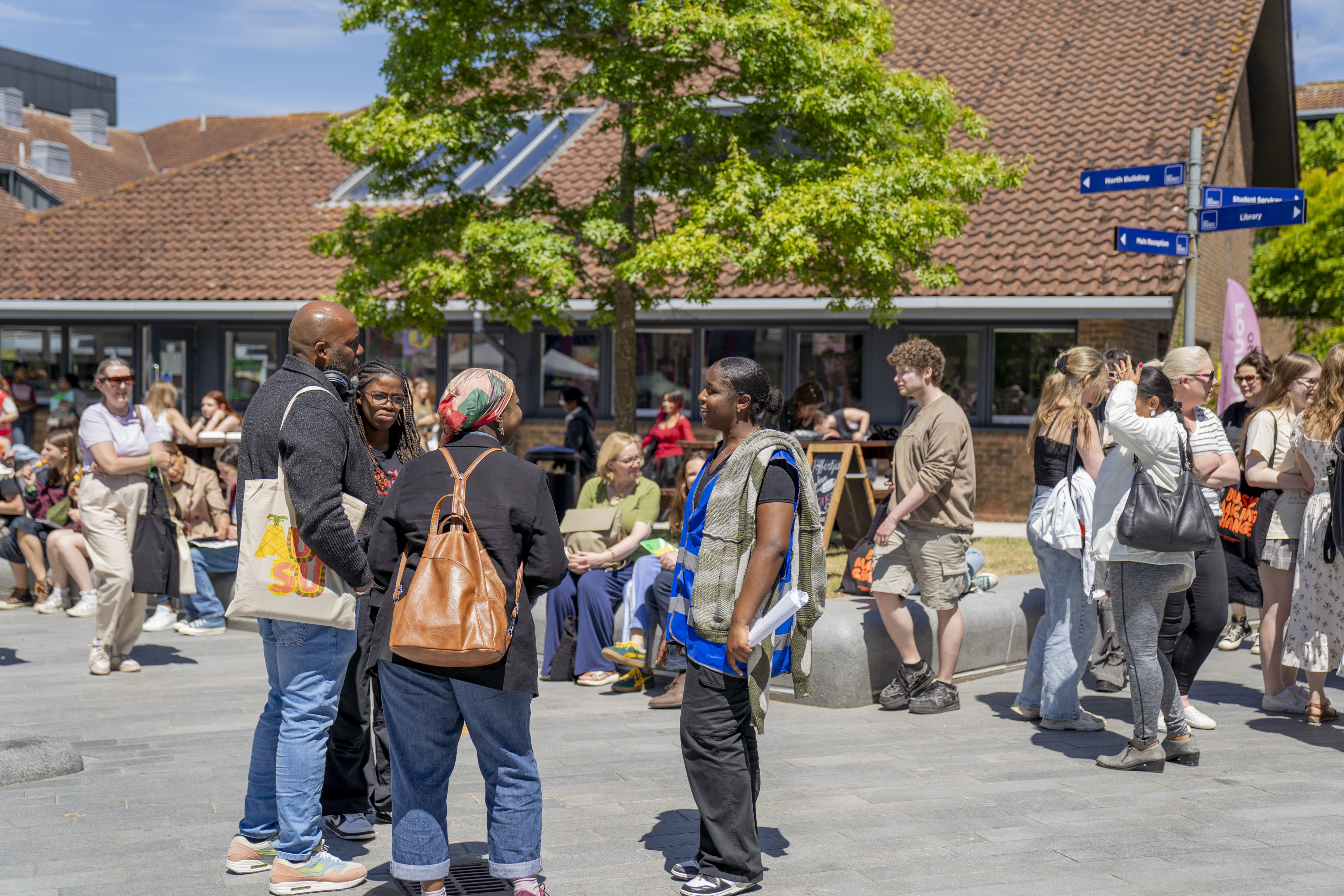
Open Days are a great way to get a feel for undergraduate life at AUB. At an Open Day, you'll be able to explore the campus, talk to course teams and discover our industry-standard facilities.
Visit us on:
- 7 November
- 5 December

STEP INTO INDUSTRY
Your journey to the creative industries begins with us, while you're studying.
Whether it's on a placement, working on a live brief with your course Industry Patron, or even in a one-to-one with our careers and enterprise service, we equip you with the skills to enter the largest sector in terms of employment in the UK.

AUB SHOWCASE
We're proud of our alumni, and rightfully so.
Explore the incredible work of our graduates in our online AUB Showcase.
Browse work by course, student or theme.
Teaching, learning and assessment
Within this area of performance experiential learning is a key principle of study and your work throughout the course reflects the collaborative nature of acting. Each unit is assessed separately, and the assessment forms part of the unit. Assessment both provides a measure of your achievement, and also gives you regular feedback on how your learning is developing.
Throughout the degree you'll experience both tutor-led learning, including the participation of professional practitioners, and self-directed methods of learning (through independent learning, negotiated practice and research work). In this way, you'll be able to develop an increasing independence and a positive attitude towards life-long learning.
The course objectives are met by deploying a wide variety of teaching and learning methods including rehearsal, performance, ensemble working, workshops, lectures, seminars, group critiques and tutorials. In consultation with the Course Leader, staff are responsible for co-ordinating individual units of study, and for selecting appropriate methods of delivery according to subject matter and student experience.
The methods employed induct you to the disciplines required of a creative practitioner and promote the development of transferable skills.
Ensemble working reflects the importance of teamwork in the discipline of acting and there are many opportunities to work in teams to learn the value of peer co-operation.
The integration of theory and practice is promoted and reinforced through a team teaching approach. Lectures, seminars and tutorials may be delivered by team members, as appropriate, in the creative learning environment.
The study time allocated to each unit in the course incorporates a balance of formal teaching, tutorial support and independent learning. The course is structured progressively to provide increased opportunities for independent learning as you reach the later stages of the course.
The progressive promotion of independent learning reflects your anticipated maturity as a student and allows you to direct your learning towards individual goals. The teaching in Level 4 is directed at providing you with the knowledge, concepts and skills to take increasing responsibility for the management of your own learning as you move on to Levels 5 and 6.
Contact hours include all scheduled teaching sessions, but also supervised time in the workshop or studio. In line with national guidance, we include in our calculation of contact hours all the time which is scheduled in the studio for independent study which is also supported by staff (either academic staff, or technicians).
The information provided below gives the proportion of your study time which constitutes contact hours. Where there are optional routes through the course, we have used the figures for the most popular option.
For every unit of your course, we'll inform you of what you're expected to learn; what you have to submit; how your work will be assessed; and the deadline for presenting your work for assessment. This is made available through Unit Information, which is on your course blog.
You'll receive a final mark for each unit in the form of a percentage, which will be recorded on your formal record of achievement (transcript). Each component of assessment is graded using a notched marking scale, whereby only certain marks are used within each grade. The only marks available within any ten-point band are *2, *5 and *8 (e.g. 62, 65, 68). These marks correspond to a low, mid, and high level of achievement within each grade band.
All learning outcomes must be passed to successfully complete the unit.
On successful completion of your Honours degree course, you'll be awarded a degree classification based on your unit marks. The final classification is determined using all unit marks at Levels 5 and 6 using two different algorithms, which are detailed in the HE Student Regulations. If the two algorithms produce different results, you'll be awarded the higher class of degree.
If you have joined Level 6 through either the Recognition of Prior Learning (RPL) route or having completed a Foundation Degree (FdA), the final classification is determined using only your unit marks at Level 6.
Course costs
The fee you pay AUB provides the necessary equipment and training for you to complete your course.
In most cases, you don't need to buy any specific items of kit before you start the course. You may also choose to buy some items of personal equipment such as a laptop or tablet computer, but this isn't required – desktop and laptop computers are available for you to use in common study areas, including a loan system in the Library.
It isn't possible to be precise about the likely additional costs that you may incur, because this depends on the choices you make and the projects you undertake. The University provides some basic materials, and you'll be encouraged to work sustainably and to reuse materials where possible, but you should still expect to make some financial investment.
For more information, including costs relating to certain courses, visit our Course Costs page.