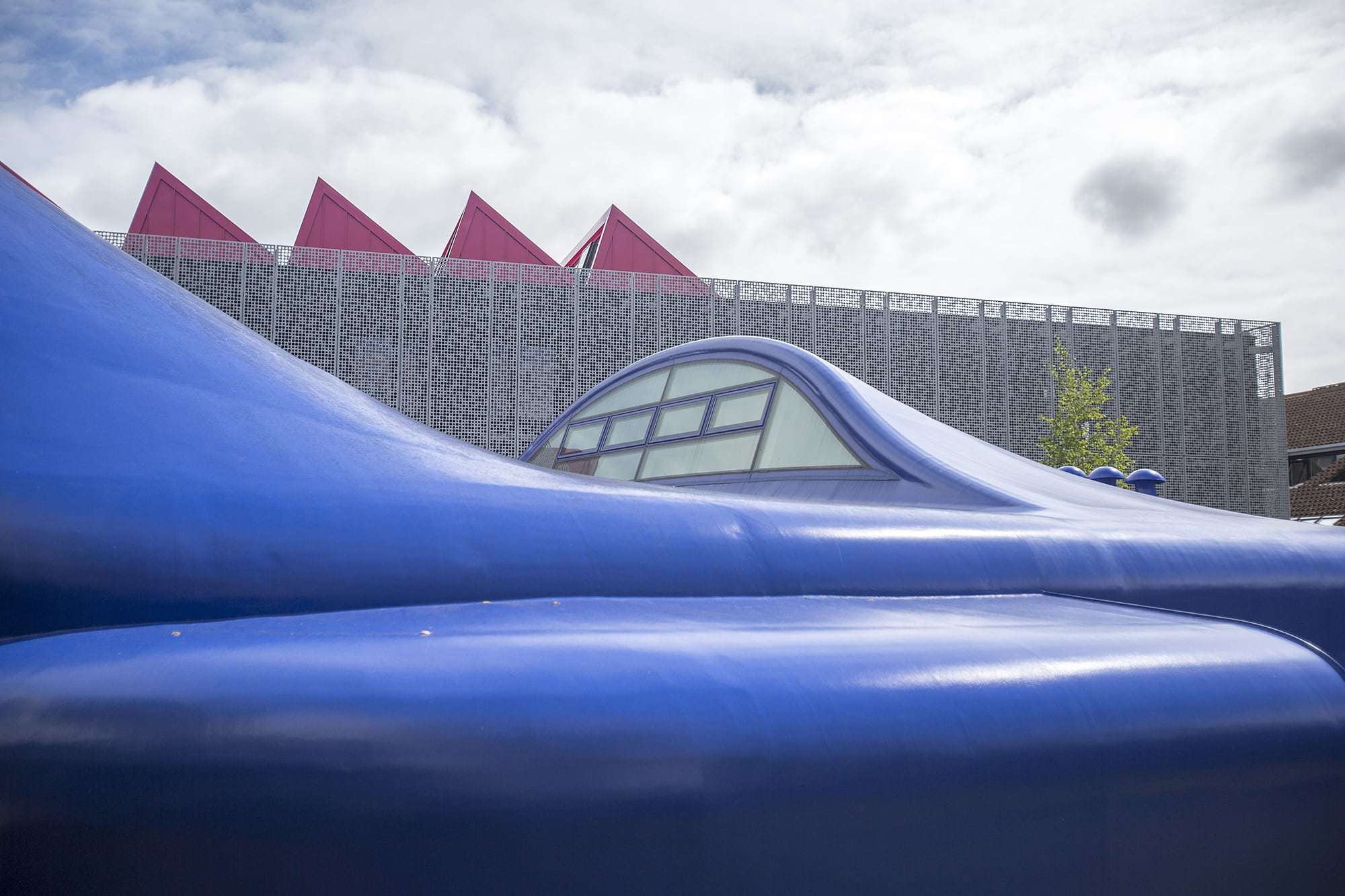

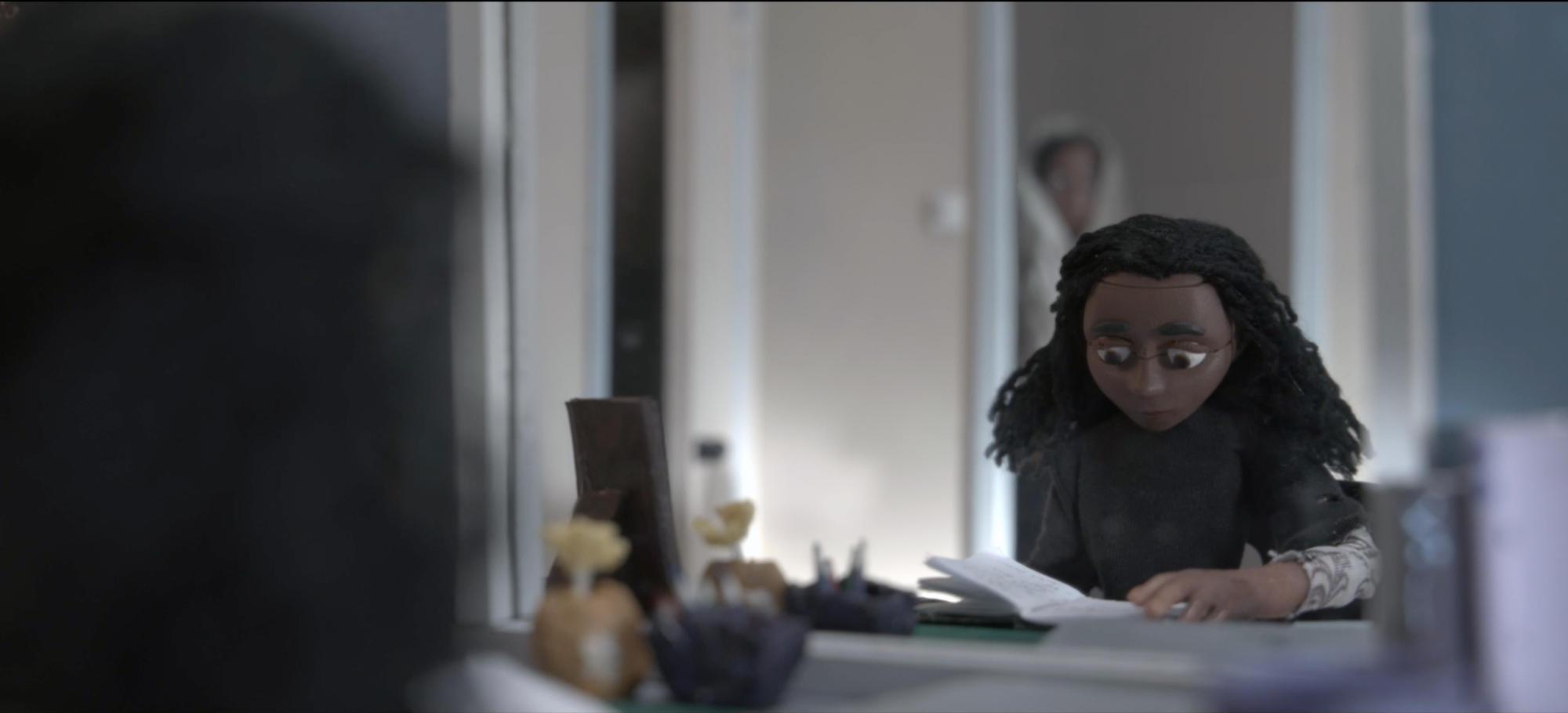
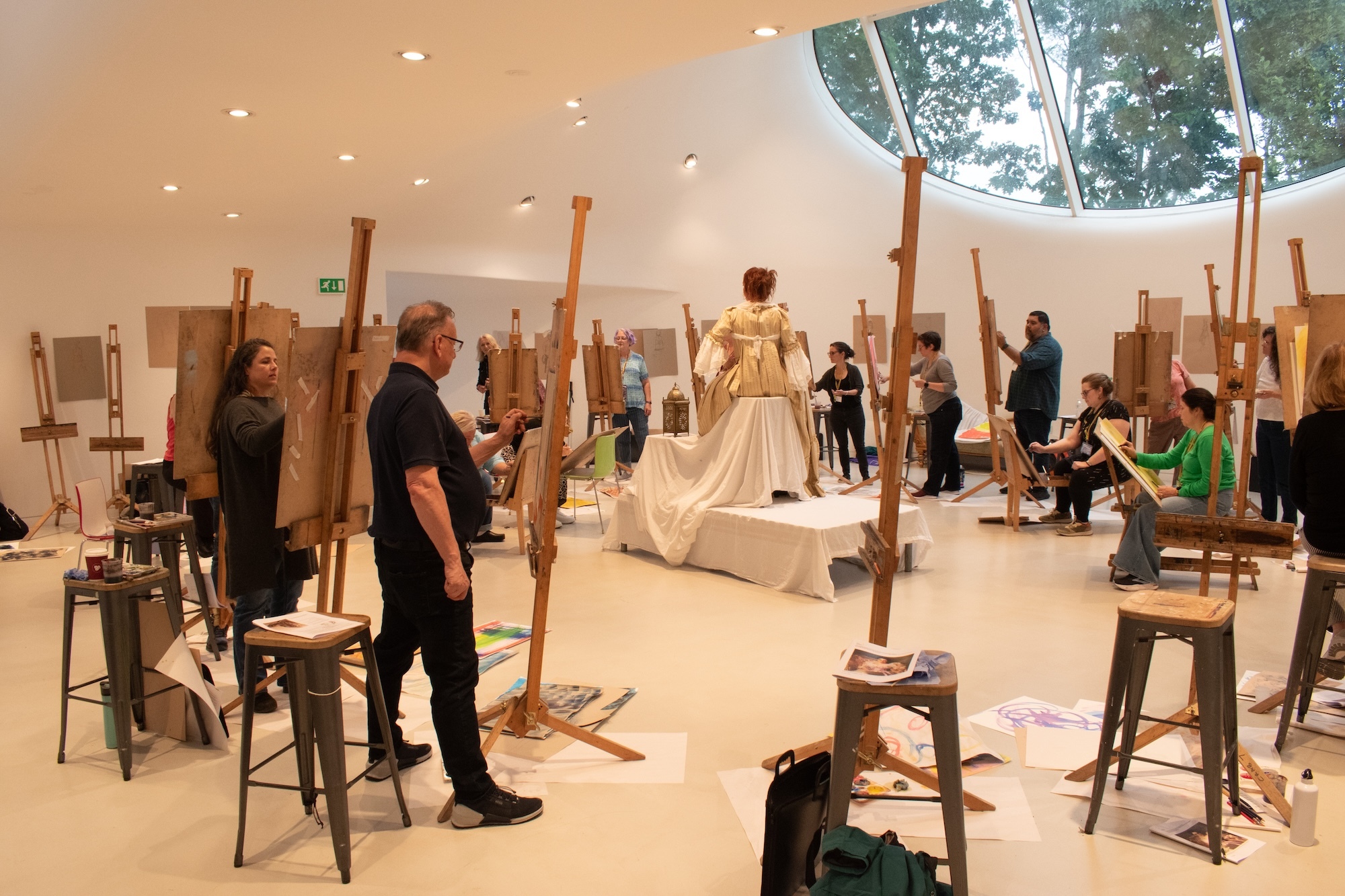
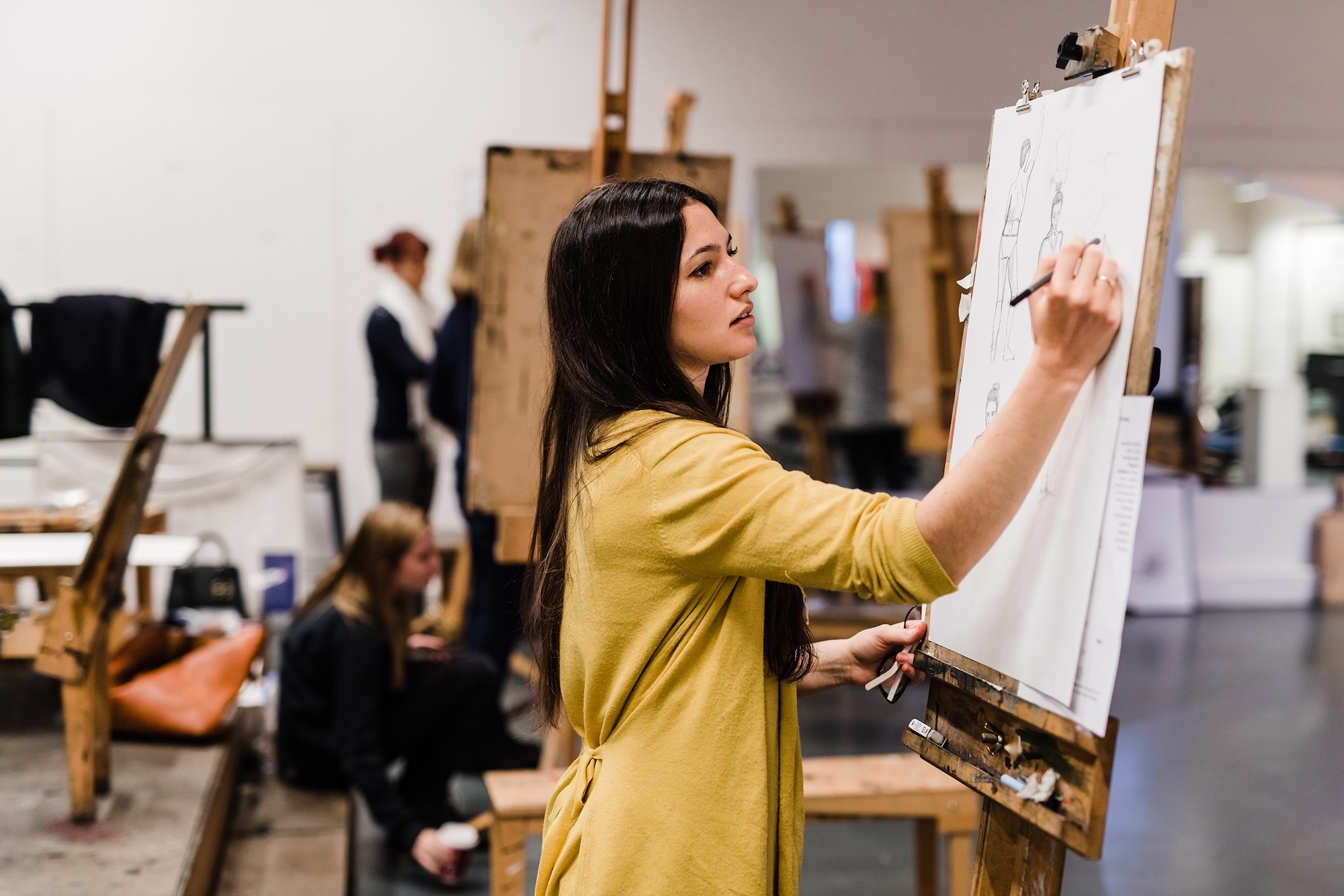
One of the most valuable experiences of my first year on the BA (Hons) Animation Production course at AUB has been the focus on drawing from life. Almost every week we’d have three-hour sessions in the Crab (a big blue Drawing Studio building – why it’s called the Crab still escapes me).
Usually led by the first-year drawing lecturer, Hrefna, we’d break down the fundamentals of anatomy, form, gesture and line; each session was challenging, shaking up the way we were used to drawing. Going back to what it meant to bring a pencil or charcoal to paper was a great way to begin my animation journey.
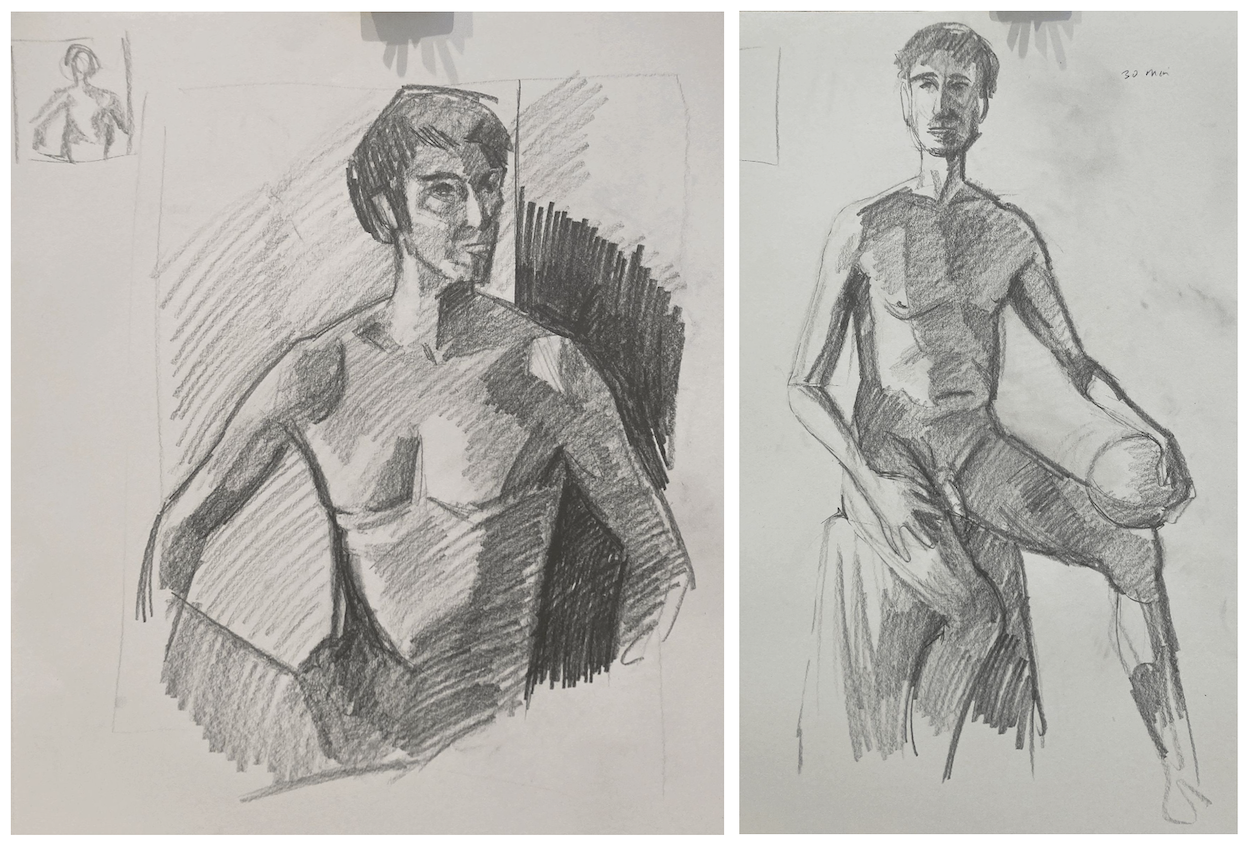
Usually, these sessions begin with short poses to quickly sketch down, and exercises such as using our non-dominant hand to draw or drawing in a continuous line. These break apart how we approach drawing, allowing us to develop new techniques and ways to shorthand what we see. As the session continues, the poses get longer and we start applying the focus of the class (line work, gesture, tone, etc.)
AUB has wonderful and hard-working models, who I feel put extra effort in for us Animation students, as we often want the more dynamic poses that really have a sense of movement and feel ANIMATED. The crazier the pose, the more fun it is to draw!
Another aspect of life drawing that was useful, was being able to see how other people drew. I was incredibly nosy in class (still am) and would wander around during the break to see how people had done. There was always such a variety of approaches and understandings on how to draw – I was especially amazed by the confidence of people who used a brush pen!
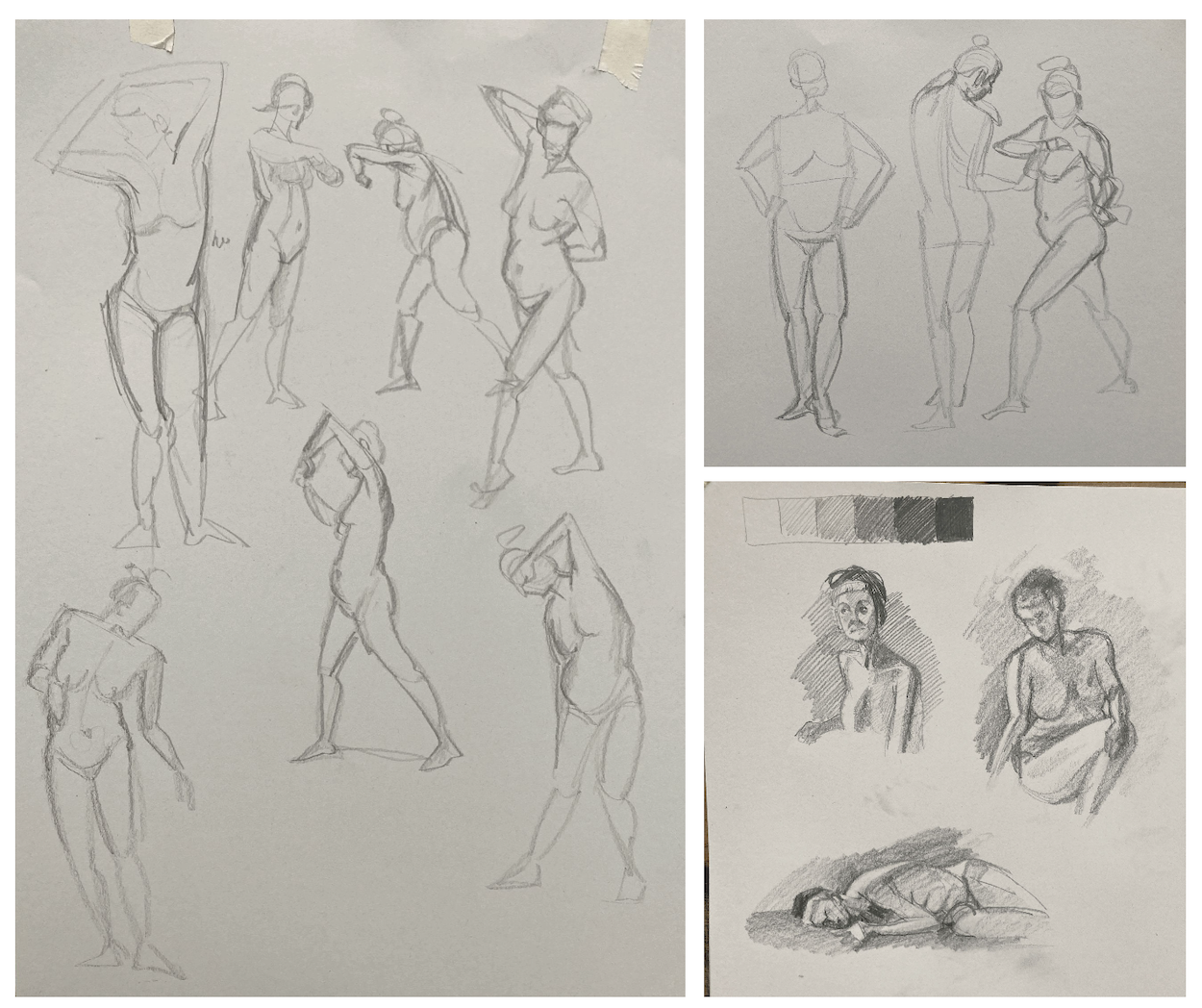
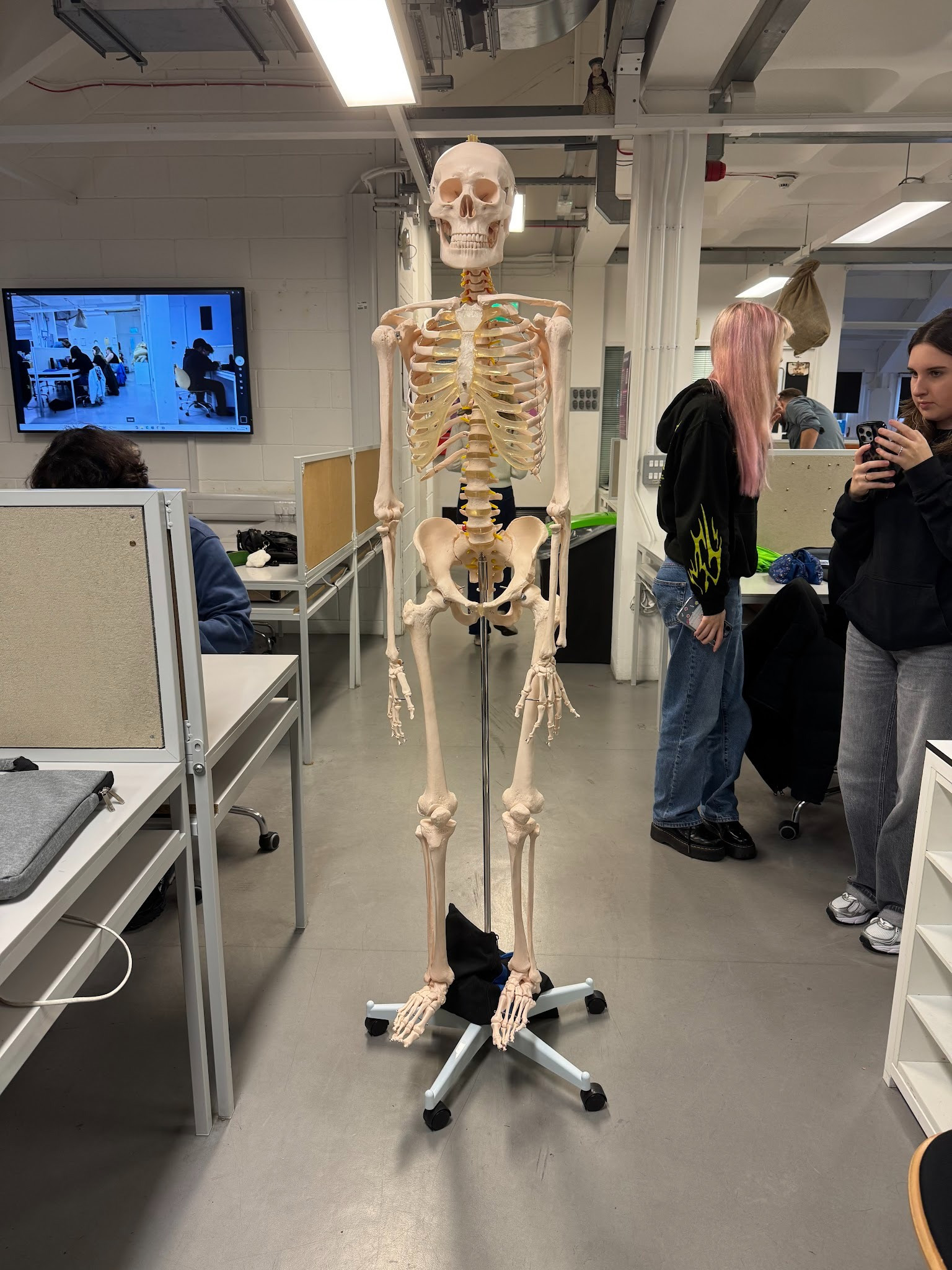
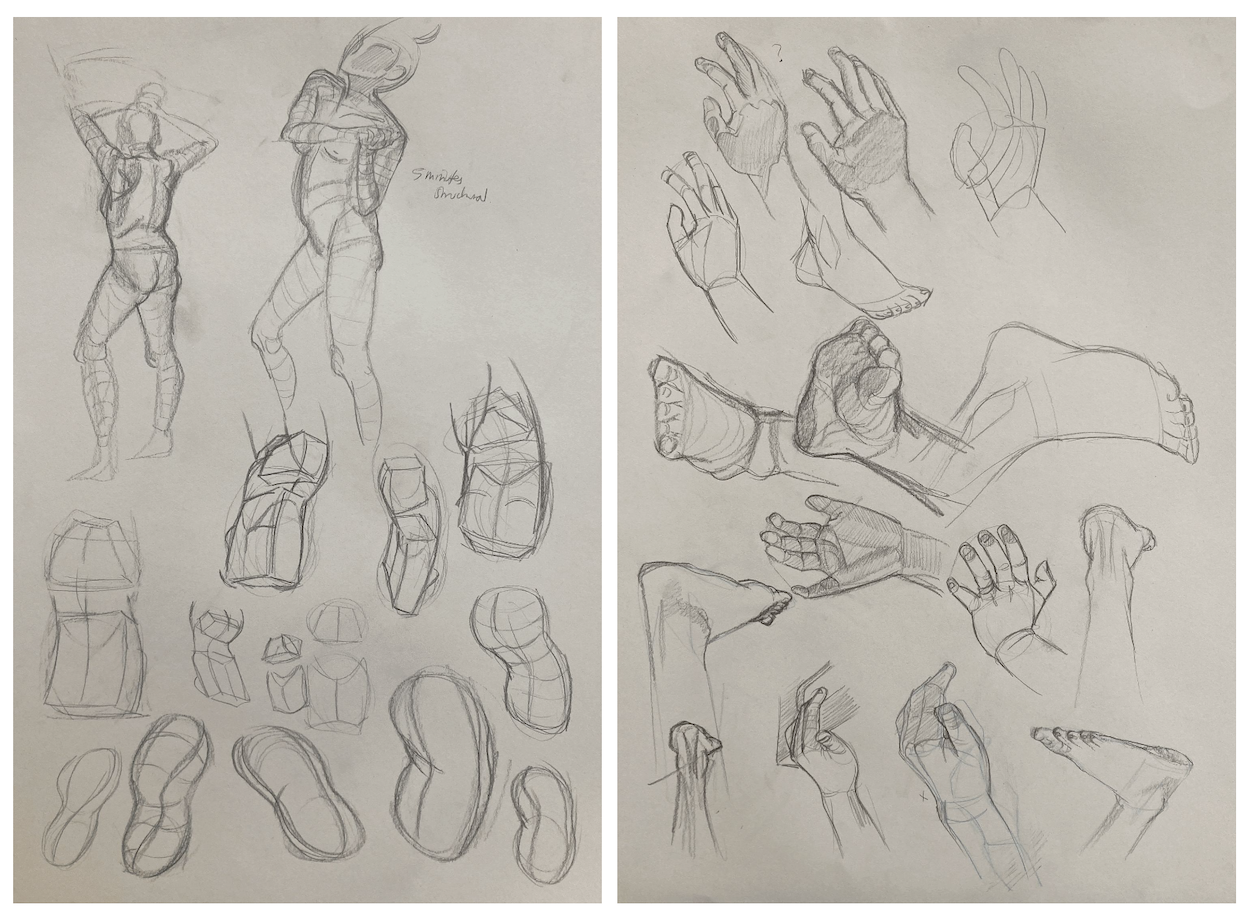
The most valuable session for me, however, was breaking down forms into their most simple shapes. We broke down the body into boxes and built these into a more rendered figure. Experimenting with ways to contour these forms and shapes was also interesting, as it brought a depth and believability to my drawings that I hadn’t managed before.
And why was this so useful? Breaking characters and environments into their most basic shapes allows animators to accurately and effectively move them through space. In our second term, we had assignments on character design – knowing how to not only structure a human body but being able to manipulate that knowledge and play with the proportions, allowed for better designs overall.
Life drawing was very much a focus in the first year, and I’m glad to see that as a second year we still have life drawing sessions. I believe having the opportunity to have tutored life drawing sessions – where taking risks and experimentation is encouraged – is valuable in an animator’s drawing journey. As much as I love cartoons and goofy little characters, life drawing allows my drawing of said goofy little characters to be so much better!
I very vividly remember attending a life drawing class back home over a summer, in Brighton. I remember looking at other people’s work – especially the work of three particular people. The confidence in their lines and the accuracy of their proportions truly bewildered me. When I asked, they weren’t fine artists or illustrators – they were the only animators in the class! Drawing is such an important part of animation, and this is exactly why it is such a focus on the AUB Animation Production course.