




























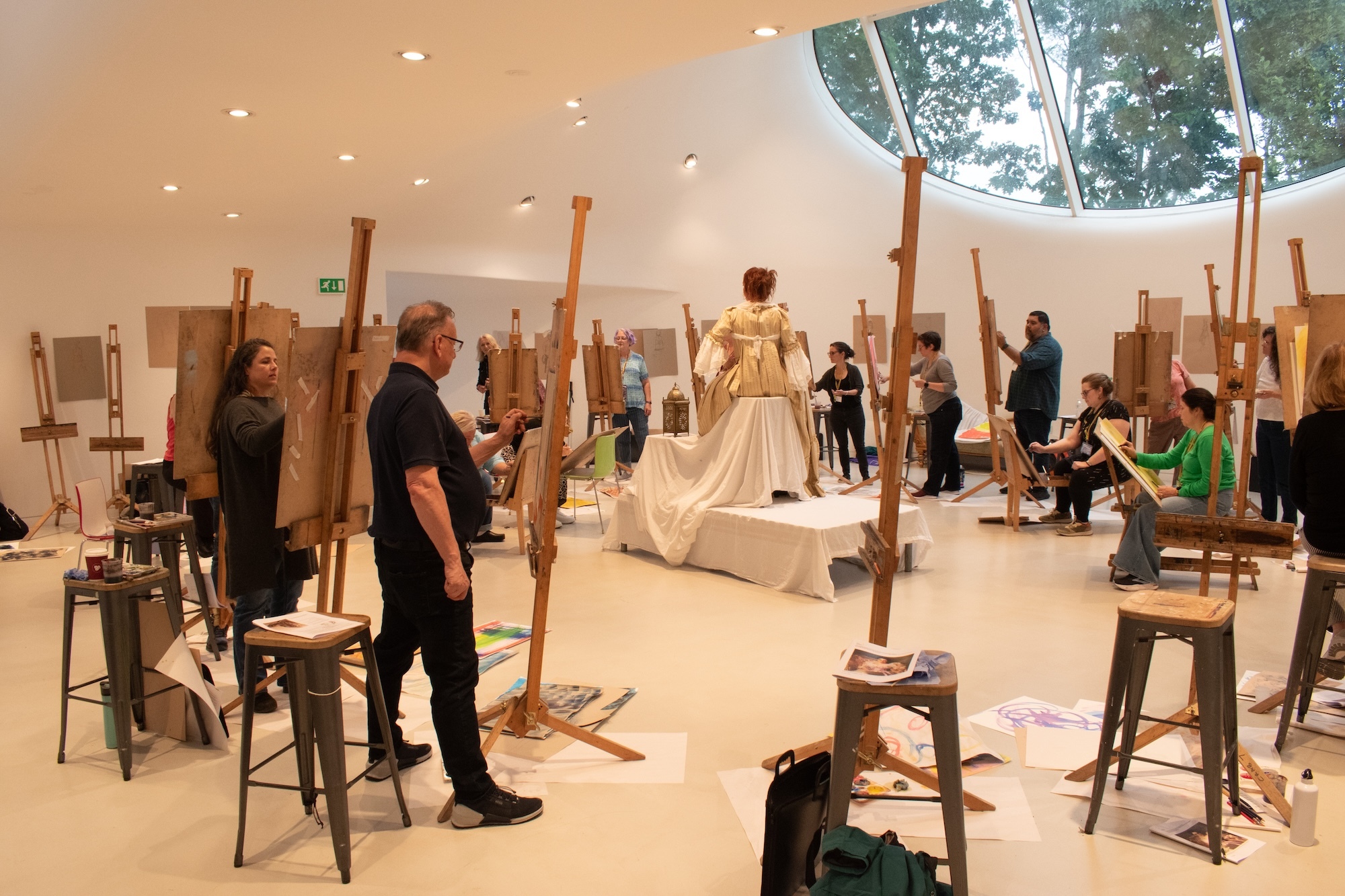




You are using an outdated browser. Most of this website should still work, but after upgrading your browser it will look and perform better.
- Home
- Undergraduate Courses
- BSc (Hons) Fashion Management and Strategy
- Course details
BSc (Hons) Fashion Management and Strategy
- Duration: 3–5 years full-time
- Placement year: Optional 1 year
- Course code: W112 (UCAS)
- Institution code: A66 (UCAS)

BSc (Hons) Fashion Management and Strategy course information
BSc (Hons) Fashion Management and Strategy is for those who aspire towards leadership and innovator roles within a creative business environment. From the start, you’ll learn through theoretical analysis and practical projects about the fashion industry, developing skills that'll make you highly employable: collaboration, effective communication and business acumen, alongside an in-depth knowledge of global fashion practice.
Throughout the course, you’ll learn about how to strategically plan for fashion businesses with a strong emphasis on ethics. This takes into account what a business produces and how it operates in terms of its impact on people, animals and the environment. In line with AUB's own values, it's designed from the ground up with this approach, which is channelled though both the content and the ways we teach every unit.
Three reasons to study BSc (Hons) Fashion Management and Strategy at AUB:
- Values-based business management focus. This course emphasises a rigorous values-based approach to business management, specifically tailored to the fashion and lifestyle industries. You'll learn how to consider the impact of business decisions on people, animals, and the environment, fostering ethical leadership. This focus on ethics and sustainability is integral to the curriculum, preparing you to become a responsible future leader in the global fashion industry.
- Optional placement year for industry experience. We offer an optional one-year placement between the second and final years, providing you with valuable industry experience. This opportunity to apply learned skills in real-world settings enhances employability and offers insights into current industry practices.
- Integration of creative and financial success strategies. This curriculum is designed to balance creativity with financial knowledge. You'll learn to develop strategies that ensure both creative and financial success for businesses, equipping you with the skills needed to navigate the complex dynamics of the fashion industry. This integration of creative and financial training distinguishes our program from others, that may only focus on one aspect.
Integrated Foundation year
On BSc (Hons) Fashion Management and Strategy, you have the option to take a specialised Integrated Foundation Year, or Year 0.
The Integrated Foundation year allows you to explore and develop your skills and knowledge at an introductory level, gaining a better understanding of what the subject area has to offer before joining the degree.
Placement year
All undergraduate courses at AUB offer an optional placement year, to be taken between your second and third years of study.
If you’re unsure about this optional placement, you don’t need to decide now. Once you’re here and studying with us, the course team will discuss the placement options with you, so when the time comes, you can make a decision that’s right for you.
Level 4 (first year)
During first year, you’ll cover the fundamental areas of knowledge and skills you’ll need to become successful within a management role. This includes analysing the global fashion system, understanding data and the digital landscape, consumer behaviour and finance for business. At AUB, our impact to is central to our approach – from the very start of this course, you’ll be taught to critically question fashion and business practices and find solutions to complex problems such as fair pricing, transparent value chains and equality within the workplace.
Level 5 (second year)
In second year, you’ll build on your knowledge through learning more about how to manage key aspects of the fashion industry such as product supply chains, fashion merchandising and range planning. You’ll have the opportunity to apply your learning through a live industry brief, which will provide you with experience of working within commercial constraints. In the third term, Career Planning, you’ll be supported in developing a career plan, enabling you to forward plan and map out your journey through to the end of your degree and beyond.
Between second and third year, you'll have the opportunity to spend a year in industry, further developing your knowledge through a work placement. Whether you choose this option or progress directly to third year, the Career Planning unit will support you in identifying the steps you can take to maximise these opportunities and experiences.
Level 6 (third year)
During your final year, you'll be an independent learner and be supported to develop a major project proposal to your further your knowledge, skills and management practice through a self-initiated project. This could be based on a live brief, a hypothetical project, or preparation for establishing your own business. You'll be tutored in finding your specialism through developing a research question and methodology that'll apply to real-world fashion business.
APPLICATIONS ARE OPEN
It's not too late to apply! Now that you've found the perfect course, it's time to join our creative community.
Check out our handy 'how to apply' guide and our portfolio top tips.
OPEN DAYS
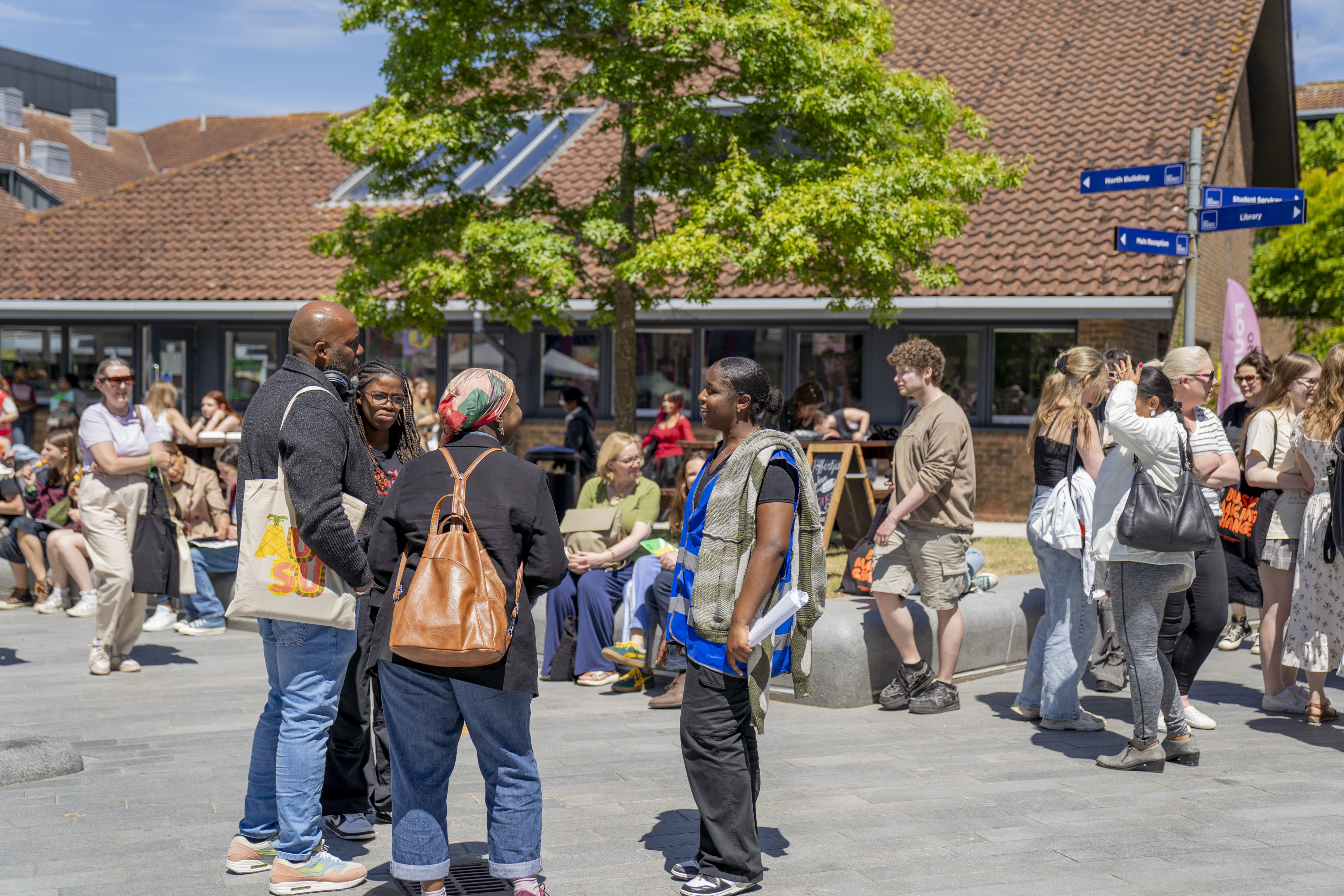
Open Days are a great way to get a feel for undergraduate life at AUB. At an Open Day, you'll be able to explore the campus, talk to course teams and discover our industry-standard facilities.
Visit us on:
- 7 November
- 5 December

AUB SHOWCASE
We're proud of our alumni, and rightfully so.
Explore the incredible work of our graduates in our online AUB Showcase.
Browse work by course, student or theme.
Teaching, learning and assessment
The BSc (Hons) Fashion Management and Strategy course aims to provide you with a creatively focused learning experience, supporting personal and collective growth and confidence as you develop into competent fashion managers.
You'll engage in project-based learning that enables you to explore and understand the domains of fashion management and strategy including finance, logistics, consumer behaviour and value chains.
The BSc (Hons) Fashion Management and Strategy course is taught through a blend of theoretical instruction, practical workshops, project based learning and independent study. It utilises a variety of methods, including lectures, workshops, and both studio-based and public facing practice. Emphasis is placed on hands-on learning, investigating theoretical concepts by developing live projects that stimulate a deep learning approach and provide opportunities for students to engage with a wide range of learning styles.
Industry-standard resources are used extensively to provide students with valuable, up-to-date technical skills. Regular feedback from tutors ensures continuous improvement, while guest lectures from industry professionals provide unique insights and specialist points of view. The course encourages self-directed study, fostering creativity and independent problem-solving skills.
Learning is through intellectual enquiry, research, and practice. The course outcomes are met by deploying a wide variety of teaching and learning methods supervised by members of the team, visiting academic tutors, and support staff, practitioners, and consultants from industry. In consultation with the Course Leader, the wider course team are responsible for co-ordinating individual units of study, and for selecting appropriate methods of delivery in accordance with the subject matter and to provide the best student learning experience.
Importance is placed upon students acquiring the skills to be able to learn independently and to develop a critical awareness. This is facilitated through a variety of learning and teaching methods such as individual and group tutorials, group discussions, peer learning and assessment, project-based learning, lectures, workshops, seminars, study visits, demonstrations, skills-based workshops, educational visits, on-site learning, working with external clients, developing learning agreements and presenting both in groups and individually.
You'll receive a final mark for each unit in the form of a percentage, which will be recorded on your formal record of achievement (transcript). Each component of assessment is graded using a notched marking scale, whereby only certain marks are used within each grade. The only marks available within any 10-point band are *2, *5 and *8 (e.g. 62, 65, 68). These marks correspond to a low, mid, and high level of achievement within each grade band.
All learning outcomes must be passed to successfully complete the unit.
On successful completion of your Honours degree course, you'll be awarded a degree classification based on your unit marks. The final classification is determined using all unit marks at Levels 5 and 6 using two different algorithms, which are detailed in the HE Student Regulations. If the two algorithms produce different results, you'll be awarded the higher class of degree.
If you've joined Level 6 through either the Recognition of Prior Learning (RPL) route or having completed a Foundation Degree (FdA), the final classification is determined using only your unit marks at Level 6.
For further information on assessment, progression, awards and classifications, please visit viewpoint.aub.ac.uk.
Course costs
The fee you pay AUB provides the necessary equipment and training for you to complete your course.
In most cases, you don't need to buy any specific items of kit before you start the course. You may also choose to buy some items of personal equipment such as a laptop or tablet computer, but this isn't required – desktop and laptop computers are available for you to use in common study areas, including a loan system in the Library.
It isn't possible to be precise about the likely additional costs that you may incur, because this depends on the choices you make and the projects you undertake. The University provides some basic materials, and you'll be encouraged to work sustainably and to reuse materials where possible, but you should still expect to make some financial investment.
For more information, including costs relating to certain courses, visit our Course Costs page.