





























You are using an outdated browser. Most of this website should still work, but after upgrading your browser it will look and perform better.
- Home
- Undergraduate Courses
- BA (Hons) Communication Design and Strategy
- Course details
BA (Hons) Communication Design and Strategy
- Duration: 3–5 years full-time
- Placement: Optional 1 year
- Course code: W213 (UCAS)
- Institution code: A66 (UCAS)
BA (Hons) Communication Design and Strategy course information
BA (Hons) Communication Design and Strategy is an innovative and unique course on which you'll learn the necessary design skills and strategic thinking to excel in the evolving communication landscape. Tailored for individuals passionate about creative design, you'll integrate strategic thinking into your creative process, generating meaningful and impactful communications.
The curriculum takes an interdisciplinary approach, incorporating creative design, visual identity, digital and print media, advertising, and branding. This is expertly balanced with a focus on business operations, marketing strategies, and consumer behaviour, enabling a robust understanding of both the artistic and commercial aspects of communication design.
Throughout the course, you'll delve into research methodologies, refining your abilities to examine complex issues and make informed strategic decisions. You'll learn to scrutinise markets, recognise target audiences, and comprehend user behaviour, all informing and enhancing your design process.
By the time you graduate, you'll be proficient in creating strategic communication designs that convey messages effectively, tell compelling stories, and promote brands successfully. The skills acquired are transferable across a multitude of industries, presenting graduates with an array of career opportunities, including roles such as marketing strategists, graphic designers, brand strategists, creative directors, and more.
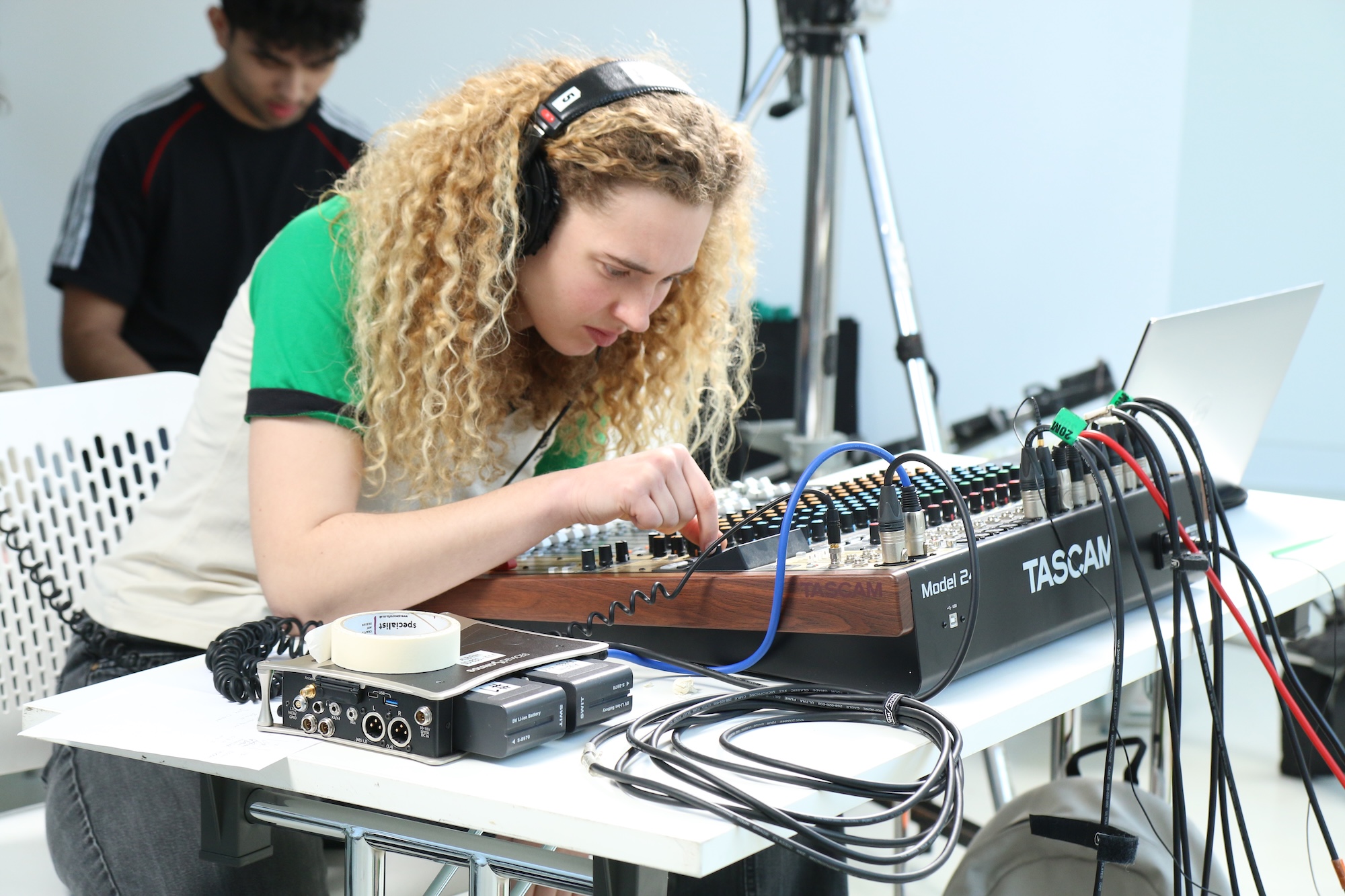
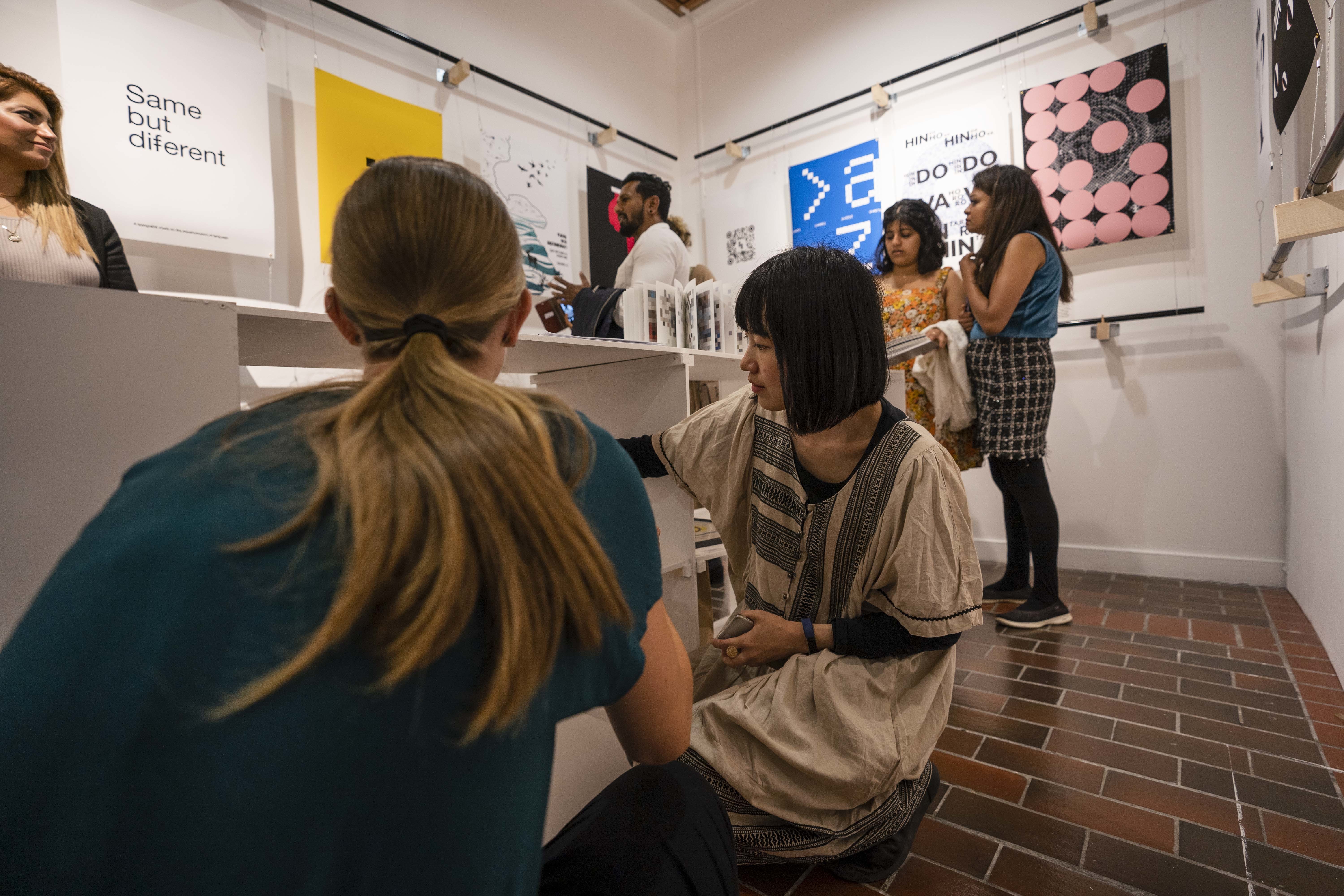
You'll have access to state-of-the-art resources, including a creative studio and computers loaded with industry-standard software. You'll also be encouraged to engage in collaborative work through shared spaces that promote creativity, innovation, and collective learning.
Three reasons to study BA (Hons) Communication Design and Strategy at AUB:
- We're a design-focused course empowering you to become a strategic thinker. Strategy underpins all aspects of the course and includes the production of a strategic report (instead of a traditional dissertation) in your final year of study.
- We're an industry-focused course that introduces you to inspirational individuals and organisations. You'll learn how to operate successfully within the creative industries, as part of a team or as an independent entrepreneur.
- We're a business-focused course that nurtures your creative professionalism. We ensure that you'll graduate with a clear understanding of how design works within the world of business, and how business informs the practice of design.
Integrated Foundation year
On BA (Hons) Communication Design and Strategy, you have the option to take a specialised Integrated Foundation Year, or Year 0.
The Integrated Foundation year allows you to explore and develop your skills and knowledge at an introductory level, gaining a better understanding of what the subject area has to offer before joining the degree.
Placement year
All undergraduate courses at AUB offer an optional placement year, to be taken between your second and third years of study.
If you’re unsure about this optional placement, you don’t need to decide now. Once you’re here and studying with us, the course team will discuss the placement options with you, so when the time comes, you can make a decision that’s right for you.
Level 4 (first year)
The first year of BA (Hons) Communication Design and Strategy is structured into three comprehensive units: Introduction to Communication Design, Communicating Ideas through Strategy, and Designing in Context.
The first unit, Introduction to Communication Design, provides an understanding of research methodologies and the design process, complemented by practical skills like image-making, visual thinking, and typography. Emphasis is placed on sketchbook use as a valuable tool for ideation and design exploration. Additionally, you're introduced to basic digital skills, establishing a solid base for future units.
The second unit, Communicating Ideas through Strategy, introduces the aspects of design strategy, idea generation, audience identification, and team collaboration. This unit promotes the crucial role of strategic thinking in effective communication design, including the history and theory of design. You get to explore how research and strategic planning influence the translation of ideas into impactful designs.
The final unit, Designing in Context, expands on your understanding of narrative, audience, environment, and context in communication design. It emphasises the significance of tailoring design decisions to the target audience and environmental factors. The unit also allows you to develop your pitching skills, necessary for presenting your ideas convincingly.
The first year supports you to confidentially study at HE level and provides a solid basis for the second year of the course.
Level 5 (second year)
The second year introduces you to more advanced topics via three units: Design Communication and Testing Strategy, Preparing for Creative Industries, and Design Practice and Strategy.
In Design Communication and Testing Strategy, you'll explore designing and defining systems, understanding audience and stakeholders' influence on these systems, and review the role of hierarchy in controlling message and meaning. You'll develop advanced typography skills and you'll be required to enhance their presentation skills. You're also introduced to the concept of prototyping and testing strategies, a crucial part of any design process.
Preparing for Creative Industries is a year-long unit offering industry-focused briefs, enriching guest speaker sessions, and insights into design agencies. It facilitates you in understanding your identity and voice within the creative industry. You undertake self-branding exercises, begin structuring their portfolios, and you're introduced to networking skills. Entrepreneurship opportunities are also covered for those of you who may want to start up your own business venture and preparations for an optional placement year commence, giving you a practical perspective on your career path.
In the final unit, Design Practice and Strategy, you're encouraged to draft your own design proposal with integrating strategy. This includes an expanded learning agreement and a self-initiated project, accompanied by a strategy presented in a written report format. This unit fosters autonomy and allows you to tailor your learning to your specific areas of interest, further enhancing your strategic design capabilities.
Level 6 (third year)
In the third and final year, you engage in two units during the first term: Professional Practice and Working Strategies, and Creative Strategy.
The Professional Practice and Working Strategies unit introduces you to real-world applications of your skills, involving you in national competition briefs and working strategies, such as design sprints and agile workflows across various projects. Concurrently, the Creative Strategy unit allows you to demonstrate your gained knowledge through writing a project proposal and a comprehensive report on an existing project brief. This exercise fosters deep research, analysis, and strategic planning to achieve the desired project outcomes.
The last two units, Design Practice and Preparing for Creative Industries 2, span across the second and third terms. The Design Practice unit essentially serves as a final major project, offering you the freedom to craft your own project brief and produce a substantial portfolio piece. This platform enables you to showcase your capabilities and align your work with your career aspirations post-graduation.
In tandem, Preparing for Creative Industries 2 builds on the self-branding exercises and networking opportunities introduced in the previous year. You'll understand the logistics of establishing a business, gaining insights into intellectual property and copyright considerations. This unit fosters awareness of contemporary trends, ensuring that you're well-prepared for a successful career in the fast-evolving creative industries.
APPLICATIONS ARE OPEN
It's not too late to apply! Now that you've found the perfect course, it's time to join our creative community.
Check out our handy 'how to apply' guide and our portfolio top tips.
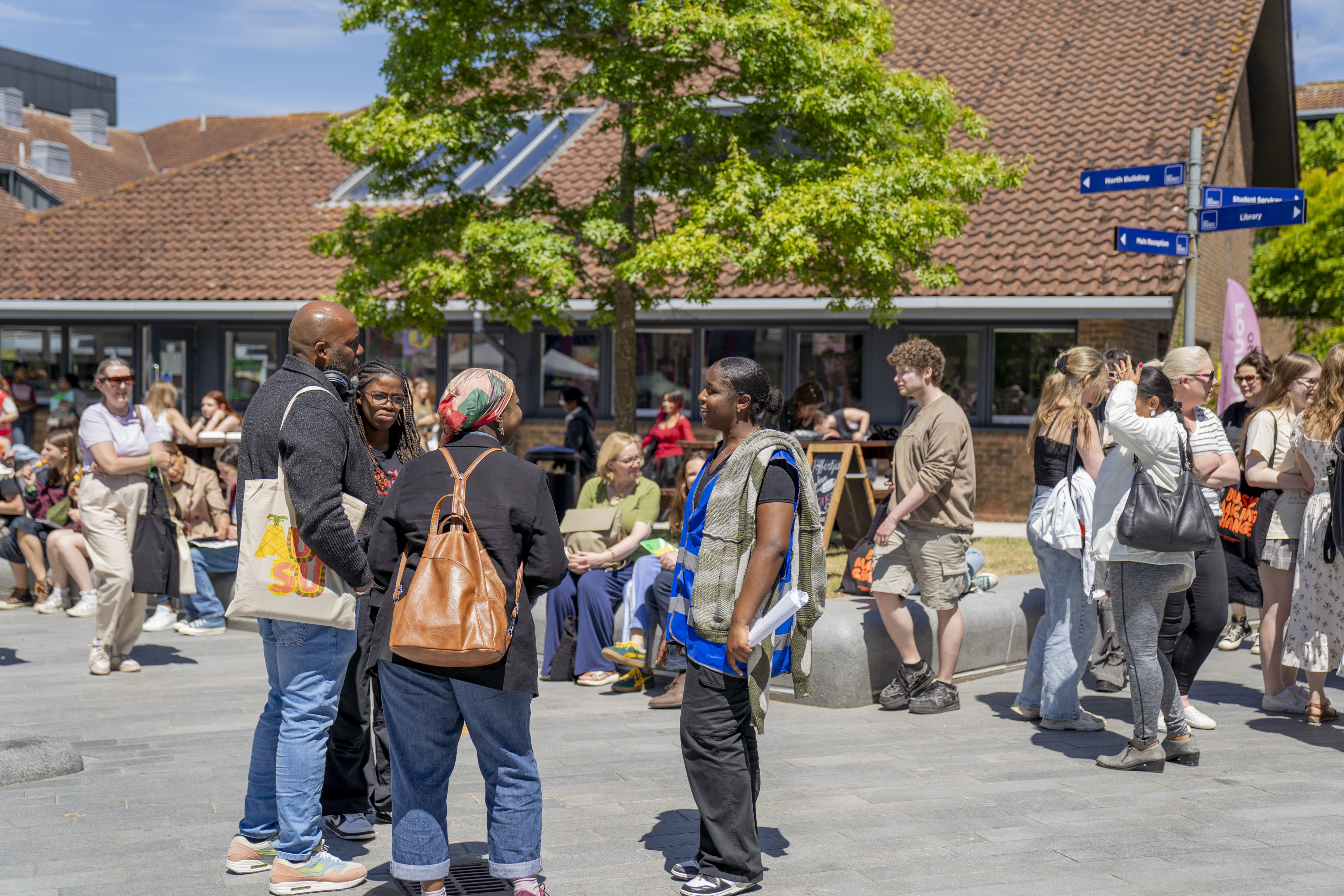
OPEN DAYS
Open Days are a great way to get a feel for undergraduate life at AUB. At an Open Day, you'll be able to explore the campus, talk to course teams and discover our industry-standard facilities.
Visit us on:
- 7 November
- 5 December

STEP INTO INDUSTRY
Your journey to the creative industries begins with us, while you're studying.
Whether it's on a placement, working on a live brief with your course Industry Patron, or even in a one-to-one with our careers and enterprise service, we equip you with the skills to enter the largest sector in terms of employment in the UK.

AUB SHOWCASE
We're proud of our alumni, and rightfully so.
Explore the incredible work of our graduates in our online AUB Showcase.
Browse work by course, student or theme.
Teaching, learning and assessment
BA (Hons) Communication Design and Strategy is a unique course that's taught through a blend of theoretical instruction and practical application. It utilises a variety of methods, including lectures, workshops, and studio-based practice. Emphasis is placed initially on hands-on learning, developing concepts through to digital construction or strategic methodologies. Students will frequently engage in individual and group projects that reflect their ideas and concepts.
Industry-standard software and hardware are used extensively to provide students with valuable, up-to-date technical skills. Regular feedback from tutors ensures continuous improvement, while guest lectures from industry professionals provide unique insights. The course encourages self-directed study, fostering creativity and independent problem-solving skills.
Independent learning is integral to BA (Hons) Communication Design and Strategy. It empowers you to explore their unique interests and styles within the creative industries. Assignments often involve self-guided research, creative concept development, and problem-solving, promoting critical thinking. You also engage in independent creative projects, from conception to execution, providing a platform to apply learned skills. Beyond studio-based learning, you're encouraged to stay updated with industry trends and software. This self-directed approach cultivates a sense of ownership, resilience, and adaptability, crucial traits for future careers in the ever-evolving creative industry. Ultimately, it supports the development of well-rounded independent designers and strategists.
Contact hours include all scheduled teaching sessions, but also supervised time in the workshop or studio. In line with national guidance, we include in our calculation of contact hours all the time that's scheduled in the studio for independent study, which is also supported by staff (either academic staff, or technicians).
You'll receive a final mark for each unit in the form of a percentage, which'll be recorded on your formal record of achievement (transcript). Each component of assessment is graded using a notched marking scale, whereby only certain marks are used within each grade. The only marks available within any 10-point band are *2, *5 and *8 (e.g. 62, 65, 68). These marks correspond to a low, mid, and high level of achievement within each grade band.
All learning outcomes must be passed to successfully complete the unit.
On successful completion of your Honours degree course, you'll be awarded a degree classification based on your unit marks. The final classification is determined using all unit marks at Levels 5 and 6 using two different algorithms, which are detailed in the HE Student Regulations. If the two algorithms produce different results, you will be awarded the higher class of degree.
If you've joined Level 6 through either the Recognition of Prior Learning (RPL) route or having completed a Foundation Degree (FdA), the final classification is determined using only your unit marks at Level 6.
For further information on assessment, progression, awards and classifications, please visit viewpoint.aub.ac.uk.
Firstly, through regular review of coursework, you receive feedback on how your learning is developing towards the achievement of the learning outcomes – Formative assessment. This process is delivered through the tutorial and critique experience, and by engaging with this process you'll develop their knowledge and skills.
You can experience the assessment process from an increased personal perspective and make serious critical decisions in conjunction with the teaching staff with regard to your peers’ work.
Formative assessment is provided during tutorials where an action plan is formulated to develop your work. Viewings and critiques offer indications of the quality of work and how it relates to the assessment criteria. Formative assessment points will be outlined in the online unit information and within the scheme of work.
The second purpose is to provide a measure of your achievement, in the form of a mark or classification, at the end of a defined period of study, i.e. unit, level, or final award – Summative assessment.
Course costs
The fee you pay AUB provides the necessary equipment and training for you to complete your course.
In most cases, you don't need to buy any specific items of kit before you start the course. You may also choose to buy some items of personal equipment such as a laptop or tablet computer, but this isn't required – desktop and laptop computers are available for you to use in common study areas, including a loan system in the Library.
It isn't possible to be precise about the likely additional costs that you may incur, because this depends on the choices you make and the projects you undertake. The University provides some basic materials, and you'll be encouraged to work sustainably and to reuse materials where possible, but you should still expect to make some financial investment.
For more information, including costs relating to certain courses, visit our Course Costs page.