






























You are using an outdated browser. Most of this website should still work, but after upgrading your browser it will look and perform better.
BA/BSc (Hons) Arts, Media and Creative Industries Management*
- Duration: 3 or 4 years full-time
- Placement year: Optional 1 year
- Course code: To be confirmed (UCAS)
- Institution code: A66 (UCAS)
BA/BSc (Hons) Arts, Media and Creative Industries Management course information
During the BA/BSc (Hons) Arts, Media and Creative Industries Management course, you’ll develop a deep understanding of how creative industries operate across global markets – gaining skills in project management, leadership, innovation, and strategic planning. You’ll explore how to lead creative teams, build sustainable business models, and respond to the complex ethical, financial and cultural demands of today’s creative and media sectors.
This course is designed for individuals who want to lead, manage and innovate within the global arts, media, and creative industries. Whether your background is in performance, visual arts, or media, BA/BSc (Hons) Arts, Media and Creative Industries Management supports your transition into strategic roles where creativity meets commerce. You might be passionate about shaping creative projects, developing cultural programmes, or driving change in the media and entertainment landscape.
Through a blend of practical and theoretical study, you’ll gain the tools to become a confident, values-led manager – ready to lead teams, launch ventures, and respond to the challenges facing creative organisations today.
Placement year
All undergraduate courses at AUB offer an optional placement year, to be taken between your second and third years of study.
If you’re unsure about this optional placement, you don’t need to decide now. Once you’re here and studying with us, the course team will discuss the placement options with you, so when the time comes, you can make a decision that’s right for you.
Level 4 (first year)
In your first year, you’ll be introduced to the foundations of creative business and management. You’ll explore the structure of the global creative industries and gain key skills in teamwork, leadership, communication, and financial literacy. You’ll examine the role of ethics, sustainability and social responsibility in managing creative enterprises, and begin to develop your own approach to collaborative working. Core topics include:
- Introduction to creative industries
- Leadership and team working
- Finance and budgeting for creatives
- Managing creative projects
- Critical perspectives on creativity and culture
Level 5 (second year)
In your second year, you’ll build on your understanding of the sector by studying how innovation and strategy are used to shape and grow creative businesses. You’ll take on live briefs and case studies from industry partners, giving you real-world insights into the challenges and opportunities in the field. You’ll also deepen your understanding of audiences, brand strategy, marketing, and intellectual property. By the end of the year, you’ll work on a career planning module to identify your professional goals and the steps needed to achieve them. Topics include:
- Creative innovation and enterprise
- Global markets and audiences
- Branding and marketing strategy
- Legal and ethical frameworks in the arts
- Career planning and professional practice
If you opt for the four-year course, this is followed by an optional placement year, where you’ll work in industry to develop hands-on experience, build your network, and strengthen your CV.
Level 6 (third year)
In your final year, you’ll apply your learning to a major self-directed project that reflects your professional aspirations—this could be a business plan, a creative enterprise proposal, or a critical research study. You’ll also develop advanced strategic skills through units in leadership, cultural policy, and sustainability. You’ll be supported in articulating your unique identity as a future creative leader, and in planning your next steps after graduation. Topics include:
- Strategic leadership and organisational change
- Creative business futures
- Major Project (business/research/industry-led)
- Final career and enterprise planning
APPLICATIONS ARE OPEN
It's not too late to apply! Now that you've found the perfect course, it's time to join our creative community.
Check out our handy 'how to apply' guide and our portfolio top tips.
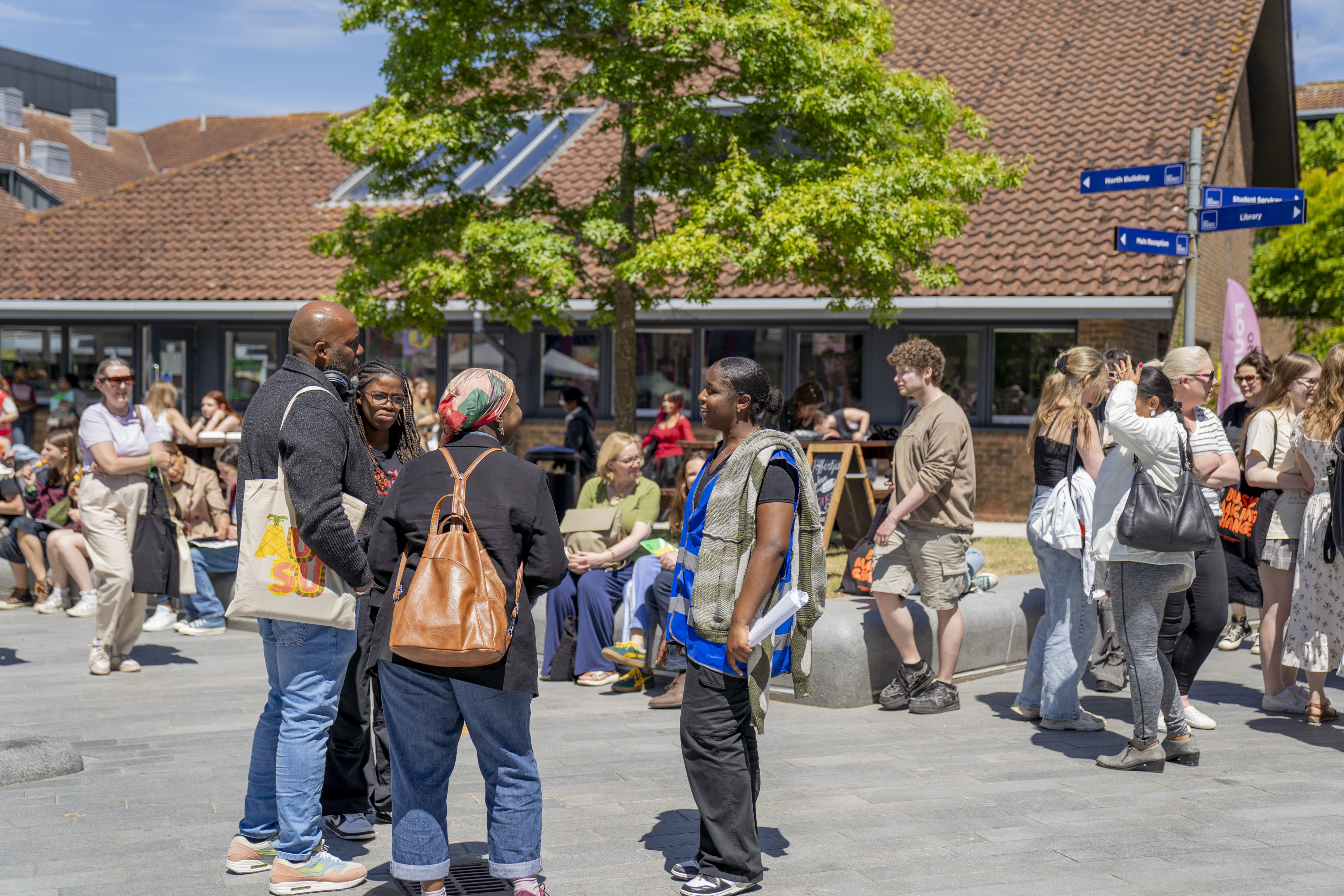
OPEN DAYS
Open Days are a great way to get a feel for undergraduate life at AUB. At an Open Day, you'll be able to explore the campus, talk to course teams and discover our industry-standard facilities.
Visit us on:
- 7 November
- 5 December
AUB SHOWCASE
We're proud of our alumni, and rightfully so.
Explore the incredible work of our graduates in our online AUB Showcase.
Browse work by course, student or theme.
Teaching, learning and assessment
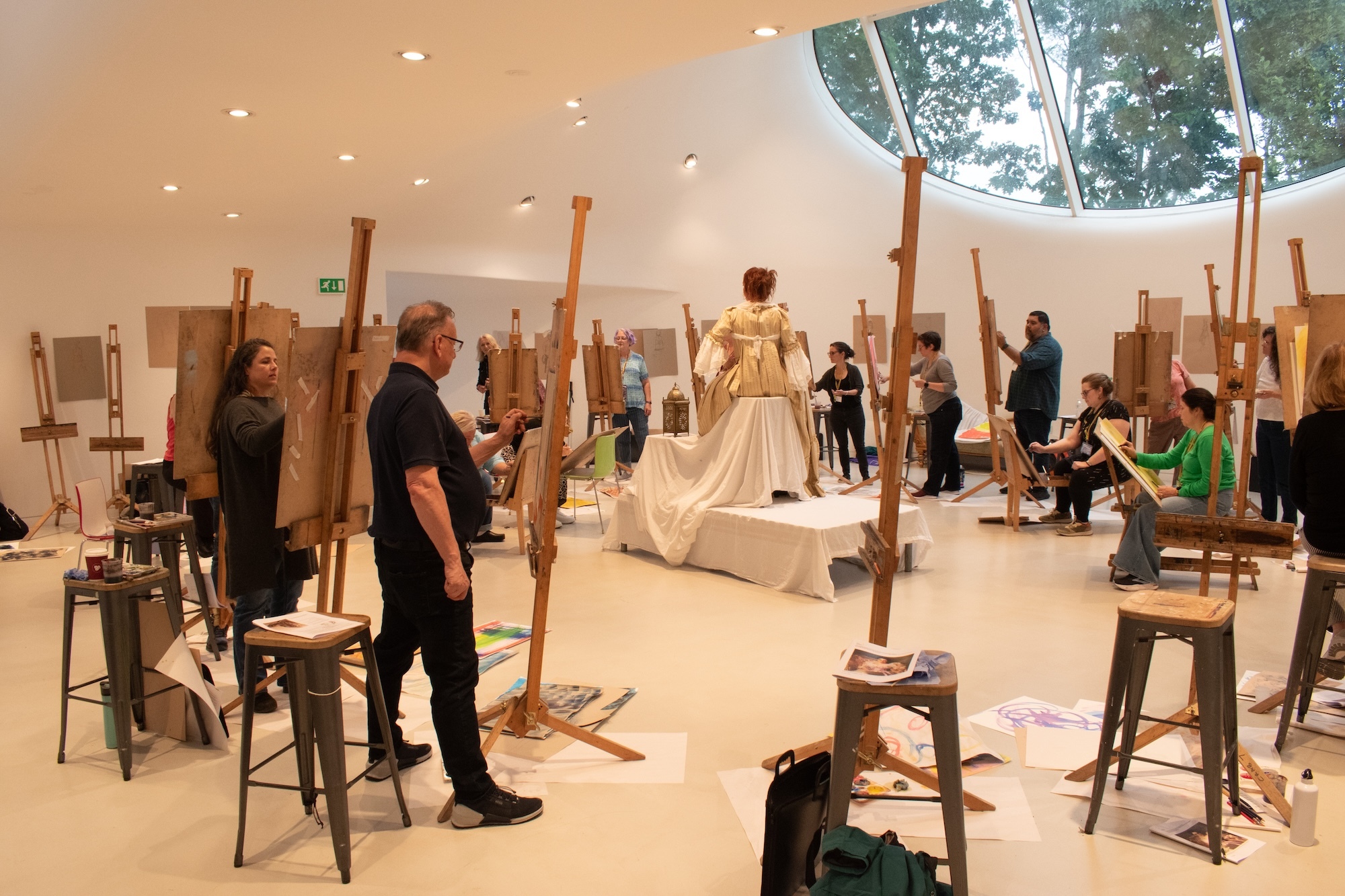
BA/BSc (Hons) Arts, Media and Creative Industries Management is a unique course that's taught through a blend of theoretical instruction and practical application – mostly project based work. You’ll be taught in a dynamic way that mirrors industry in many ways – such as problem-based learning, hackathons, action learning sets and practical time constrained challenges, alongside this there will be some more traditional style lecture, seminar, tutorial and workshop sessions.
Industry-standard software and hardware are used to provide students with valuable, up-to-date technical skills. Regular feedback from tutors ensures continuous improvement, while guest lectures from industry professionals provide unique insights. The course encourages self-directed study, fostering creativity and independent problem-solving skills.
Independent learning is a cornerstone of BA/BSc (Hons) Arts, Media and Creative Industries Management. Supported by structured guidance and reflective accountability, you are encouraged to explore your individual interests within the expansive and fast-evolving creative industries. Many assignments are designed to promote autonomy—requiring self-directed research, critical analysis, creative development, and strategic problem-solving. You’ll initiate and deliver your own creative projects, applying your learning in real-world contexts. Alongside this, you’re expected to actively engage with current affairs, global culture, industry trends, and digital innovation.
This independent, self-motivated approach fosters not only resilience and adaptability but also equips you with the entrepreneurial mindset needed to build your own business, work freelance, or become your own boss. You’ll develop the skills and confidence to forge your own path, while also being well prepared to work effectively within organisations and collaborative environments. Throughout, an emphasis on agility, flexibility and sustainable practice helps you consider how to manage workload, creativity and wellbeing—essential for maintaining a healthy work-life balance in today’s fast-paced, fluid creative economy.
Contact hours include all scheduled teaching sessions, but also supervised time in the workshop or studio. In line with national guidance, we include in our calculation of contact hours all the time that's scheduled in the studio for independent study, which is also supported by staff (either academic staff, or technicians).
Course costs
The fee you pay AUB provides the necessary equipment and training for you to complete your course.
In most cases, you don't need to buy any specific items of kit before you start the course. You may also choose to buy some items of personal equipment such as a laptop or tablet computer, but this isn't required – desktop and laptop computers are available for you to use in common study areas, including a loan system in the Library.
It isn't possible to be precise about the likely additional costs that you may incur, because this depends on the choices you make and the projects you undertake. The University provides some basic materials, and you'll be encouraged to work sustainably and to reuse materials where possible, but you should still expect to make some financial investment.
For more information, including costs relating to certain courses, visit our Course Costs page.