

























- Home
- Latest
- Student Stories
- Ruth Fuller – Going from photography to ...

Some moons ago, when I was at school, I knew fine art would be my backbone. That was the world that made the most sense to me. I studied painting and photography as separate subjects, and I was fascinated equally by them.
I chose to follow photography at that point, I didn’t want to do a foundation year as I knew fine art was my area, and I was lucky enough to be offered a place on a four-year degree course, at an institution that taught photography purely as a discipline under the broader umbrella of fine art. The ground beneath my feet was fine art, and photography was my medium – my materials were light, time, and light sensitive surfaces. To begin with, I used it to discuss the uncanny and the female figure.
There’s a kind of magic in photography for me. It’s an inherently surreal discipline that mimics reality but is not like it at all. Photographs are created by physical connection to the real world (via light particles). But they have edges and strict borders, reality does not. They are two-dimensional – you can wave them about, look behind them, and they have a kind of static focus that we don’t experience. A little slice of time is involved, showing us a ’moment‘ in an impossible way, suspended and unnatural. The photograph is like a ghost of the real world, a truly weird object and a certain kind of seeing. That suited me.
I wouldn’t have changed my degree for anything, and it has led my practice to where it is now. Painting however, always felt like it was waiting in the wings. At art school, I was usually found hanging around the painting studios, looking at everything that was being made. My boyfriend was a painter. At that time, painting was being questioned in some art schools, but we were lucky, because where we studied, painting was thriving. After we graduated, a wealth of painting exhibitions were springing up in London, where we had moved. Major retrospectives at that time included Luc Tuymans, Peter Doig, Lucian Freud, Elizabeth Peyton, Philip Guston, Chris Ofili.
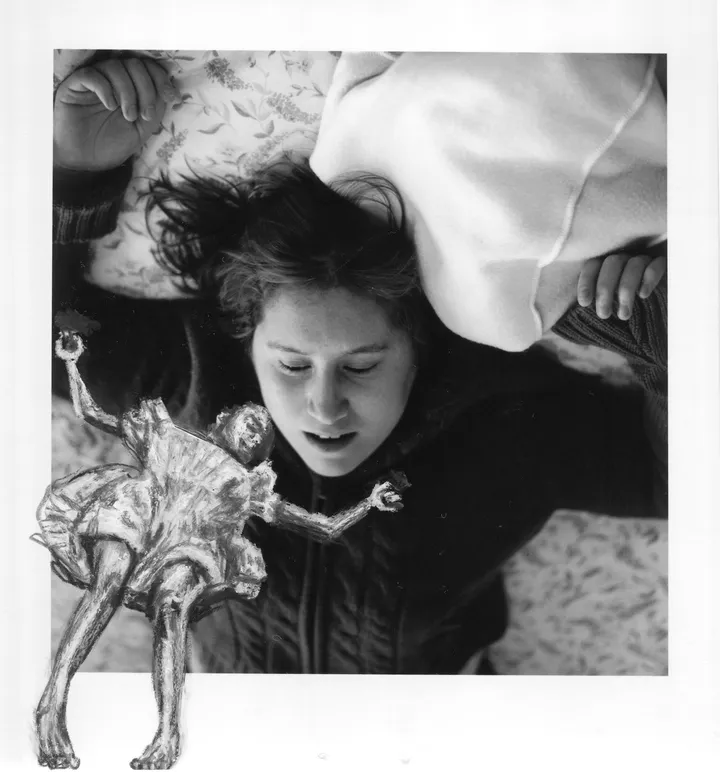
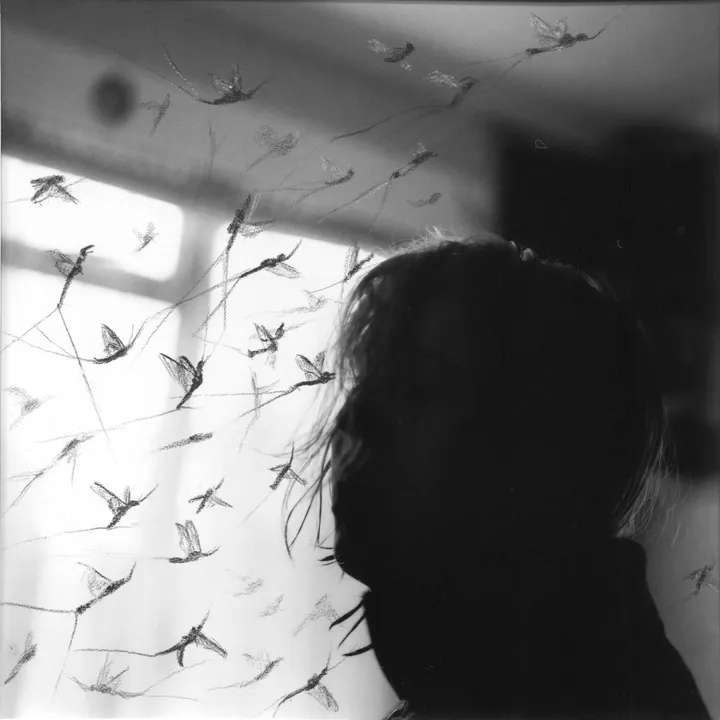
So, after graduating, I continued a photographic practice and created a series that involved drawing over my photographs.
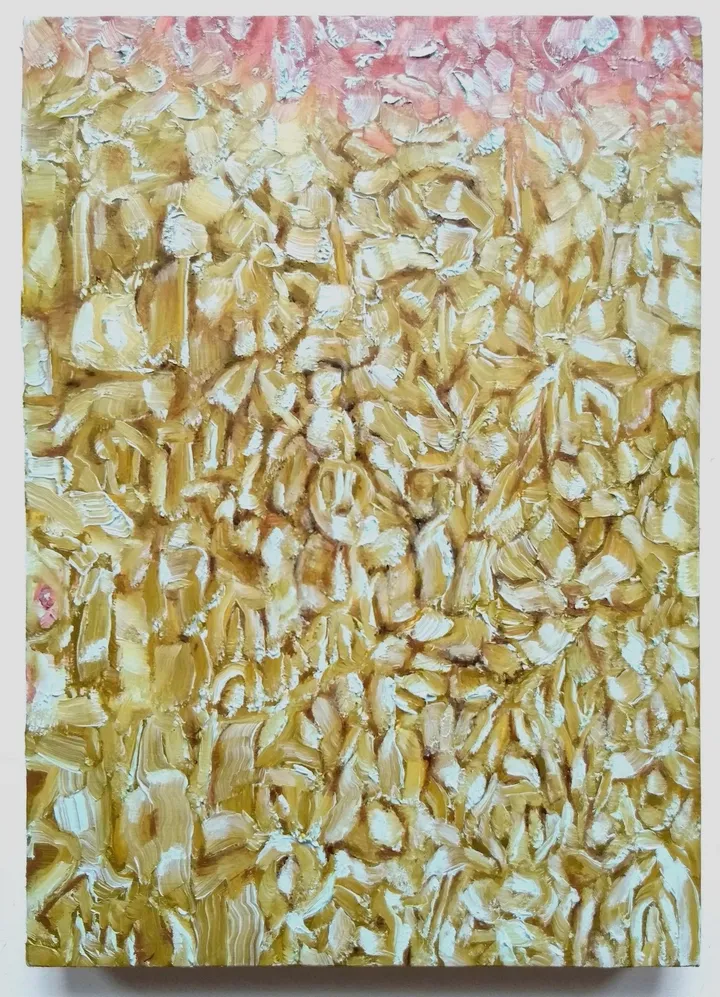
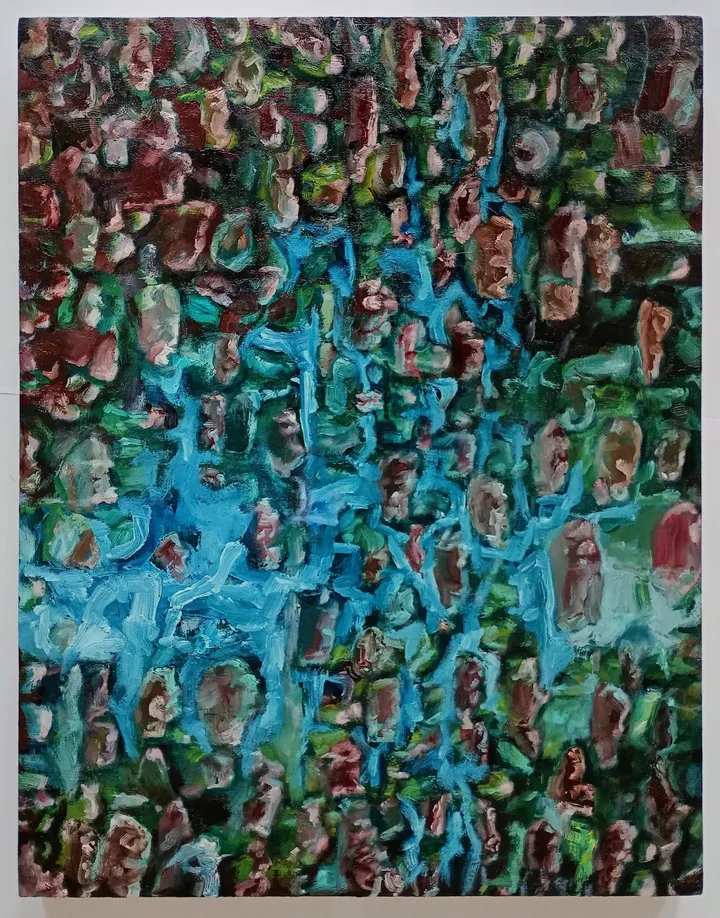
These soon led me to start painting again. I noticed that painting had similarities to photography. Time plays a role in painting as it does in a photograph – it’s also a record of a time period, showing traces of the painter rather than traces of light. Instead of the physical touch of light in photography, the magic of painting is a direct connection to the painter's hand and hence to the painter's mind. For me, as we stare into a potential AI abyss, this makes painting more relevant and important than ever.
I discovered MA Painting at AUB when looking for an MA course. It was what I was looking for, and I knew it would fit – specialist painting tutors, and a deep dive into the nature of painting itself. What I wasn’t expecting however, was that a photographic way of seeing was deeply embedded in my mind. As I created paintings, I found I was repeatedly referencing a photographic and also filmic way of seeing, which I couldn’t seem to break out of, even when not using photographic sources at all. I discovered that I didn’t really want that, and that it served no strong purpose in the work. To think differently was a process that felt like slowly trying to break through thick ice.
Eventually, with the help of course tutors, and Ken Kiff (a painter no longer with us, whose exhibition I saw first-hand), something changed in my mind, and I was able to move away from the photographically observed, which for me had been a constraint. I am now on a different journey, exploring similar themes but in a way that is free from a photographic way of thinking. I don’t know where it will move to in the future.
At the moment, I am treading lines between figuration and abstraction to circle around ideas of the uncanny, human scale and flux through painting. My experience is that MA Painting is a special course, which can guide students, whatever their areas of interest, towards developing a stronger painting practice.


