

























- Home
- Student Stories
- Iryna Lytvynenko – "The MA Interior Desi...
I graduated from a Ukrainian university in 2009 with a degree in civil engineering. I never studied interior design formally at undergraduate level. Instead, I taught myself through watching design videos, reading professional literature and constantly practising.
Over the years I worked as a furniture, staircase and interior designer – both in studios and as a self-employed professional. My favourite areas have always been residential and hospitality interiors. All my projects until 2022 were created in Ukraine. After moving to the UK because of the war, I had to pause my design career, but I continued researching trends and keeping my knowledge up-to-date.
What made you decide to pursue the online MA course? Why did you choose AUB?
I specifically looked only for fully online programmes because I work full-time.
I found two suitable options: the MA Interior Design (Online) course at Arts University Bournemouth and the National Interior Design Course at De Montfort University. I was accepted to both, but I chose AUB because the units felt much more interesting and relevant to me.
I particularly wanted to study evidence-based design, and that is exactly how AUB positions its course. The combination of theoretical depth, live projects and the opportunity to combine healthcare and hospitality approaches made the decision clear for me.
Tell us about something that pleased you or surprised you about the course.
What I really enjoy is the friendly and supportive atmosphere. You can feel that the tutors genuinely want to help, guide and encourage you.
What surprised me most was the teaching method itself. It is very different from the way I studied in Ukraine. The course is largely based on independent learning – reading recommended literature, analysing it, reflecting, drawing conclusions and then applying this knowledge to projects. The online seminars are not lectures where someone explains a textbook. They are real discussions between tutors and students about ideas, analysis and critical thinking. This approach noticeably improved my analytical skills.
Tell us about a favourite project you’ve worked on during the MA Interior Design (Online) course.
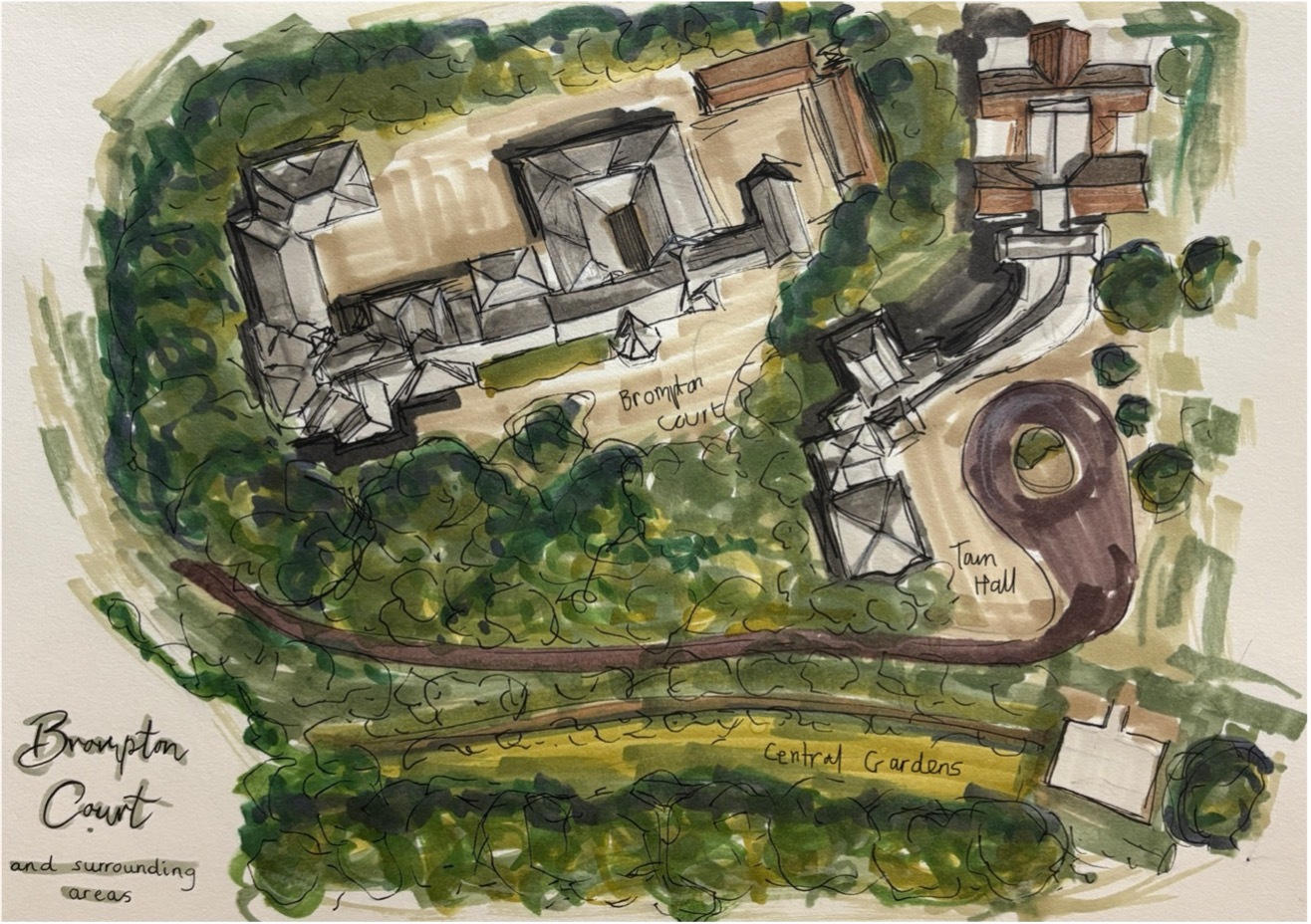
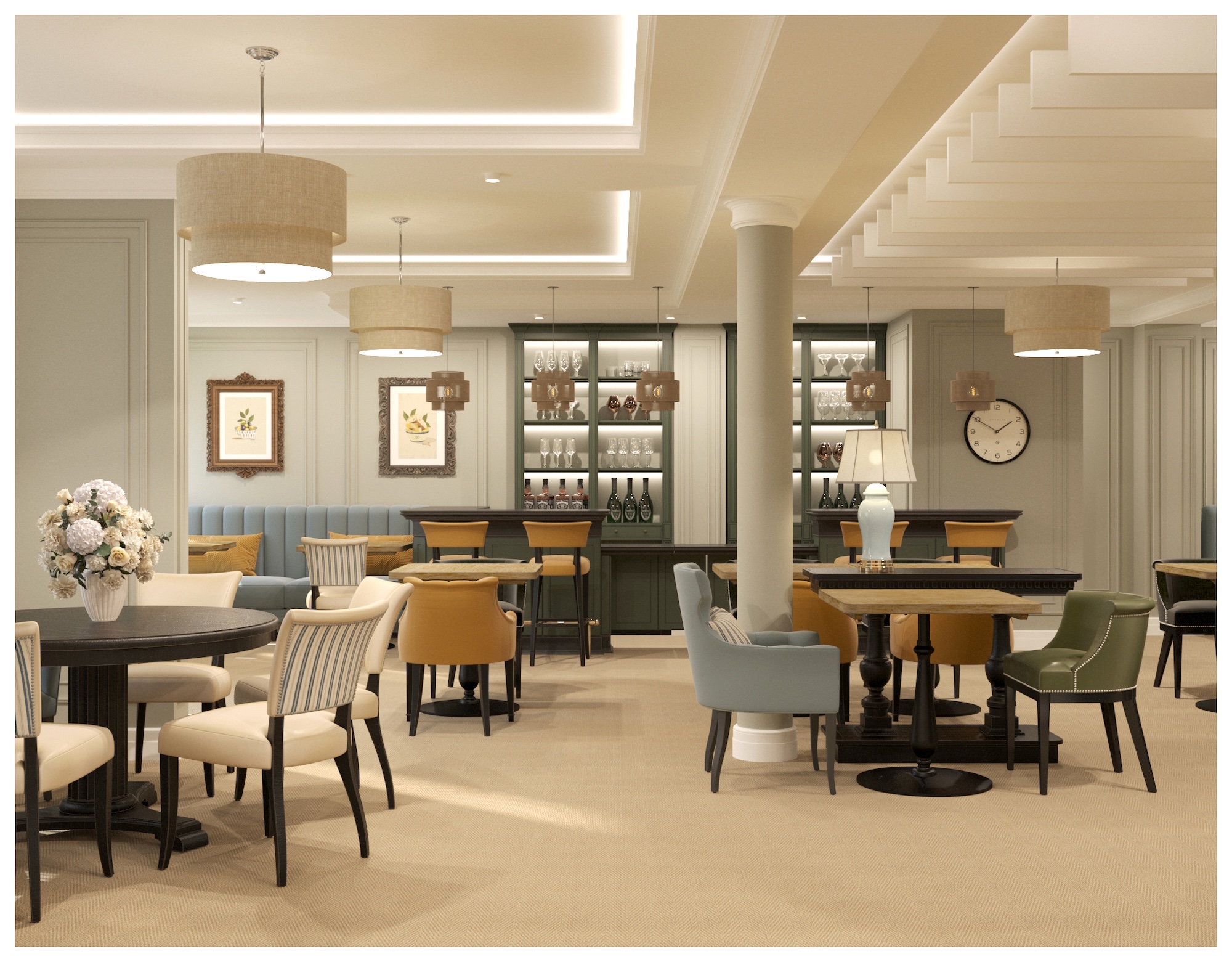
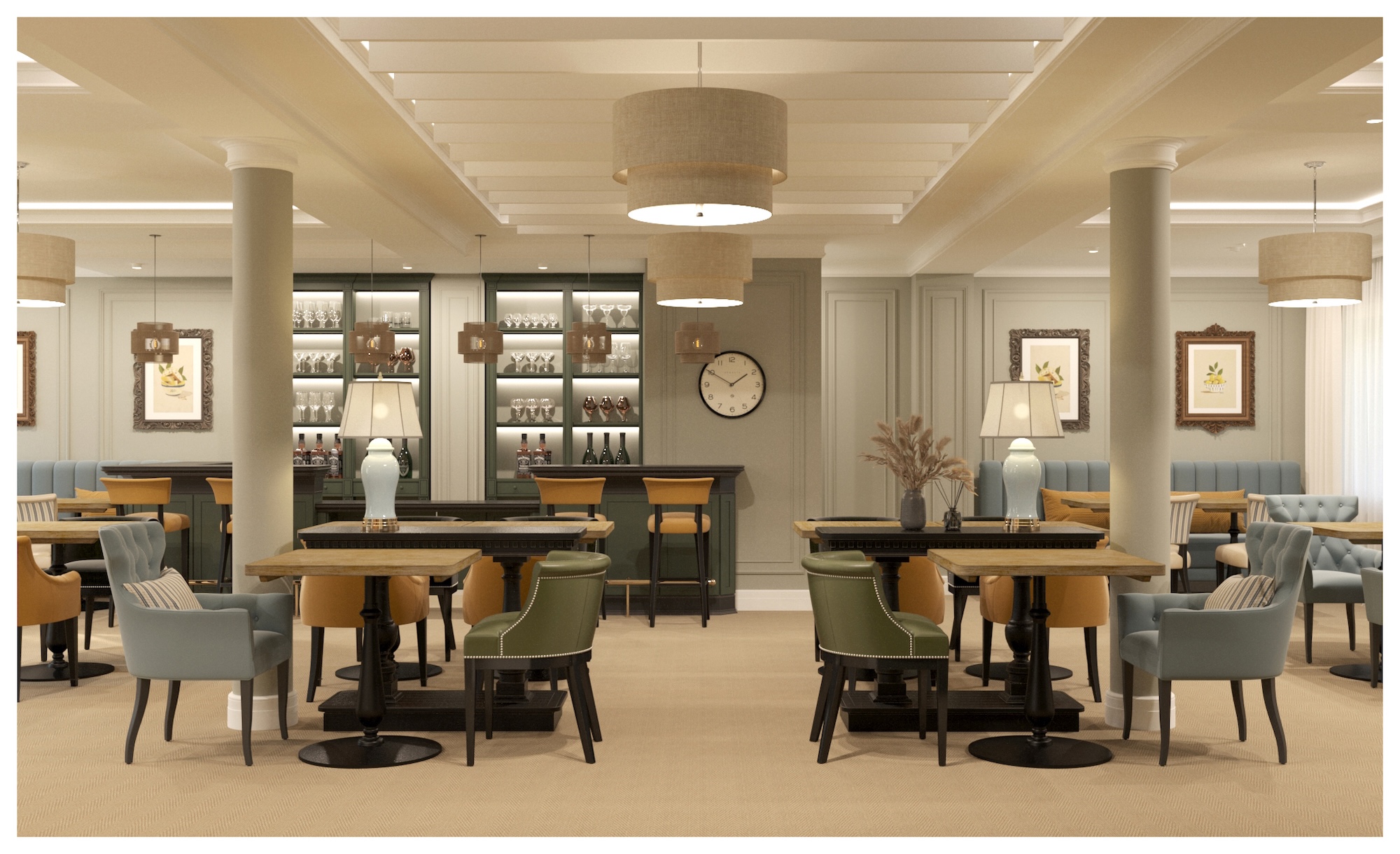
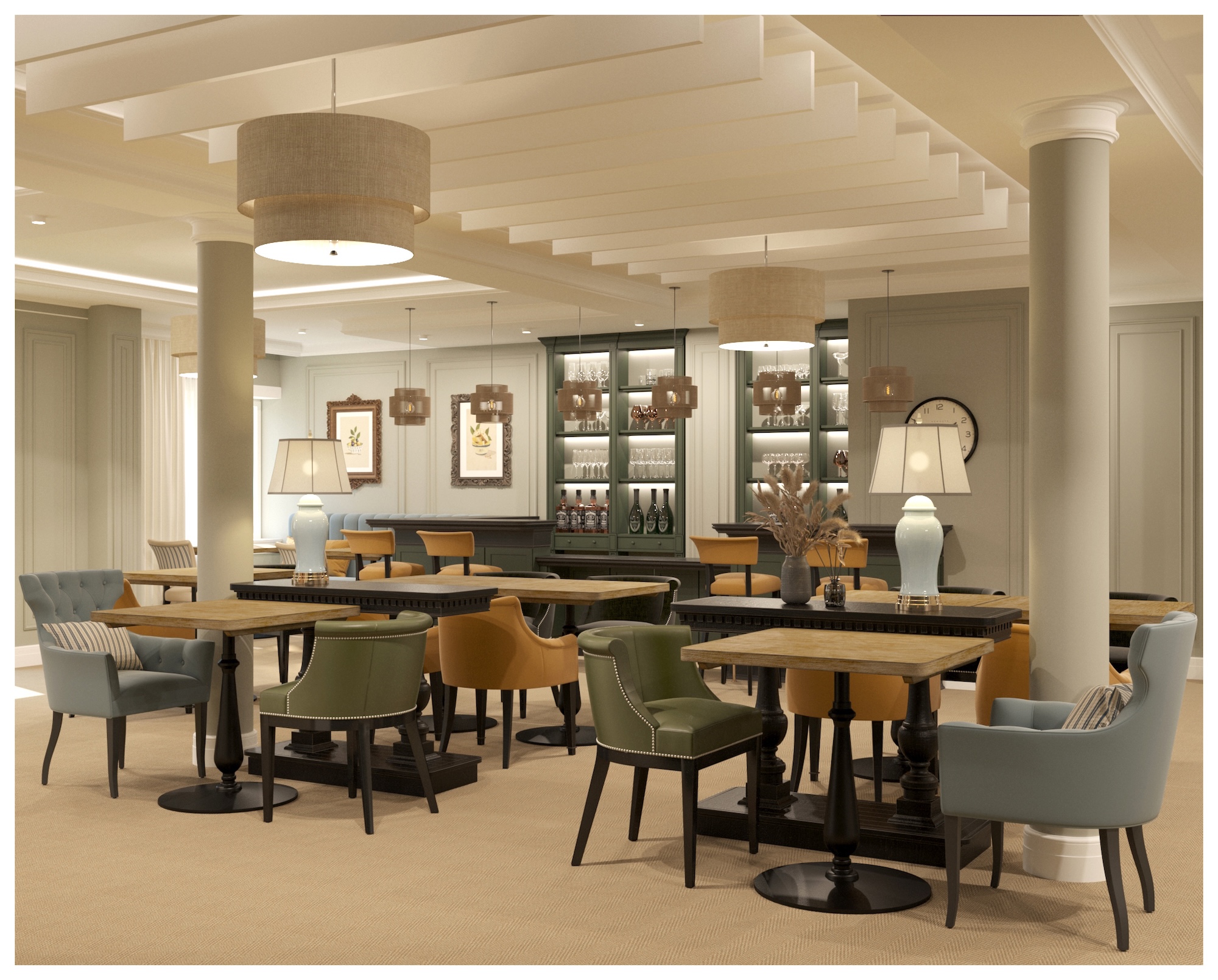
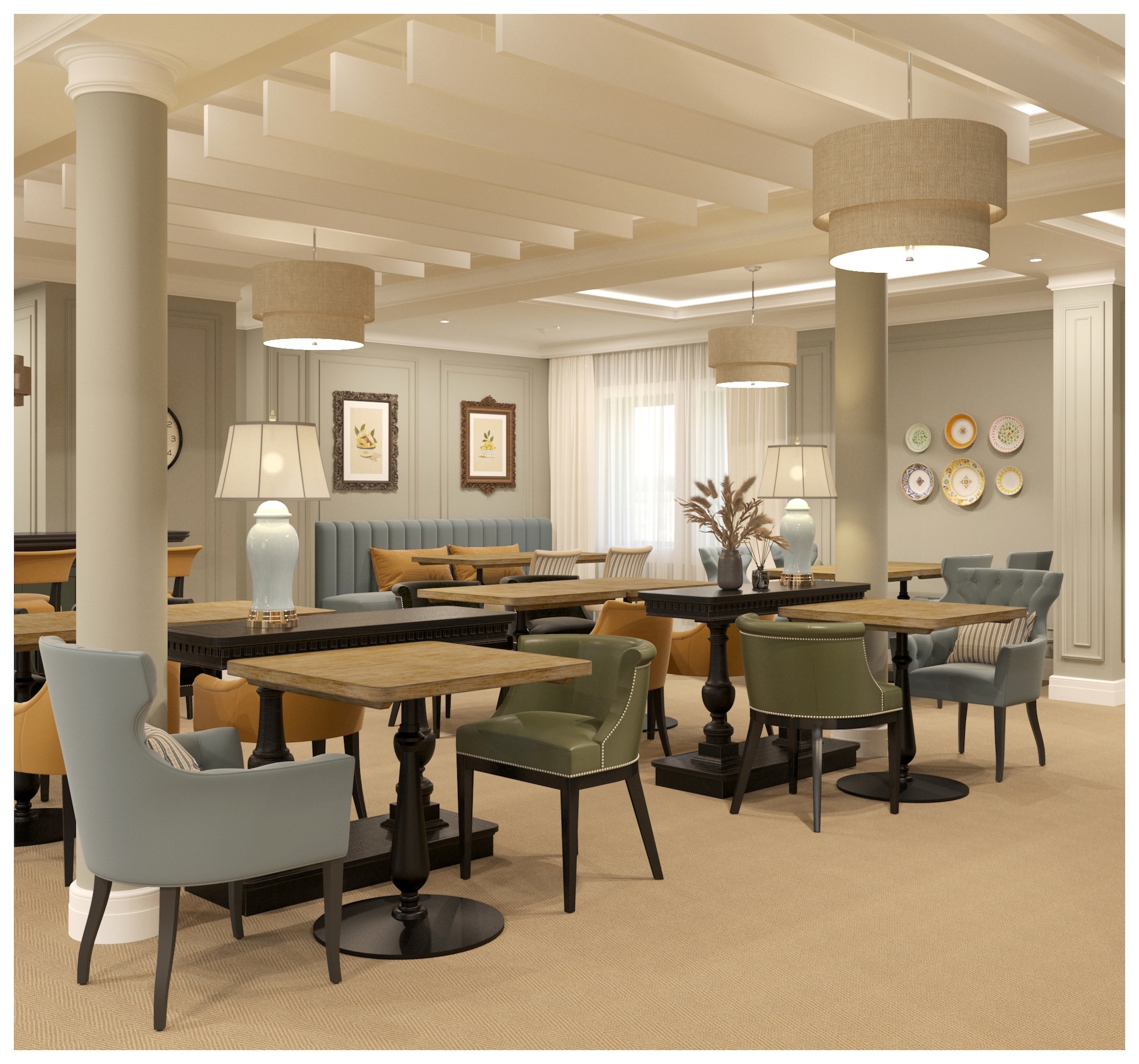
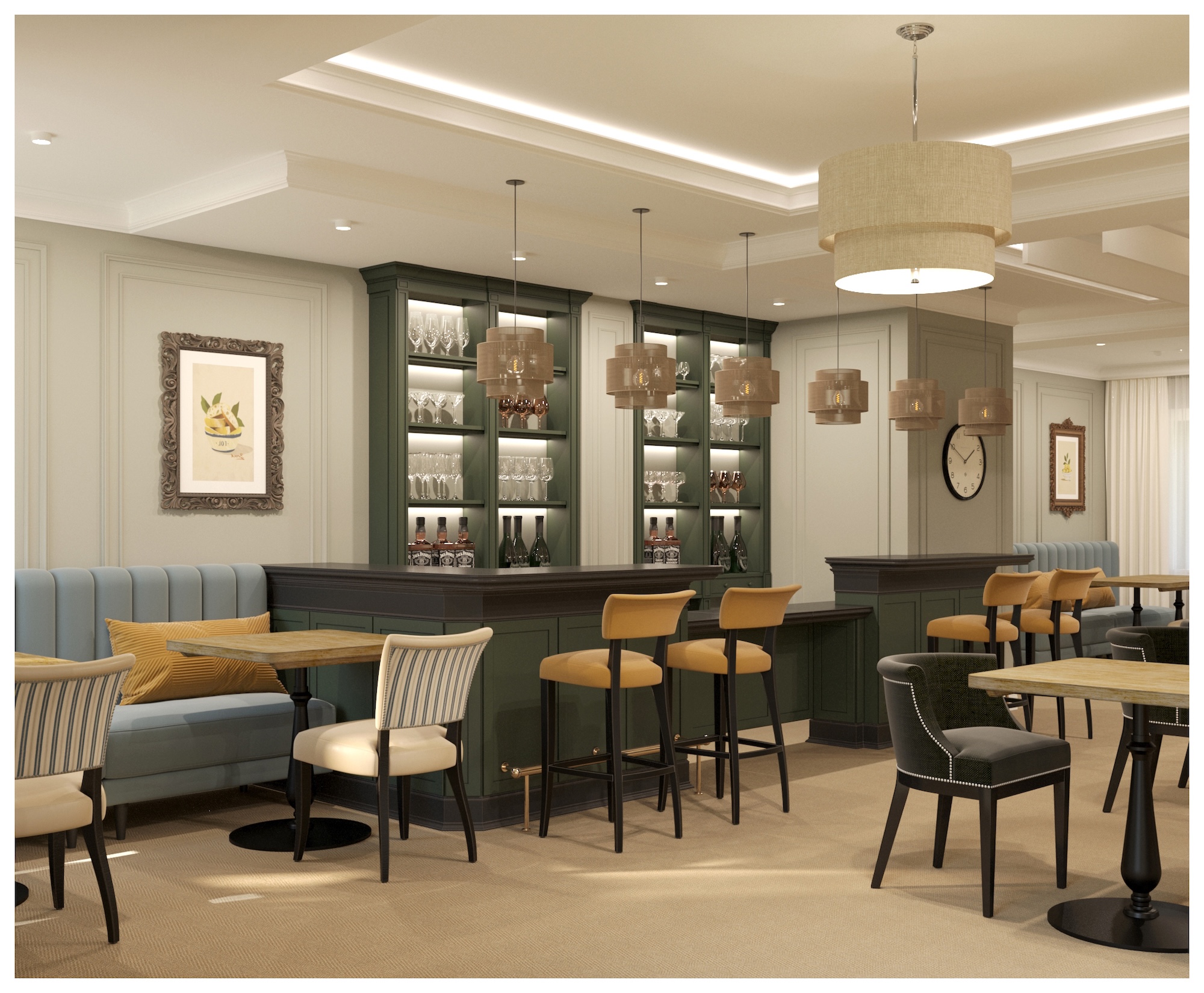
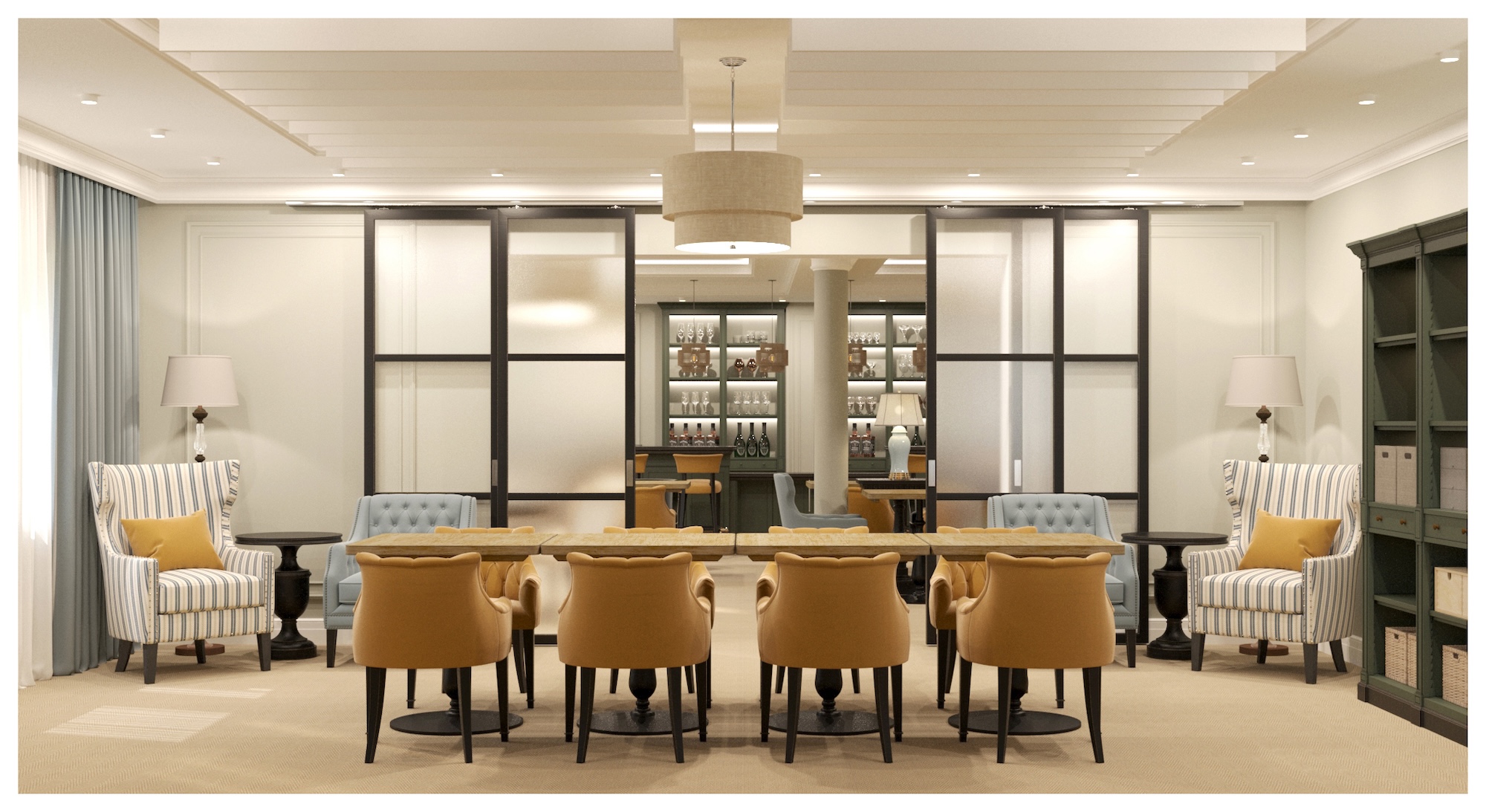
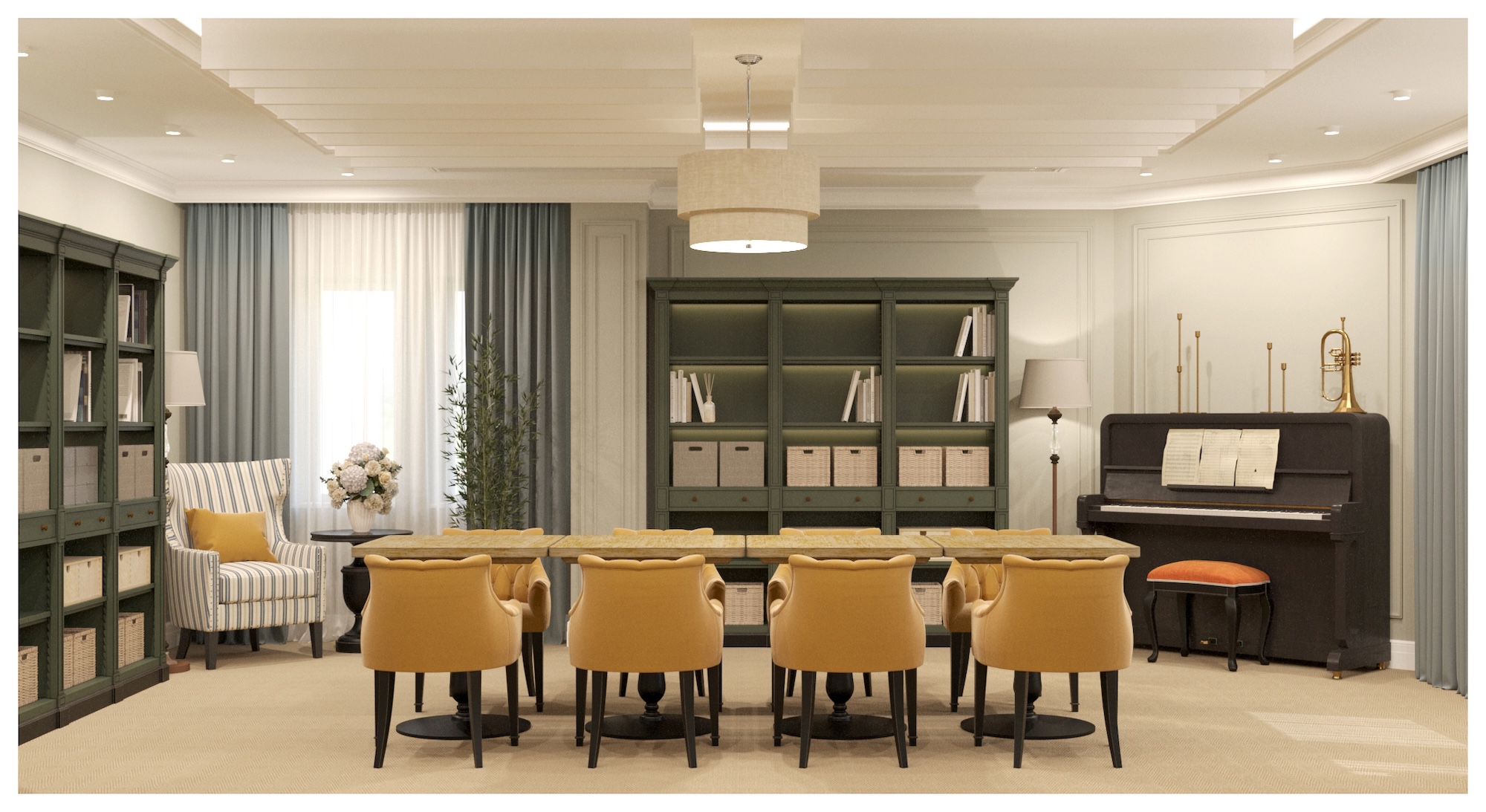
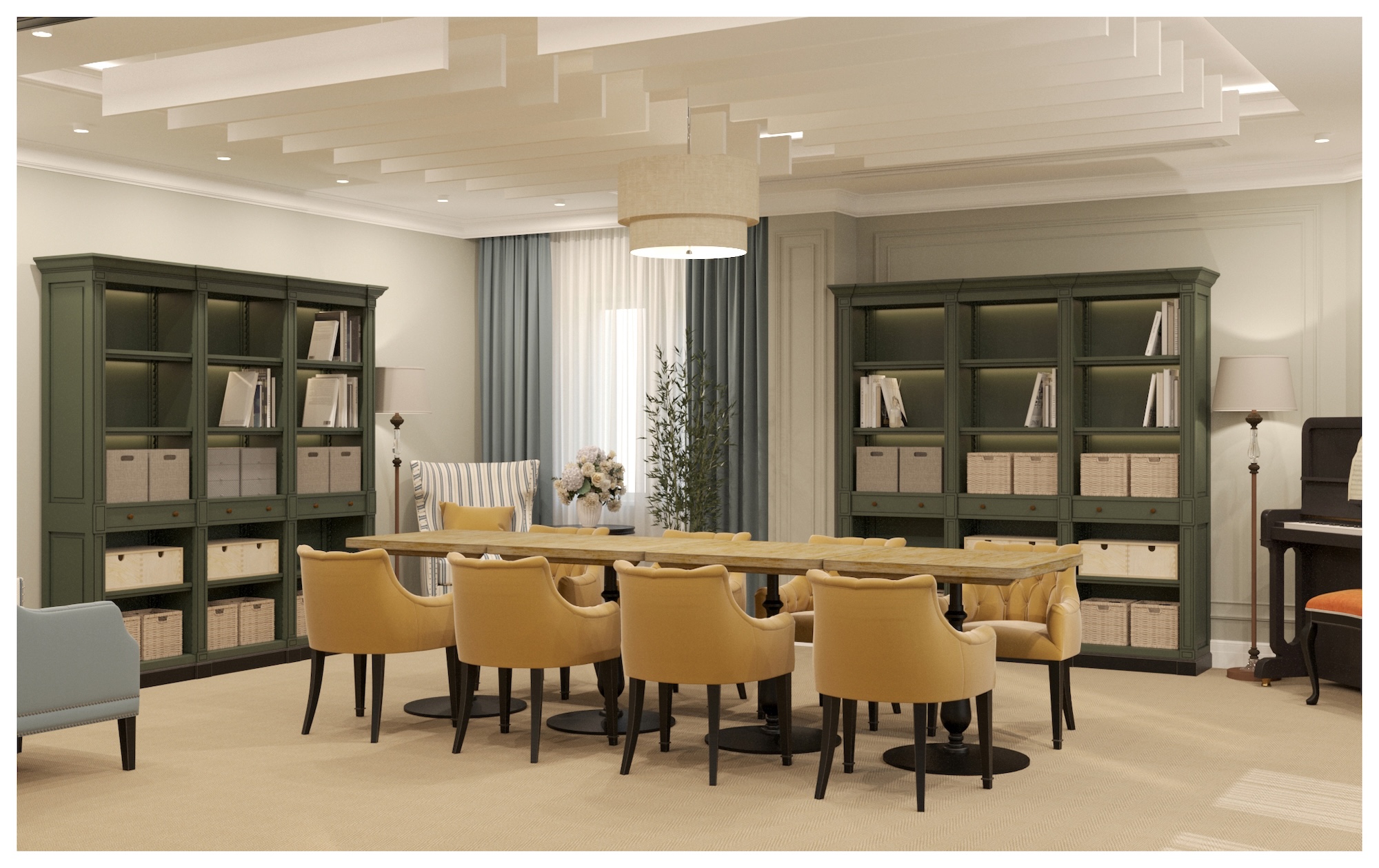
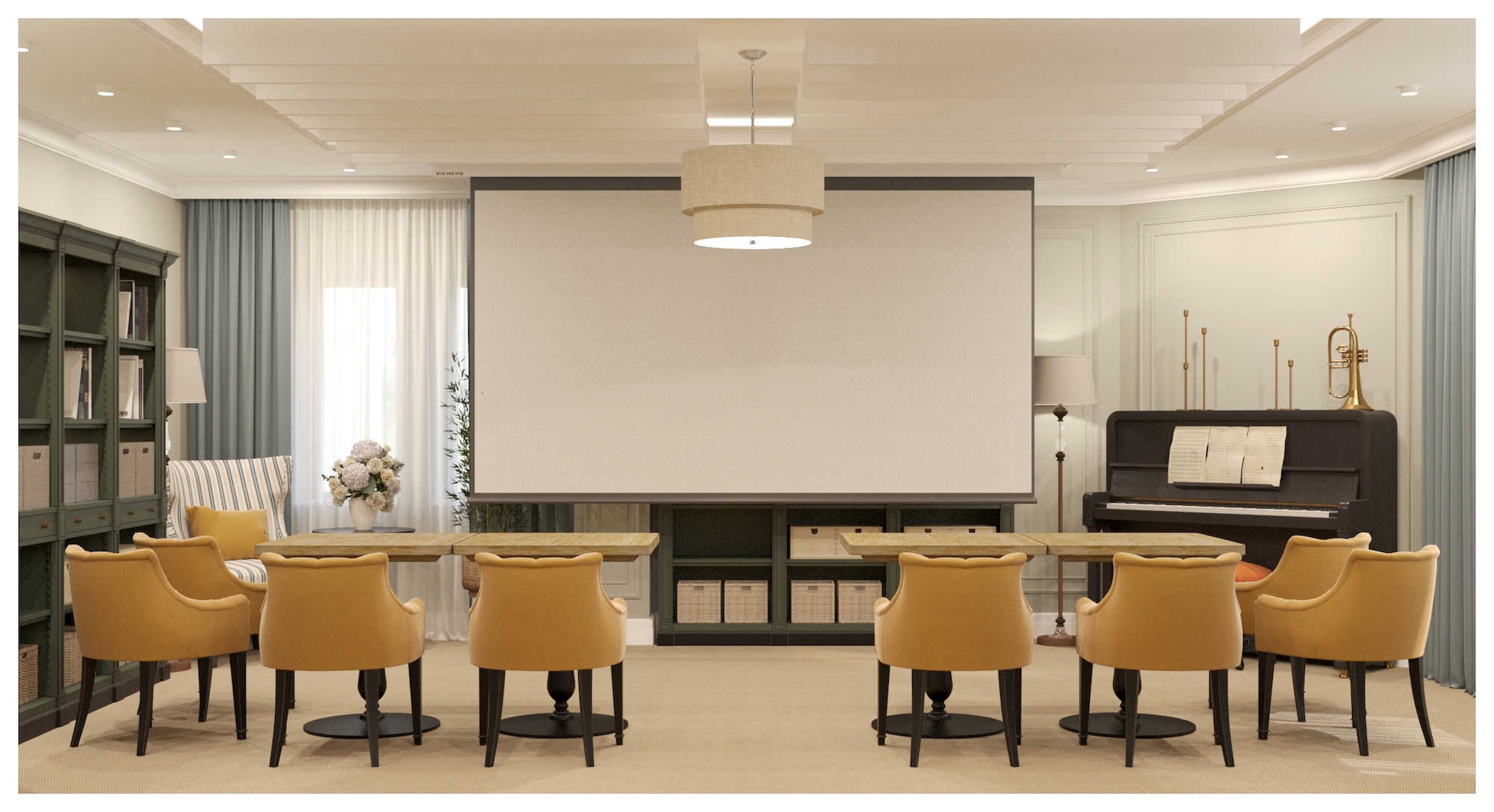
My favourite project so far is the live client project for Brompton Court in Bournemouth – a Grade II listed luxury retirement living scheme for residents aged 65+. It was part of the Collaboration unit.
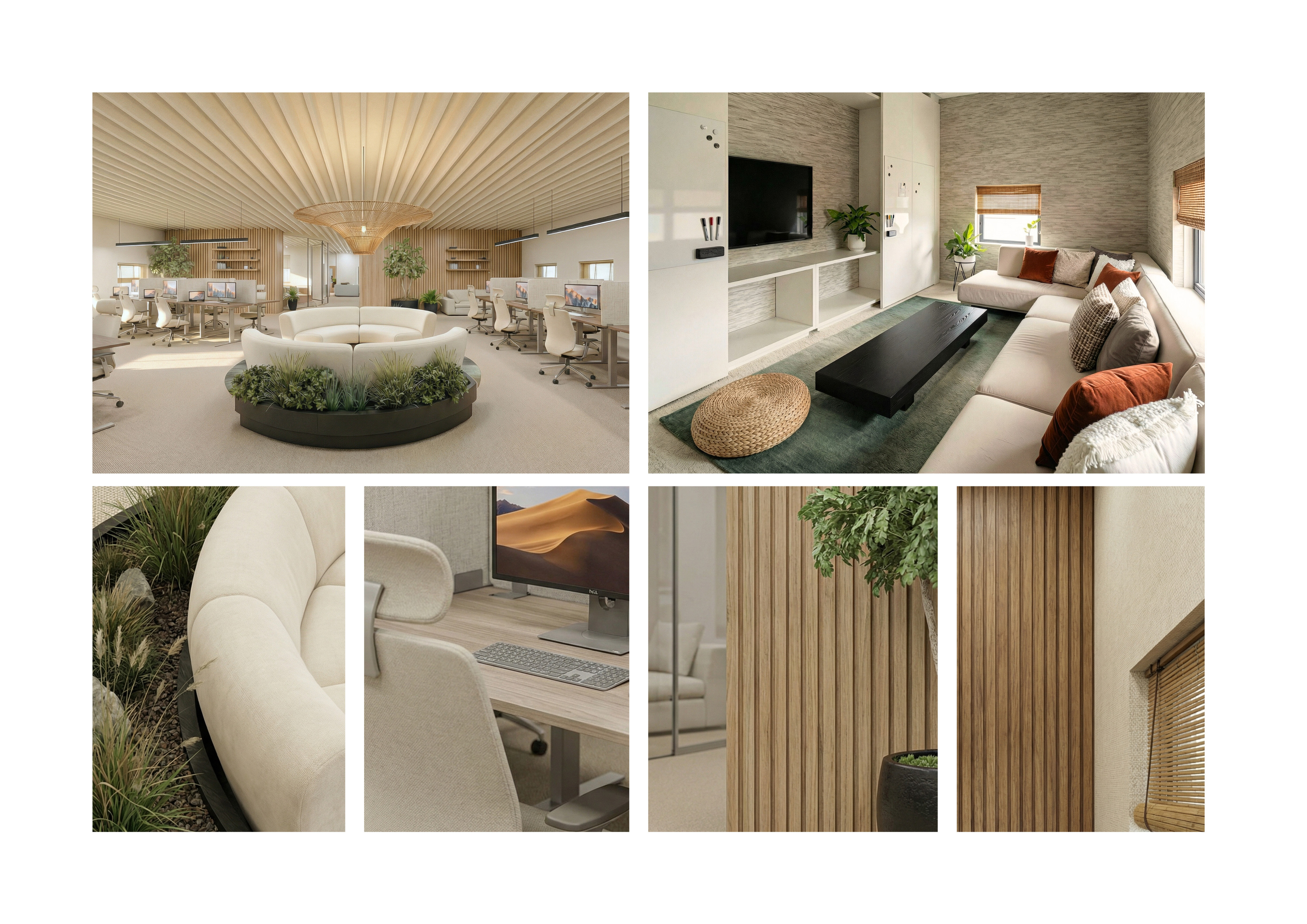
I chose to work on the communal areas: the dining room (40 seats, also used for events) and the hobby room (a flexible space that could function as a cinema). I started working on the reception area as well, but due to time constraints I focused on the two main spaces for the final submission.
The brief required combining evidence-based design for older people with a luxurious, aspirational hospitality atmosphere. The design had to support independence, accessibility and social connection while still feeling warm, elegant and “homely” rather than clinical. I researched age-related changes, dementia-friendly design, Light Reflectance Values, acoustics, ergonomics, biophilic elements and coastal references linked to Bournemouth’s location.
What made it especially memorable was the real collaboration – with the client Helen Morrell, tutors, my peer Hope, and even my architect friend. Through discussions, feedback and constant iteration I transformed my initial ideas into a coherent final design that I am genuinely proud of. It was challenging because every decision had to balance beauty, functionality and inclusivity – but that is exactly why I loved it.
In what ways has the MA course developed your skills, knowledge, and/or interior design practice?
The MA course is changing the way I approach design. Before starting at AUB, I relied largely on intuition and practical experience gained in Ukraine. Now I am building a much deeper, research-driven foundation and gradually becoming more confident in my professional decisions.
I am learning to work with evidence-based design, critical reflection and academic research methods. Through live projects and different units, I am exploring how to combine healthcare and hospitality principles, how to work with existing and historic buildings, how to apply sustainability and inclusivity, and how space can influence psychological and emotional experience.
The course is also strengthening my analytical thinking, academic writing and ability to collaborate and iterate. Most importantly, it is helping me rebuild my design practice with greater depth and critical awareness — something I am still actively developing and will continue to develop throughout the remaining units.
What advice would you give people thinking about studying an online MA course at AUB?
- Choose the university primarily for the units and teaching philosophy that really interest you.
- Be ready for a high volume of independent reading, analysis and reflection – this is the core of the learning experience.
- Actively participate in the seminars and discussions; they are where a lot of the real learning happens.
- Don’t be afraid to collaborate and ask questions – the tutors and peers are genuinely supportive.
- If you work full-time, plan your time carefully and treat the course as a serious commitment.
- Embrace the live projects if they are offered – working with real clients and real constraints is incredibly valuable.