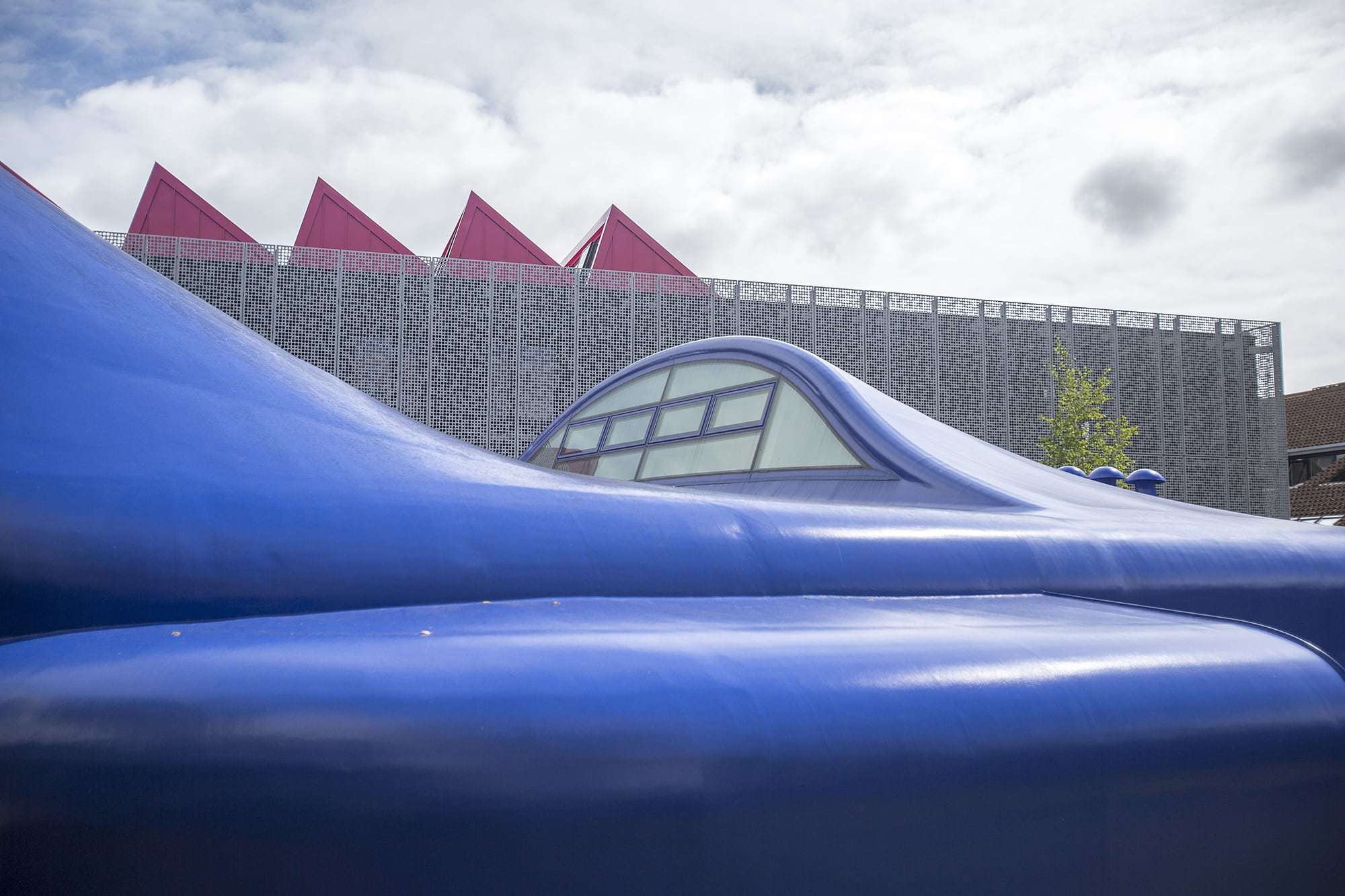

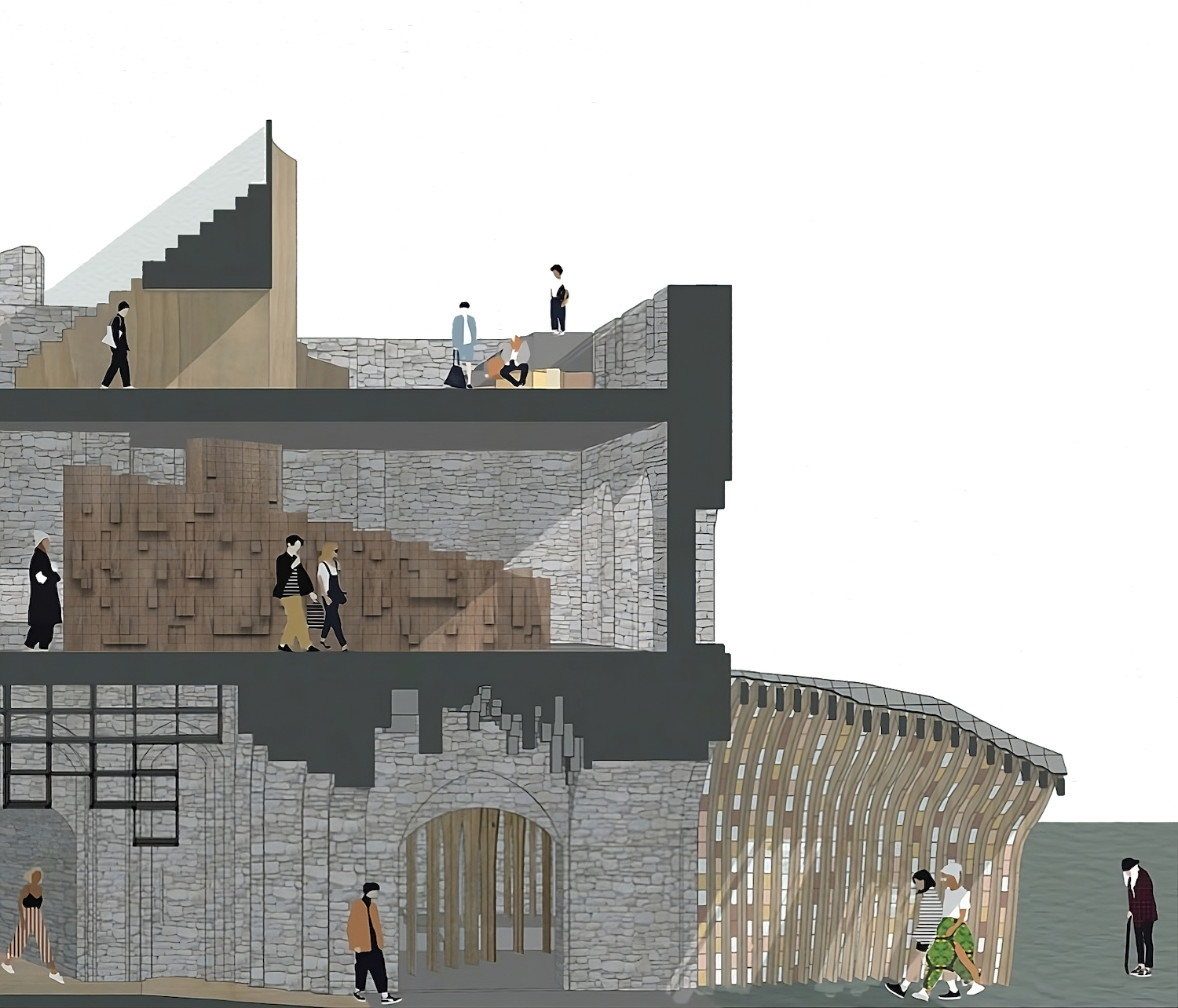






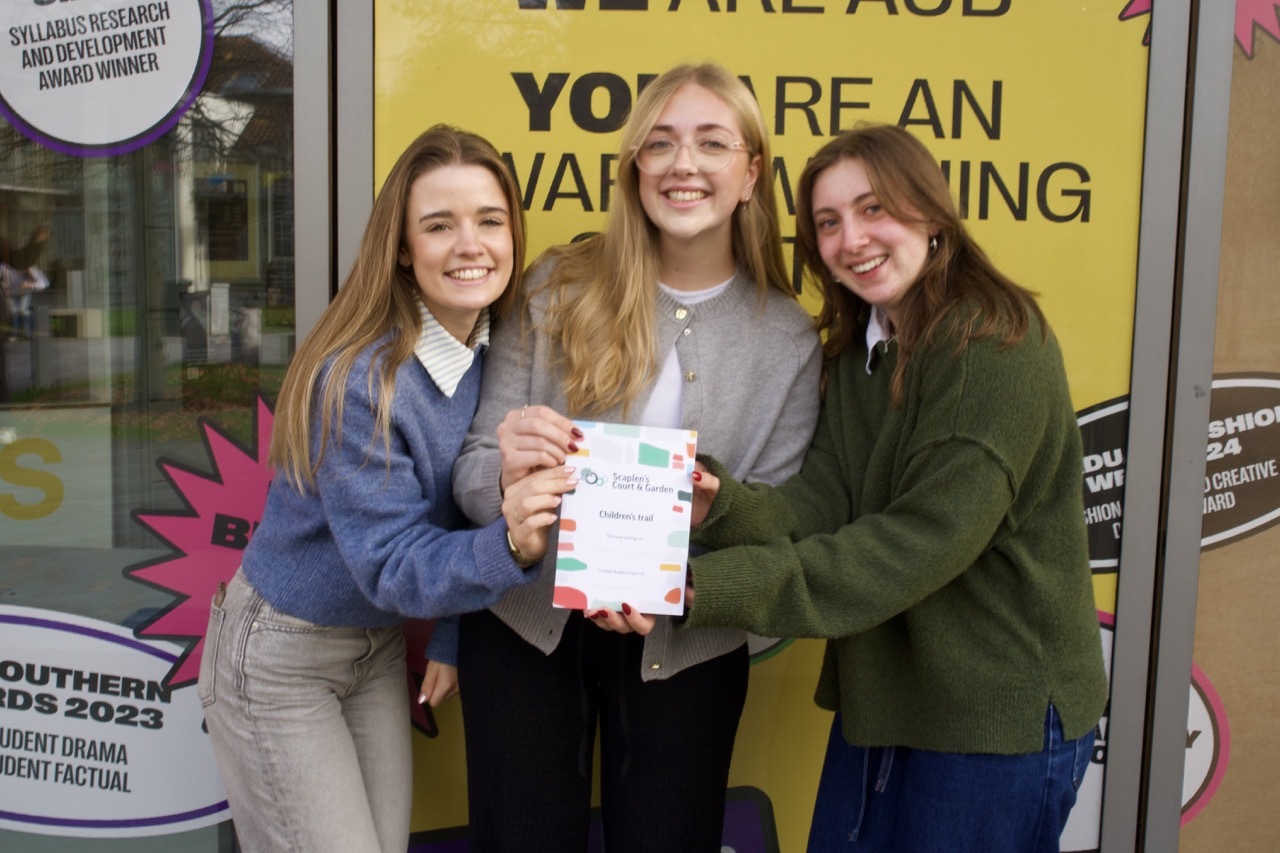
Earlier this year, we were given the opportunity through AUB to work on a live brief for Poole Museum. There were four briefs to pick from and we chose a wayfinding brief for Scaplen’s Court – a medieval building owned by and situated next to the museum.
The brief asked for a wayfinding solution that would navigate young visitors around the property, engaging them with the history that surrounds them, whilst still being fun, purposeful and accessible. We had many initial ideas but settled on a children’s trail that flows through the building, taking them through each room to learn about Scaplen’s Court and completing fun games.
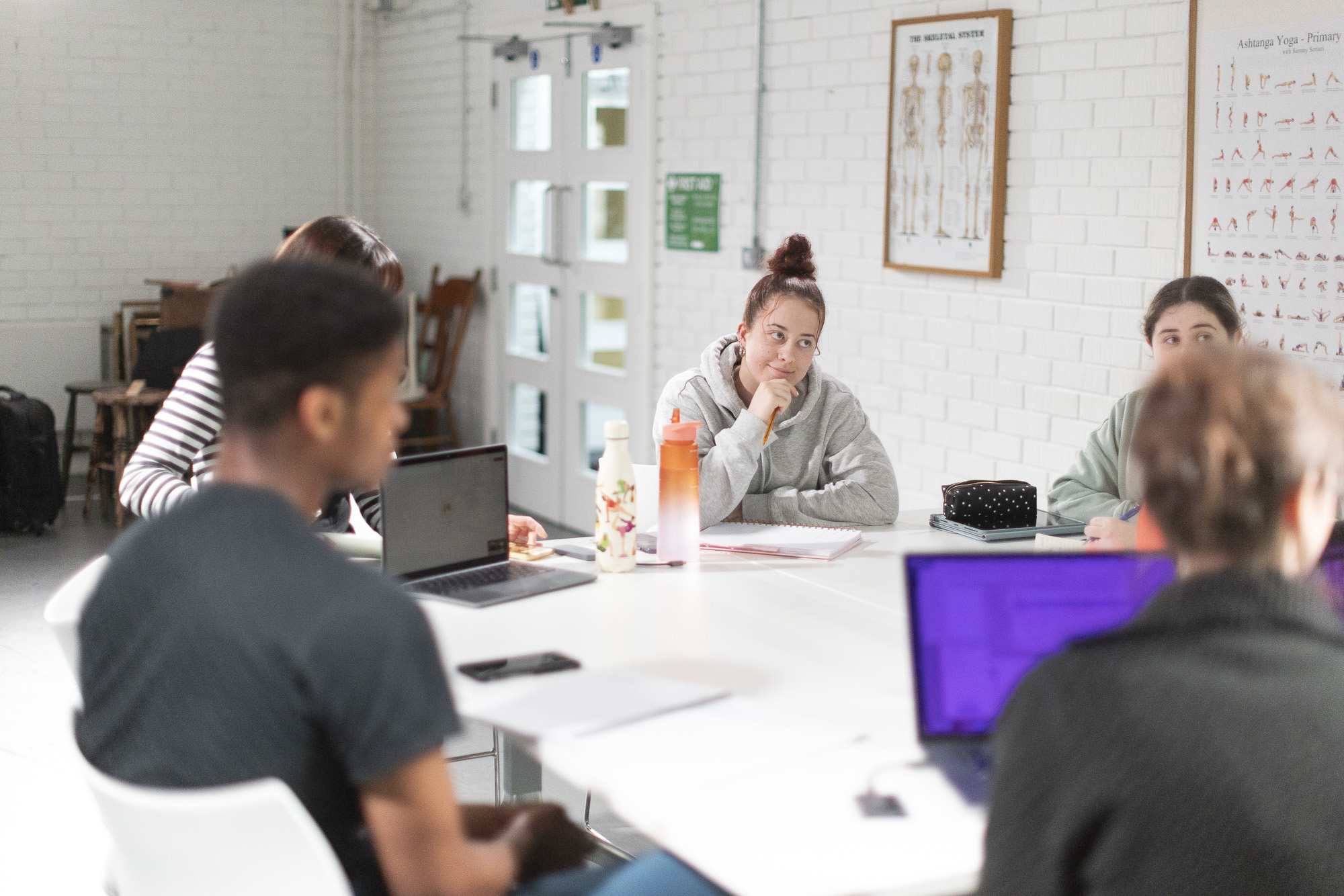
From the beginning of the project, we knew we wanted to work together as we were all comfortable with each other, equally driven and had the same work ethic. Each of us knew the value of working within a team and as this was our first live brief, it was nice to work with like-minded people. We found that we improved individually as we learnt a lot from each other, specifically different ways we can work on one project.
We used what we have learnt at AUB to mind map, research and develop ideas. There were a lot of initial ideas which we communicated with multiple teams at Poole Museum. Before finalising our proposal, we had a few site visits which allowed us to see Scaplen’s Court’s layout, so we could see the key elements we would include in our booklet. Additionally, having many meetings with different teams allowed us to get a sense of their ideas and thoughts for the trail.
After our first visit and a meeting, we created our proposal, which included our research composing of surveys, historical facts and accessibility research. Having primary and secondary research made our proposal have integrity and meaning; it showed we really cared. Ultimately, our proposal was chosen, and then we got to work.
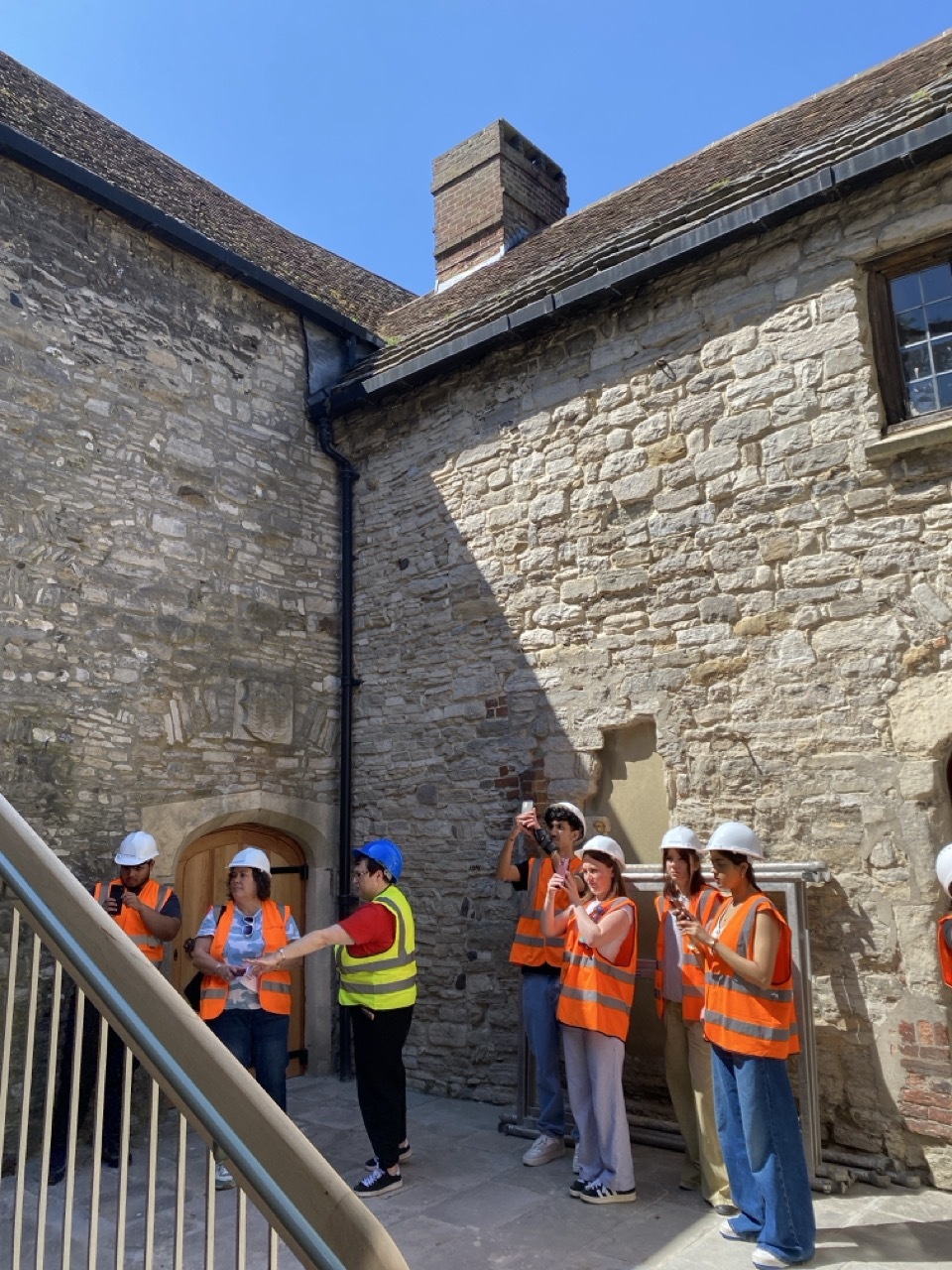
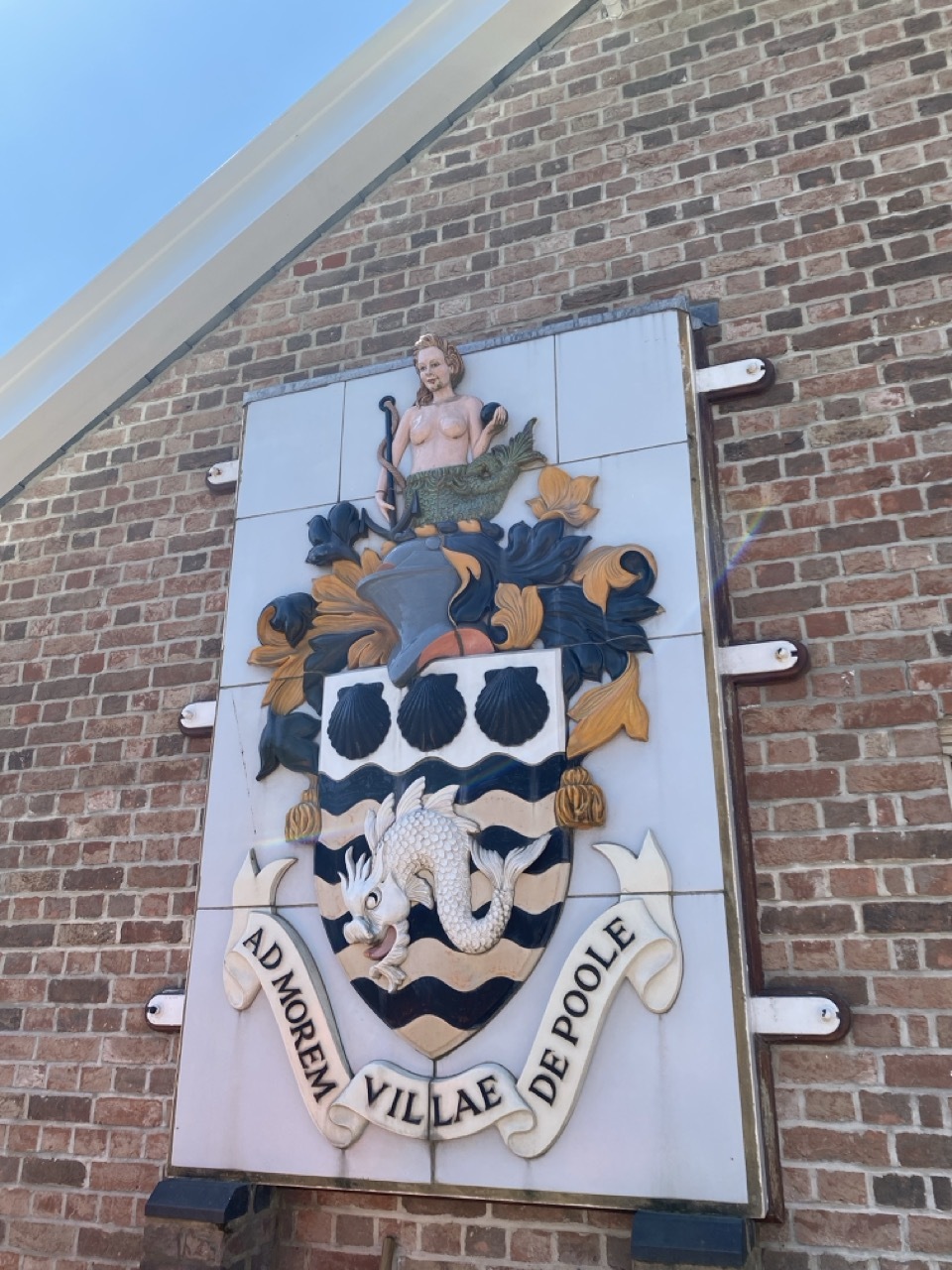
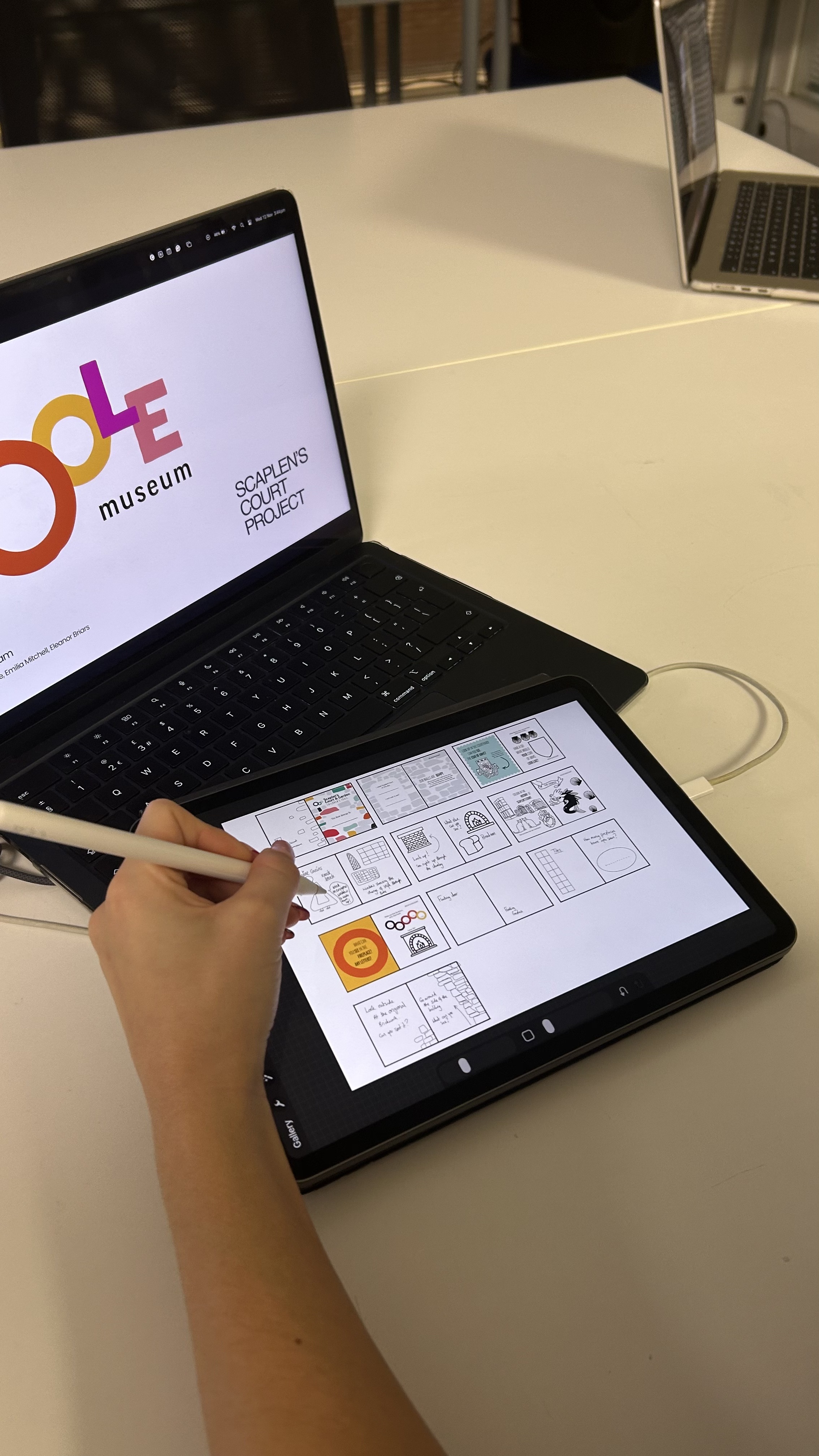
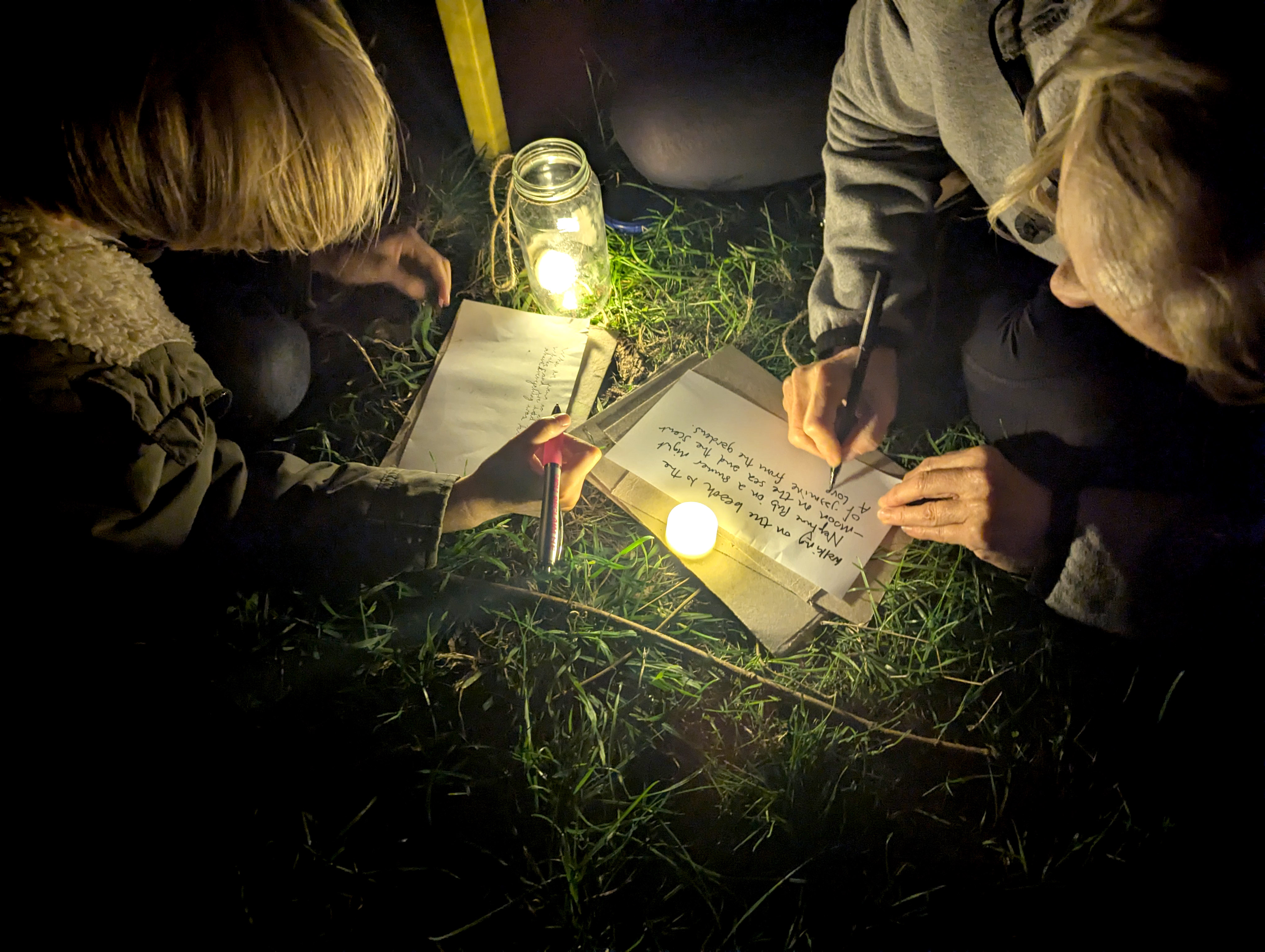
Our design process started like all our other projects, with research, brainstorming and initial concept ideas. We then took these starting points into our conversations with the team at Poole Museum, talking through how these fit into the brief and our plans to move forward with our designs. Throughout the process, we pushed for multiple site visits to help keep our knowledge of Scaplen’s Court history fresh. This was made possible by the museum’s historian, Gary, who provided us with plenty of historical facts about the building itself and Poole town. The site visits enabled us to refine our concepts and keep our target audience in mind.
The development of our booklet was highly collaborative between ourselves, university lecturers and the Poole Museum team, which provided us with multiple opportunities to collect constructive feedback and develop our design strategy moving forward. We prioritised researching accessibility for children, looking at both primary and secondary, and asking teachers (industry professionals) about how to approach the young audience.
We were so excited and happy to have won the brief, especially as it was our first live brief. We were so grateful to be given the opportunity, and to have won it was just a bonus! Once we did, we were given supportive feedback from both Poole Museum and our lecturers, advising us on what to do next and how happy they were with all the work that we had put in. This left us feeling confident about the work we had produced. It was a really rewarding feeling to see our design outside in a live project.
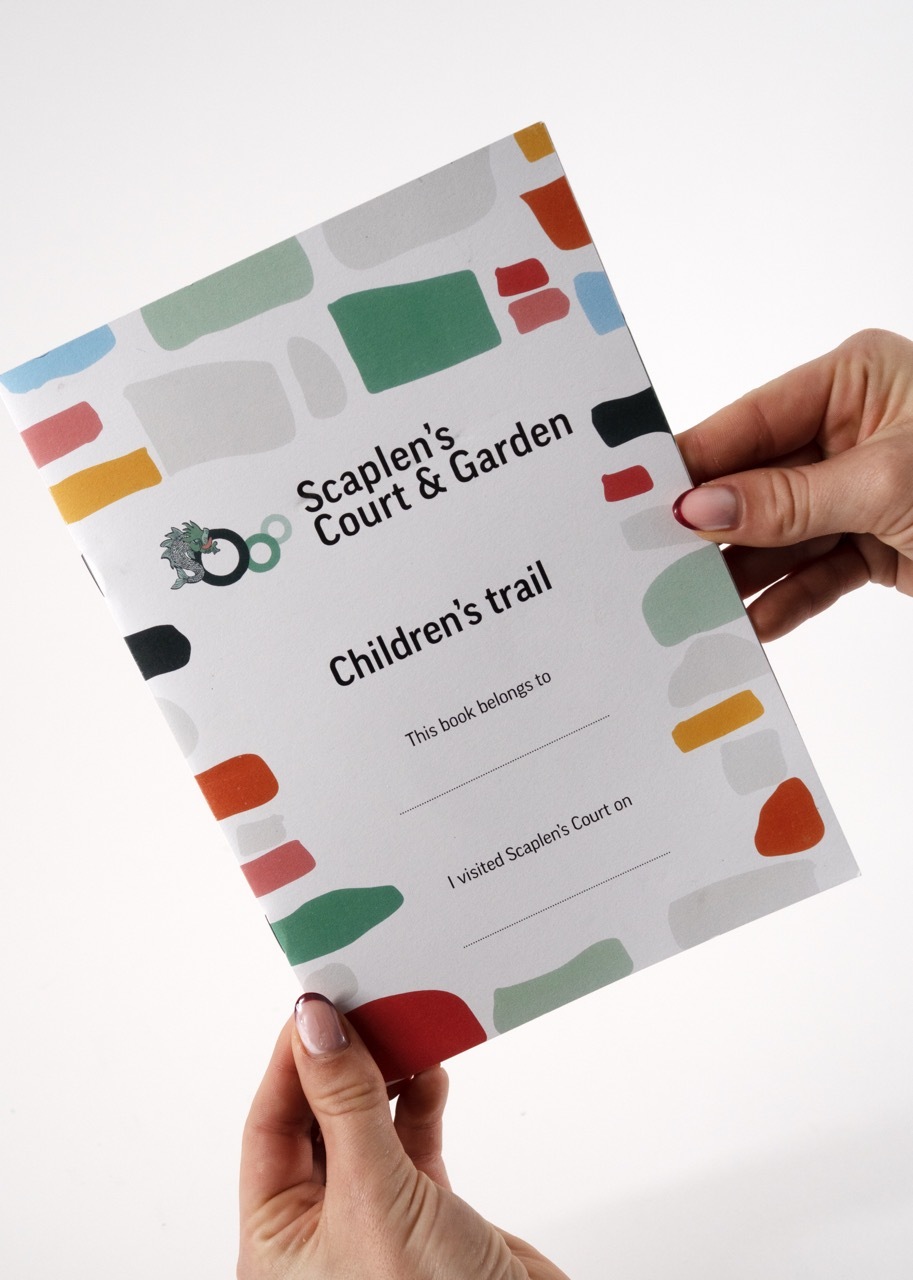
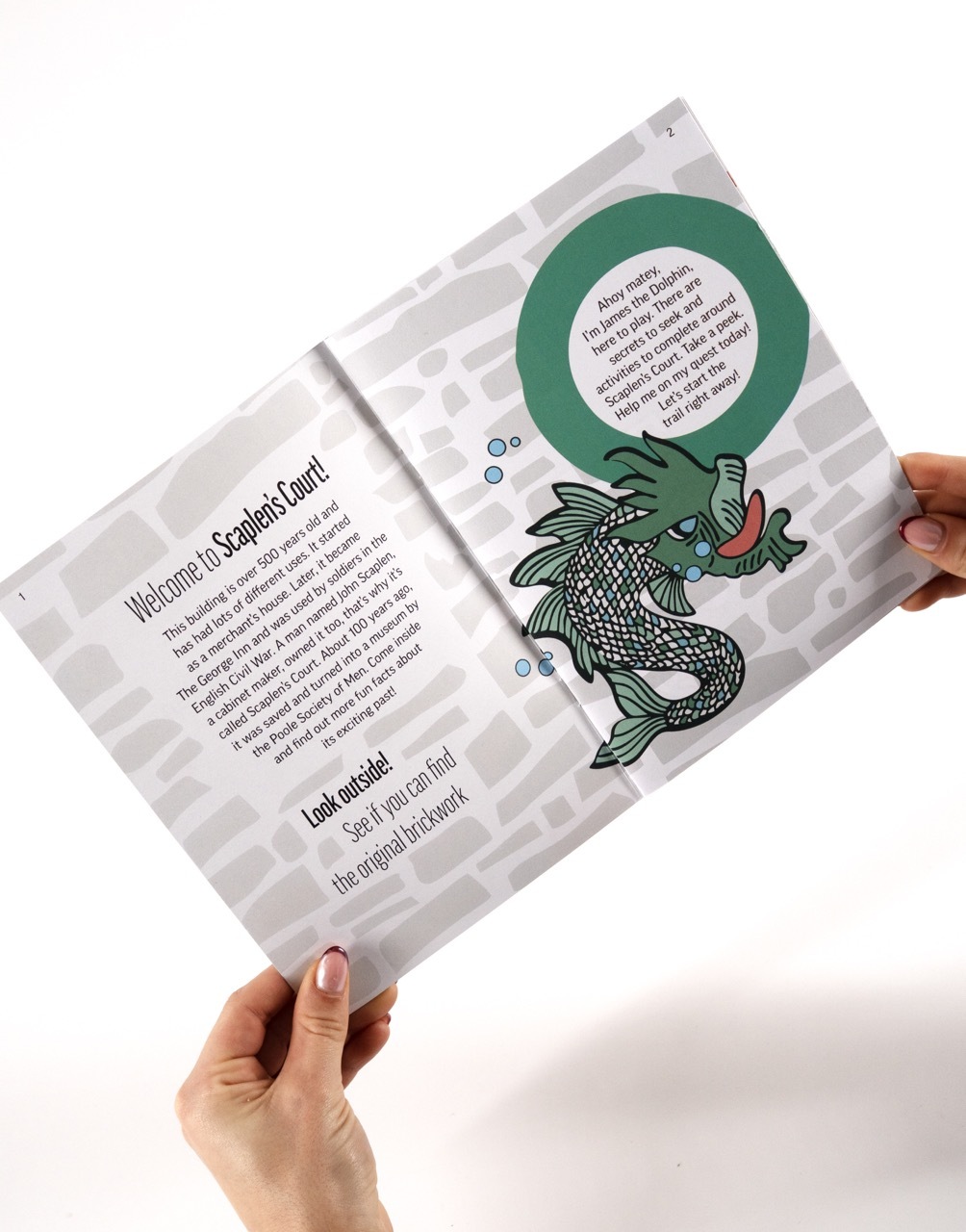
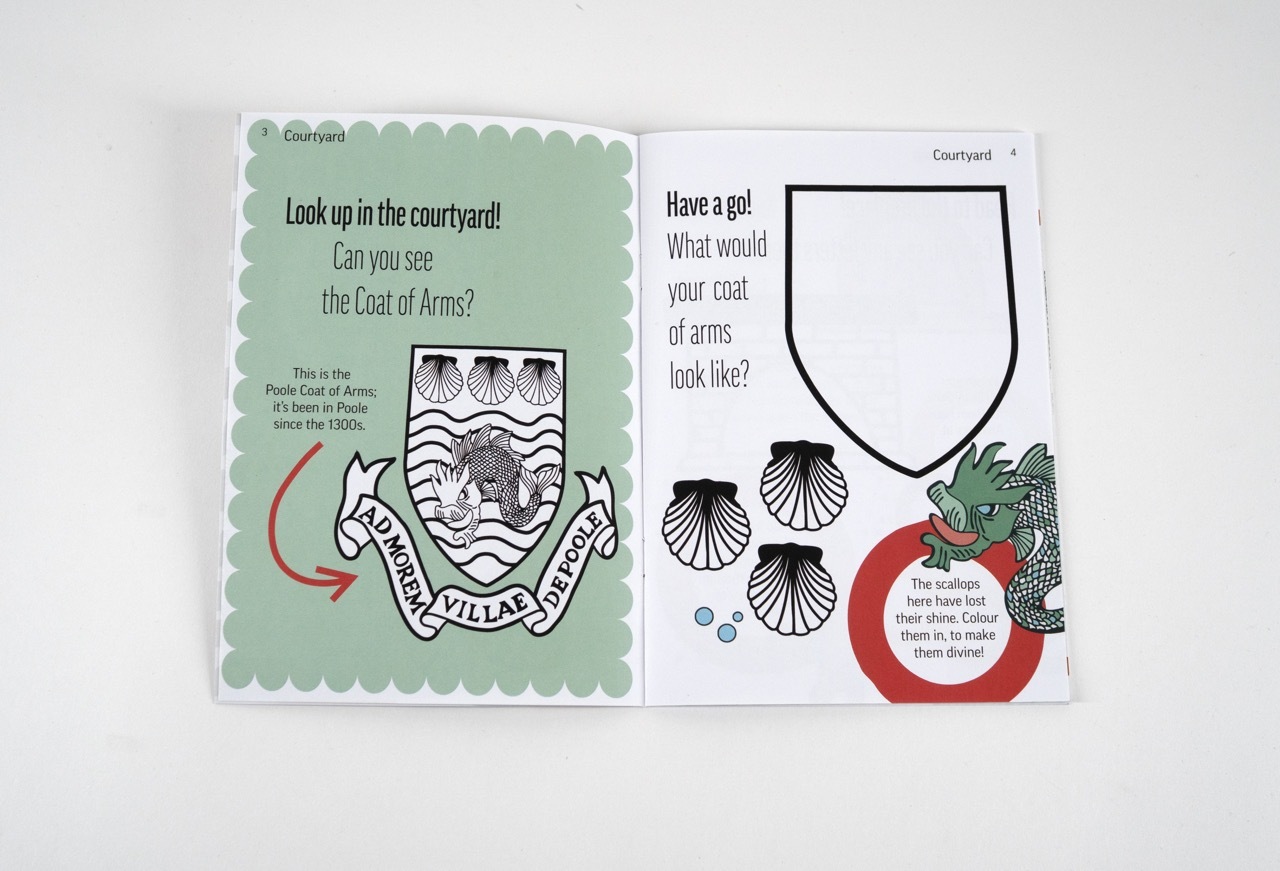
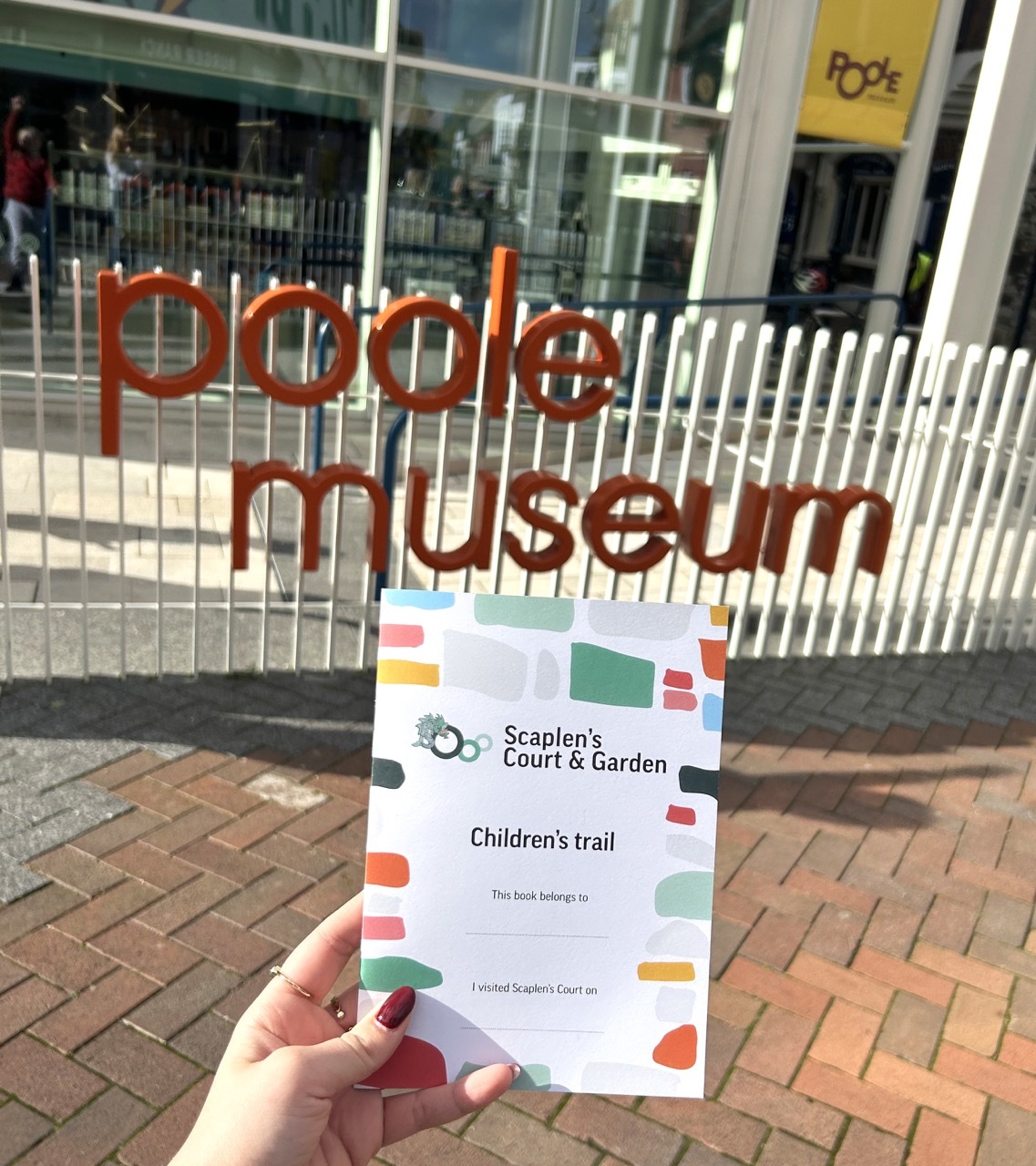
Studying Visual Communication (now BA (Hons) Communication Design and Strategy) has taught us to keep an open mind when approaching a design project. Throughout our time on the course, we have worked on a broad range of projects, which has encouraged us not to shy away from challenging briefs that are out of our comfort zone. We figured out quite quickly that we all have different strengths, and working as a team has let us learn from one another. In the future, after we graduate, we want to take these new skills with us as we head into the industry.
Some advice we would give is not to shy away from projects presented to you, put yourself out there, apply yourself to every opportunity and connect with people. Don’t let the workload put you off as your lecturers, the company and your peers are all there for help and support. Ask as many questions as you possibly can and just communicate consistently so you get the most out of the experience as you can. Live briefs can feel daunting at first, but they are an amazing chance to learn, collaborate and make industry connections.
You can always find projects on the AUB Futures page or even the AUB Futures Padlet for student collaborations or job opportunities. Our advice would be to just take opportunities where you can!