





















A BA (Hons) Photography student at Arts University Bournemouth (AUB) has achieved success off the back of an ambitious, high-risk project. Namely, sending photographic film into space.
Earlier in the year, Tom Liggett worked with the Filmed in Space Company to plan and carry out a series of space launches, sending the film up 121,000 feet into the upper atmosphere, to capture impressions left by cosmic radiation – UV-C rays, muons and other high-energy particles – directly striking the surface of the film.
After two launches, the developed films have come back, with fascinating, positive results.
“Going into this, all I wanted was a speck of dust or something,” says Tom. “Even if it was a completely blank image with a tiny alteration in the film, I would have been happy. But to get these crazy abstract results, which are from black holes and sun radiation […] I was very shocked, but really happy. I’m really proud as well. I’ve done something that is like a dream and turned it into a reality.”
This all began as part of a module on the BA (Hons) Photography course, in which Tom had to take inspiration from past projects.
“I shocked film with electricity in my first year, first term, to see what that would do to the film emulsion. That was a successful project, so I thought ‘let’s see how else I can trace something.’
“I spent a whole term X-raying film emulsion with hospital X-rays to test what type of film would be best to go up to space, and from those tests, determined that colour worked the best.”
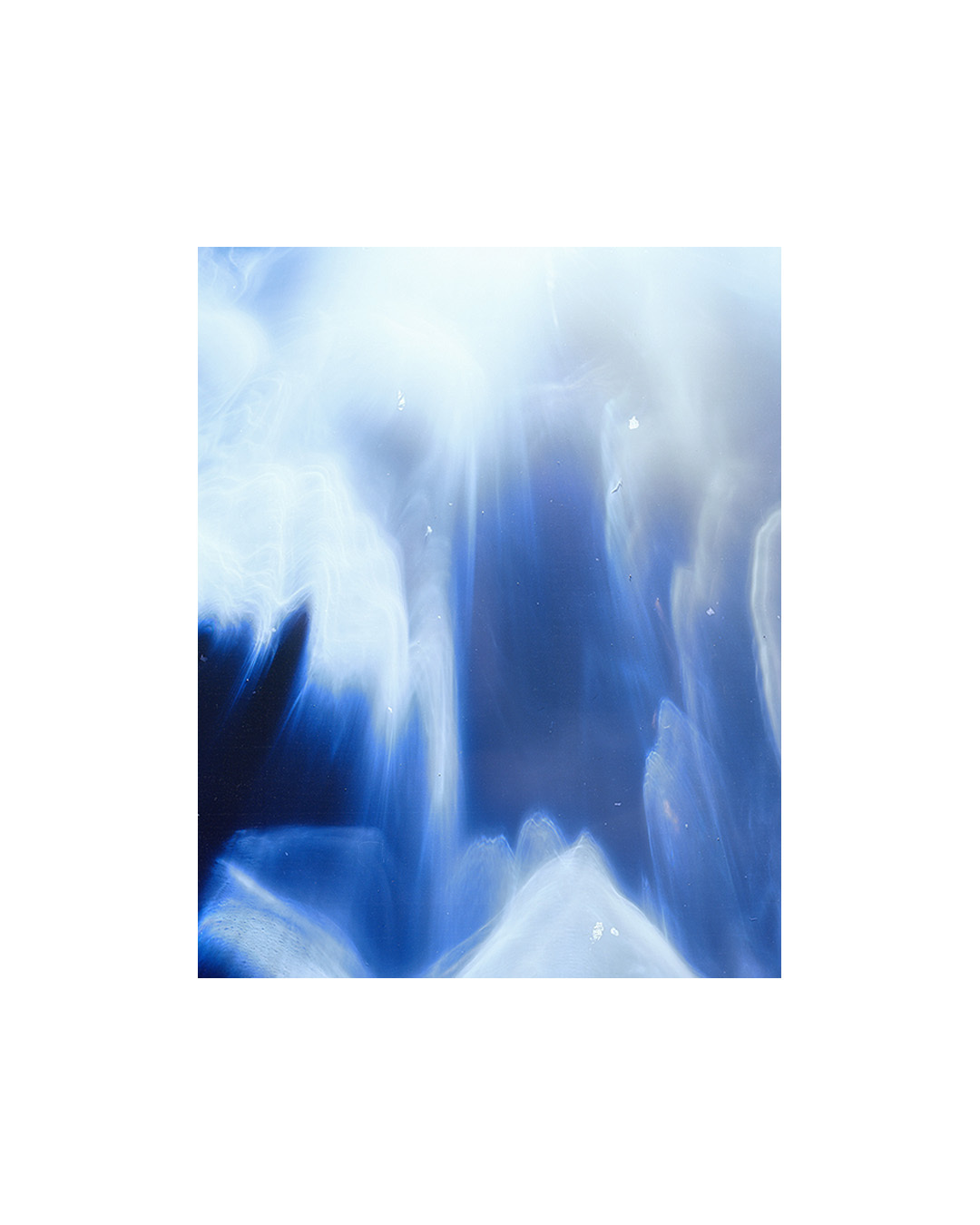
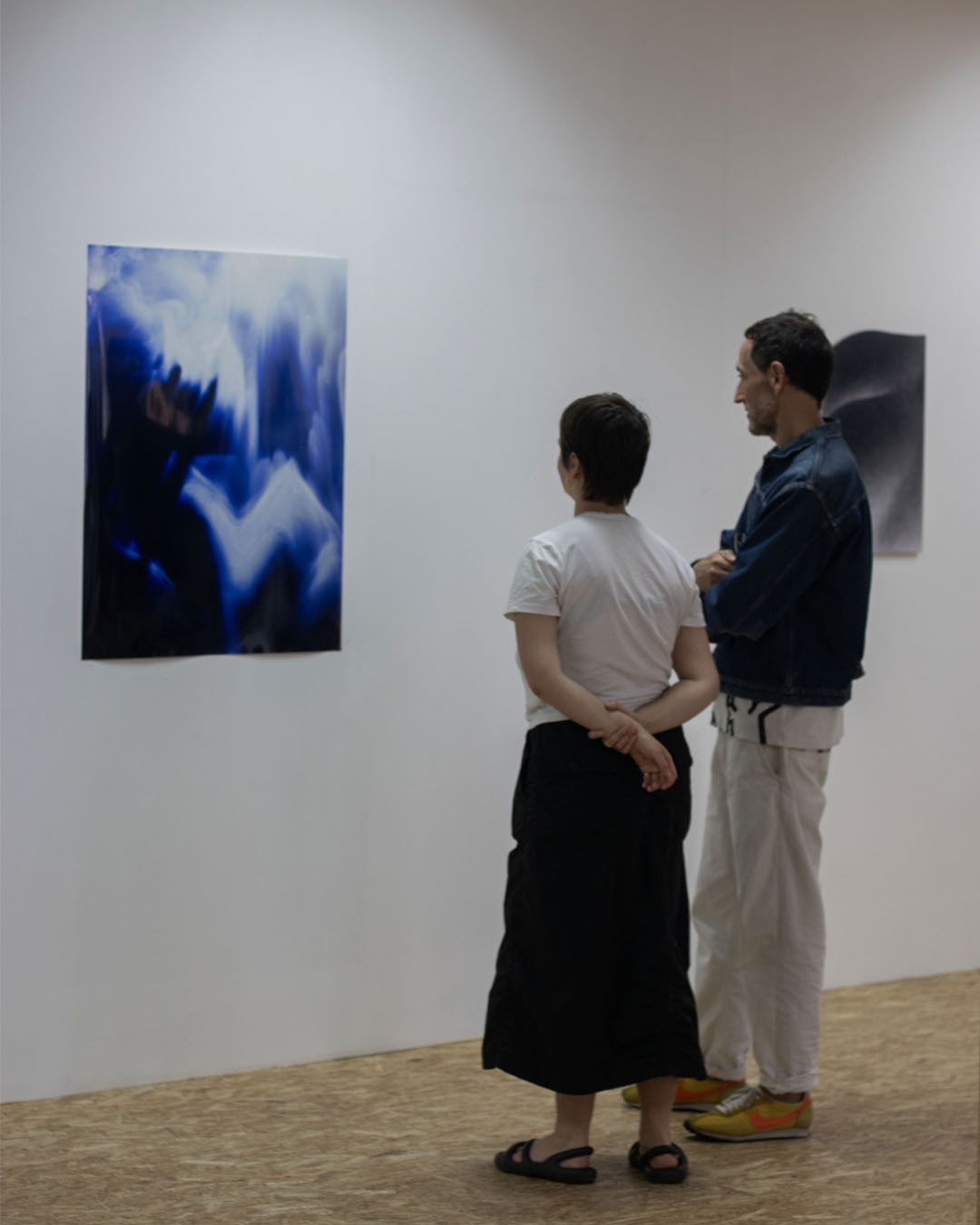
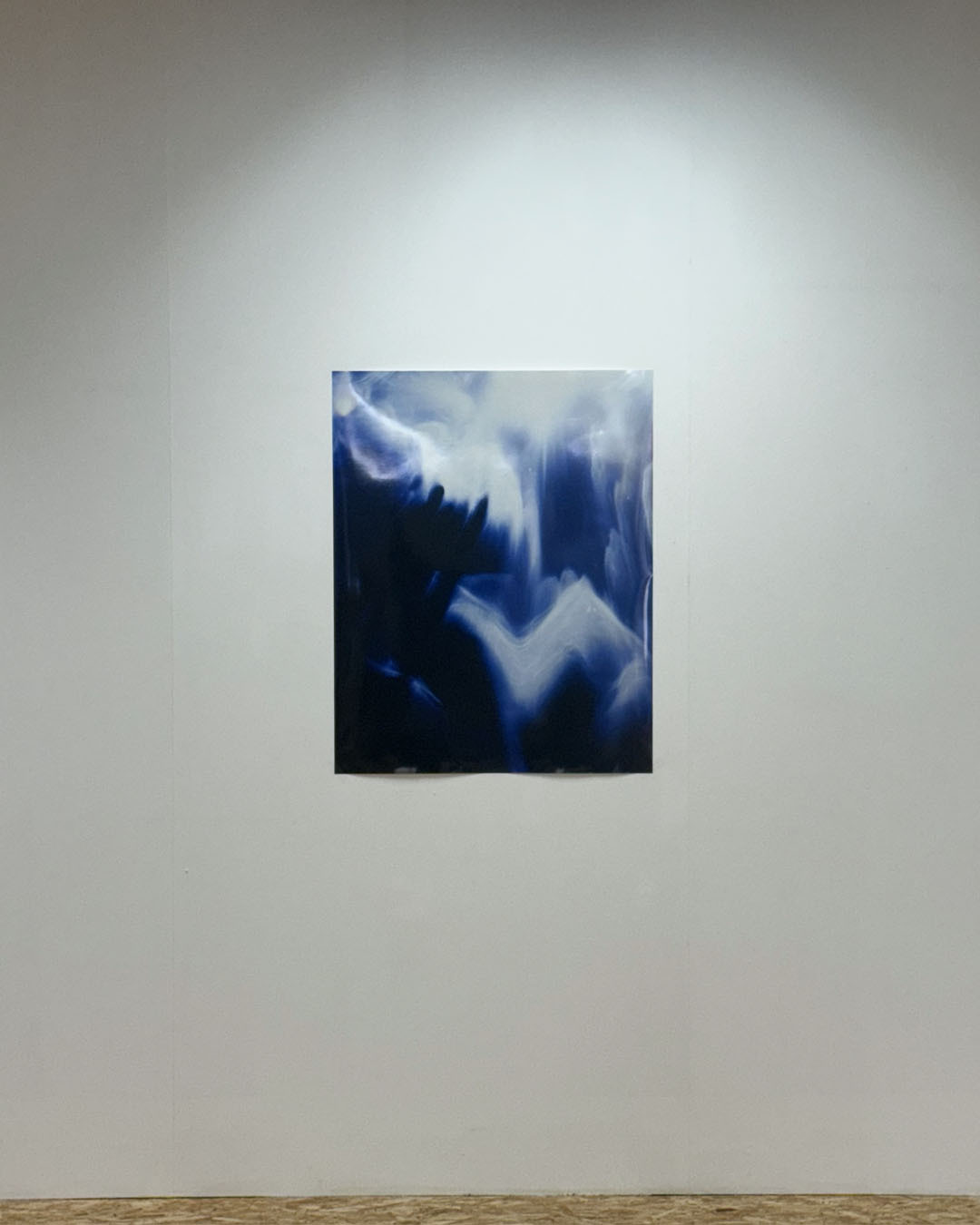
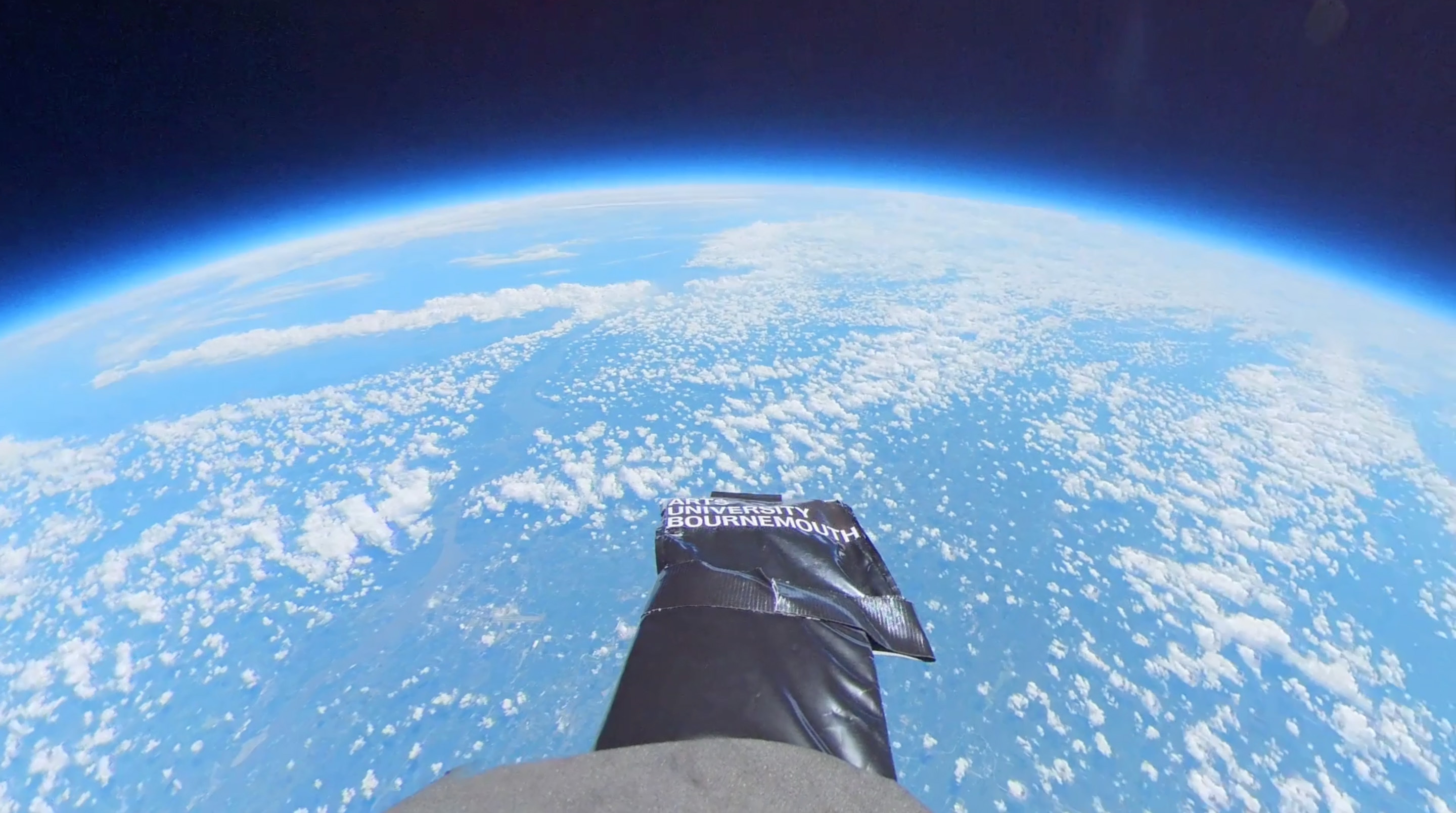
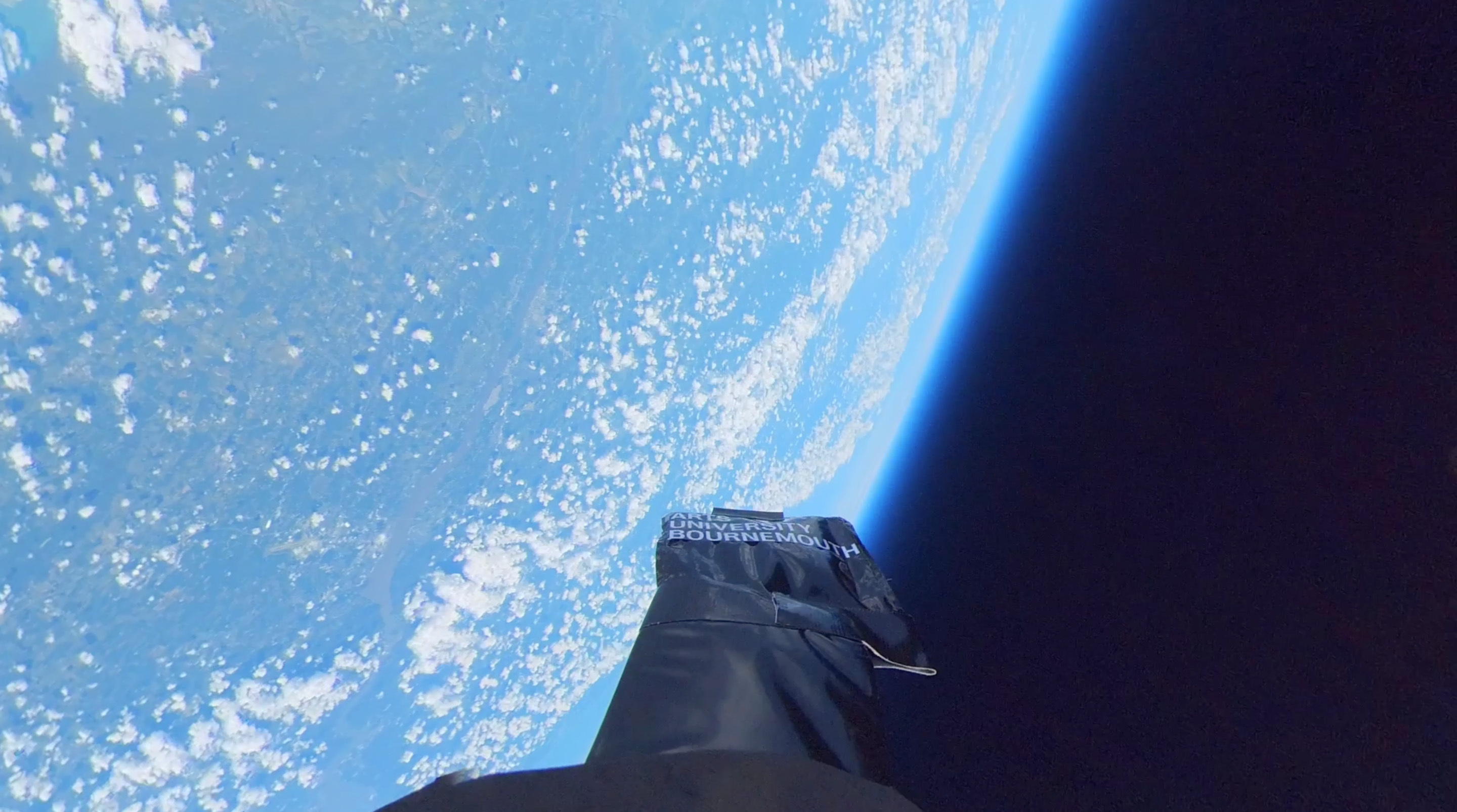
People have been photographing space for decades, but no one has ever directly captured what makes up the compound of space, from the dangerous amount of radiation to the other invisible forces. This has all been etched onto the surface of the film, physically tracing space. This makes Tom’s project, Helios, the first of its kind.
“Everyone on the course is very positive and very much like, ‘Do something while you’re at university that’s really expansive’,” says Tom. “Once I come up with an idea, I think I need to do it then and there, because I might not have the opportunity to do it next year.”
As he heads into his third and final year at AUB, what’s next for Tom and his project?
“There’s interest in sending a massive sheet of film into space,” he says, “maybe A3 size? That could be really interesting.
“I’d also like to go higher. These things are going to 120,000 feet. I’m about to contact Blue Origin and SpaceX, to show them these results and ask them, ‘Would it be possible to attach something to the top of your rocket ship?’ This is crazy, but anything is possible if you go for it. Or maybe impossible. You just have to find out.
“I couldn’t be more complimentary of [the training at AUB] – I can’t recommend it enough. The technicians and lecturers, the amount of work they put in and how influential that is on people. I’ve learnt more in two years than I have in 20 years of my whole life. So much technical knowledge that whatever style of photography you do, it’ll be massively impactful after university.”