
























You are using an outdated browser. Most of this website should still work, but after upgrading your browser it will look and perform better.
- Home
- Postgraduate Courses
- MA Fine Art
- Course details
MA Fine Art
- Mode of study: Full-time
- Study location: AUB Campus
- How to apply: Apply directly to us
MA Fine Art course details
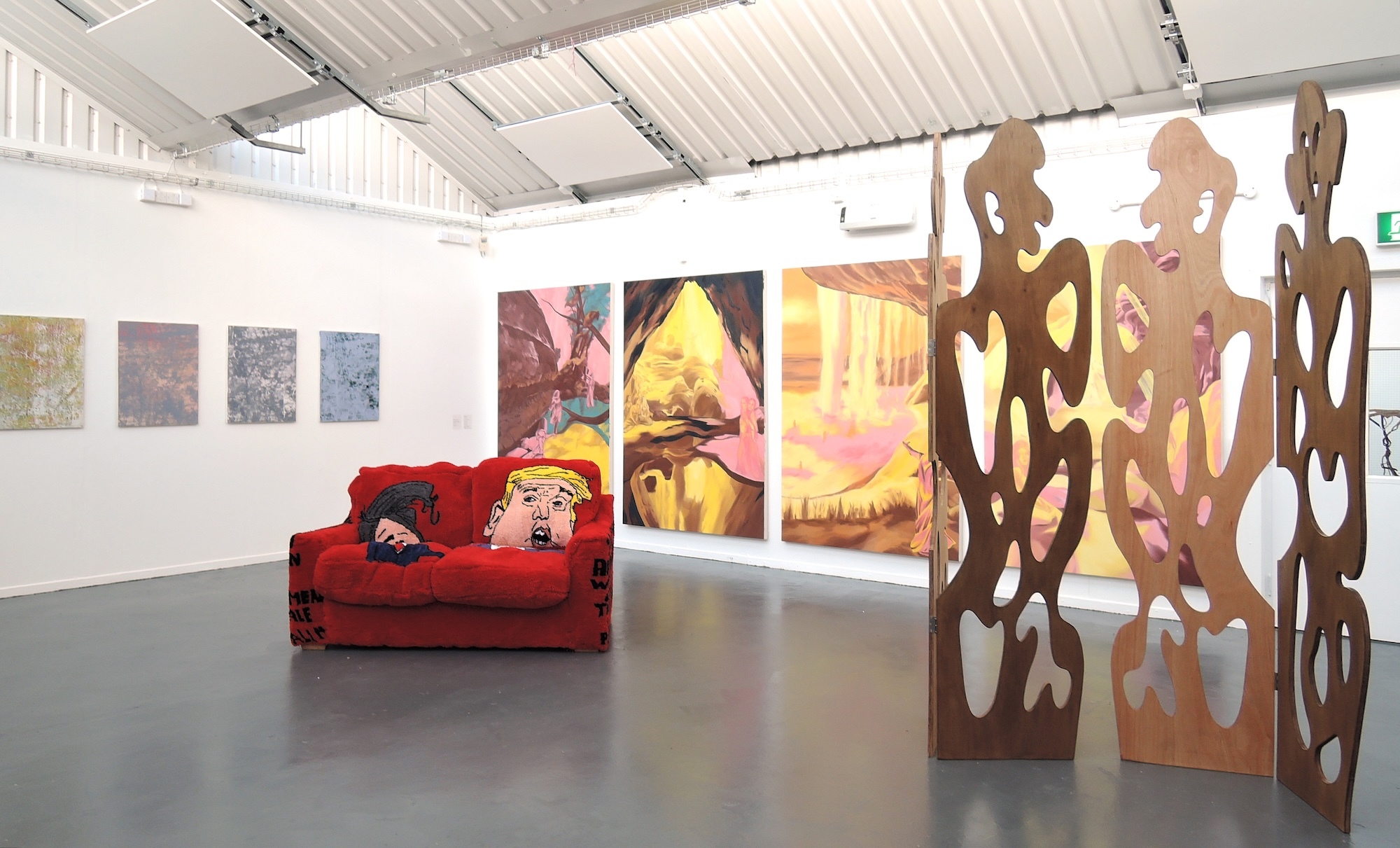
This course builds on the longstanding reputation of Fine Art at AUB as a specialist art and design university renowned for shaping student employability. Whether aiming to exhibit or curate in contemporary galleries; work in the public domain; engage in social art enterprise; teach in academia; or pursue further research, individual aspirations are enabled. MA Fine Art alumni are agile, confident, robust, autonomous, and impactful creatives, well-equipped to face the complex contemporary art climate.
Learning how the rules and systems of art operate, involves testing what it means to bend or break them through experimental studio practice and theoretical enquiry.
Students contextualise their work in relation to other contemporary artists and connect their ideas with wider discourses, issues and debates. By drilling deeply into subjects of current relevance, they aim to expand the limits of what's possible, known or imagined. In doing so, they work towards being the kind of responsible and credible practitioner that makes valuable contributions to society.
The MA Fine Art philosophy is underpinned by two premises. Firstly, that creativity isn't a talent that we're born with but something that can undoubtedly be learnt; and secondly that artists learn most effectively by doing, by engaging in activity that's meaningful to them, and then reflecting upon that experience.
The open-ended nature of the discipline is reflected in an emphasis on investigative studio practice. A Fine Artist may know ‘how’ or ‘why’ they're going to work in a certain way but can't predetermine ‘what’ the final product will be, or how others will make meaning from it.
The distinctive features of MA Fine Art at AUB include:
- A synergy of student cohorts comprising multifarious disciplines, professional experiences, ethnicities, dispositions, life circumstances and neurodiversity are shaped into relevant and impactful communities of contemporary Fine Art practice.
- Focus on autobiography as the launchpad for a reflexive reassessment of artistic and creative roles, responsibilities, boundaries, discourses, and methodologies.
- Foregrounding what socially engaged art practice can ‘do’ as a mode of research for gaining understanding and offering up new perspectives of value to oneself and others.
MA Fine Art is structured around three 60-credit units, as consecutive and equally weighted phases of study:
- Master's 1: Deconstructing Thinking and Practice
- Master's 2: Navigating Content and Context
- Master's 3: Resolving Audience and Impact
Master's 1: Deconstructing Thinking and Practice
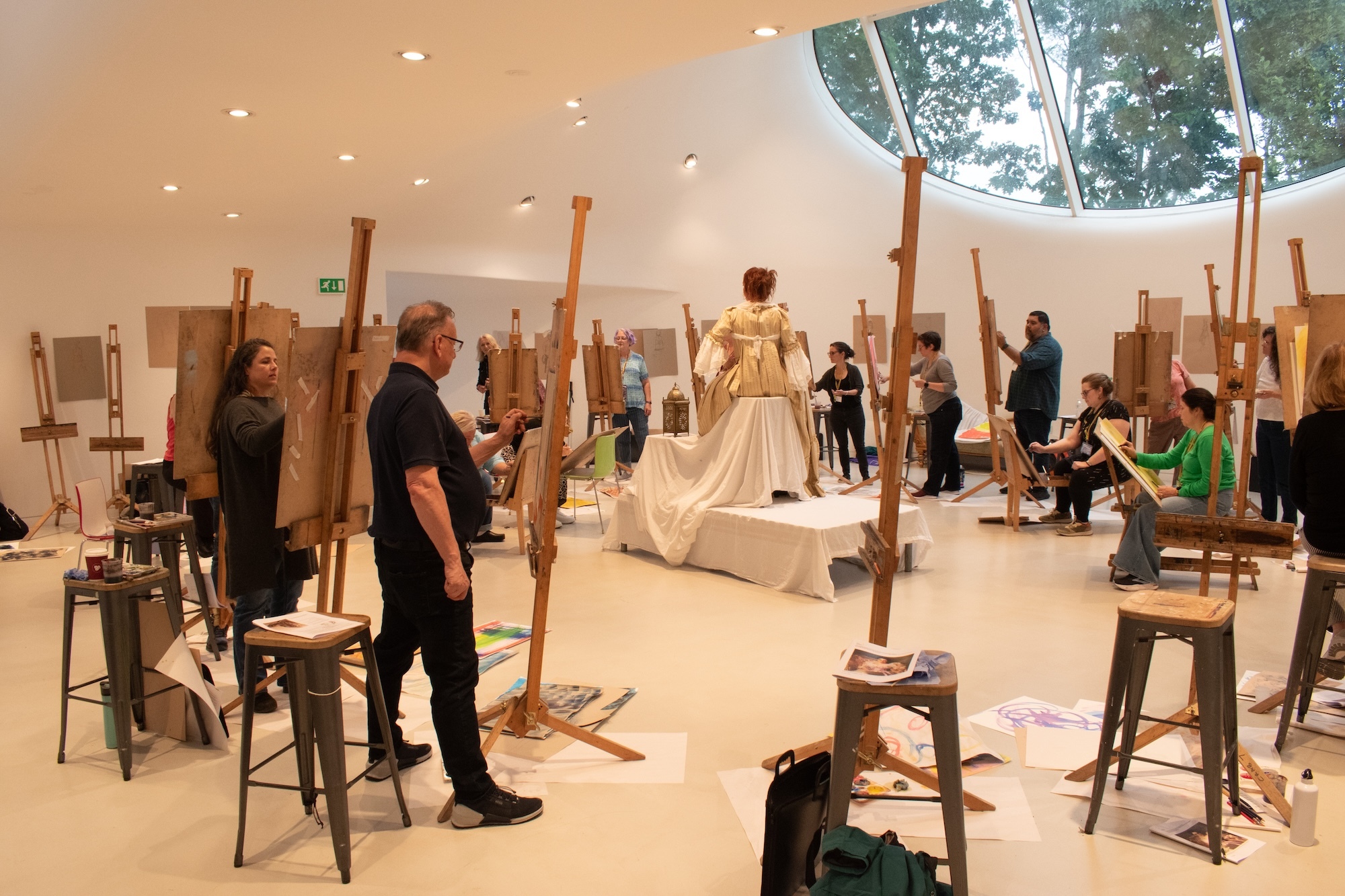
The first unit launches studio coursework with an experimental phase of study that challenges pre-existing understanding of artistic materials, methods, and contexts. Short projects driven by thematic provocations revisit the fundamentals of Fine Art thinking. Light-hearted and fast-paced, this unit dispels self-consciousness as developmental responses are regularly documented and constructively discussed. Although some properties, processes and strategies may already be familiar, analysis of their relevance for oneself and others is encouraged.
Master's 2: Navigating Content and Context
This unit aims to define subject-matter, intentions, and research parameters in relation to context. In launching a major body of work to be finalised in Master's 3, you're encouraged to survey existing practices, literature, concepts, theories, and enquiries of relevance to an emerging subject focus. The approaches of others are repurposed as modes of gaining understanding and generating new knowledge around one’s own concerns grow a stronger sense of artistic identity and responsibility. Gradually taking ownership of planning, testing, promoting, and presenting work helps build a distinctive professionalism in which individual personality, interests and audience meet.
Master's 3: Resolving Audience and Impact
The final unit emphasises the findings, function and coherence of outputs that are realised then tested in the public domain through group exhibition and/or publication. It constitutes an ambitious and demanding phase of study investigating the forefront of disciplinary boundaries and pushing the possibilities of artistic roles. The reflexive, self-aware and autonomous habits required to sustain a successful Fine Art practitioner are cemented through increasingly methodical working. A set of opportunities for future practice and research are defined in establishing a position within creative industries.

APPLICATIONS ARE OPEN
Time to take your studies to the next level.
Apply directly to us to begin your postgraduate journey at AUB.

WE'RE HERE TO HELP
Whether you have any burning questions or you just want to find out more about our courses, you can book a one-to-one call with our course team at any time.

AUB SHOWCASE
We're proud of our alumni, and rightfully so.
Explore the incredible work of our graduates in our online AUB Showcase.
Browse work by course, student or theme.
Course costs
The fee you pay AUB provides the necessary equipment and training for you to complete your course.
In most cases, you don't need to buy any specific items of kit before you start the course. You may also choose to buy some items of personal equipment such as a laptop or tablet computer, but this isn't required – desktop and laptop computers are available for you to use in common study areas, including a loan system in the Library.
It isn't possible to be precise about the likely additional costs that you may incur, because this depends on the choices you make and the projects you undertake. The University provides some basic materials, and you'll be encouraged to work sustainably and to reuse materials where possible, but you should still expect to make some financial investment.
For more information, including costs relating to certain courses, visit our Course Costs page.