- Home
- Student Stories
- What’s it like studying a creative PhD?
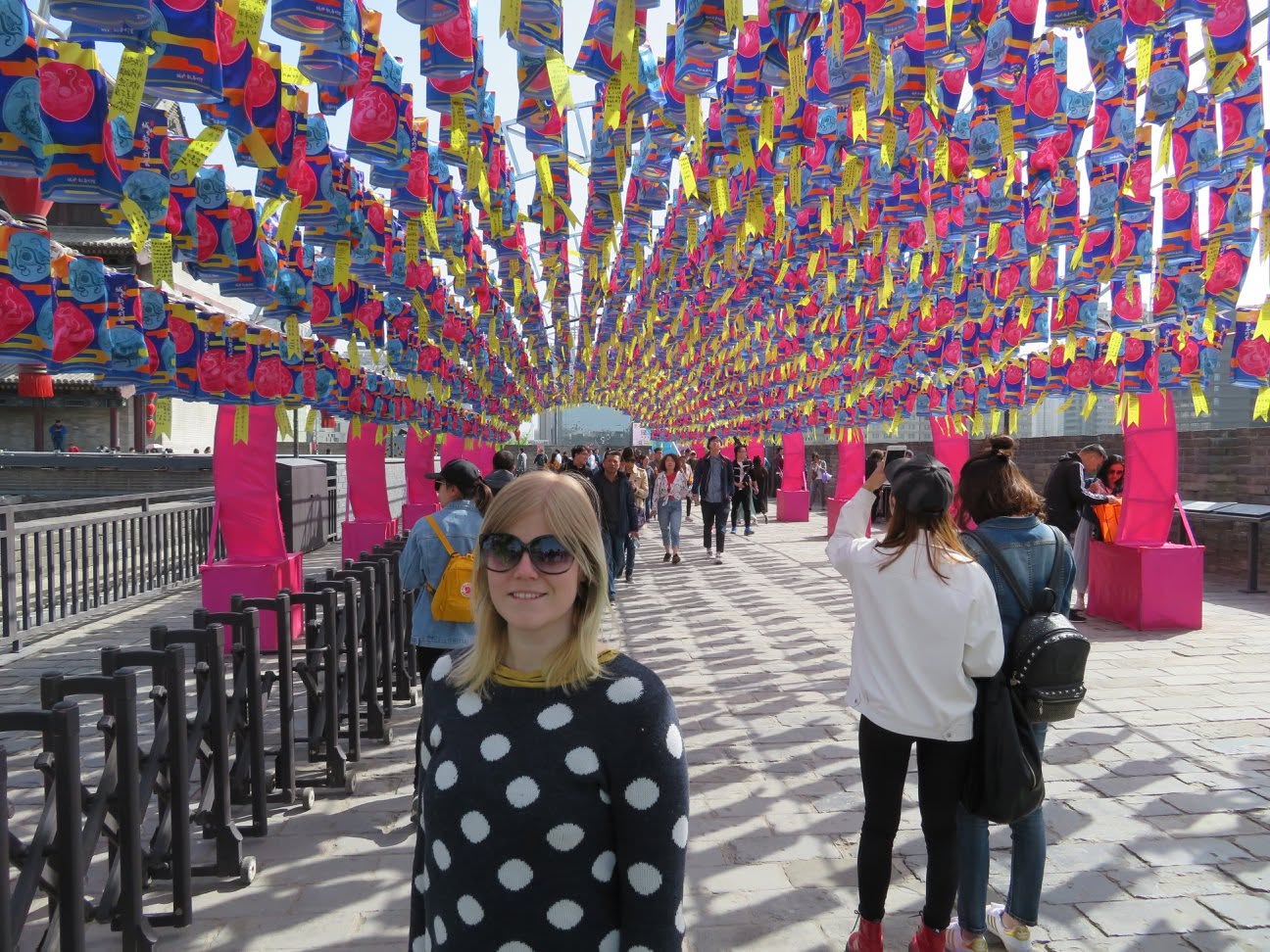
Hi, I’m Charlotte and I’ve just moved into the fifth year of my part-time PhD with AUB. I’m a course leader for a BA Animation programme at a UK-China University partnership and have been teaching in China for around 10 years.
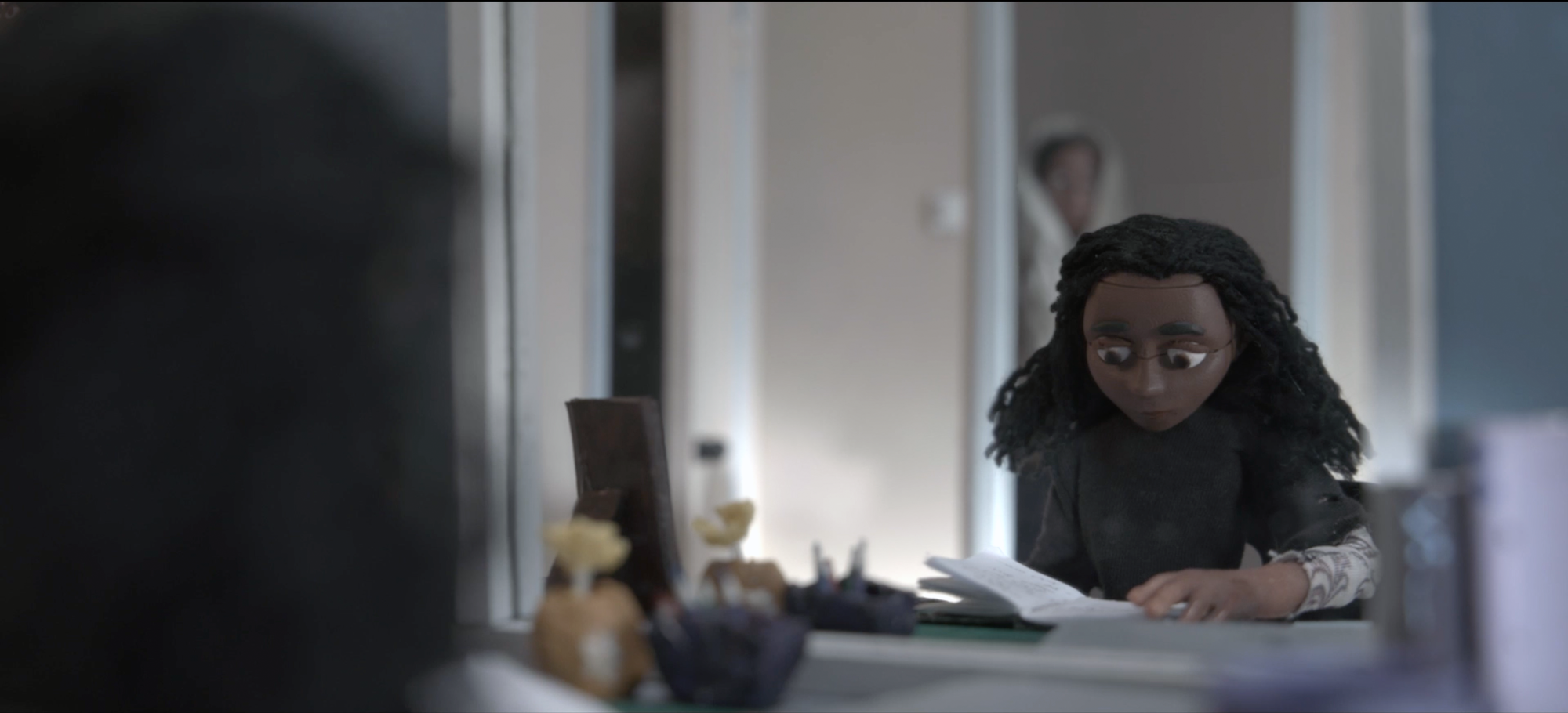
I have loved teaching in China; the students are wonderful, and the food is amazing! China’s rich cultural traditions of craft, performance and ritual, from ceramics and calligraphy to shadow puppetry and tea ceremonies, made me think more about my own cultural heritage and connection to craft. As a stop-motion animator who uses knitting, crochet and other crafting techniques, these experiences subconsciously sowed the seeds of what would become my PhD project, but one particular event solidified it.
Towards the end of 2019, what I thought would be a month’s break in the UK turned into three years as COVID hit. I found myself back in my hometown of Wakefield, West Yorkshire, still teaching my students, but remotely from the UK. This sudden change of situation created an unexpected jolt – a kind of reverse culture shock I was not expecting.
Like many at this time, I was missing human connection as life gravitated towards the online world. I used this time to reconnect with the animation community through online events, including a series of talks on experimental animation hosted by AUB’s Professor Paul Ward. Paul was knowledgeable and approachable, and after the talk I contacted him with questions about doing a PhD. At the time, I wasn’t sure what a PhD entailed, and that horrible internal voice hit: “Do I have what it takes? Do I have the time?” I’d put a PhD on a pedestal – out of reach and only for the most scholarly of people. Paul was reassuring, patient and curious about my experiences and ideas, which helped dampen that negative internal voice. When I returned to China in 2022, I was fully registered at AUB and my PhD was underway.
As a stop-motion animator, my research looks at how stop-motion practitioners form relationships with their tools and materials, and how these relationships shape our sense of creative and professional identity.
The catalyst for my PhD topic came from leaving many of my tools in China whilst I was in the UK. During this time, I had been commissioned to make an animation and found myself in turmoil. I could buy replacement tools; they weren’t unique in a practical sense, but they were mine! The psychological effects of being separated from my tools had creative consequences. I didn’t feel complete as a practitioner without them. In particular, a needle and a set of knitting needles that had belonged to my grandmother, and had been present during all of my projects, were no longer accessible.
This led me to investigate if other stop-motion practitioners also shared similar relationships with their tools. My research approach is divided between exploring my own creative practice and interviews with stop-motion practitioners. This has given me an opportunity to reconnect with my own practice and the broader stop-motion community.
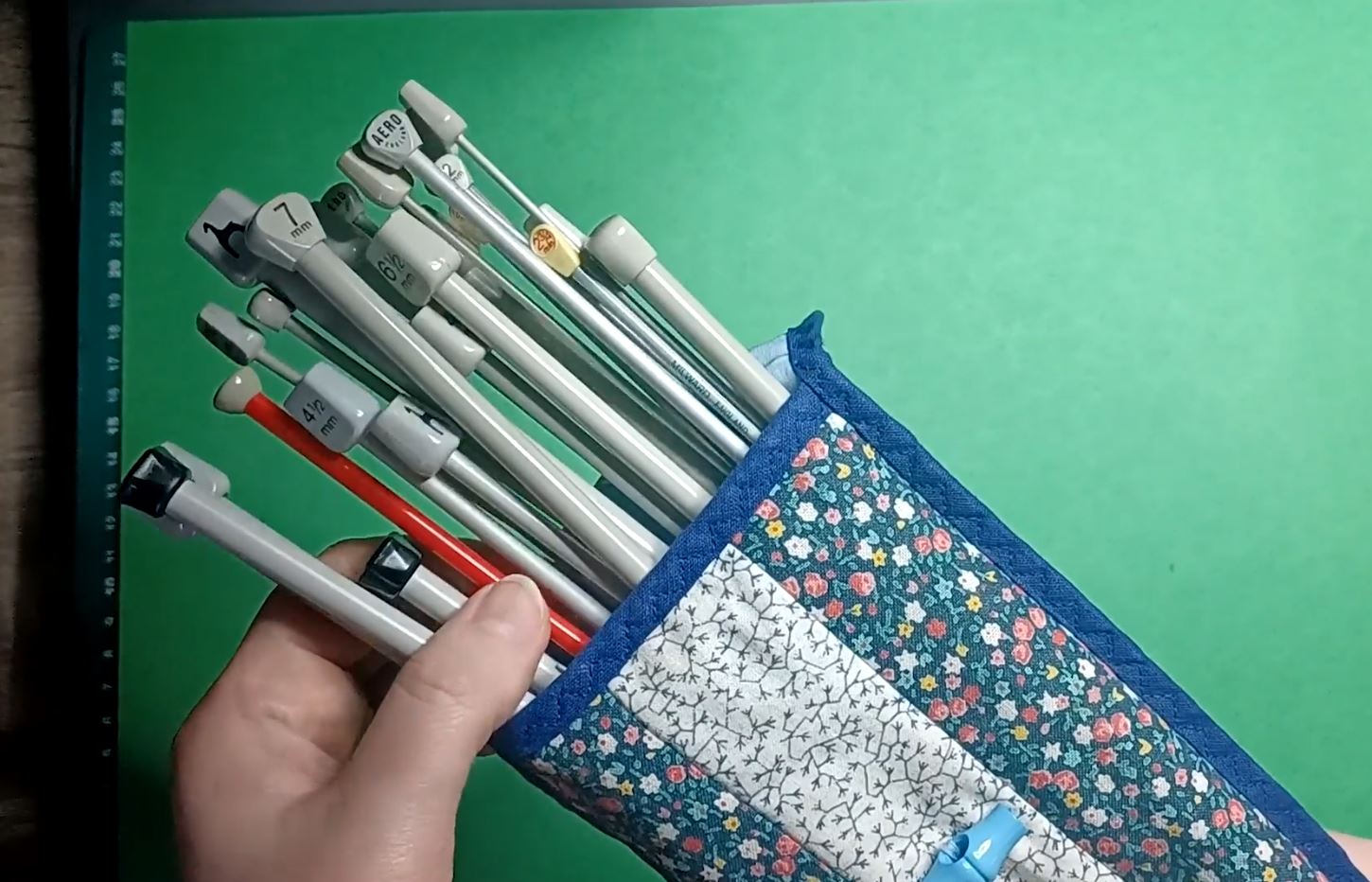
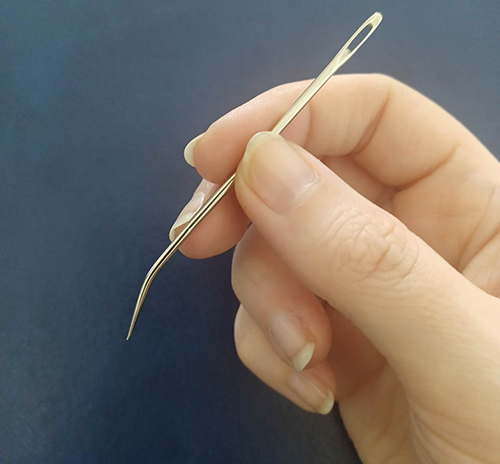
The PhD journey has been a steep learning curve, but I am fortunate to have a supervision team who I’ve felt thoroughly supported by. Since starting, I’ve spoken at conferences and recently had an article accepted by the Animation Practice, Process & Production journal (AP3), a journal I have long admired. I am fortunate enough to already work in academia; my next career goal is to work with postgraduate students. The PhD has placed me back in the position of being a student again, which has given me a fresh perspective and approach to teaching. I have also found that the research skills I’ve acquired during the PhD have enriched my classes and ability to guide students in connecting theory to practice. I now feel part of the animation research community, which has given me access to many exciting people and projects. This again feeds into my teaching.
Over my years as course leader of a BA programme, I have felt myself slip into admin mode with little time to pursue my own creative projects. Doing a creative PhD has provided me with space to reconnect with my animation practice, alongside developing my research practice.
My advice for anyone thinking about doing a PhD is to reach out and have a conversation with the research team and your potential supervisor first. A PhD is a long and involved process and knowing that you’ll have that support is important, especially when those big milestones come up. I’ve found AUB staff to be very approachable and open to talking through ideas and options.
If you are a creative practitioner thinking about doing a PhD, before you allow those negative voices in your head to talk you out of it, have a conversation with someone who supervises creative PhDs. As I mentioned earlier, many of us do put the idea of a PhD on a pedestal and, from my experience, feel unworthy or not academic enough. Remember, when thinking about doing a creative PhD, practice is research; your experiences and knowledge are valuable, and through guidance, you will learn how to synthesise your practice with theory.
Resilience is key. The ability to take a wrong road, back up and keep going is a vital part of the process. Also, what you learn during that misstep is never wasted. I’ve shelved several theories that I ended up later dusting off and passing on to my students.
It all starts with a conversation.