
























Experts from Arts University Bournemouth’s (AUB) Innovation Studio have played a pivotal role in creating the most complete 3D digital record to date of the Great Hall at the City of London’s historic Guildhall.
Working alongside 3D project lead Thomas Flynn and digital heritage venture Cradle of English, the AUB team utilised state-of-the-art spatial technology to capture eight centuries of architectural mastery, heraldry, and civic history inside the Grade I listed venue.
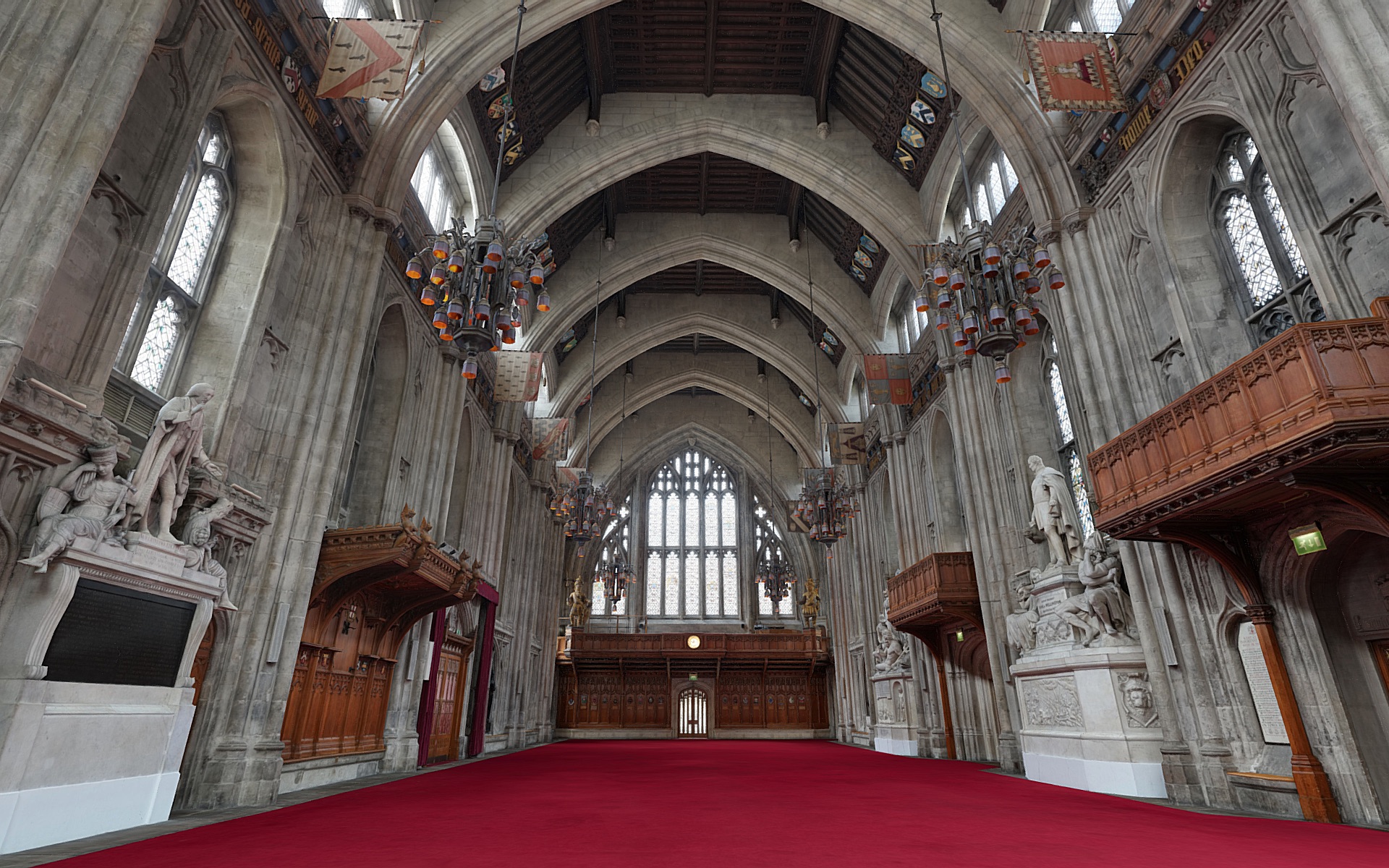
The Guildhall has stood at the heart of London’s municipal governance for over 800 years, with documentary evidence suggesting a hall has existed on the site since at least the early 12th century. The current Great Hall dates back to the 15th century, surviving both the Great Fire of London in 1666 and the Blitz.
As the administrative seat of the City of London Corporation, a municipal authority operating continuously since Anglo-Saxon times, the space is steeped in political history, acting as a gateway to English democratic development.
Today, its vast interior remains festooned with historic heraldry, monuments, and statuary, serving as a layer-upon-layer record of the nation's civic past.
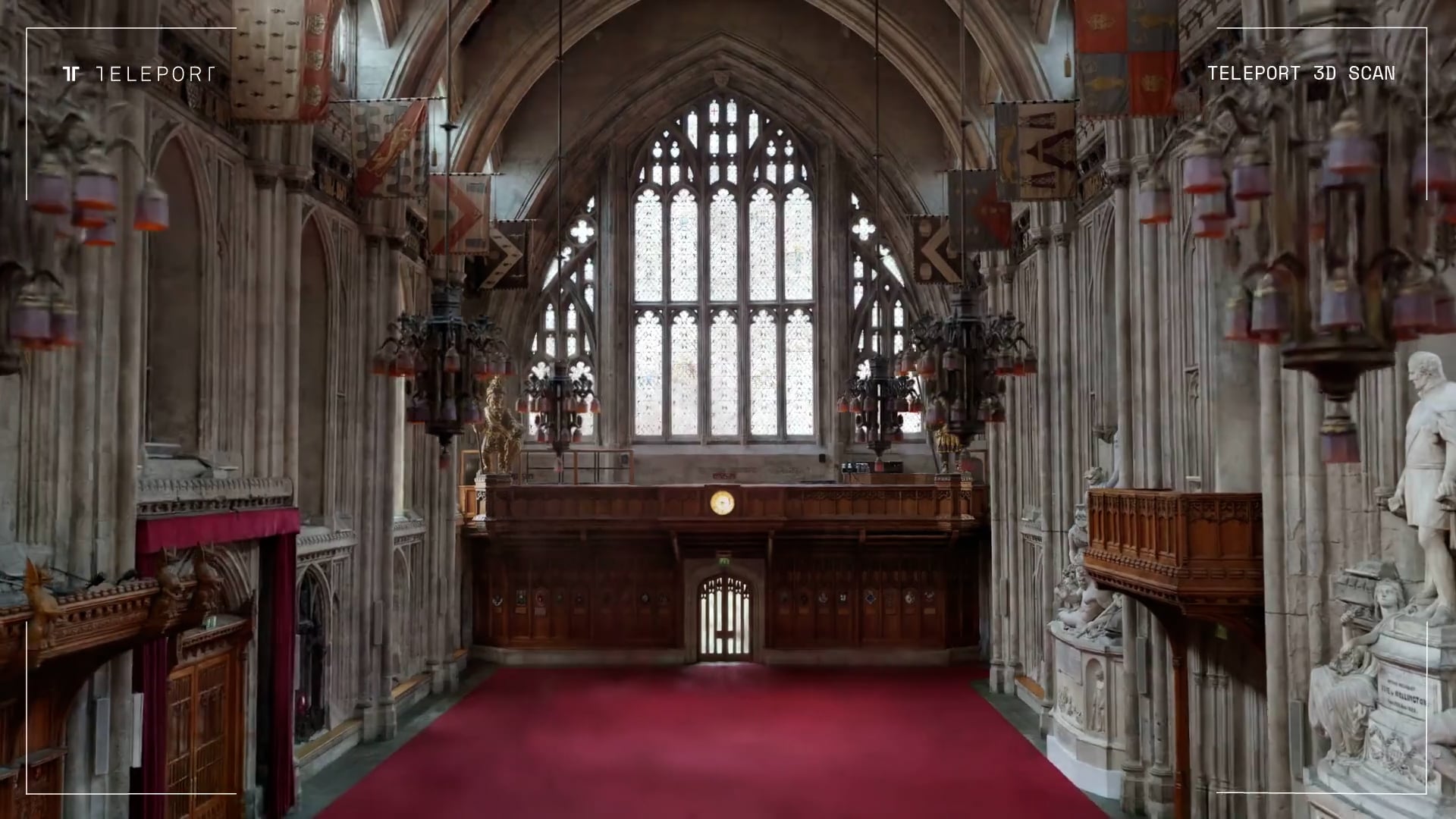
The Guildhall 3D project combines high-fidelity laser scanning and photogrammetry to build an intricate ‘memory twin’ of the 153 ft-long, 85 ft-high hall.
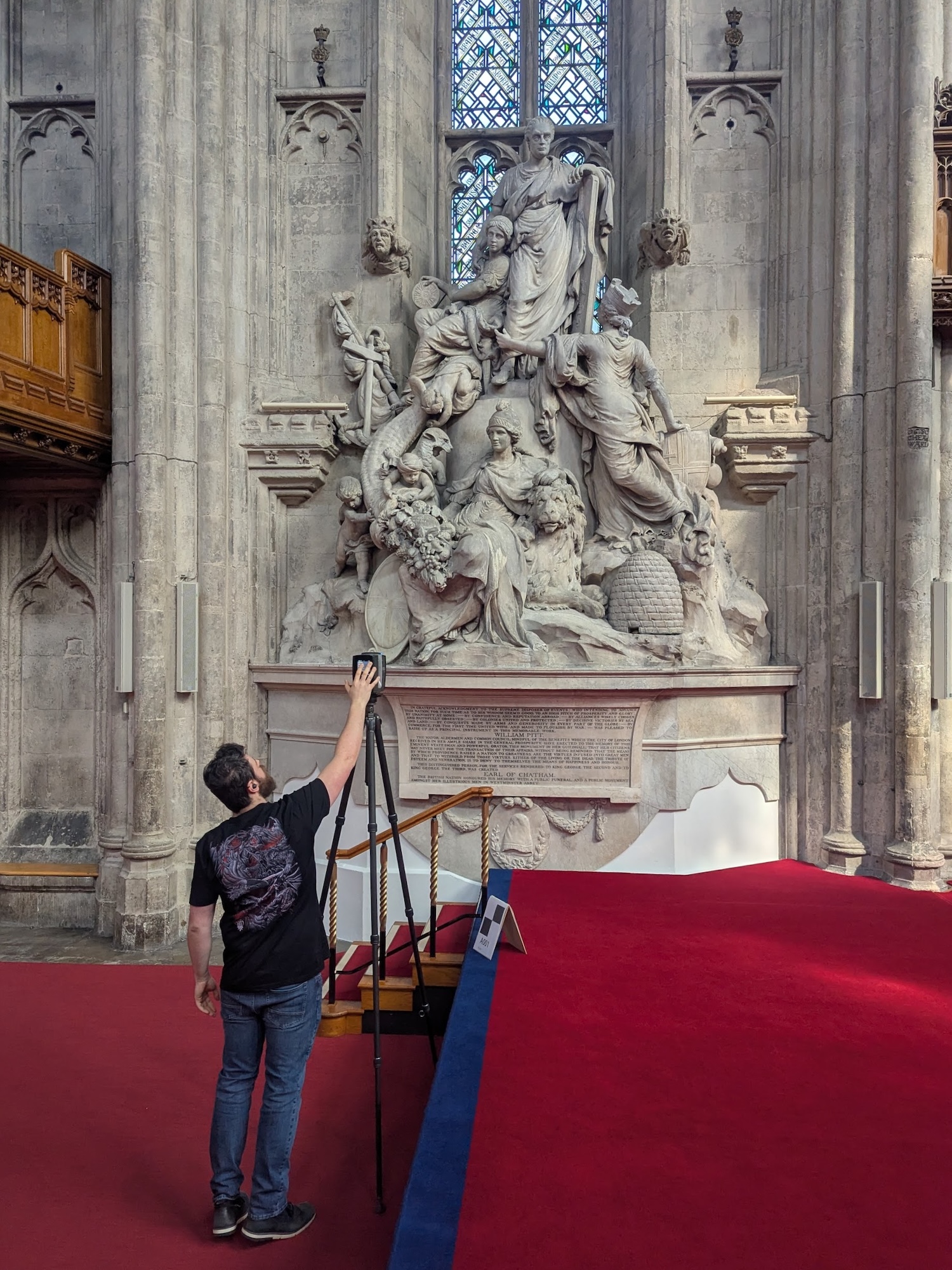
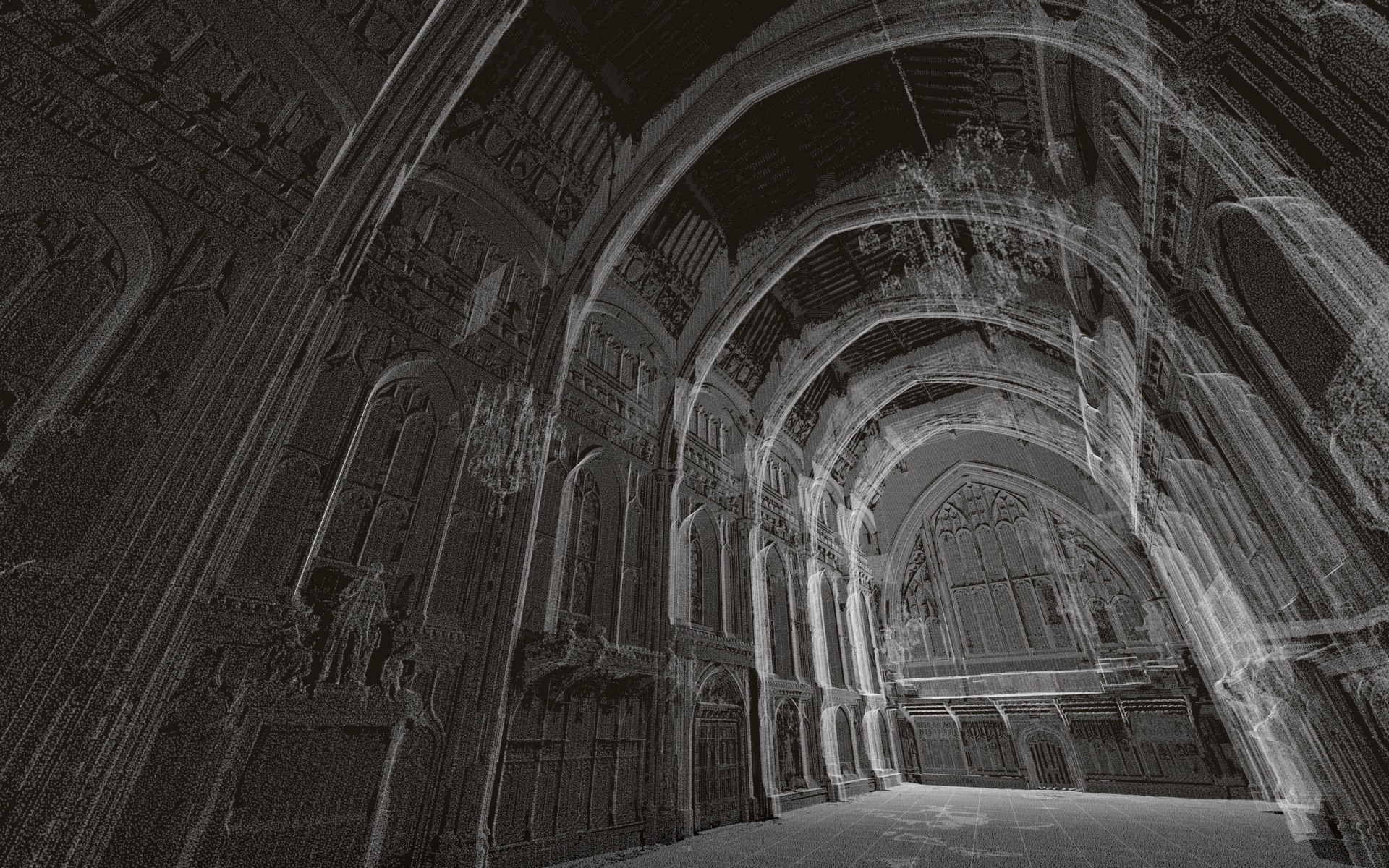
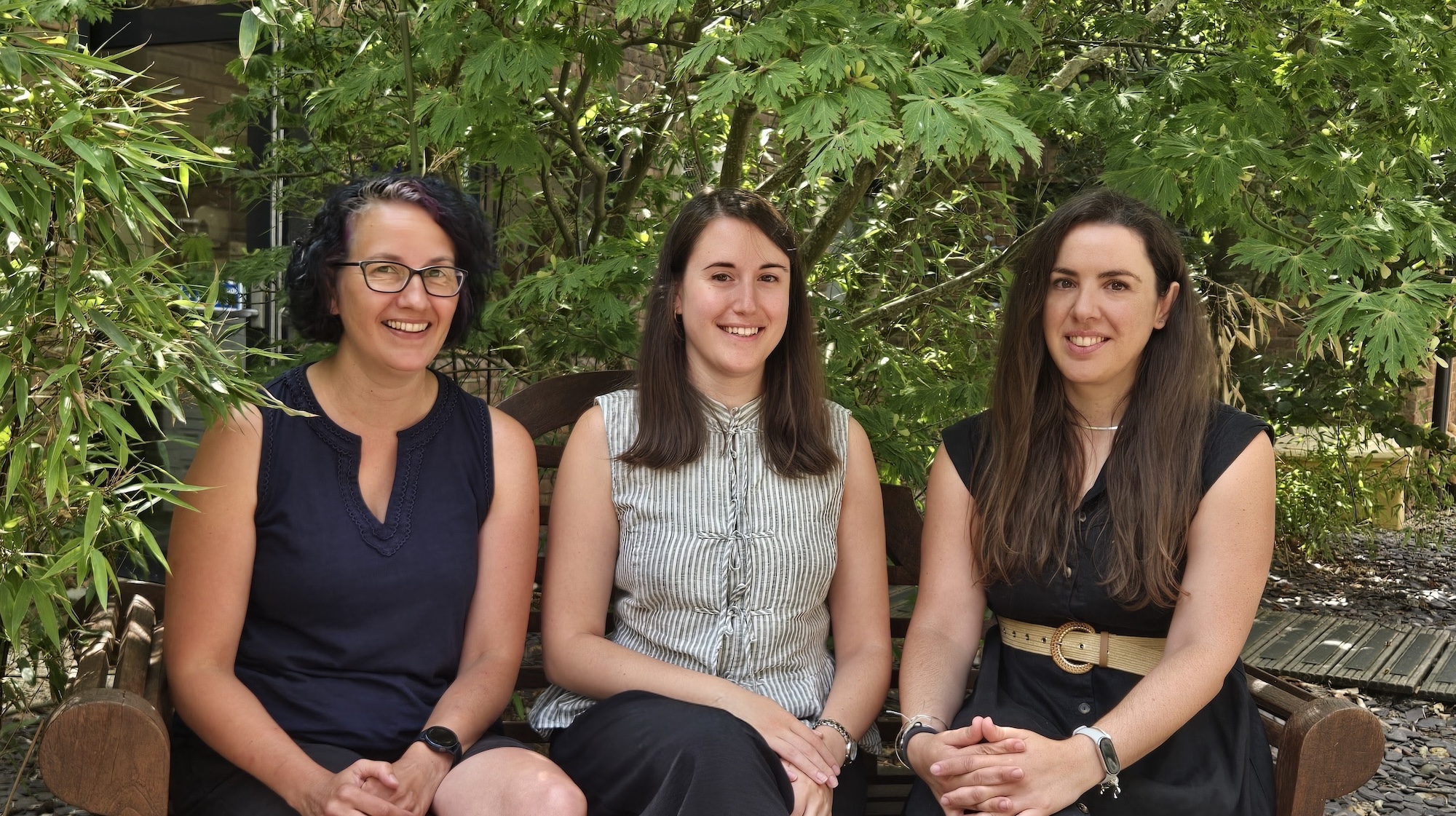
To achieve the precise architectural geometry required for a space of this scale, the Innovation Studio’s Rob Hill, David Speare, and Jordan Cutler led the terrestrial laser scanning on-site in London.
Armed with a FARO Focus laser scanner, the team worked under strict venue time constraints to capture millions of spatial data points, navigating complex obstructions such as historic banners, chandeliers, and high window bays.
The resulting laser data was merged with thousands of high-resolution photogrammetry images to produce a multi-million-polygon 3D mesh, complete with 8K texture maps.
“When looking for the technical support to capture a space as massive and complex as the Great Hall, I knew I wanted to work with the team at AUB’s Innovation Studio," says Thomas Flynn.
“Rob, David and Jordan brought incredible expertise and energy to what was a demanding on-site scan under tight time constraints. Combining their precise laser scan data with high-resolution photogrammetry has given us the highest quality 3D record of the Guildhall ever created, establishing a rich foundation for both historical research and future immersive storytelling.”
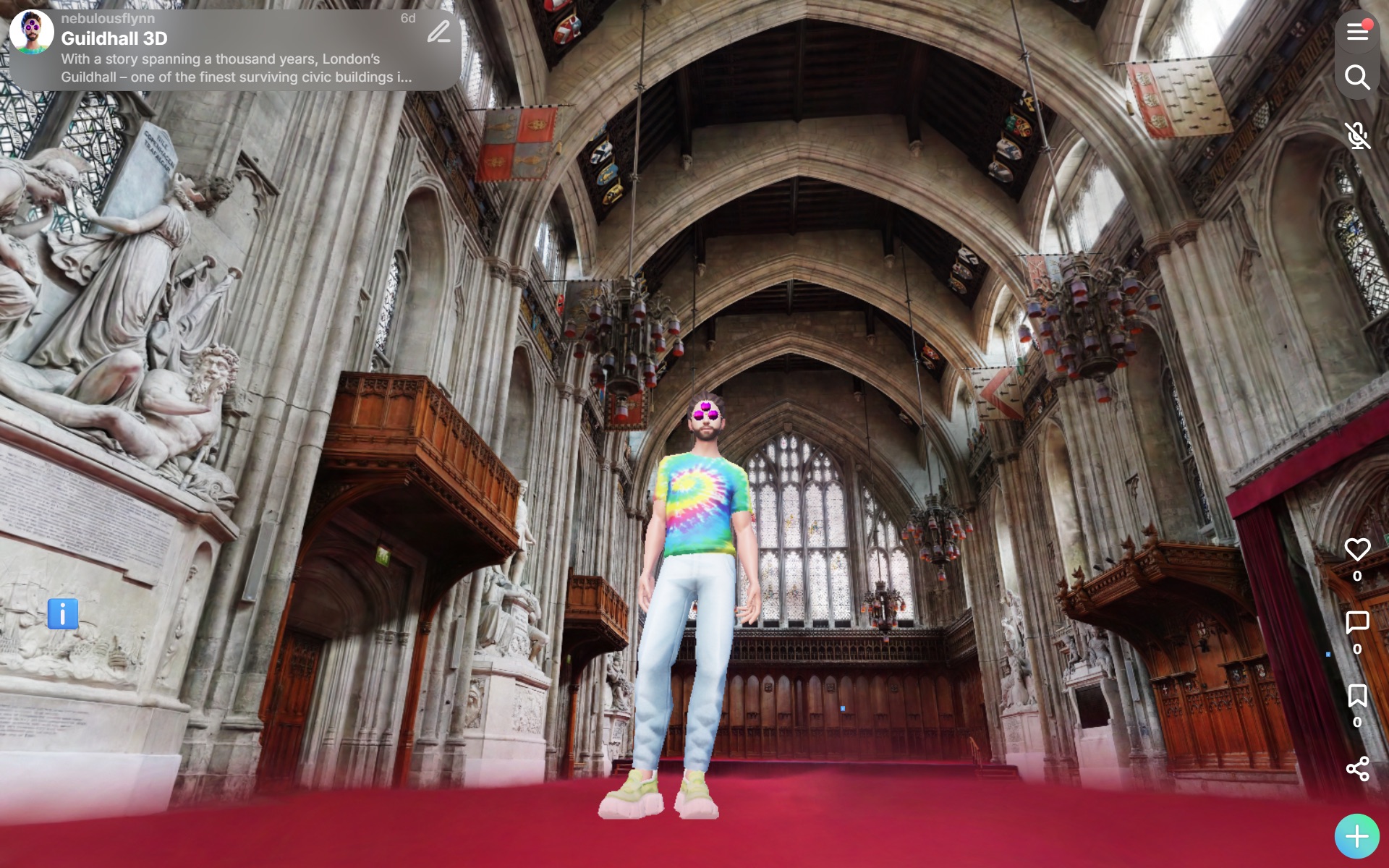
Beyond creating a visual resource, Guildhall 3D embeds a ‘history-first’ approach. The digital twin features 23 detailed annotations highlighting key historical elements, backed by extensive research from historians and archival specialists.
The high-precision dataset contributed by AUB is also supporting wider international cultural initiatives. The combined output scan data has been integrated into pan-European digital heritage frameworks, including EUreka3D and Europeana’s TwinIt! campaign, ensuring the UK’s rich architectural history remains part of a shared, borderless digital landscape.
The scan is also being adapted for cutting-edge uses in virtual production at The Open University, Gaussian Splatting (3DGS), and AI-driven educational walkthroughs demonstrating how spatial data captured by AUB's specialists can fuel the next generation of creative technology and interactive storytelling.
Rob Hill, Innovation and Business Development Manager at the Innovation Studio, says, “It was a fantastic experience for the AUB Innovation Studio team to collaborate with Thomas Flynn and Cradle of English on such an iconic, historical venue.
“Bringing our spatial capture technology out of the lab and into an eight-hundred-year-old space demonstrates the massive real-world impact of these digital tools. It really highlights how modern technological expertise can help preserve, unlock, and share our heritage in ways that were previously impossible.”