



















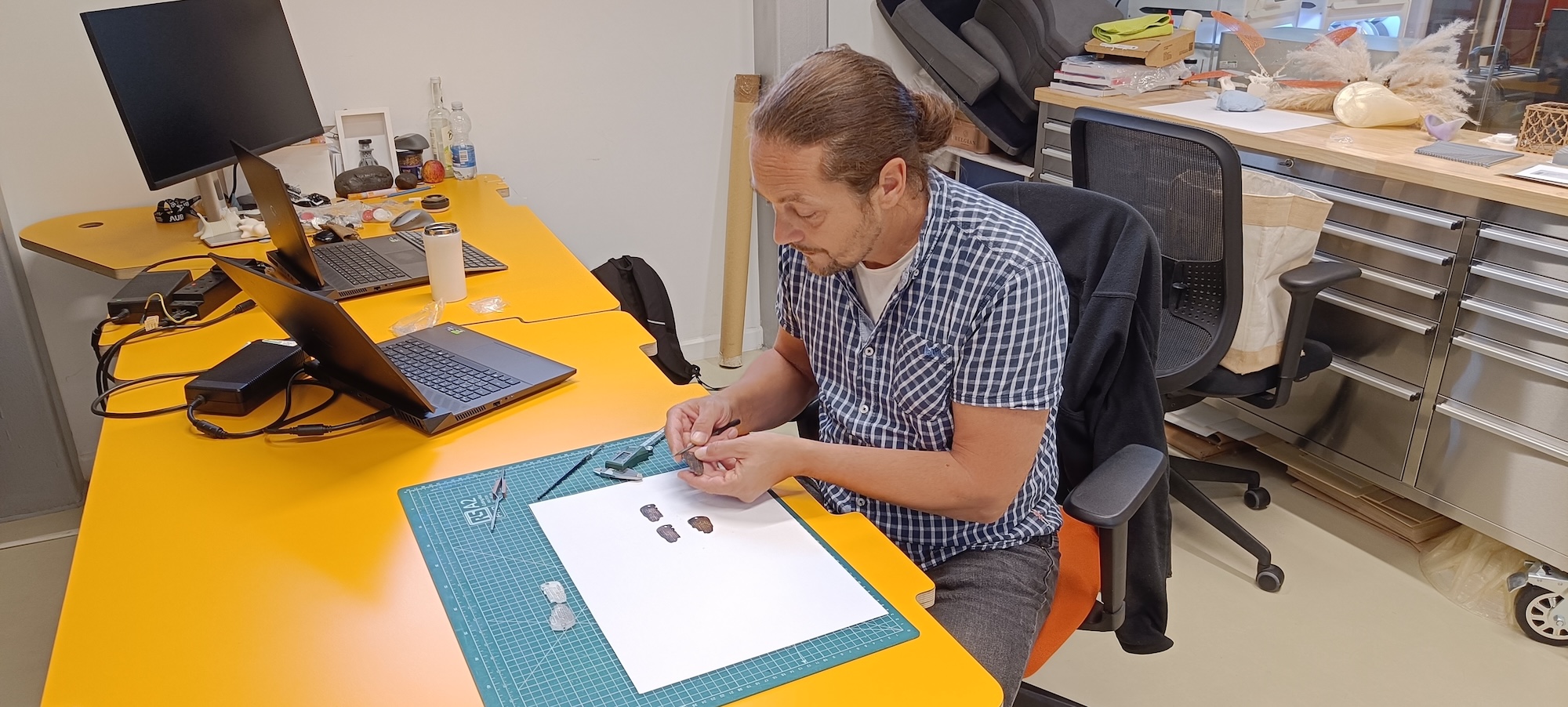
The Innovation Studio at Arts University Bournemouth (AUB) has been instrumental in recreating some US military dog tags, which were discovered in the New Forest.
Military history enthusiast Nik Brown presented the artefact to the Innovation Studio after his dog unearthed them on a routine walk across the historic heathland at Stoney Cross, a site where British and American ‘front line saviours’ were once tested to the extreme.
After cleaning the artefact, the legend on the dog tags was deciphered: Dennis L. Cooper.
The journey from a muddy Hampshire forest to a home in Buffalo, New York, required significant detective work. After using Google Earth to identify the American home Cooper departed from, Nik enlisted the help of fellow historians Chris Brown (the Wimborne Town Crier "Dapper Dan") and Roger Hopkins to uncover the soldier's backstory.
The breakthrough came when Nik contacted Dennis’s granddaughter, who was astonished by the news.
In a remarkable twist, Nik discovered that he and the late Corporal Cooper shared the same civilian profession as manufacturing consultants.
Nik’s professional background led him directly to the solution for preserving the find; having previously worked for the South West Manufacturing Advisory Service, he frequently brought local manufacturers to the Innovation Studio to showcase advanced technology.
It was this connection that inspired Nik to get in touch with the team to see if replicas of the dog tags could be created.
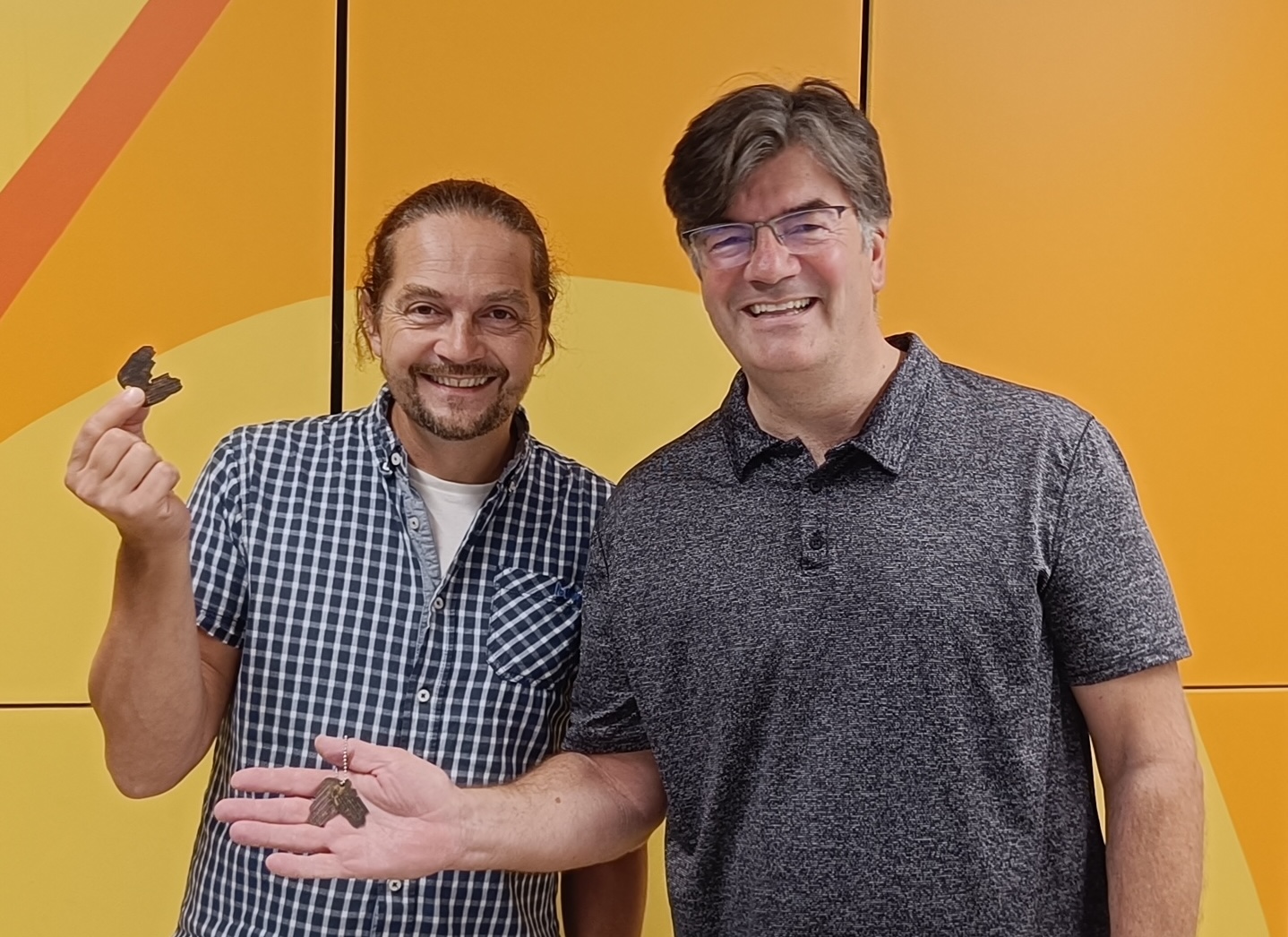

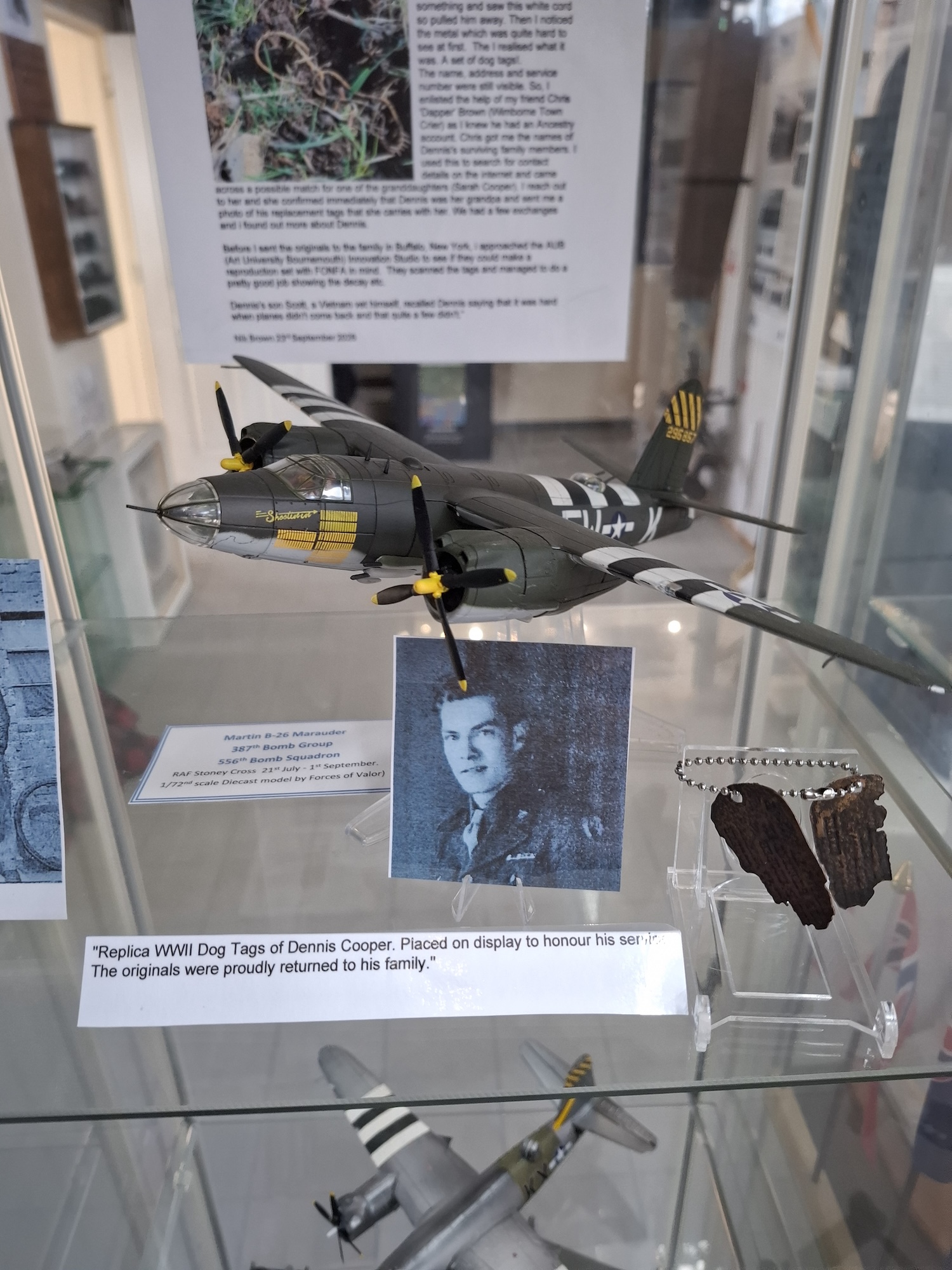
Anatol Just, Senior Technician at the Innovation Studio, took on the challenge of creating the replicas.
“Standard 3D scanning struggled to capture the minute details of the corroded metal” he explains, “I used a handheld scanner initially, but it didn't show the text well enough.”
Instead, Anatol turned to Reflective Transformation Imaging (RTI), a method often used for surface detection on fine art.
“The tags are paper-thin where they've deteriorated, making them incredibly hard to scan and 3D print.”
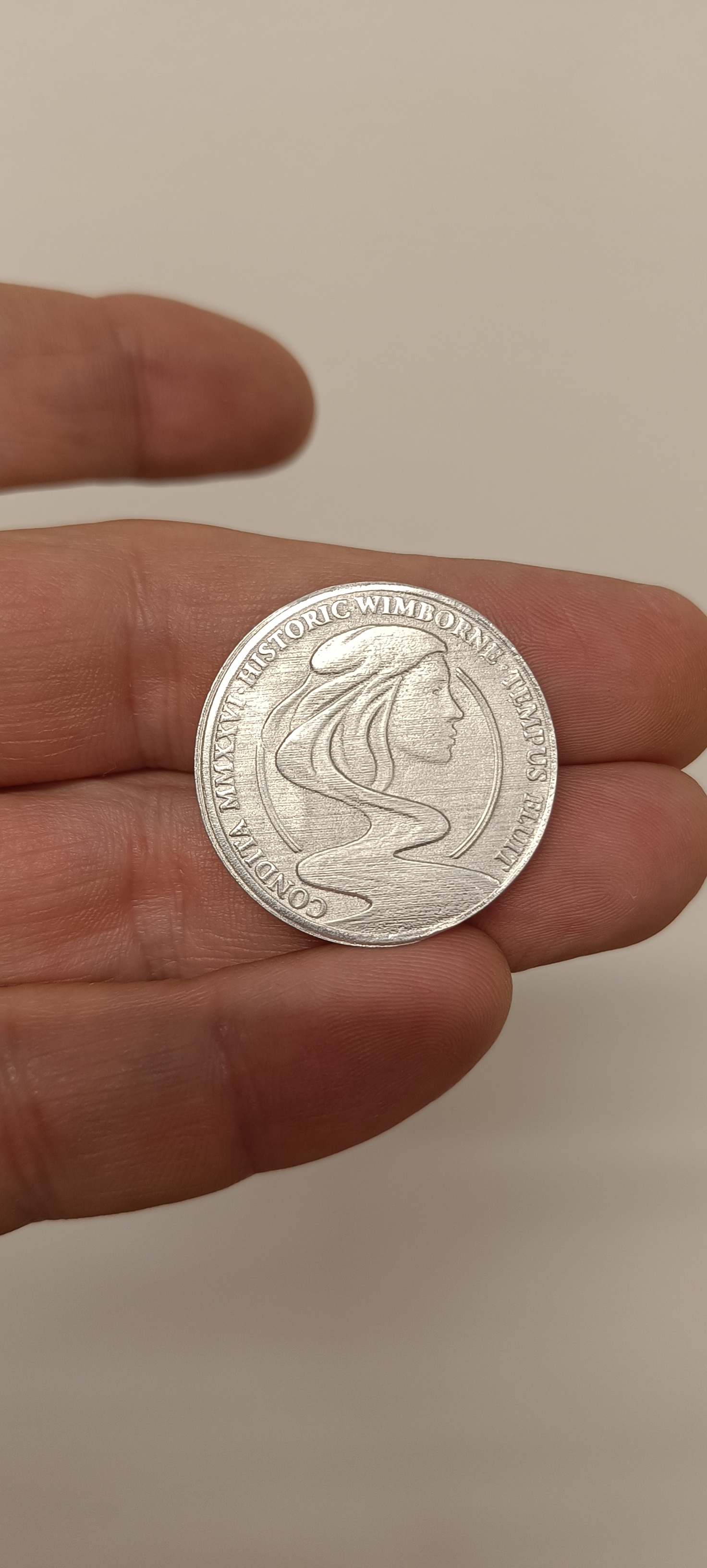
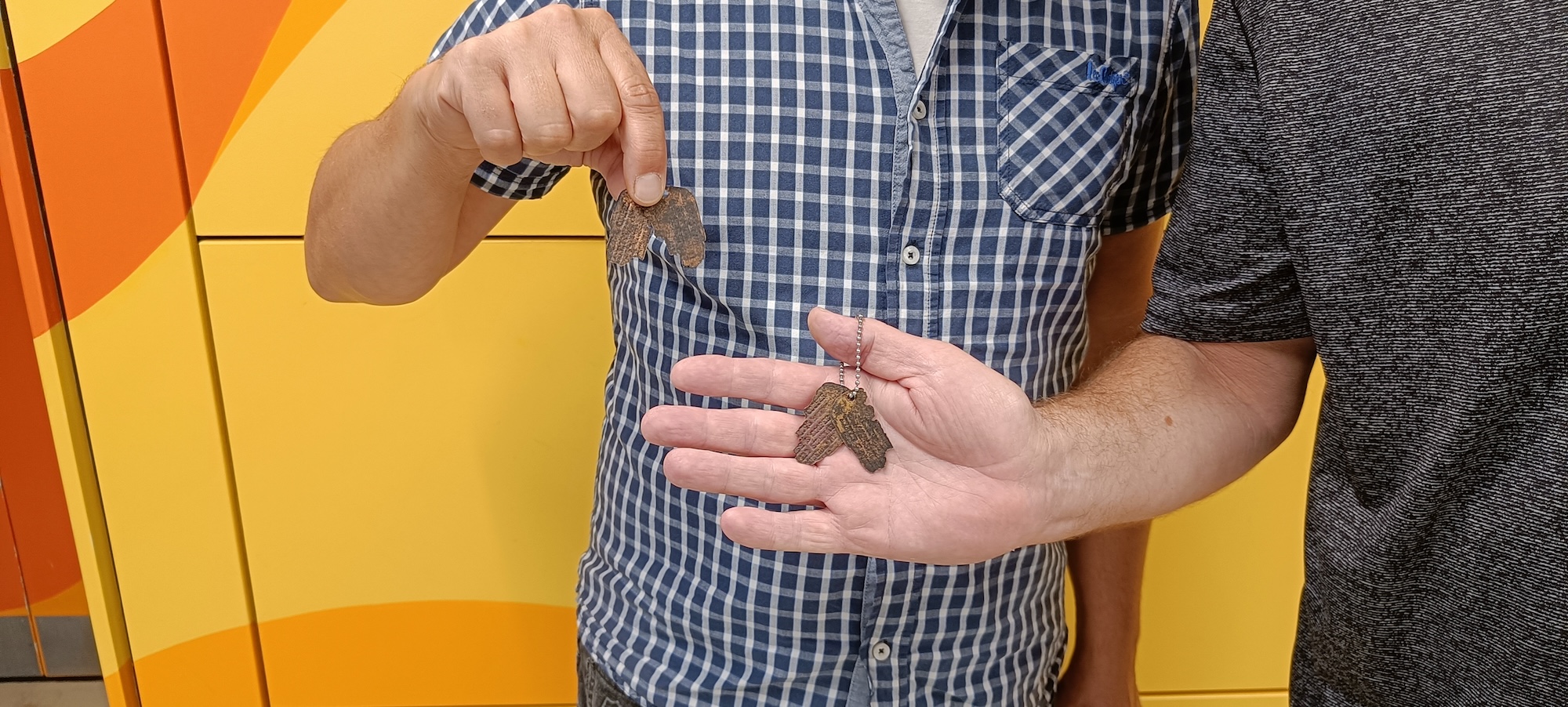
Anatol developed a custom ‘press form’ technique for the task. By etching the scanned 3D data into an acrylic plate, he used a 20-tonne hydraulic press to punch the authentic, weathered texture into new metal, creating a true-to-life copy.
With the meticulous scanning complete, the original tags have now made their long journey back to the United States to be reunited with Corporal Cooper's family while the replicas will remain in the local area to tell the story of Dennis and Stoney Cross to future generations.
Nik chose to donate the replicas to the Friends of the New Forest Airfields (FONFA) Heritage Centre in Bransgore. Formed by a group of aviation enthusiasts, service veterans, historians and authors, FONFA was established as a memorial to the personnel who served in the New Forest and to preserve the aviation heritage of the New Forest for generations to come.
“To have these replicas here at the FONFA Heritage Centre is truly fantastic," says Sam Ruddy, Chairman of FONFA. "Dennis Cooper’s story highlights the vital, personal connections between the New Forest and the Allied servicemen who passed through here in 1944.
“Thanks to Nik, Doodle, and the brilliant technical work at Arts University Bournemouth, visitors to the museum will be able to connect directly with Corporal Cooper’s legacy for many years to come.”