




















You are using an outdated browser. Most of this website should still work, but after upgrading your browser it will look and perform better.
- Home
- Undergraduate Courses
- BA (Hons) Interior Design*
- Course details
BA (Hons) Interior Design*
- Duration: 3–5 years full-time
- Placement year: Optional 1 year
- Course code: To be confirmed
- Institution code: A66 (UCAS)
BA (Hons) Interior Design course information
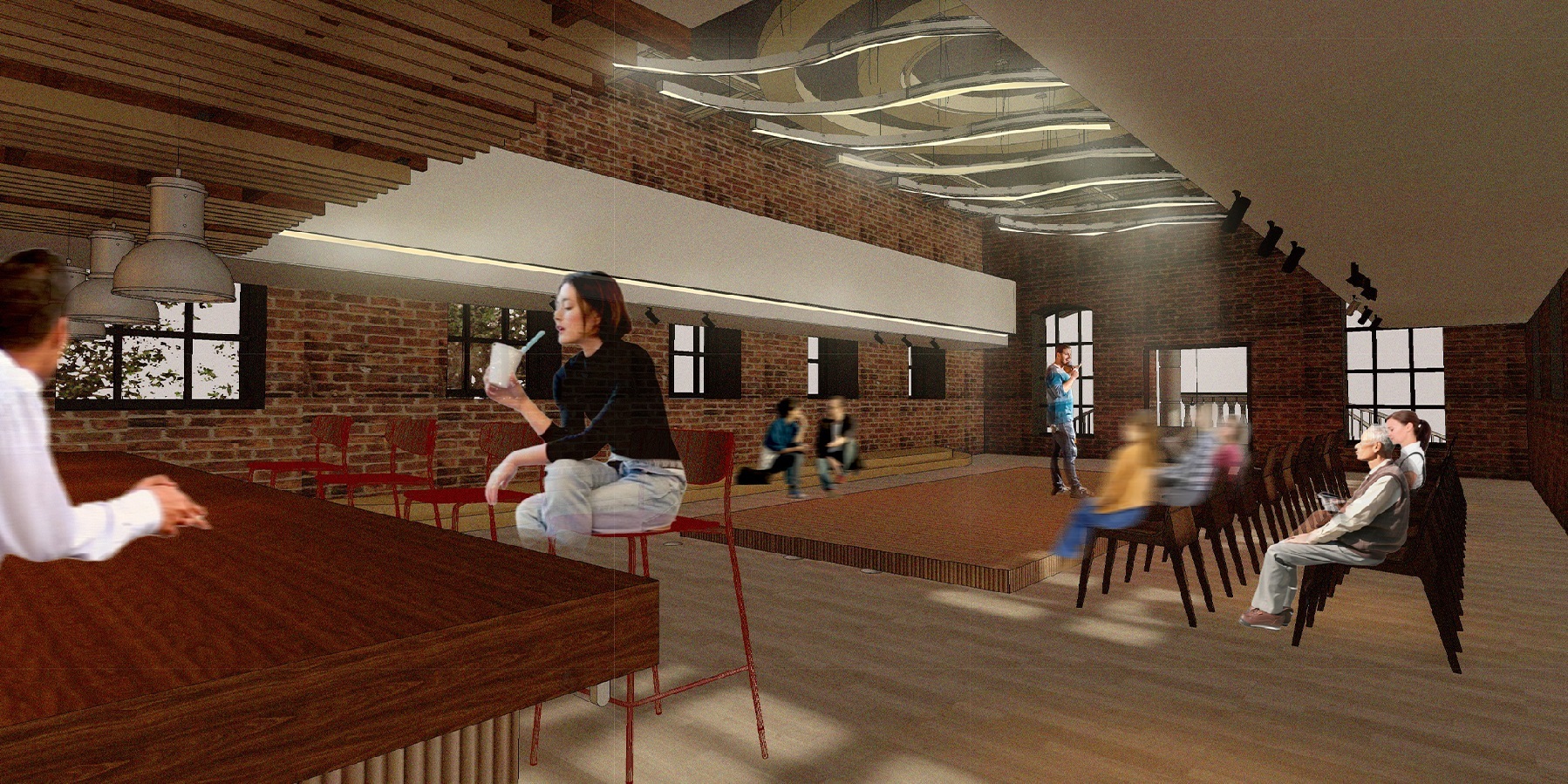
On BA (Hons) Interior Design, you'll explore a range of design briefs, collaborative projects and industry-led challenges that encourage you to think critically, challenge conventions, develop creative solutions and communicate your ideas effectively.
Interior design is closely connected to the wider built environment. Through opportunities to work alongside students from BA (Hons) Interior Architecture, you'll explore the relationship between interior spaces and buildings, consider how existing places can be adapted and reimagined, and discover how thoughtful design can transform the way we experience our surroundings.
Throughout the course, you'll develop your visual communication skills, strengthen your design judgement and learn to articulate the ideas and research behind your creative decisions. You'll gain confidence in taking a concept from initial inspiration and exploration through to a resolved and well-considered design proposal.
Your individual interests, creativity and ambitions will inform the projects you undertake and the portfolio you develop. Through studio-based teaching, access to specialist facilities, engagement with visiting practitioners and collaboration within a vibrant creative community, you'll build the skills, knowledge and confidence to establish your own emerging design identity.
Whether your interests lie in residential interiors, hospitality, retail, workplaces, cultural environments, exhibitions or immersive experiences, we'll encourage you to experiment, identify your strengths and explore the diverse opportunities available within the interior design profession.
Graduates can progress into a wide range of careers, including roles within specialist interior design studios, multidisciplinary design practices and the wider creative industries, or choose to further develop their expertise through postgraduate study.
Three reasons to study BA (Hons) Interior Design at AUB:
- Learn through creativity and collaboration. Develop your creative thinking and design skills through exciting, practical projects, collaborative opportunities and industry-informed briefs. Work alongside students from related disciplines and explore how interior design connects with the wider built environment.
- Discover your own design identity. Experiment, challenge conventions and explore different approaches to designing spaces. Through studio-based learning, specialist facilities and support from experienced tutors and visiting practitioners, you'll develop your skills, confidence and a portfolio that reflects your individual creativity and ambitions.
- Prepare for a diverse creative career. Explore the many possibilities within interior design, from residential, retail and hospitality to workplaces, cultural spaces and immersive environments. Develop the creative, technical and professional skills to take your ideas into practice and prepare for a future in the wider design industry.
Integrated Foundation Year
On BA (Hons) Interior Design, you have the option to take a specialised Integrated Foundation Year, or Year 0.
The Integrated Foundation year allows you to explore and develop your skills and knowledge at an introductory level, gaining a better understanding of what the subject area has to offer before joining the degree.
Placement year
All undergraduate courses at AUB offer an optional placement year, to be taken between your second and third years of study.
If you’re unsure about this optional placement, you don’t need to decide now. Once you’re here and studying with us, the course team will discuss the placement options with you, so when the time comes, you can make a decision that’s right for you.
Level 4 (first year)
Explore, experiment and discover
Your first year will introduce you to the creative, conceptual and practical foundations of interior design.
Through a range of studio-based projects, you'll explore how people experience and interact with spaces, developing an understanding of scale, proportion, materials, light, colour and spatial relationships. You'll learn to observe, research and interpret existing environments, experiment with ideas through drawing, modelmaking and visualisation, and develop your ability to communicate design concepts.
You'll also explore the relationship between interiors, architecture and the wider built environment, considering how spaces can respond to people's needs, contemporary lifestyles and environmental challenges. Working alongside students from BA (Hons) Interior Architecture, you'll benefit from a shared creative learning environment while beginning to identify your own interests, strengths and direction as an emerging interior designer.
Level 5 (second year)
Develop, challenge and refine
In your second year, you'll build on the creative and technical foundations developed in first year, taking on more ambitious and complex interior design projects. You'll explore how design can respond to the needs of different users, contexts and contemporary challenges, developing proposals for a range of environments such as residential, commercial, retail, hospitality and shared spaces.
Through research, experimentation and design development, you'll strengthen your understanding of spatial planning, materials, lighting, building technologies and sustainable design approaches. You'll also develop your visual communication, technical drawing, digital skills and ability to present and justify your design decisions.
Opportunities to collaborate across disciplines and engage with industry-informed briefs will help you understand the wider professional context of interior design, while encouraging you to develop your own creative voice, design judgement and emerging professional identity.
Level 6 (third year)
Define, realise and prepare for your future
In your final year, you will take greater ownership of your creative direction, developing a distinctive approach to interior design through an ambitious, self-directed major project.
Building on the knowledge and skills gained throughout the course, you'll identify a design opportunity, undertake in-depth research and develop a considered response that demonstrates your ability to think critically, work independently and address complex spatial, social, cultural and environmental issues. You'll refine your conceptual, technical and visual communication skills, producing a professional portfolio that showcases your creative thinking, design process and ability to translate ideas into resolved design proposals.
Through engagement with professional practice, industry-informed challenges and opportunities to explore your individual interests, you'll develop the confidence and professional awareness to take the next step, whether pursuing a career in interior design, exploring related creative industries or progressing to postgraduate study.

APPLICATIONS ARE OPEN
It's not too late to apply! Now that you've found the perfect course, it's time to join our creative community.
Check out our handy 'how to apply' guide and our portfolio top tips.
OPEN DAYS
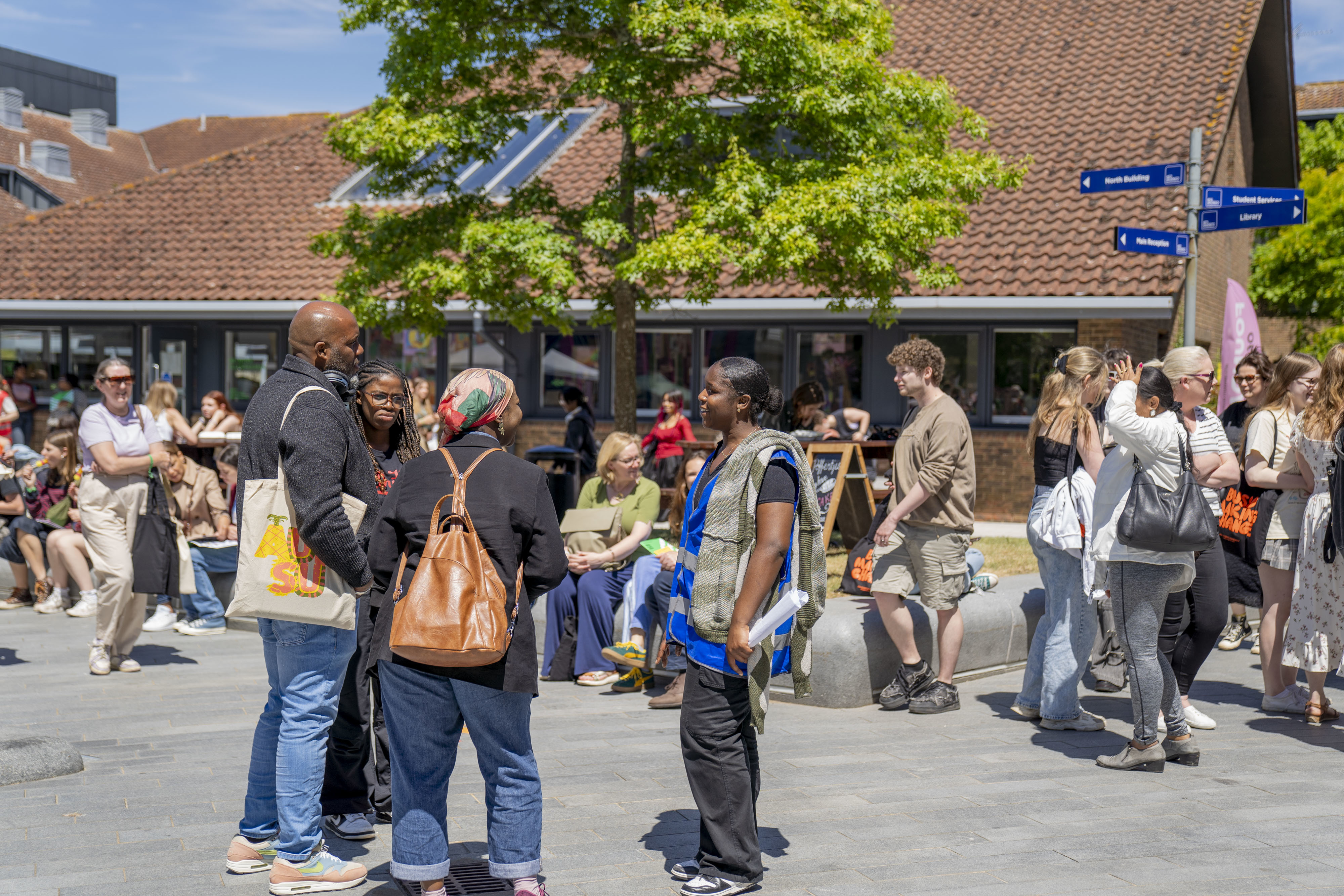
Open Days are a great way to get a feel for undergraduate life at AUB. At an Open Day, you'll be able to explore the campus, talk to course teams and discover our industry-standard facilities.
Visit us on:
- 7 November
- 5 December
STEP INTO INDUSTRY
Your journey to the creative industries begins with us, while you're studying.
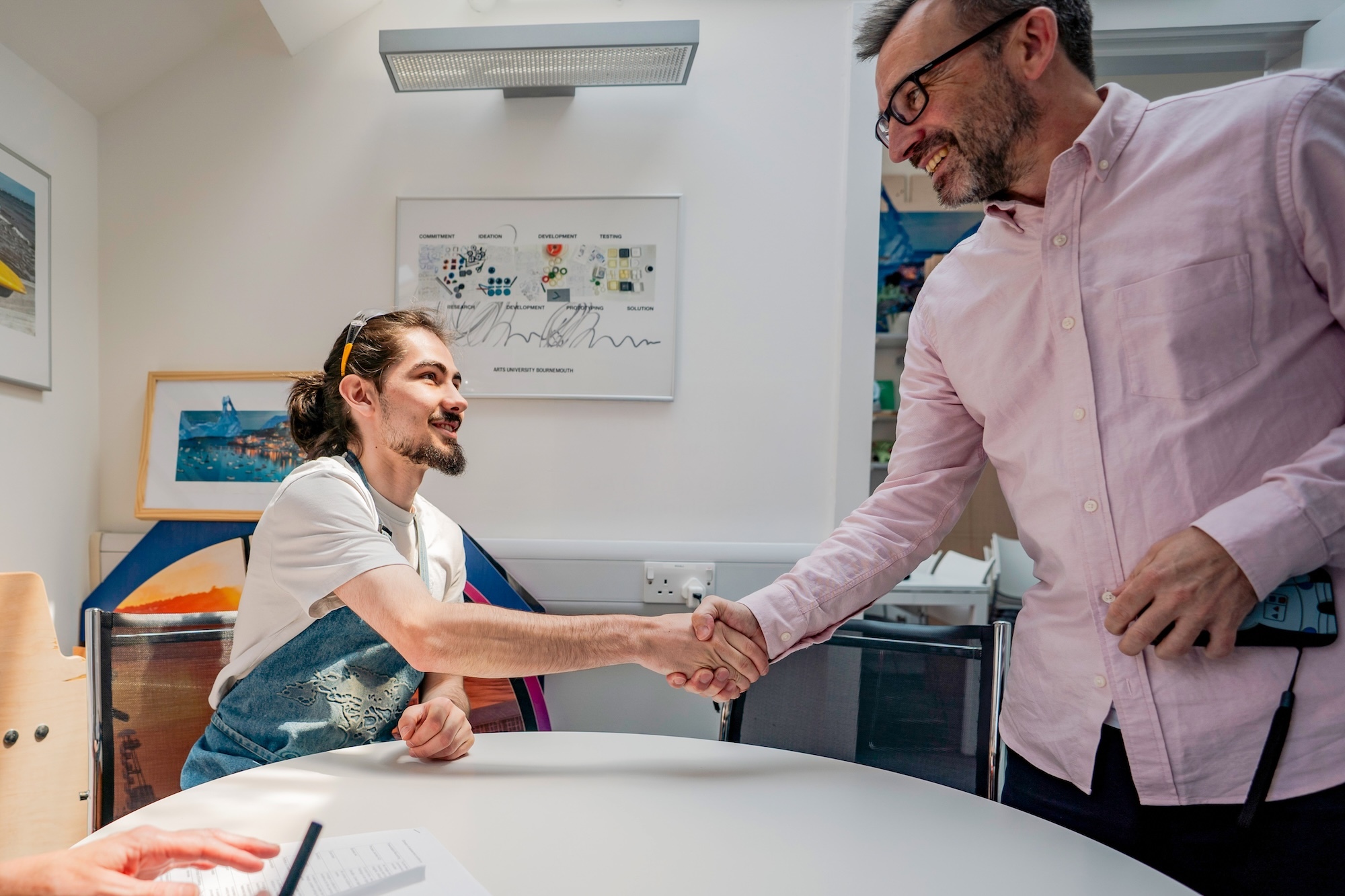
Whether it's on a placement, working on a live brief with your course Industry Patron, or even in a one-to-one with our careers and enterprise service, we equip you with the skills to enter the largest sector in terms of employment in the UK.

AUB SHOWCASE
We're proud of our alumni, and rightfully so.
Explore the incredible work of our graduates in our online AUB Showcase.
Browse work by course, student or theme.
Teaching, learning and assessment
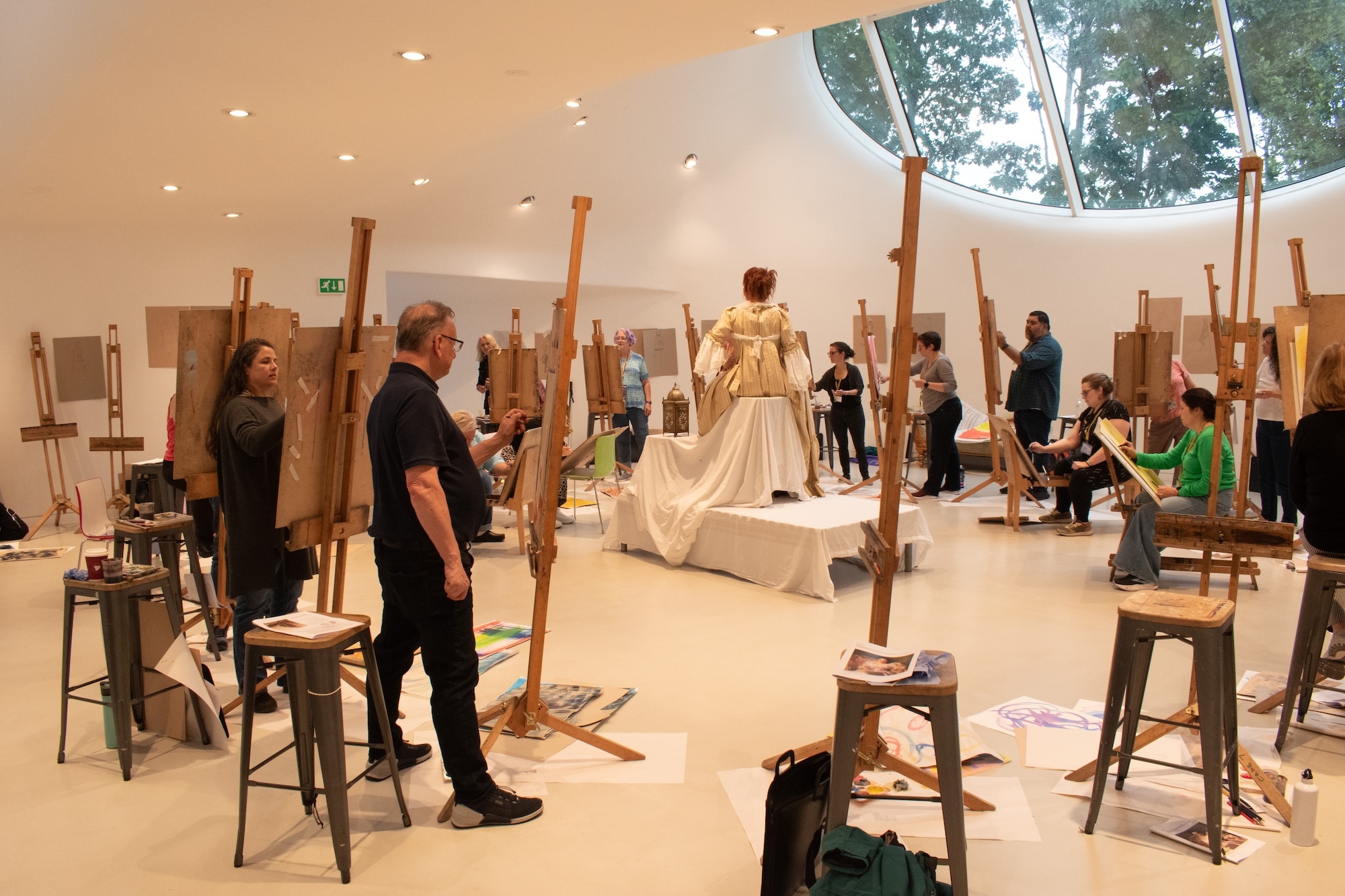
The studio and a studio culture are central to the ethos of the course. From before you join the course (at Open Days and Offer Holder Days) you'll have appreciated that, while not mimicking practice, the studio is central to your practice. The diversity of the student group brings benefits of cross-course and cross-cultural experience; you can learn so much from making use of your space.
Each unit is assessed separately, and the assessment forms part of the unit. Assessment both provides a measure of your achievement, and also gives you regular feedback on how your learning is developing.
The course objectives are met by deploying a wide variety of teaching and learning methods including projects, lectures, seminars, group critiques and tutorials. In consultation with the Course Leader, staff are responsible for co-ordinating individual units of study, and for selecting appropriate methods of delivery according to subject matter and student experience.
The methods employed induct you to the disciplines required of a creative practitioner and promote the development of transferable skills.
The study time allocated to each unit in the course incorporates a balance of formal teaching, tutorial support and independent learning.
BA (Hons) Interior Design is structured progressively to provide increased opportunities for independent learning as you reach the later stages of the course.
The tutor leading the unit will employ a variety of methods of delivery in order to encourage your participation in the learning process. These will be dependent on the nature of the unit and the progress of the unit. Throughout the units within a year (and year on year) in the course, you're encouraged to gradually become more autonomous, progressively being asked to consider yourself as a professional designer.
The understanding of the role and appropriateness of communication is essential: as designers of space – something that cannot be experienced in reality until it is built, and something that will not be built unless it has been communicated beyond any level of doubt – clarity and professionalism in the verbal, visual and written communication of the self, of ideas and solutions to problems is prioritised on the course from the moment you join us.
The progressive promotion of independent learning reflects your anticipated maturity as a student and allows you to direct your learning towards individual goals. The teaching across the course is directed at providing you with the judgements necessary to take increasing responsibility for the management of your own learning.
Teaching is directed at supporting individual engagement in learning, although there will be opportunities for you to work in teams to enable you to learn the value of peer co-operation.
Contact hours include all scheduled teaching sessions, but also supervised time in the workshop or studio. In line with national guidance, we include in our calculation of contact hours all the time which is scheduled in the studio for independent study which is also supported by staff (either academic staff, or technicians).
The information provided below gives the proportion of your study time which constitutes contact hours. Where there are optional routes through the course, we have used the figures for the most popular option.
For every unit of your course, we'll inform you of what you're expected to learn; what you have to submit; how your work will be assessed; and the deadline for presenting your work for assessment. This is made available through Unit Information, which is on your course blog.
You'll receive a final mark for each unit in the form of a percentage, which will be recorded on your formal record of achievement (transcript). Each component of assessment is graded using a notched marking scale, whereby only certain marks are used within each grade. The only marks available within any 10-point band are *2, *5 and *8 (e.g. 62, 65, 68). These marks correspond to a low, mid, and high level of achievement within each grade band.
The University has agreed that, during 2019/20, it will run a pilot project. This will mean that on some courses, one unit at Level 4 will be assessed on a Pass / Fail basis only, with written feedback but no numerical grade. If your course has been selected for the pilot, your Course Leader will tell you this, and the details will be clearly expressed on the Unit Information Sheet.
All learning outcomes must be passed to successfully complete the unit.
On successful completion of your Honours degree course, you'll be awarded a degree classification based on your unit marks. The final classification is determined using all unit marks at Levels 5 and 6 using two different algorithms, which are detailed in the HE Student Regulations. If the two algorithms produce different results, you'll be awarded the higher class of degree.
If you have joined Level 6 through either the Recognition of Prior Learning (RPL) route or having completed a Foundation Degree (FdA), the final classification is determined using only your unit marks at Level 6.
For further information on assessment, progression, awards and classifications, please visit Viewpoint.
Course costs
The fee you pay AUB provides the necessary equipment and training for you to complete your course.
In most cases, you don't need to buy any specific items of kit before you start the course. You may also choose to buy some items of personal equipment such as a laptop or tablet computer, but this isn't required – desktop and laptop computers are available for you to use in common study areas, including a loan system in the Library.
It isn't possible to be precise about the likely additional costs that you may incur, because this depends on the choices you make and the projects you undertake. The University provides some basic materials, and you'll be encouraged to work sustainably and to reuse materials where possible, but you should still expect to make some financial investment.
For more information, including costs relating to certain courses, visit our Course Costs page.