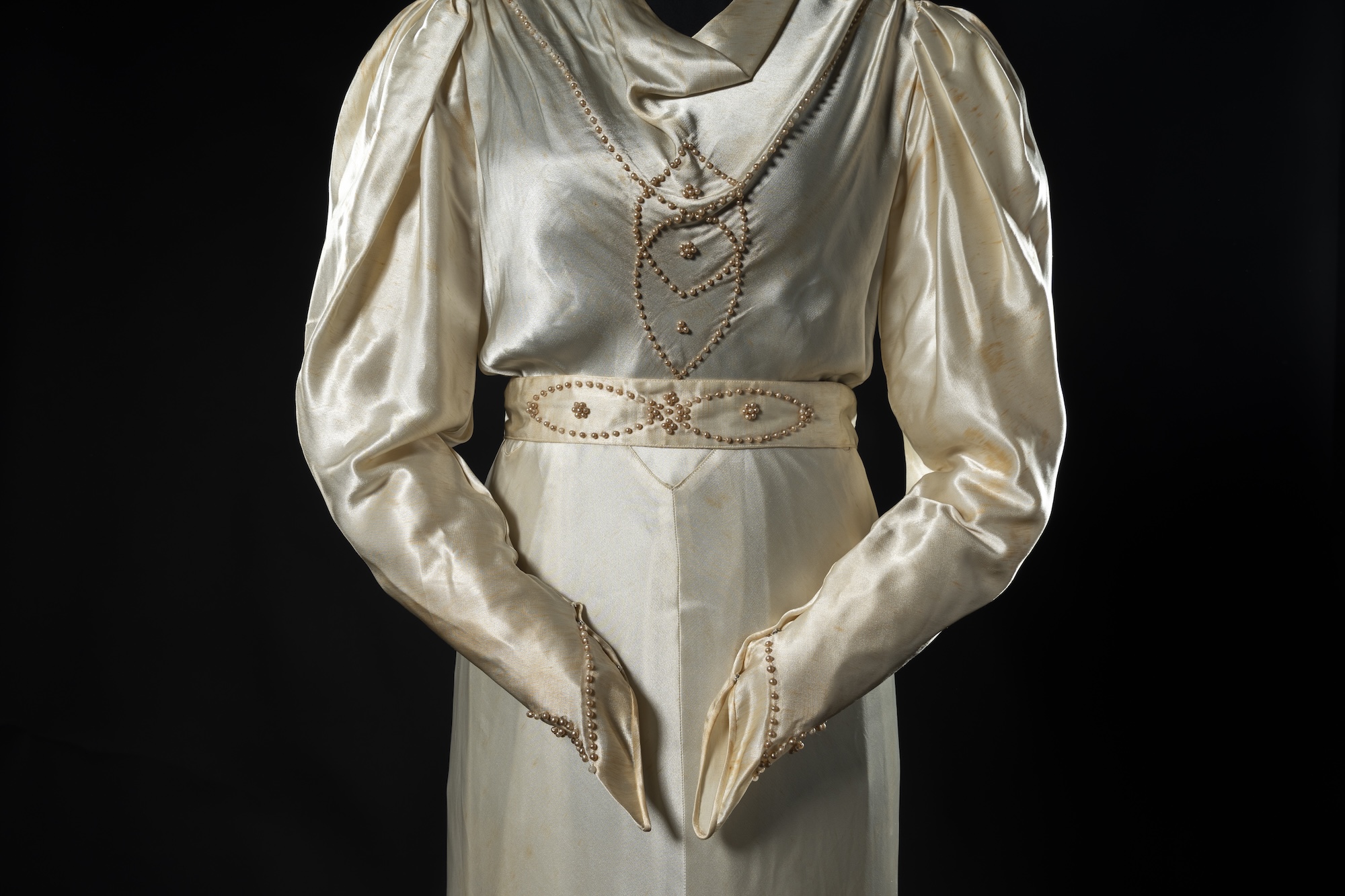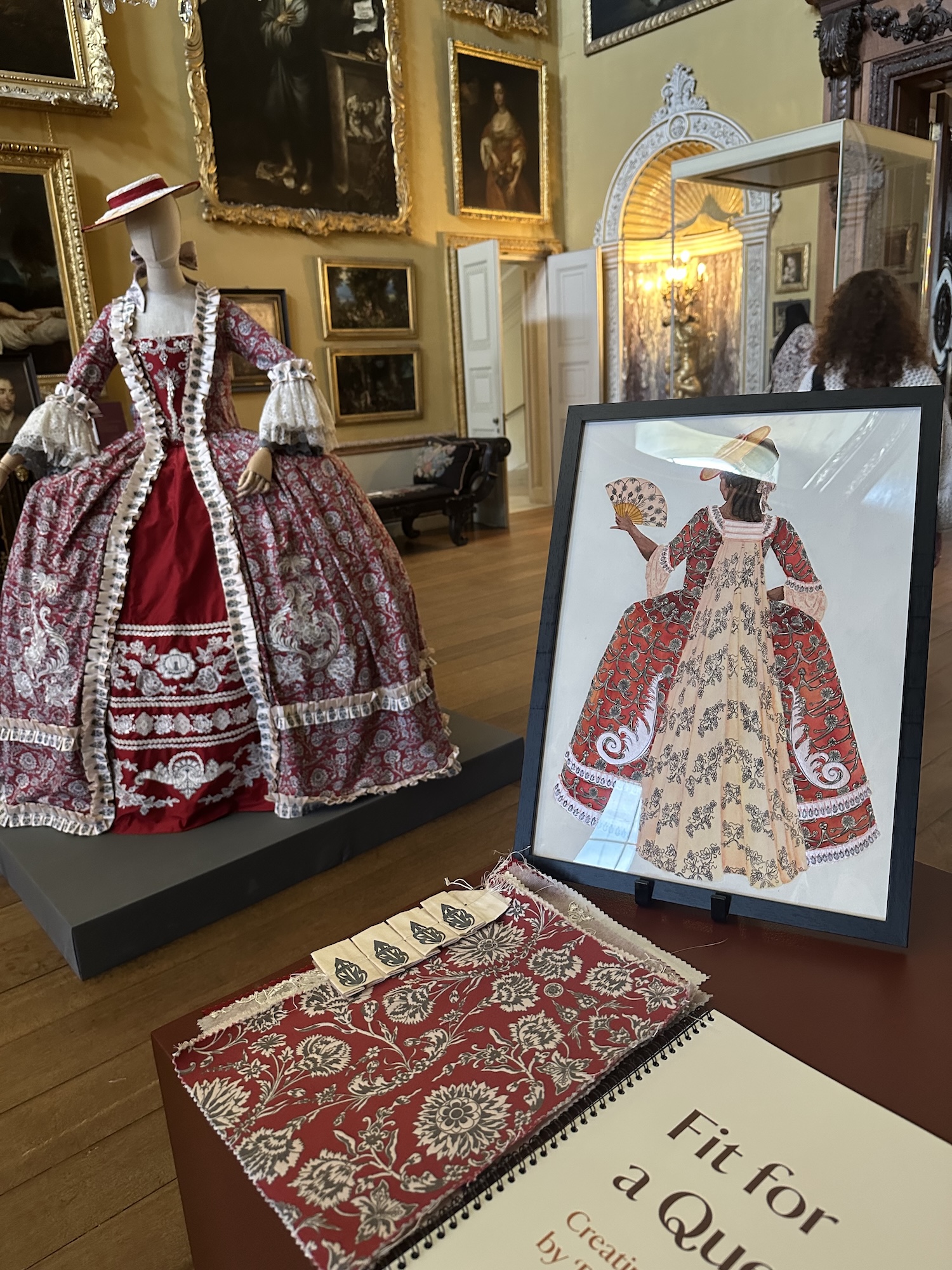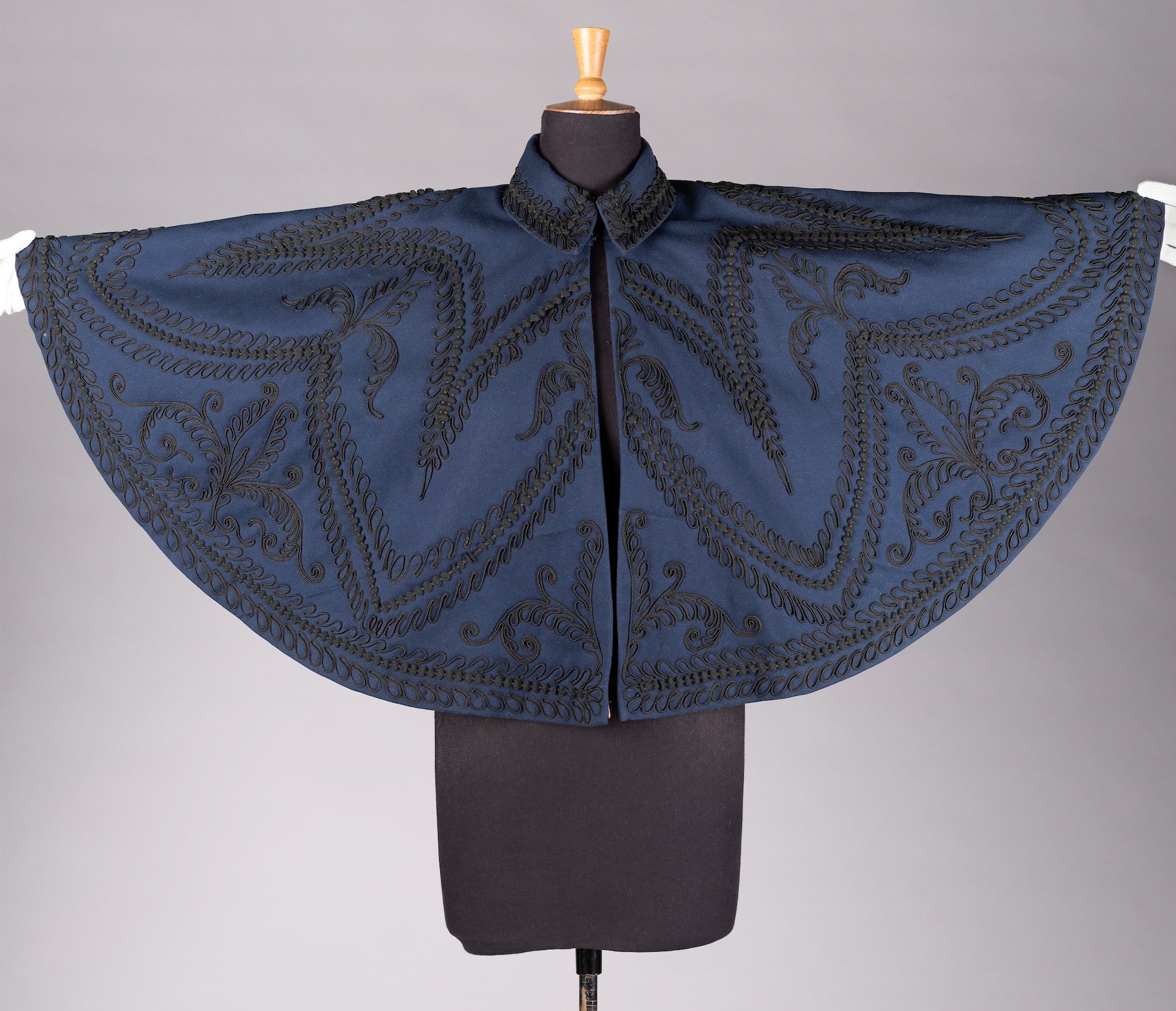


















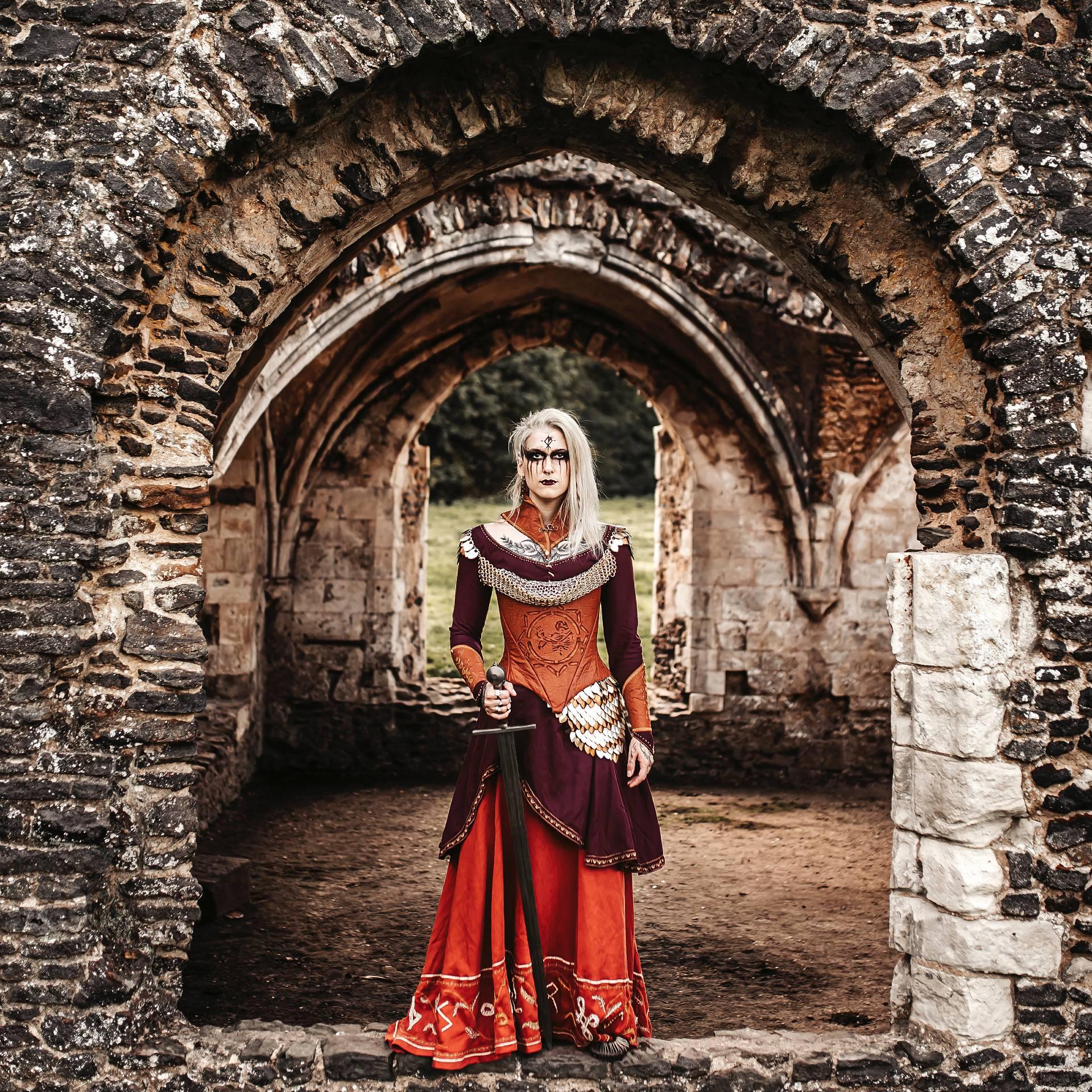











MA Historical Costume graduate Kelsey Williams hadn't even had a chance to cross the Graduation stage before taking on her first role after university.
A recommendation from Wayne Martin, Senior Lecturer on the BA (Hons) Costume course at Arts University Bournemouth (AUB) led her to working with renowned costume production manager, supervisor and designer Carol Lingwood.
"On the day that I was supposed to give my final project presentation, [Wayne] came to me as I was walking into the office and said, “I need you to find me as soon as you’re done.” I was like, “Okay?” He said, “It’s really important. It’s Carol Lingwood.”
After a successful phone interview with Carol, the next day, Kelsey was on a train to Leeds to go clothes shopping for a production. "Then I slept on a sofa for two-and-a-half months at a friend's who lived in London, to be able to commute in every single day to do this job. And it was wonderful. I absolutely loved every part of the experience – even the crazy stuff!"
Craziness such as trying to source actual clothes from the 1980s, which Kelsey describes as a "crapshoot". "You get the full range of people who are just giving bags of it away, because no one's going to need this many windbreakers ever in their life – except for us. But then also you get the people who deify that era of clothing.
"You never know if you're going to find a suit for a fiver that you have to rummage in a bin for, or if someone is going to charge £500 for something because it's from the '80s. You have to be quite an investigator for it – identifying real stuff and paying realistic prices for it."
Since then, Kelsey has worked as an Assistant Costume Supervisor and as a Costume Maker on different productions. But how do these two roles vary?
"I like to say that Making is ‘keeping people from being naked with fabric,’ whereas Supervision is ‘keeping people from being naked with spreadsheets’. They’re very different roles, but the skills required for each are invaluable for learning how to do what you do even better.
"As a supervisor, your job is to identify all the things a character wears, the costings for those things, what can be purchased versus borrowed versus made, and then making sure everything is easily understood and compiled into a Bible for the next run of that show. The maker is part of the machine that makes that happen. But as a supervisor, if you don’t know how things can realistically be altered, or what material you might need to make something look or hang in a specific way, then you’re going to be less effective at your job. They cross in such a way that doing both is incredibly helpful."
In the course of her career, Kelsey has worked on multiple productions that star famous figures from drama and comedy – Griff Rhys Jones, Ralph Fiennes and Sir Kenneth Branagh – but her favourite among them? Mel Giedroyc, while doing supervision work study under Carol Lingwood for Starter for Ten.
"As a maker, you don't always get to work with the actors," she explains. "Sometimes you don't even meet [them]. Making is very much on a contract basis – you don't typically sit with a team in a shop and make all the things for the show. You get a phone call and they say, 'Hey, can I have 10 pairs of pants by next week?'
"We worked with Mel very often. She was at pretty much every rehearsal that we had, because she was quite a pivotal person, playing several roles. We did fittings together and on our tea breaks, we were able to sit with her and chat. She was working on her garden; she'd bring things in, we'd do a little veg exchange. I know it’s such a silly thing to say, but she's genuinely as lovely as she seems."
Kelsey admits owing a lot to Carol Lingwood. "She has done so much for me simply from the joy of how nice it is to work together, the two of us just click very well. I feel she has actively tried to find places for me in her recent productions because we ‘click’ and to some extent because we enjoy one another's company.”
She says the same about expert set and costume designer, Lee Newby, with whom she worked on productions such as Starter For Ten and Barnum.
"Carol, Lee and I truly feel a bit like The Three Musketeers at times with the work that we do, and we have done multiple shows together now to test that compatibility.
"I’ve met other wonderful people through Carol, too. Recently I did some making work for Grace Pervades with Fotini Dimou, who had worked with Carol on The Tempest for the Royal Shakespeare Company. So, meeting one lovely person leads to finding a whole spiderweb of lovely people. Because Carol has been that lynchpin for me, in no small way, I do consider her both a mentor and a friend."
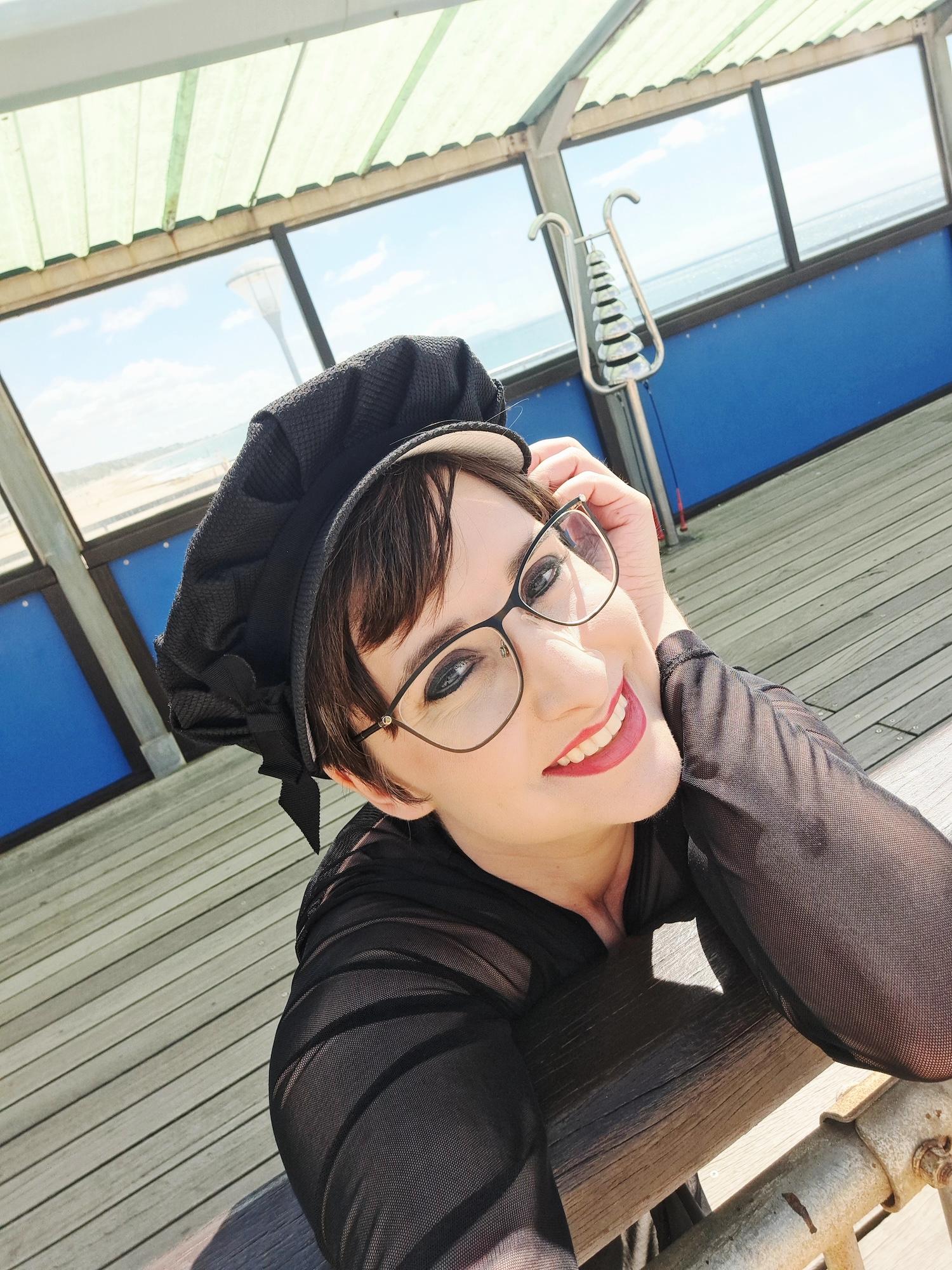
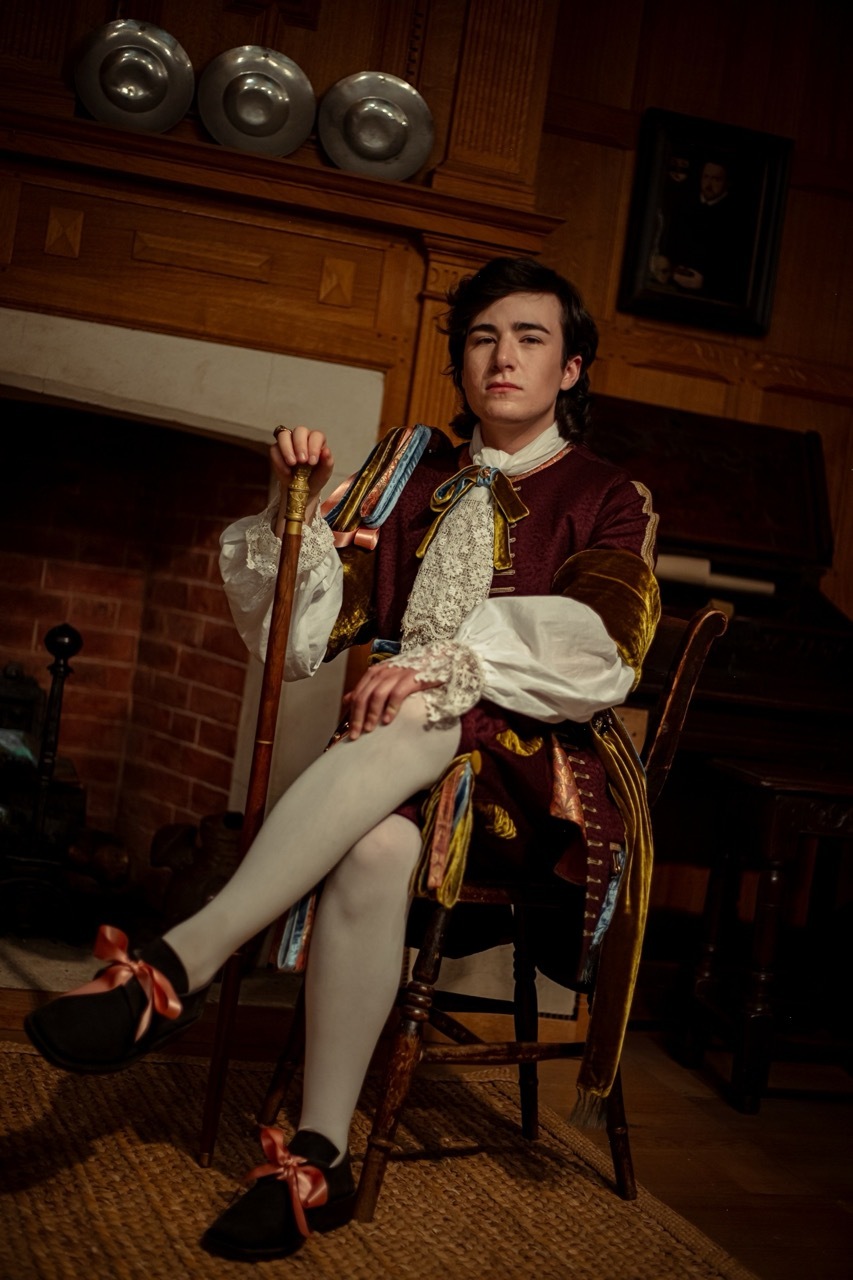
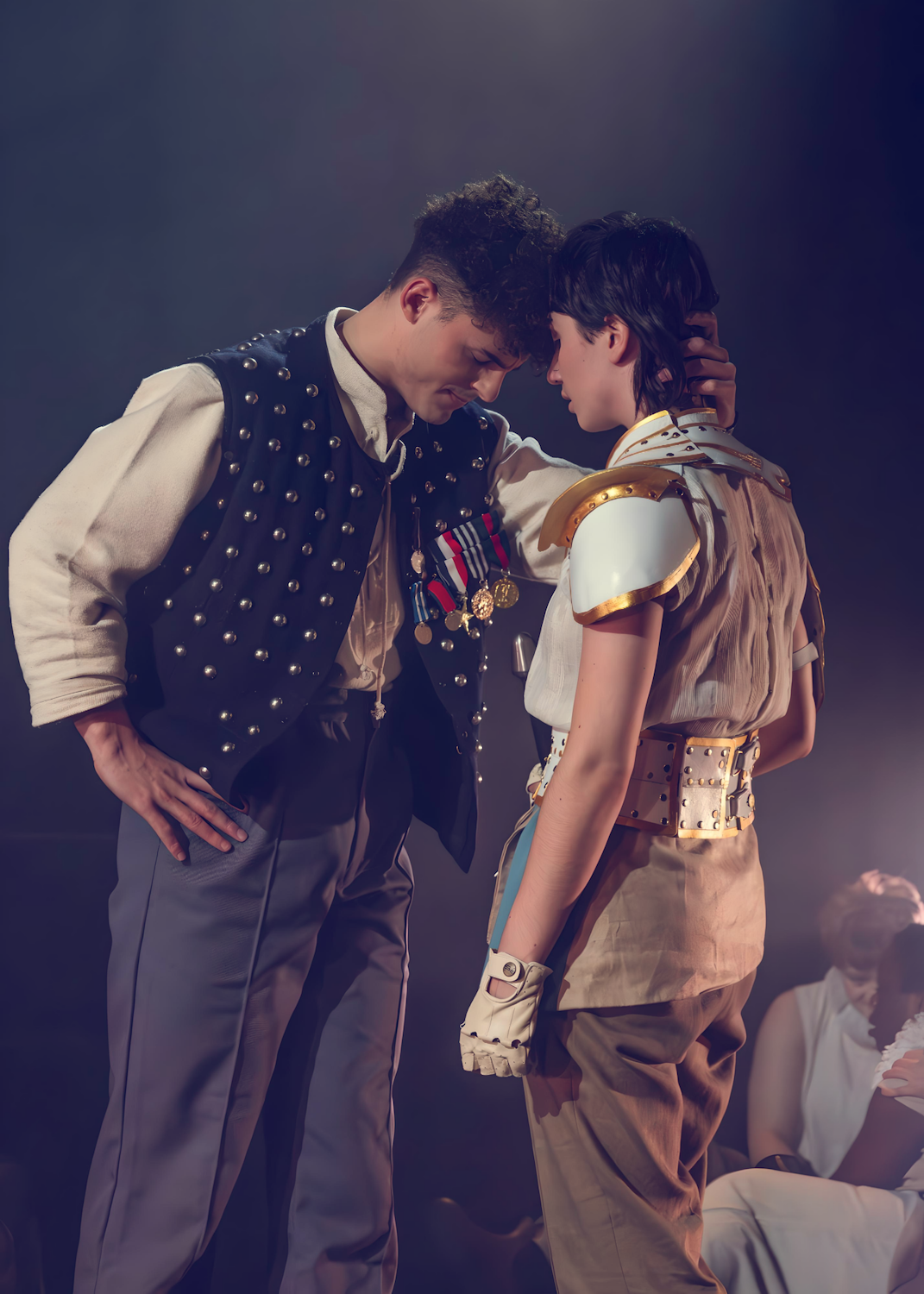


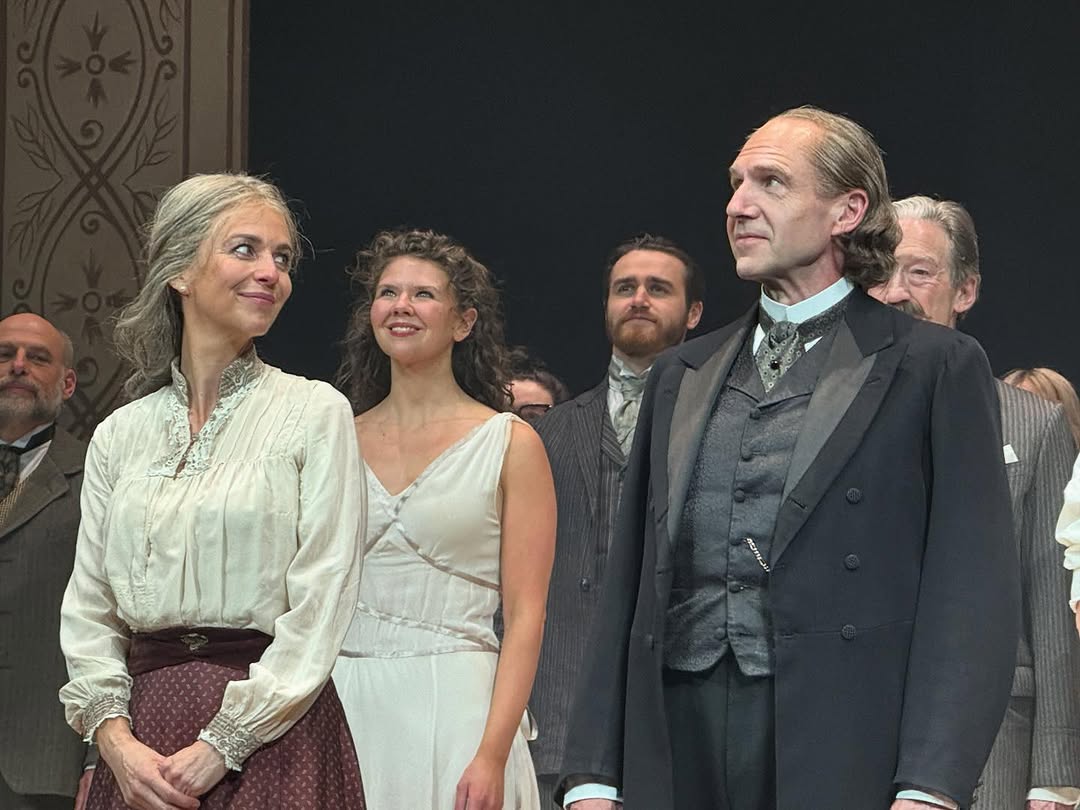
More recently, Kelsey's been working for Stephen Jones Millinery in Covent Garden, moving into the world of couture. But while it was a deliberate move, it was not a move away from theatre. Instead, it added to her breadth of experience, which ranges from working with dance studios like Studio Roxander in Southern Oregon and E33 Dance Company in London, to television shows like CSI and Once Upon a Time, to live events like Renaissance fairs, comic book conventions and even live-action role-playing.
"One of the things I was looking for was direct cutting experience. While I have cut materials and patterns, I've not worked as a cutter, so I wanted to have that to flesh out my portfolio.”
Almost 90 days into the new role, Kelsey says she's discovered a new love. "It is so much fun, it feels like playing with Legos I have never seen before, and it is such a blast. The people are incredibly kind – the different workrooms are all filled with really creative and talented folks. Stephen himself is an absolute gem of a human being; it feels like Christmas when he comes back and graces you with new ideas and collaborations. And all of that, because I wanted to expand my realm of knowledge for theatre, film and television."
Kelsey admits there is a big difference between costuming and couture – namely, the final product. "The final product of couture relies on consistency and perfection," she explains. "I like to call it 'repetition to perfection', because you need to keep practising the thing to make it a flawless end.
"When it comes to stage and screen productions, a lot of what you produce depends 100% on the people you’re working with. What’s the director’s vision, how do they want it to look in the end and behave on stage? What does the designer have in their mind? How far away is it going to be from the audience? Do we need to worry about how clean that hem looks on the inside? There are so many components that depend entirely on the production itself, the production team, and the audience.
"Whereas, with couture, everything is under a microscope, so it’s more finite; there’s no room for creative interpretation. It must be done to the standard that one would expect for that designer."
She credits her professional experience, and her training at AUB, with enabling her to respect her fellow creatives' space, to keep calm under pressure, and to ask questions.
"I think one skill everyone really needs is to learn how to find answers," Kelsey says. "I feel like we’re taught culturally that people need to be able to come to you, that you should be the one that is somehow magically imbued with the knowledge, or the skill or the power. When, really, the greatest thing you can say is, 'I don’t know how to do this yet. Do you? Let’s do this together.'
"Those are the people, the collaborators, that you want to work with. You don’t want someone who muscles through thinking they know how to do something, when in reality, they’re not 100% sure."
Kelsey ends with her one piece of advice: "Nurture the parts of you that feed childlike wonder."
"Childlike wonder is so important. We live in a world that feeds into fear and hatred and all the things that make us react with our gut impulse: do the things that keep yourself safe, et cetera. But if you have childlike wonder and excitement for the world around you, you are impervious to that fear. Do everything you can to nurture that and access that, because that’s what will keep you going when things are too stressful and hard and big and scary. You need to be able to love and see the world for how beautiful it is, and to keep that energy to keep you functioning."
Want to see more from Kelsey?
You can find out more about Kelsey and her work on her website and on Instagram.