



- Home
- Student Stories
- Fleur Webb – The processes behind "Expre...
I studied my Bachelor's degree at the Royal School of Needlework, so embroidery is my passion. Once I completed my three years of intensive training, I realised I held a keen interest in the historical aspect of embroidery, as well as a desire to learn more about costume. AUB was the only university in the country to offer this winning combination of historical and period costume in postgraduate study – the MA Historical Costume course – allowing students to choose a making, designing or research approach to the degree.
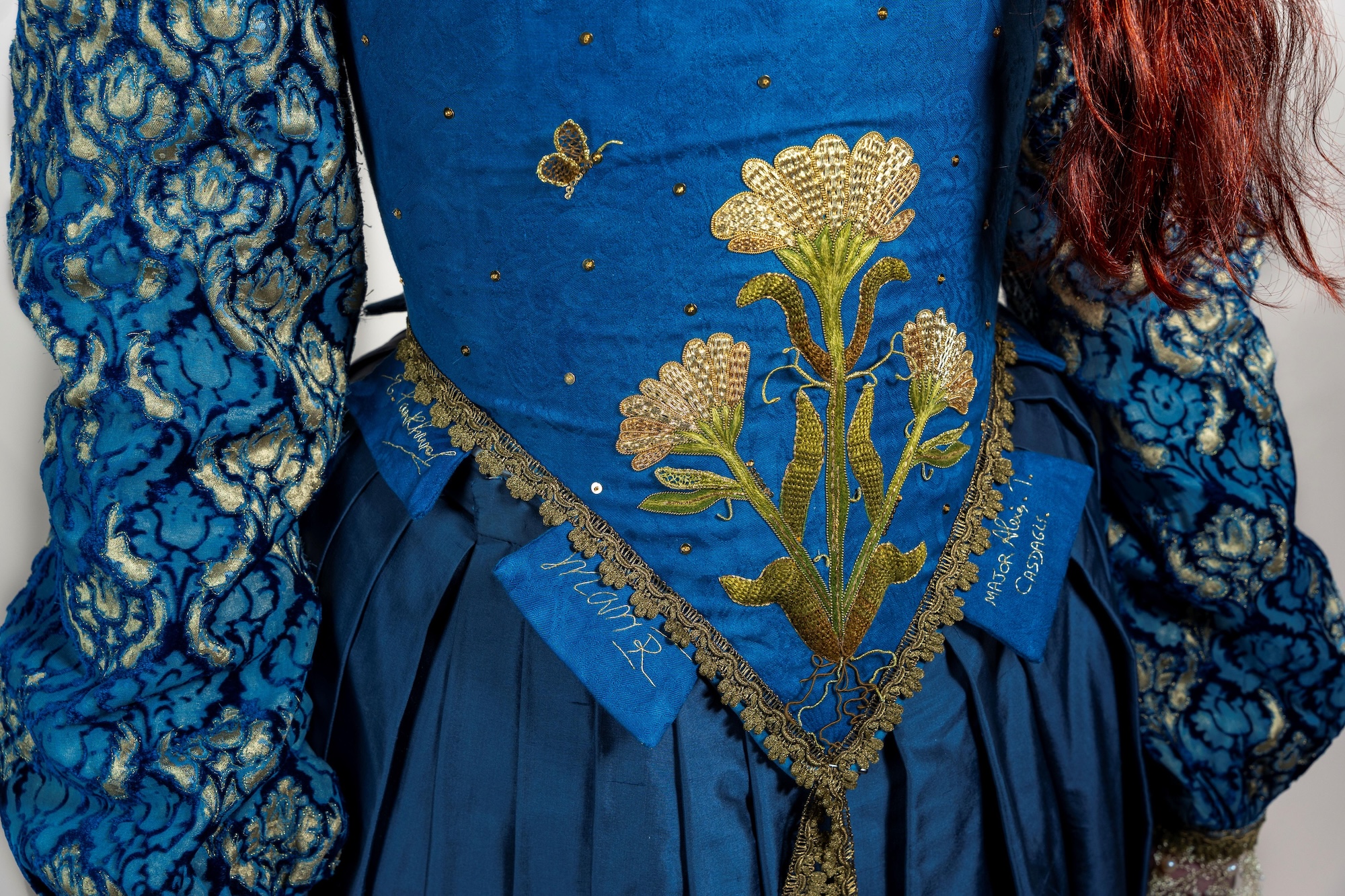
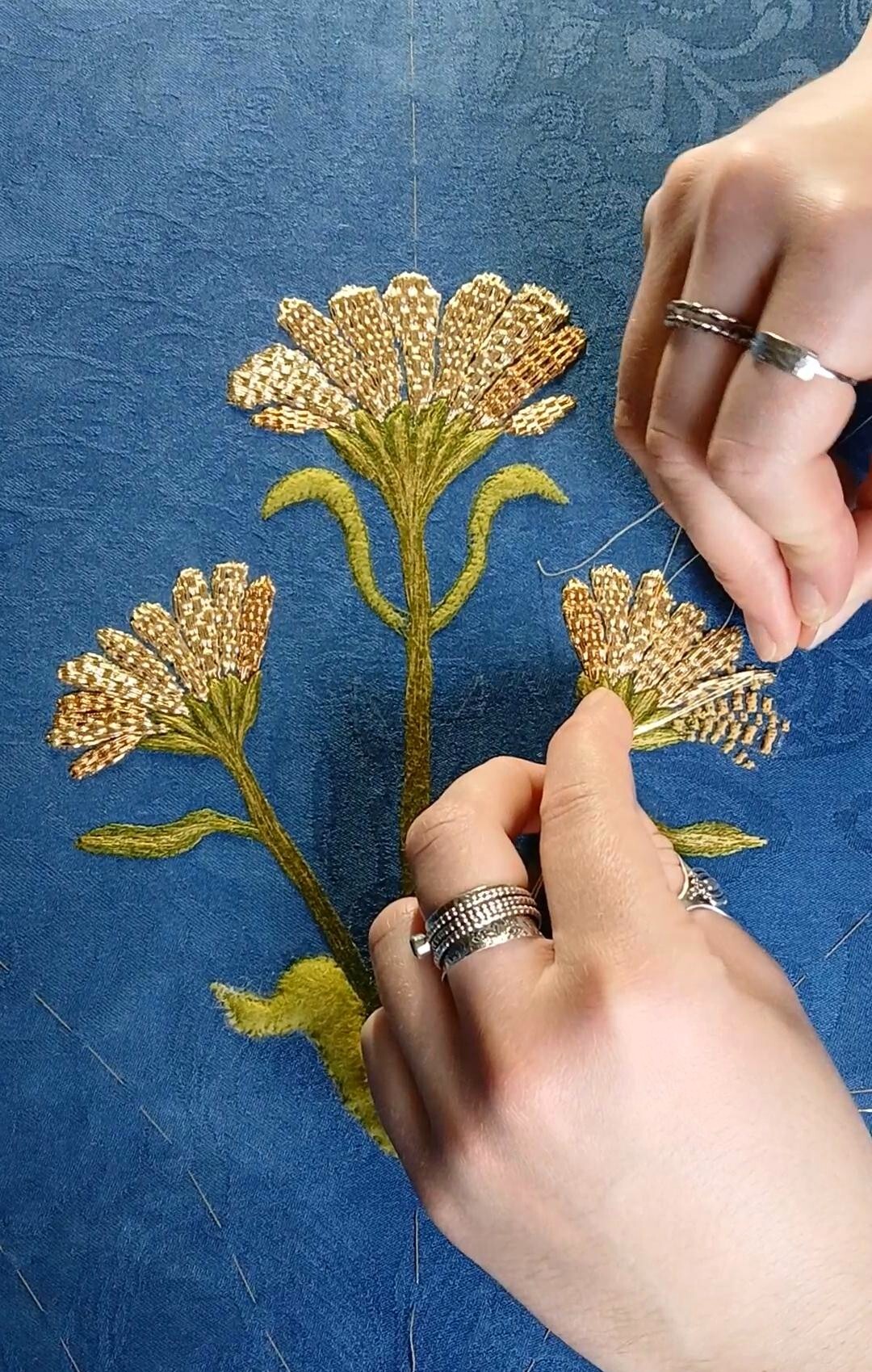
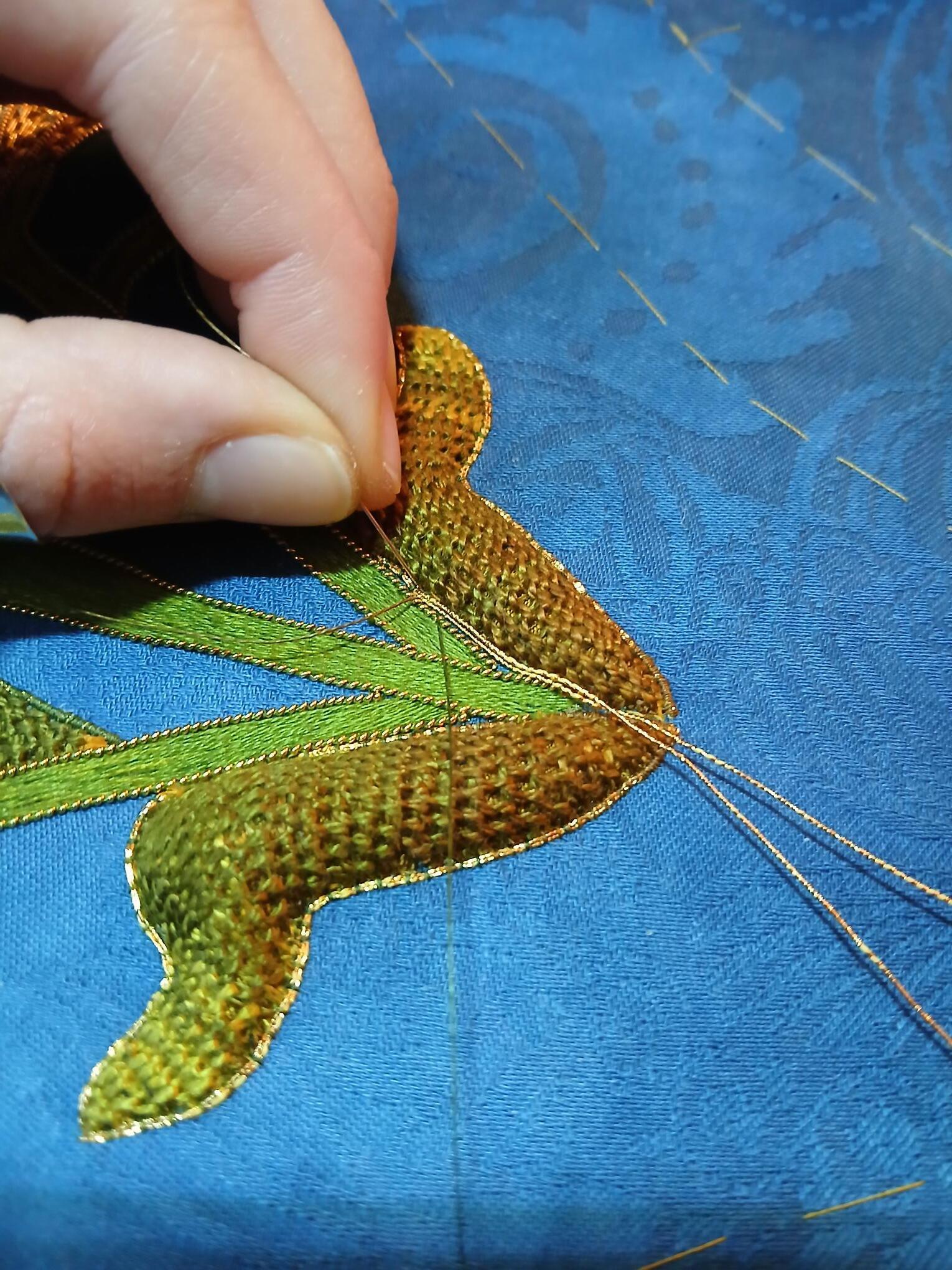
My project for the second Master's unit is made to honour all those who have been incarcerated with only a needle and thread for company. Expression Through Oppression is a hand-embroidered re-creation of the oldest surviving pair of bodices (1598), embellished using the traditional hand-embroidery techniques of goldwork, silk shading, needlelace and stump work.
I was influenced by the earliest-known prison embroideries stitched by Mary Queen of Scots; the central motif of the three marigold flowers are a take on her personal emblem of a marigold turning towards the sun, representing courage in the face of adversity, and symbolising her three motherlands: France, England and Scotland.
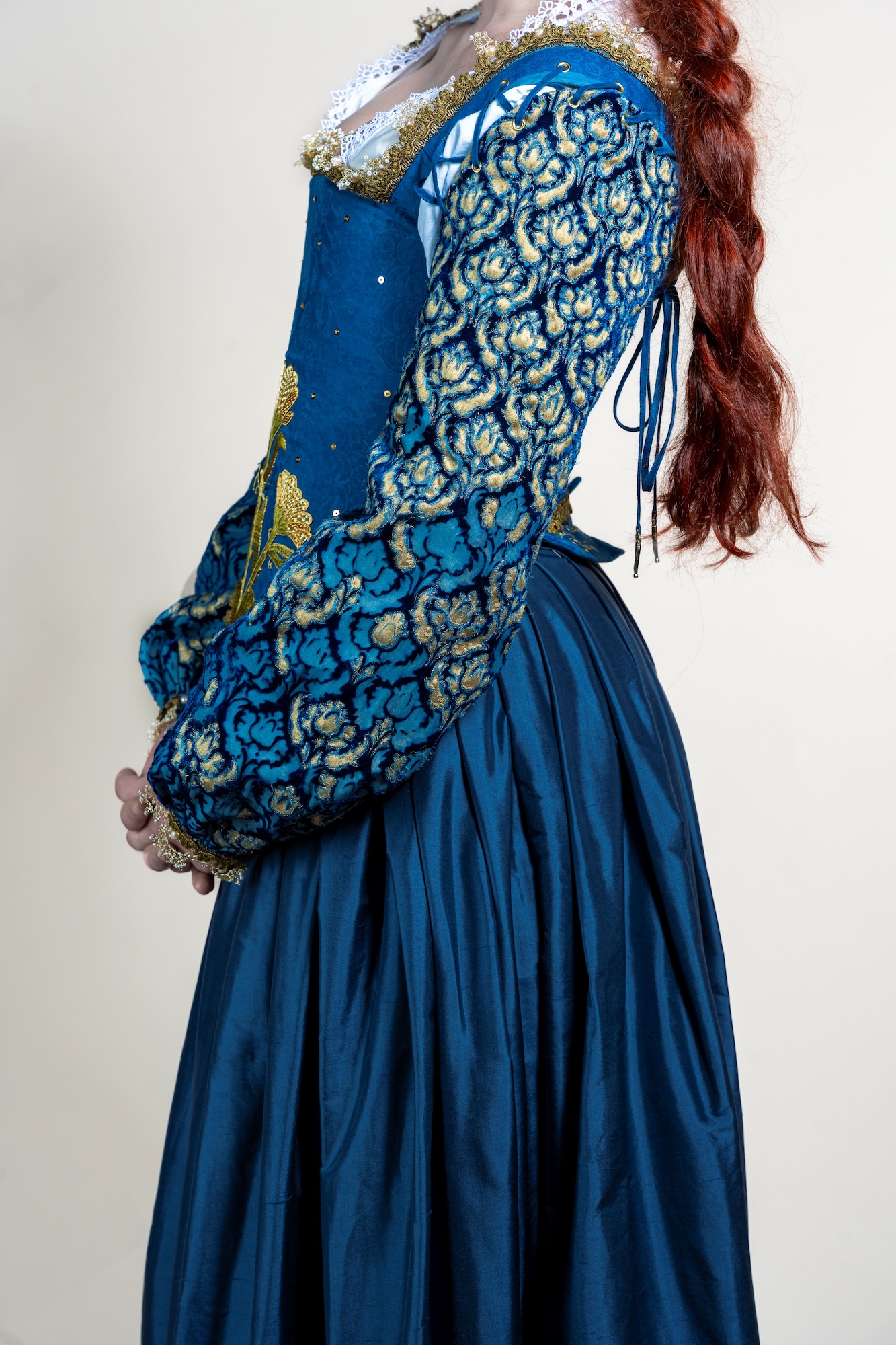
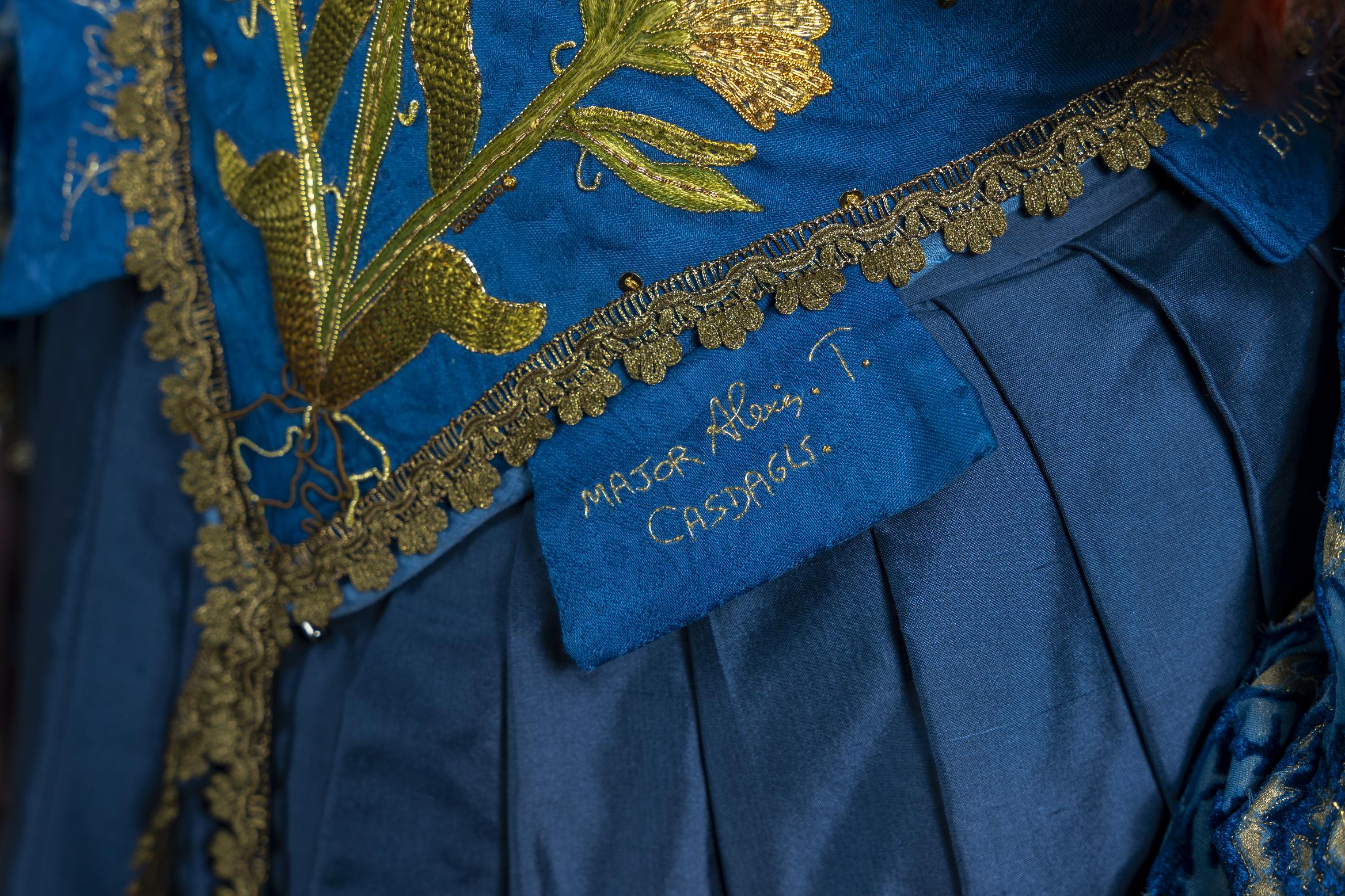
The sleeves consist of screen-printed gold and devoré patterns accented by free motion machine embroidery. The tabs feature the signatures of people who have stitched in incarceration, and serve as a tribute to all embroiderers who have stitched their time away, including Mary herself.
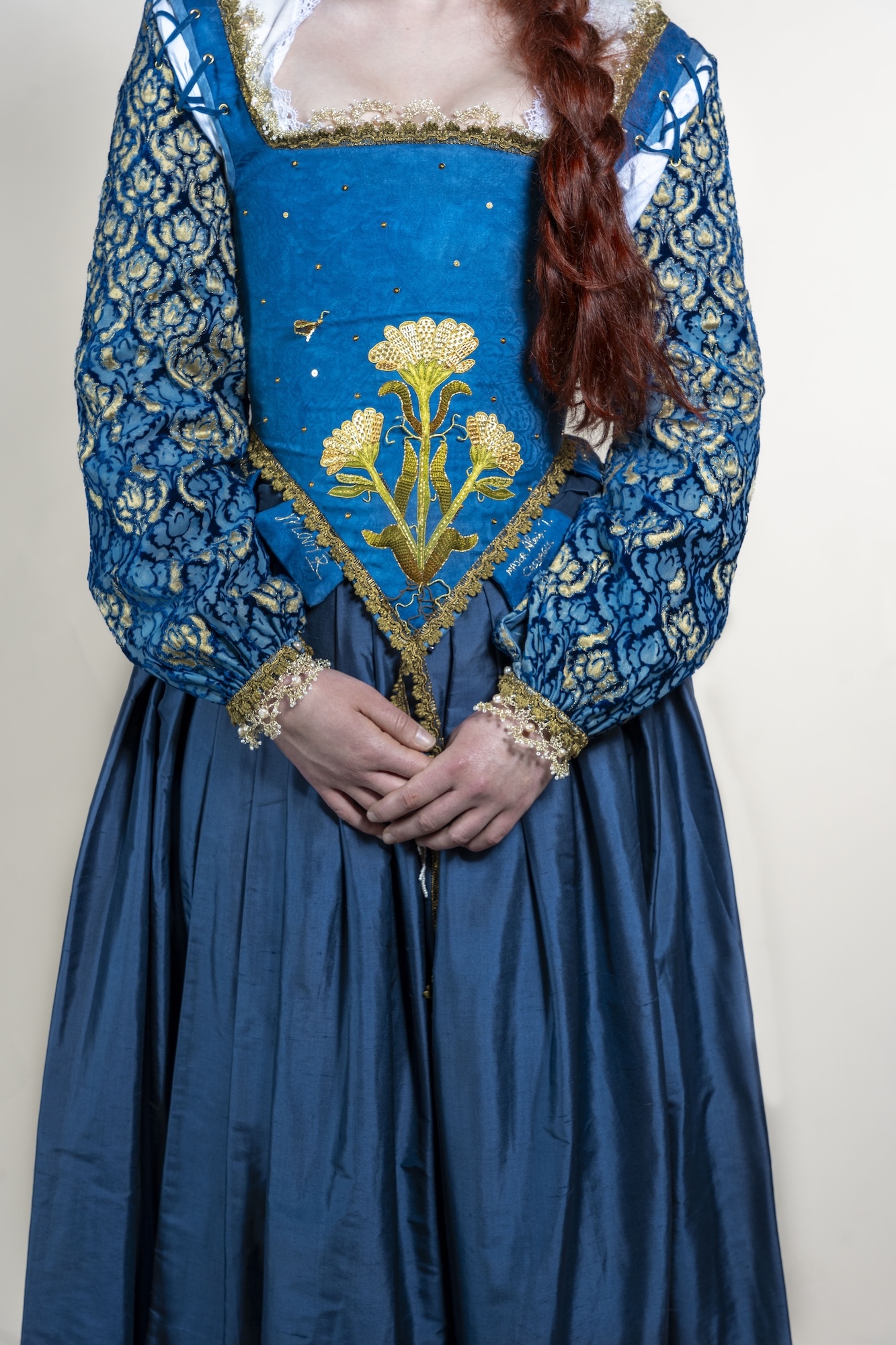


I knew I wanted to expand my construction skills, so decided I would make a bodice, and it fit nicely to make one from Mary Queen of Scots' time, which led me to the 1598 pair of bodices in Mandy Barrington's Stays and Corsets Volume 2 (2018).
However, this project wasn't just about Mary. I visited the Women's Library to view their archive collection of suffragette prison embroidery and banners, and this is where I saw the most beautiful banner made for the Civil Services Women's Suffrage Society in 1911; stitched with gold and yellow detail on a deep blue damask ground, the colours were just as fresh as the day it was made. It was at this moment I knew these were the colours I had to use.
In the beginning there was a lot of sampling involved using varying techniques of the ancient process of indigo dyeing, in order to achieve the desired shade of deep blue. Once this was achieved, sampling for the embroidery became the next step. With my colour palette and design finalised, I took to sourcing varying shades of gold wires and threads to give the marigolds depth. During this process I decided to incorporate shades of olive greens and green golds to enhance the design details.
I made the bodice to my measurements, therefore fitting it required an extra pair of hands and eyes to assist, which proved challenging at times. On another note, creating a sleeve pattern that not only somewhat honoured the 16th century style, but also allowed for the textile technique applications of devoré, screen-printing, free motion embroidery and slashing.
A new skill I acquired for this project was crocheting with wire to make a metal lace. I am an avid crocheter in my free time, but normally with a soft cotton yarn rather than the fiddly nature of coated copper wire.
Now, Expression Through Oppression will be exhibited as part of the Fashion and Embroidery Show at the National Exhibition Centre in Birmingham (12–15 March).